
Cranberry Orange Pecan Tart
The filling puffs slightly around the edges as it bakes, while the middle keeps a gentle wobble. That’s the moment I watch for with this Cranberry Orange Pecan Tart: firm…

By Ava
•
•
Reading time: 9 min
Tip: save now, make later.
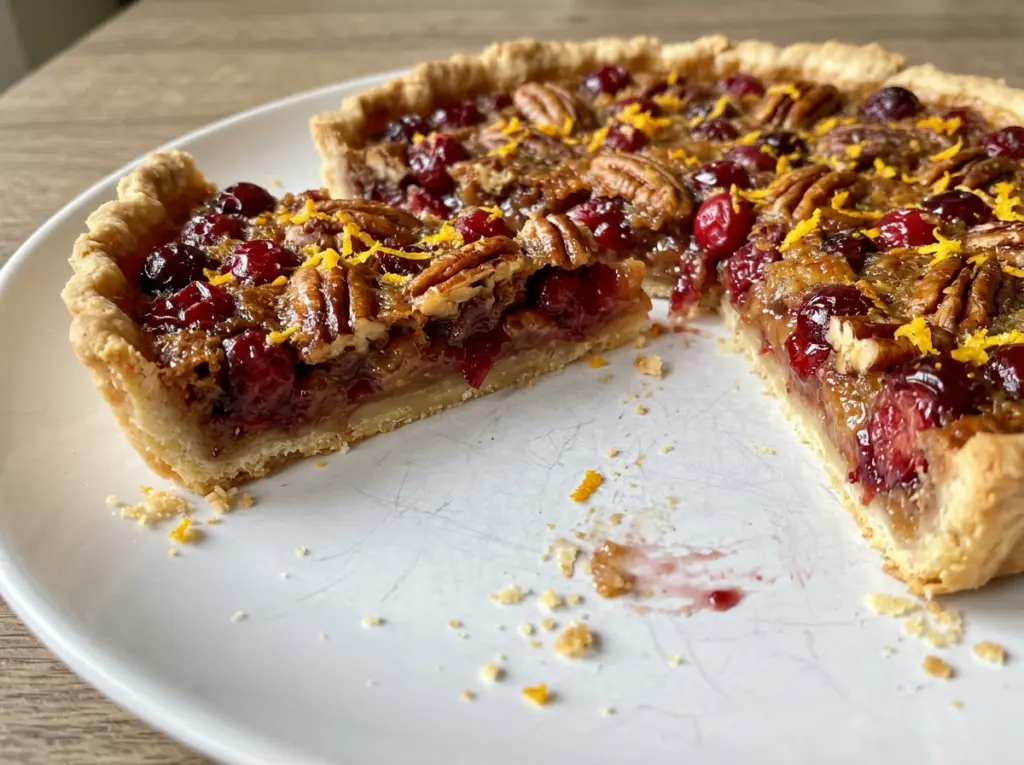
The filling puffs slightly around the edges as it bakes, while the middle keeps a gentle wobble. That’s the moment I watch for with this Cranberry Orange Pecan Tart: firm enough to slice once it cools, but not baked until every bit of movement disappears. The cranberries bring a sharp pop against the sweet filling, and the pecans add the sort of crunch that makes each slice feel substantial.
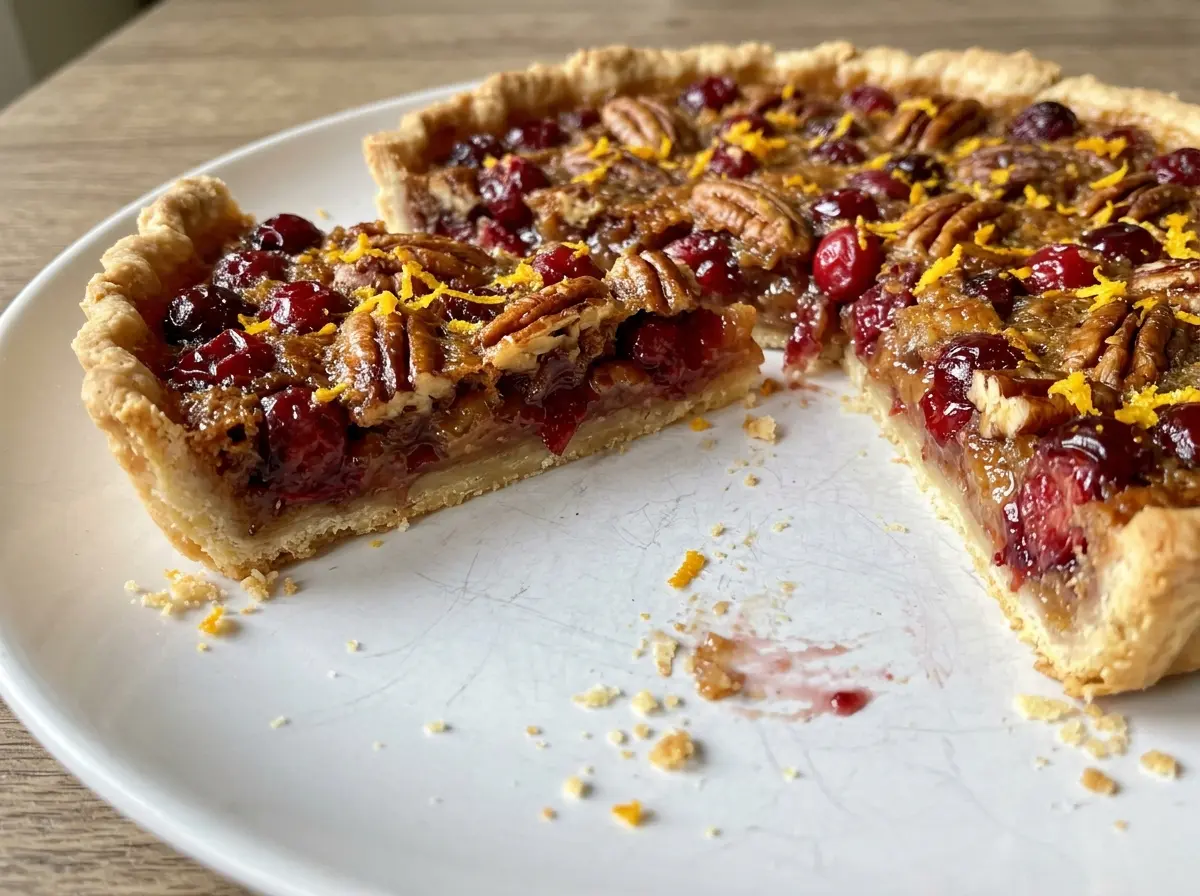
I press the buttery crust into the tart pan instead of rolling it, then give it a short blind bake before adding the filling. That extra bake sets the shell so it can hold the syrupy mixture without turning soft underneath. Fresh orange zest gives the filling a bright aroma, while the juice adds citrus flavor without competing with the cranberries. Once the tart has cooled, the slices show off all three layers: a tender crust, glossy cranberry filling, and toasted-tasting pecans.
Kitchen Note
Grate the orange zest before you cut and juice the orange; it’s easier to hold, and the fine zest disperses evenly through the filling. Stop before you reach the white pith, which can make the citrus taste bitter.
Save this Cranberry Orange Pecan Tart for its tart berry bites, buttery crust, and crisp pecans in every slice.
Why This Tart Needs a Blind-Baked Shell
The filling is much wetter than the dough, so baking everything together from the start leaves the crust struggling to catch up. A blind bake gives the shell a head start: the butter-rich dough firms, the surface dries, and the edges begin to color before any filling goes in. That first bake is what helps the bottom hold its shape beneath a mixture made with eggs and corn syrup.
There’s a useful contrast here, too. The crust starts out tender and pale, then the second bake gives its edges a little more color as the filling sets. Don’t pour the filling into a shell that still looks damp or doughy; it needs that dry surface first. The finished tart should have a crisp-edged shell and a center that stays soft rather than turning dense or hard.
How the Orange, Cranberries, and Pecans Shape the Filling
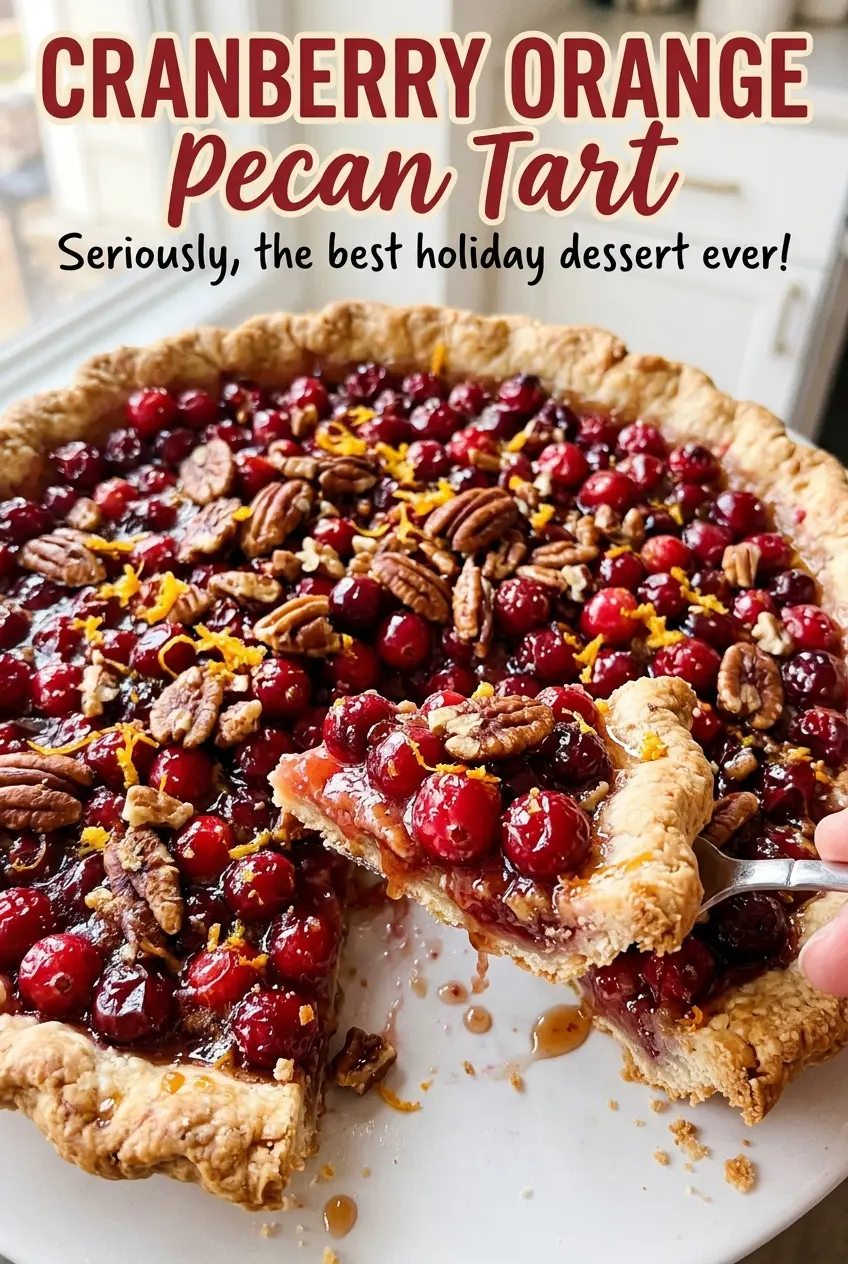
- Fresh cranberries — Coarsely chopped berries keep their tartness and give the filling bright little bursts. Choose firm berries without soft spots. If fresh cranberries aren’t available, frozen ones can work after they’re thawed, drained well, and patted dry; extra water can make the filling looser.
- Pecans — Coarse pieces give the filling a satisfying crunch without disappearing into the syrup. Buy fresh-tasting pecans; stale nuts are especially noticeable in a tart where their flavor is concentrated. Coarsely chopped walnuts are the closest swap, with a slightly more assertive, earthy taste.
- Orange zest and juice — The zest brings fragrant citrus oils, while the juice gives the filling a softer, rounded orange note. Fresh zest matters more than whether the juice is freshly squeezed; bottled juice is fine here. For a sharper citrus variation, use lemon zest and juice in the same amounts.
- Corn syrup and light brown sugar — Together they create the sweet, cohesive filling that sets around the cranberries and nuts. The brown sugar contributes a mild molasses note, so light brown sugar keeps the orange and cranberry flavors clear. I don’t replace the corn syrup with maple syrup; the two don’t behave the same way in this egg-set filling.
- Butter and eggs — Softened butter makes the crust easy to press into the pan, and melted butter enriches the filling. Use large eggs, divided as written, so one binds the crust and the others set the filling. Unsalted butter gives you control over the measured salt in both parts.
- All-purpose flour — It gives the press-in crust enough structure to hold the filling while keeping the bite tender. A fresh bag is fine; there’s no need for specialty pastry flour. For a gluten-free version, use a cup-for-cup gluten-free baking blend that includes a binder.
From Press-In Crust to a Gently Set Center
Mix a soft dough and press it into the pan
Beat the softened butter and granulated sugar until creamy, about 1 minute, then beat in one egg. Stir in the flour and the crust portion of the salt just until a dough forms; stop as soon as you no longer see dry flour. Press it evenly over the bottom and up the sides of a 9-inch tart pan with a removable bottom. Chill the shell for 30 minutes so it’s firm before baking.
Blind-bake until the surface looks dry
Heat the oven to 375°F with a rack in the center, and set the tart pan on a baking sheet. Line the crust with parchment and fill it with pie weights, then bake for 15 minutes. Lift out the parchment and weights and bake for another 8 to 10 minutes, until the surface looks dry and the edges are lightly golden. Lower the oven to 350°F for the filled tart.
Whisk the orange filling until blended
Melt the remaining butter and let it cool slightly while you gather the filling ingredients. Whisk the three remaining eggs with the corn syrup, brown sugar, melted butter, orange zest, orange juice, vanilla, and remaining salt until blended. If the butter is still piping hot, give it another moment to cool before adding it to the eggs. The mixture should look smooth, with the brown sugar incorporated rather than sitting in clumps.
Fold, fill, and bake to a slight jiggle
Fold the chopped cranberries and pecans into the filling, then pour it into the warm crust. Bake at 350°F for 35 to 45 minutes. The edges should look set while the center jiggles only slightly; an instant-read thermometer inserted in the center should read at least 160°F. Cool the tart on a rack for 2 hours before removing the ring and slicing, which gives the filling time to settle.
Two Easy Ways to Adapt This Tart
Make the crust gluten-free
Replace the all-purpose flour with the same amount of cup-for-cup gluten-free baking blend that contains a binder. The crust may feel a little more delicate when you press it into the pan, so work it gently and check that the bottom and sides are evenly covered before chilling.
Swap the orange for lemon
Use lemon zest and lemon juice in place of the orange zest and juice, keeping the same amounts. The filling will taste brighter and more sharply citrusy, which plays well with the cranberries; the pecans and sweet base stay the same.
Storage and Reheating
- Refrigerator: Cover the cooled tart and refrigerate it for up to 4 days. The crust softens a little as it sits, but the filling stays pleasantly firm.
- Freezer: Freeze individual slices, wrapped well and placed in an airtight container, for up to 2 months. Thaw overnight in the refrigerator; the crust may be less crisp after freezing.
- Reheating: Warm slices in a 300°F oven until heated through, checking the center reaches 165°F. Avoid a hot oven or long reheating, which can dry the filling before the middle warms.
Questions That Come Up Before the First Slice
Cranberry Orange Pecan Tart
Ingredients
Equipment
Method
- Beat 8 tablespoons of the softened butter and the granulated sugar in a medium bowl until creamy, about 1 minute.
- Beat in 1 egg.
- Stir in the flour and 1/2 teaspoon of the salt just until a dough forms.
- Press the dough evenly over the bottom and up the sides of a 9-inch tart pan with a removable bottom.
- Chill for 30 minutes.
- Preheat the oven to 375°F with a rack in the center.
- Set the tart pan on a baking sheet.
- Line the crust with parchment paper and fill with pie weights.
- Bake for 15 minutes.
- Remove the parchment and weights.
- Bake for 8 to 10 minutes until the surface looks dry and the edges are lightly golden.
- Reduce the oven temperature to 350°F.
- Melt the remaining 3 tablespoons butter and let it cool slightly.
- In a medium bowl, whisk the remaining 3 eggs with the corn syrup, brown sugar, melted butter, orange zest, orange juice, vanilla, and remaining 1/4 teaspoon salt until blended.
- Fold the cranberries and pecans into the filling.
- Pour the filling into the warm crust.
- Bake at 350°F for 35 to 45 minutes, until the filling is set around the edges, the center jiggles only slightly, and the center reads at least 160°F on an instant-read thermometer.
- Cool on a rack for 2 hours.
- Remove the tart ring and slice.