
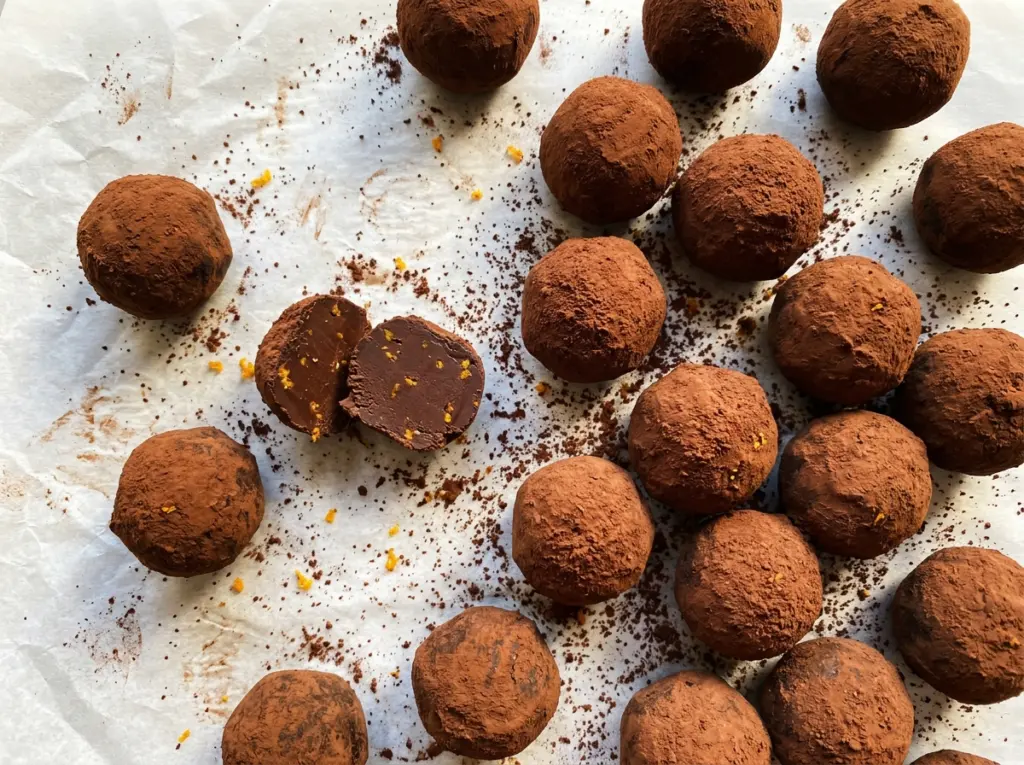
Orange Chocolate Truffles
The cream starts steaming, and a few tiny bubbles gather around the edge of the saucepan. That’s the moment to pour it over the chocolate—not a minute later, when it’s…

By Ava
•
•
Reading time: 8 min
Tip: save now, make later.
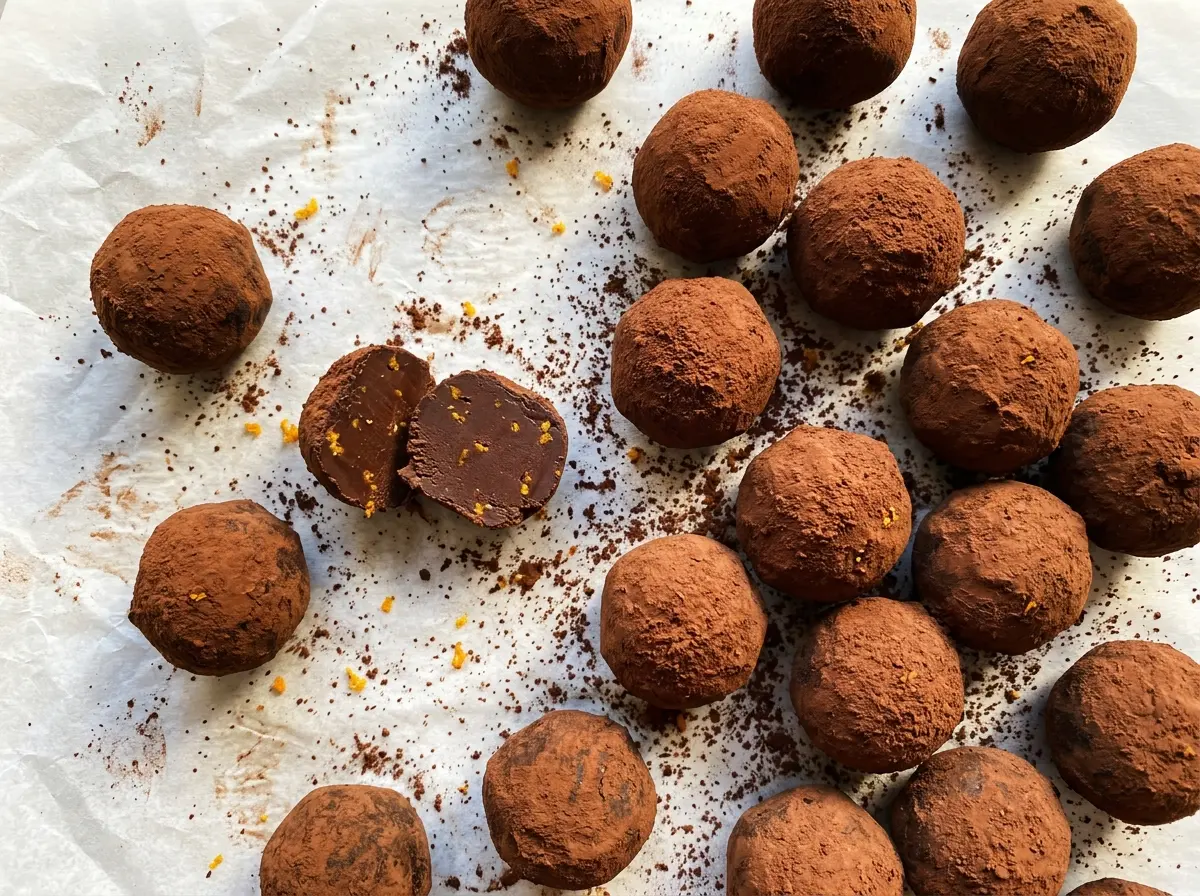
The cream starts steaming, and a few tiny bubbles gather around the edge of the saucepan. That’s the moment to pour it over the chocolate—not a minute later, when it’s boiling. I learned that the gentle heat is plenty to melt finely chopped chocolate into a smooth ganache, without rushing the process or scorching the cream. These orange chocolate truffles have a deep semisweet center with a clear hit of orange, then a soft, pleasantly bitter cocoa coating.
The orange comes from two ingredients, and each has a job. Finely grated zest brings the fragrant oils of fresh orange; a little orange extract makes that citrus note easy to taste beneath the chocolate. Once the ganache has chilled, it’s easy to portion and roll, and the cocoa gives each truffle a tidy finish. They’re rich enough that a small truffle feels like a proper treat.
Kitchen Note
Stop heating the cream as soon as it’s steaming and small bubbles appear around the edges. It doesn’t need to boil to melt the chocolate, and that gentle heat is all this ganache needs.
Save these orange chocolate truffles for a make-ahead treat with a smooth citrus-scented center and a cocoa-dusted finish.
Why These Truffles Need Two Chills, Not One
The first refrigerator rest gets the ganache firm enough to scoop. It’s a different texture from a finished truffle: cool and thick, but still soft enough to roll between your hands. Skip that wait and the portions slump or smear instead of forming neat balls.
The second rest happens after shaping, when the ganache has been warmed by handling. Chilling the balls again firms their outsides before they meet the cocoa powder, so you can roll them through the coating without pressing cocoa into a soft surface. Each chill has a clear purpose, and neither one needs a complicated trick or extra ingredient.
That two-stage approach also makes the work easier to pace. You can prepare the ganache first, let the refrigerator do the firming, then shape and finish the truffles in a short session. The result is a smooth center that holds its shape under a thin, even cocoa layer.
What Gives These Truffles Their Chocolate-and-Orange Balance

- Semisweet chocolate — Chocolate does the structural work here, so choose a bar you enjoy eating and chop it finely for even melting. A good grocery-store bar is plenty; chips can contain stabilizers and may not melt as smoothly. Bittersweet chocolate can stand in one-for-one for a less-sweet, slightly firmer center.
- Heavy cream — Cream gives the chocolate enough liquid and richness to become ganache. Half-and-half has less fat and can leave the mixture softer, so stick with heavy cream for the most reliable scoopable texture. For a dairy-free version, use full-fat coconut milk as described below; it adds a light coconut note.
- Unsalted butter — Butter rounds out the ganache and helps it feel smooth on the tongue. A basic unsalted butter works well; if you need to leave it out, the chocolate and cream will still make ganache, though the center will be a little less rich.
- Orange zest and orange extract — Fresh zest contributes fragrant orange oils, while extract gives the citrus a more distinct presence against the chocolate. Grate only the bright outer peel, not the bitter white pith. If you leave out the extract, the truffles will have a subtler orange note; extra zest won’t taste quite the same.
- Unsweetened cocoa powder — Cocoa makes a dry, pleasantly bitter coating that balances the rich center. There’s no need to buy a specialty brand for rolling; choose unsweetened cocoa, and use a shallow dish so it’s easy to coat each ball.
How to Melt, Chill, and Coat the Ganache Without a Mess
Let the Hot Cream Melt the Chopped Chocolate
Put the finely chopped chocolate in a medium heatproof bowl. Heat the cream in a small saucepan over medium heat until it’s steaming and small bubbles appear around the edges; this takes 2 to 3 minutes, and the cream shouldn’t boil. Pour it over the chocolate and leave it undisturbed for 5 minutes before whisking. Whisk until the mixture looks smooth, then whisk in the butter until it melts before adding the orange zest and extract.
Chill Until the Ganache Holds a Scoop
Cover the bowl and refrigerate the ganache for about 2 hours. It should feel firm enough to hold a mound on a spoon, but still soft enough to portion without crumbling. If the middle looks looser than the edges, give it more time in the refrigerator rather than trying to shape it warm. That scoopable consistency makes the next part much less sticky.
Shape the Portions Before the Cocoa Coating
Line a baking sheet with parchment paper and scoop the ganache into 1-tablespoon portions. Roll each portion into a ball, then arrange the truffles on the lined sheet. Refrigerate them for 20 to 30 minutes, until firm. Put the cocoa powder in a shallow dish and roll each chilled truffle through it to coat.
Simple Ways to Change the Coating or Make Them Dairy-Free
Swap the Cocoa for Toasted Hazelnuts
Roll the chilled truffles in finely chopped toasted hazelnuts instead of cocoa powder. You’ll get a crunchier coating with a warm, nutty flavor; the balls won’t have cocoa’s dry, bittersweet finish.
Make a Dairy-Free Batch with Coconut
Use dairy-free semisweet chocolate, full-fat coconut milk in place of the heavy cream, and plant-based butter in place of the butter. The ganache will still chill into truffles, with a mild coconut flavor alongside the orange. Check that the chocolate and butter alternative are dairy-free.
Storage and Serving
- Refrigerator: Store the truffles in an airtight container for up to 1 week. The cocoa coating may darken or absorb a little moisture as it sits.
- Freezer: Freeze the truffles in a single layer until firm, then transfer them to an airtight freezer container for up to 2 months. Thaw them in the refrigerator while still covered to limit condensation on the cocoa.
- Serving: Serve them cool for a firmer bite, or let them sit out briefly for a softer center. Don’t leave this cream-based dessert at room temperature for an extended stretch.
Questions That Come Up When Making Orange Chocolate Truffles
Orange Chocolate Truffles
Ingredients
Equipment
Method
- Place the chopped chocolate in a medium heatproof bowl.
- Heat the cream in a small saucepan over medium heat until steaming and small bubbles appear around the edges, 2 to 3 minutes; do not let it boil.
- Pour the hot cream over the chocolate and let stand for 5 minutes.
- Whisk the chocolate and cream until smooth.
- Whisk in the butter until melted.
- Whisk in the orange zest and orange extract.
- Cover the ganache and refrigerate until firm enough to scoop, about 2 hours.
- Line a baking sheet with parchment paper.
- Scoop the ganache into 1-tablespoon portions.
- Roll each portion into a ball.
- Refrigerate the truffles on the baking sheet until firm, 20 to 30 minutes.
- Put the cocoa powder in a shallow dish.
- Roll the truffles in the cocoa powder to coat.