
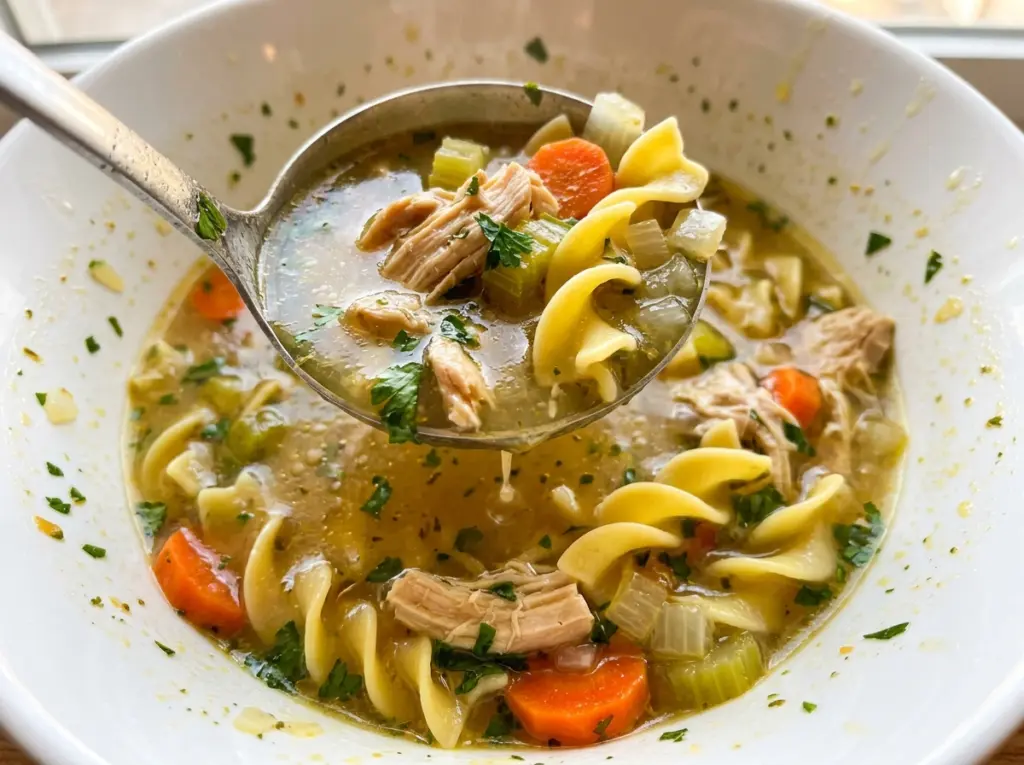
Copycat Panera Bread Chicken Noodle Soup
The onion, carrots, and celery soften in the olive oil, and the whole pot starts to smell like the kind of chicken soup you want to eat with a spoon…

By Ava
•
•
Reading time: 9 min
Tip: save now, make later.
The onion, carrots, and celery soften in the olive oil, and the whole pot starts to smell like the kind of chicken soup you want to eat with a spoon held in both hands. I make this Copycat Panera Bread Chicken Noodle Soup in a Dutch oven, cooking the chicken right in the broth so the vegetables and herbs have time to season it, too.
What makes this version easy to manage is the order: simmer the chicken whole, lift it out while the noodles cook, then shred it and return it to the pot. The chicken stays out of the way while the noodles become tender, and you don’t have to juggle a second pot. Use low-sodium broth so the salt stays balanced, and keep the simmer gentle once the chicken goes in.
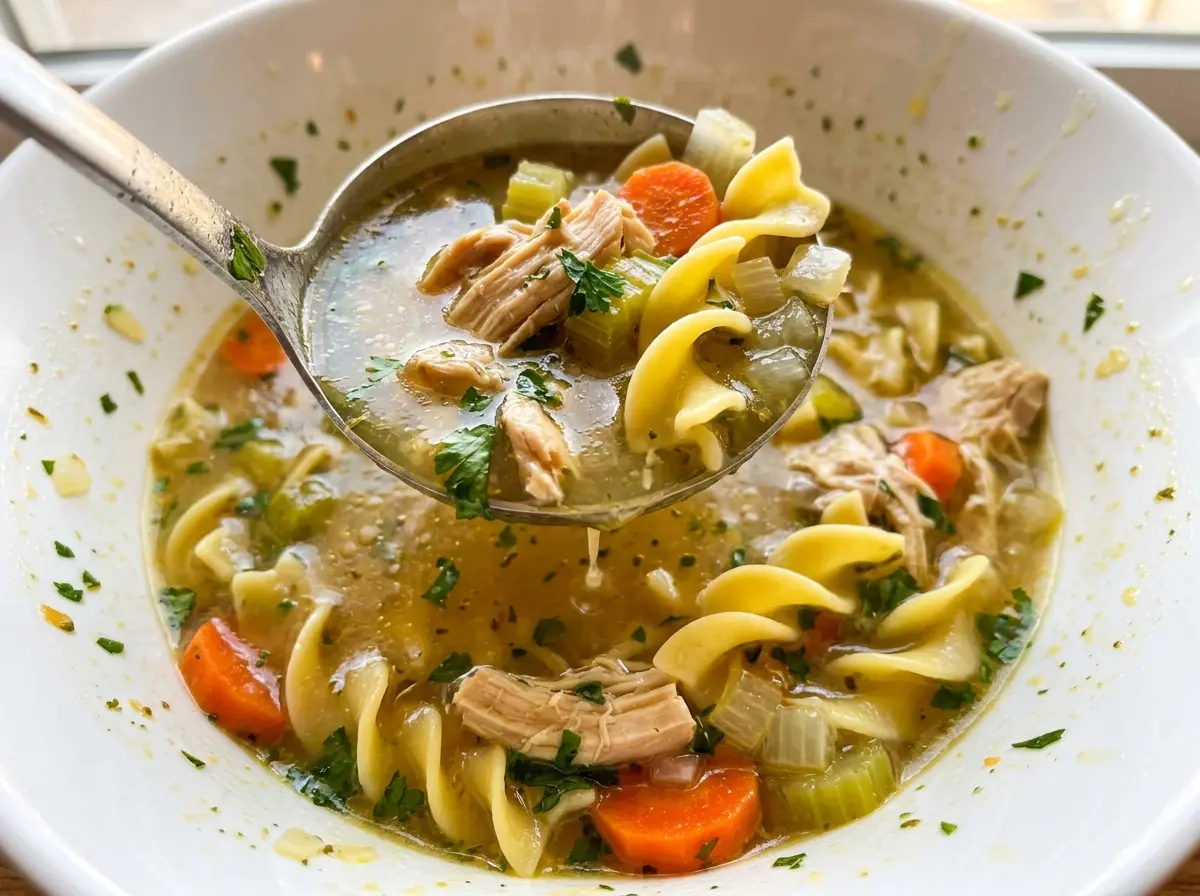
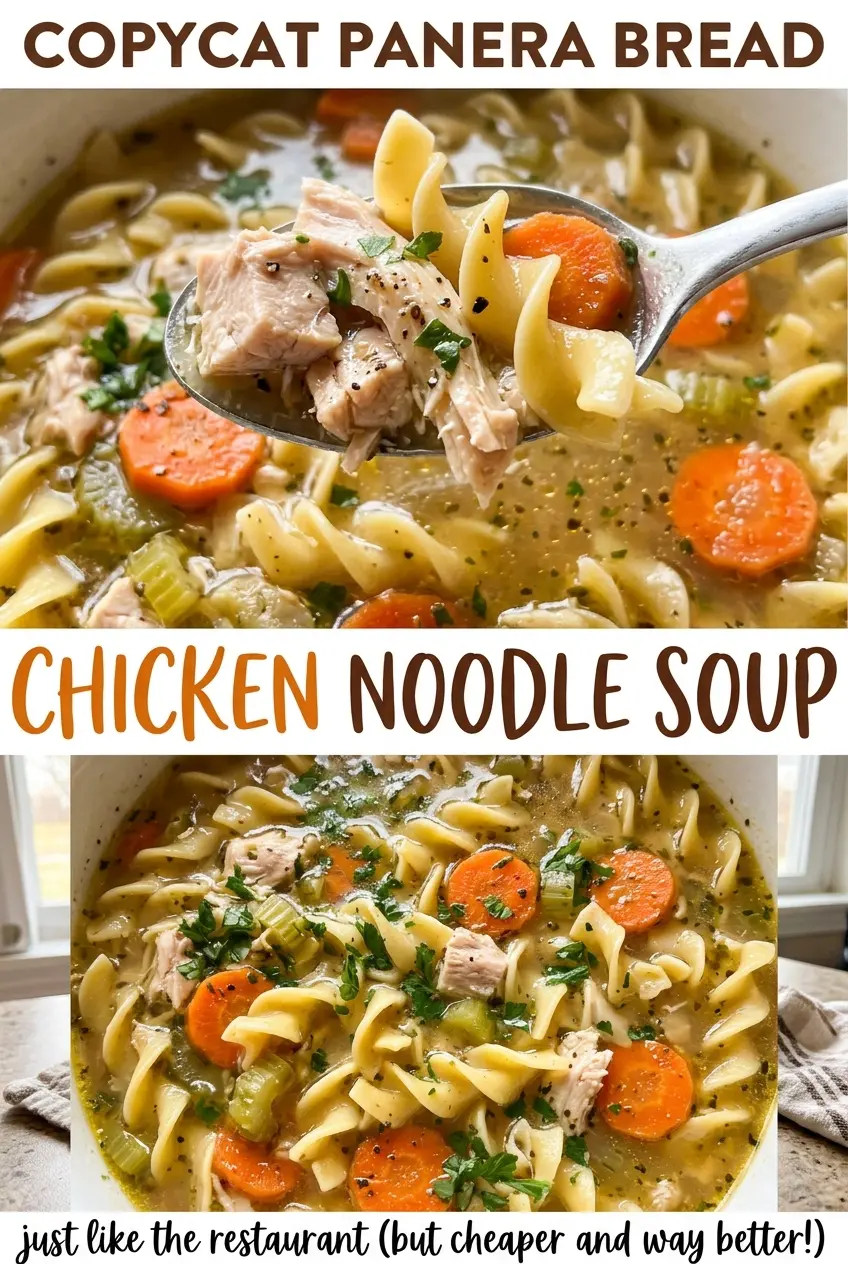
The finished soup has tender chicken, wide egg noodles, and a warm, savory broth with fresh parsley stirred in at the end. It’s a generous pot for six, with familiar ingredients and no fussy technique.
Kitchen Note
Fish the bay leaves out before the noodles go in. Once the noodles are bobbing around in the broth, those leaves are much harder to spot.
Save this Copycat Panera Bread Chicken Noodle Soup for a cozy pot of tender chicken, wide noodles, and savory broth.
Why the Noodles Belong in the Broth, Not a Separate Pot
These noodles cook in the same broth that simmers with the chicken and vegetables. That gives them a chance to pick up the thyme-and-chicken flavor as they soften, rather than arriving in the bowl tasting like a separate component. It also keeps the method to one Dutch oven, which matters when you want soup without extra dishes.
There’s a useful tradeoff: noodles cooked right in the soup contribute body to the broth, while a separate pot of noodles would keep the broth a little lighter. For this version, the direct-to-pot method is part of the texture. Let the broth settle to a gentle simmer before adding them, and follow the package timing if your particular noodles need a little longer or less time. Once tender, they’re ready for the shredded chicken and parsley.
That order also gives the chicken a short rest on a plate while the noodles cook. You can shred it without trying to work around hot broth, and it goes back into the pot just long enough to warm through.
What Wide Egg Noodles and Low-Sodium Broth Bring to This Pot
- Low-sodium chicken broth — It gives the soup a savory base without locking in more salt than you want. An everyday carton works well here; the low-sodium label matters more than choosing a premium brand because the soup also has measured kosher salt.
- Chicken breasts — Boneless, skinless breasts simmer directly in the broth and are easy to shred once cooked. Choose evenly sized pieces when possible, so they finish at a similar pace; the thickest part is the place to check for doneness.
- Wide egg noodles — Their broad shape makes each spoonful feel substantial, and they’re sturdy enough to simmer in the soup. If you use a different pasta shape, the texture will change and the package’s cooking time may differ; check the FAQ before swapping.
- Onion, carrots, celery, and garlic — This combination gives the broth its familiar vegetable base. Slice the carrots and celery evenly so they soften together, and mince the garlic so it cooks quickly after the vegetables are ready.
- Dried thyme and bay leaves — These add a gentle herbal note as the chicken simmers. Keep the bay leaves whole so they’re easy to remove, and use the dried thyme listed here rather than substituting a larger amount of fresh herbs.
- Fresh parsley — Chopped parsley goes in at the finish, bringing a fresh, green note to a broth that has simmered for a while. Fresh parsley is worth using if you have it; leaving it out makes the soup a little less bright, but the pot still works.
The Four Stages That Keep the Chicken Tender and the Broth Savory
Soften the Vegetables Before Adding Garlic
Warm the olive oil in a 6-quart Dutch oven over medium heat, then add the diced onion, sliced carrots, and sliced celery. Stir occasionally for 6 to 8 minutes, until the vegetables have softened rather than browned heavily. Add the minced garlic and cook for 30 seconds; it should smell fragrant, not dark or toasted. Garlic burns quickly, so keep it moving during this short finish.
Simmer the Chicken Gently in the Broth
Add the chicken broth, chicken breasts, bay leaves, dried thyme, kosher salt, and black pepper. Bring the pot to a boil over high heat, then lower the heat so the soup simmers gently. Cook for 18 to 22 minutes, checking the thickest part of each breast with a thermometer; it needs to reach 165°F. A hard, rolling boil can make the chicken less tender, so ease the heat down once the broth boils.
Give the Noodles Their Own Simmer
Move the cooked chicken to a plate and take the bay leaves out of the pot. Add the wide egg noodles to the broth and simmer for 6 to 8 minutes, or follow the package directions, until tender. Keep the simmer steady but gentle, and stir as needed so noodles don’t stick together. If one is still firm in the center, give them a little more time and taste again.
Shred, Return, and Finish
Use two forks to shred the chicken on the plate, pulling it into bite-size strands. Return the chicken to the pot with the chopped fresh parsley. Simmer for 1 to 2 minutes, until the chicken is hot throughout, then serve. The parsley needs only this brief time in the soup to finish the pot without losing its fresh character.
Simple Ways to Adjust the Noodles and Herbal Notes
A lower-carb bowl without noodles
Leave out the egg noodles for a lighter, lower-carb soup centered on chicken and vegetables. The broth will feel less substantial, but the chicken and vegetable base still makes a complete bowl.
Keep the broth more prominent
Use 4 ounces of wide egg noodles instead of the full amount for a more broth-forward bowl. Cook them until tender using the package timing as your guide; the soup will have fewer noodles in each spoonful without changing the chicken or vegetable base.
A softer herbal finish
For a milder herbal note, leave out the bay leaves and keep the dried thyme. The soup will lose some of the bay’s background aroma, while the thyme and vegetables still season the broth.
Storage and Reheating
- Refrigerator: Refrigerate within 2 hours and use within 3 to 4 days. The noodles soften as they sit in the broth.
- Freezer: Freeze the broth, vegetables, and shredded chicken before adding the noodles and parsley. Cool, portion into airtight containers, and freeze for up to 2 to 3 months; add the noodles and parsley after thawing and reheating.
- Reheating: Warm gently in a saucepan, stirring now and then, until steaming hot. Avoid a vigorous boil, which can break up the noodles and make the chicken less pleasant.
Questions That Come Up While Making Chicken Noodle Soup
Copycat Panera Bread Chicken Noodle Soup
Ingredients
Equipment
Method
- Heat the olive oil in a 6-quart Dutch oven over medium heat.
- Add the onion, carrots, and celery and cook for 6 to 8 minutes, stirring occasionally, until softened.
- Add the garlic and cook for 30 seconds.
- Add the broth, chicken, bay leaves, thyme, salt, and pepper, then bring to a boil over high heat.
- Reduce the heat and simmer gently for 18 to 22 minutes, until the thickest part of each chicken breast reaches 165°F.
- Transfer the chicken to a plate and remove the bay leaves from the pot.
- Add the egg noodles and simmer for 6 to 8 minutes, or according to the package directions, until tender.
- Shred the chicken with two forks and return it to the pot with the parsley.
- Simmer for 1 to 2 minutes, until the chicken is hot, then serve.