
Sweet Potato Casserole With Pecan Topping – Holiday Side Dish Recipe
When the pecan topping turns golden, the sweet potato layer underneath should be soft and spoonable, not watery or loose. That contrast is what makes this sweet potato casserole with…

By Ava
•
•
Reading time: 9 min
Tip: save now, make later.
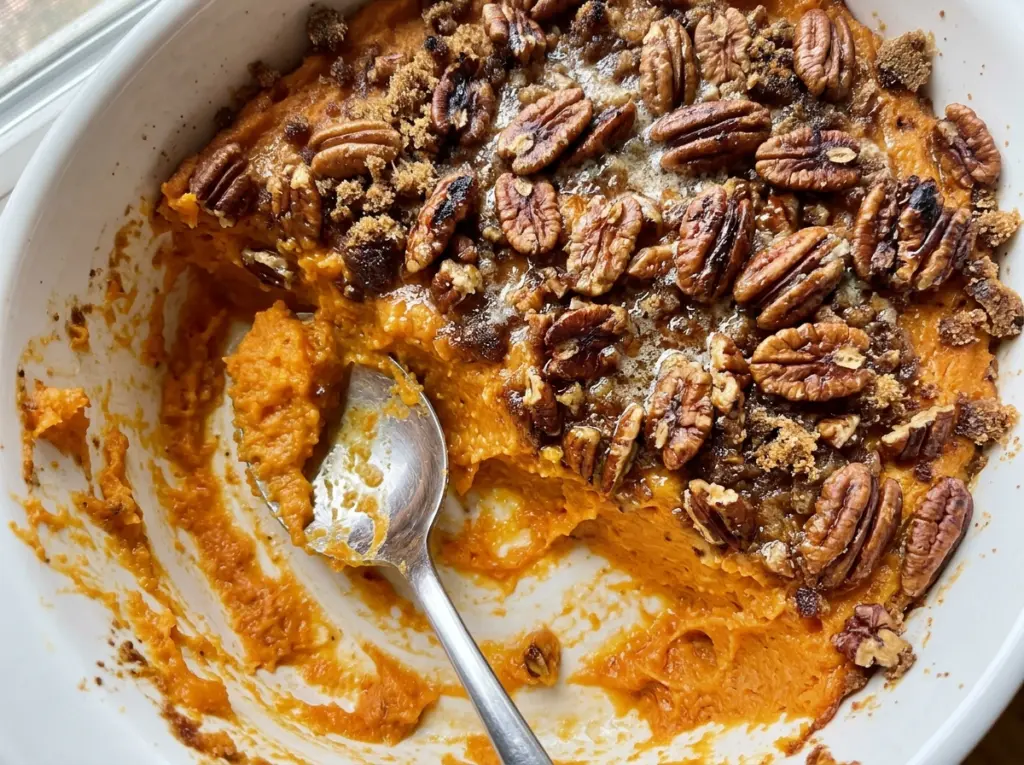
When the pecan topping turns golden, the sweet potato layer underneath should be soft and spoonable, not watery or loose. That contrast is what makes this sweet potato casserole with pecan topping worth bringing to the holiday table: a smooth, gently sweet filling under a buttery, crisp-edged crumble. The potatoes do most of the work, so there’s no need to hide their flavor under a heavy layer of sugar.
I roast the sweet potatoes whole, then mash the flesh before adding the eggs and milk. That gives the filling a concentrated sweetness and lets it set into a tender layer as it bakes. Meanwhile, the pecans, flour, brown sugar, and butter turn into a quick crumb topping that browns while the center cooks through. After a short rest, each scoop has both textures in the same bite.
Kitchen Note
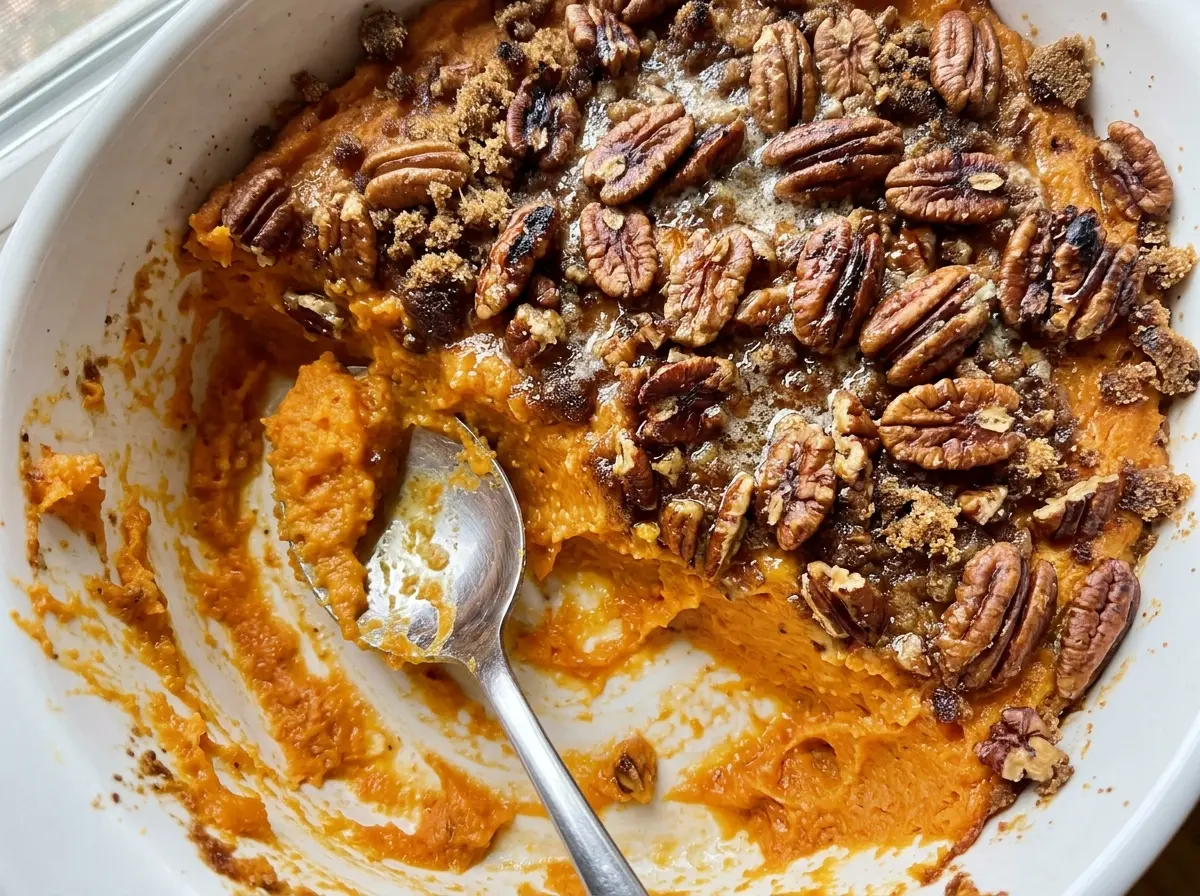
Stop mashing when the sweet potatoes are mostly smooth; a few soft bits are fine. Once the eggs and milk go in, mix just until everything comes together instead of beating the filling until fluffy.
Save this sweet potato casserole with its buttery pecan topping for a holiday meal that needs a make-ahead-friendly side.
Why Roasting the Sweet Potatoes Keeps This Casserole From Turning Watery
Sweet potatoes can go into a casserole after boiling, but boiling adds water to an ingredient that already softens as it cooks. Roasting them whole keeps that extra water out of the filling, and the flesh turns soft enough to mash without much effort. It also lets the potatoes’ natural sweetness come through, so the filling doesn’t need a lot of added sugar.
Roast them with their skins on, then wait until they’re easy to handle before peeling. The flesh goes straight into the bowl, where it meets melted butter, milk, eggs, vanilla, sugar, and salt. Once baked, those eggs help the filling hold together, while the milk and butter keep it tender instead of firm like a slice of pie. You get a casserole that scoops cleanly but still feels soft on the spoon.
How the Soft Filling and Crumbly Pecan Topping Get Their Texture
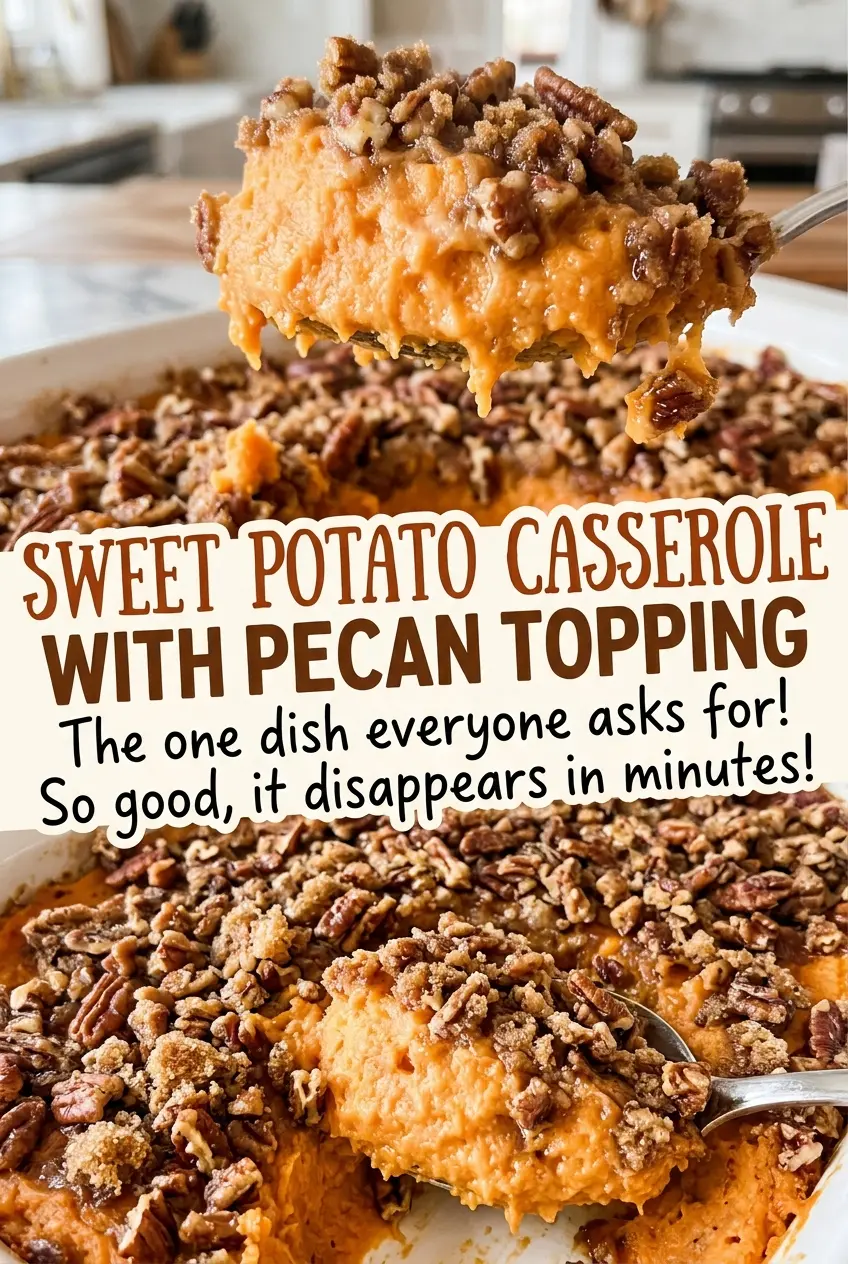
- Sweet potatoes — They make the body of the filling, so choose firm potatoes without soft spots. Similar-sized potatoes tend to finish roasting around the same time; the knife test matters more than the clock. Fresh whole potatoes give this filling its characteristic roasted sweetness and texture.
- Butter and whole milk — Butter brings richness to both layers, while milk loosens the mashed potatoes into a soft filling. Ordinary unsalted butter is all you need; there’s no advantage to using a specialty butter here. Two-percent milk works in the same amount, though the filling will taste a little less rich.
- Eggs — The eggs help the filling set as it bakes, so it holds together when served rather than flowing like mashed potatoes. Large eggs are the right size for this balance. There isn’t a simple omission that keeps the same soft, set texture.
- Pecans — Chopped pecans bring crunch and a gentle toasted flavor to the topping. Fresh pecans have a cleaner, sweeter taste, but standard grocery-store pecans work well. Chop them into reasonably even pieces so they’re distributed across the casserole rather than collecting in a few large clusters.
- Flour and brown sugar — Flour helps the melted butter and sugar cling to the pecans and form a crumbly topping. Packed light brown sugar adds a mellow molasses note and helps the crumbs brown; plain granulated sugar won’t give quite the same flavor or texture.
From Roasted Potatoes to a Golden Pecan Crust
Roast the Potatoes Until a Knife Slides In Easily
Heat the oven to 400°F and arrange the scrubbed sweet potatoes on an 18×13-inch rimmed baking sheet. Roast them for 45 to 60 minutes, checking the thickest part with a knife; it should slide in easily without meeting a firm center. Larger potatoes often need more time than small ones, so use that tenderness cue to judge them. Let the potatoes cool until they’re easy to handle before peeling.
Make a Tender, Mostly Smooth Filling
Lower the oven temperature to 350°F and coat a 9×13-inch baking dish with nonstick cooking spray. Peel the cooled sweet potatoes, transfer the flesh to a large bowl, and mash it. Add the melted butter set aside for the filling, milk, sugar, eggs, vanilla, and salt, then mix until combined. If you spot a few small soft lumps, that’s fine; the filling doesn’t need to be whipped smooth.
Mix the Pecan Crumbs Until No Dry Flour Remains
Stir the chopped pecans, flour, and packed brown sugar together in a medium bowl. Pour in the remaining melted butter and mix until the dry ingredients are evenly moistened. You’re looking for a crumbly mixture that clumps lightly when pressed, not a pool of butter at the bottom of the bowl. If you see a patch of dry flour, keep stirring before adding the topping to the casserole.
Bake Until the Center Sets and the Topping Browns
Spread the sweet potato filling in the prepared dish, then scatter the pecan mixture evenly over the surface. Bake at 350°F for 30 to 35 minutes, until the topping is golden and the center registers 160°F on an instant-read thermometer. Keep the thermometer tip in the filling rather than resting it against the dish. Let the casserole rest for 10 minutes before serving so the filling can settle.
Three Easy Ways to Adapt the Pecan-Topped Casserole
Make the Topping Gluten-Free
Replace the all-purpose flour with the same amount of a cup-for-cup gluten-free baking flour blend. The topping will still crumble around the pecans, though the exact crispness depends on the blend; choose one intended to replace wheat flour in baking.
Make It Dairy-Free
Use dairy-free butter in both the filling and topping, and replace the whole milk with the same amount of unsweetened oat milk. The casserole keeps its soft filling and crumb topping, though the buttery flavor will be a little different. Keep the eggs; they help the filling set.
Trade Pecans for Walnuts
Use chopped walnuts in place of the pecans in the same amount. They give the topping a slightly earthier, more robust flavor and a similar crunchy finish, so you can keep the rest of the topping unchanged.
Storage and Reheating
- Refrigerator: Cover leftovers and refrigerate for 3 to 4 days. The topping softens as it sits against the moist filling.
- Freezer: Freeze cooled portions in an airtight, freezer-safe container for up to 2 months. Thaw overnight in the refrigerator; the pecan topping will be softer after thawing.
- Reheating: Warm portions covered in a 325°F oven until hot throughout, or microwave individual servings. Uncover the oven dish near the end if you’d like to bring back a little crispness; reheating uncovered the whole time can dry the top before the middle is hot.
Questions I Get Asked About Sweet Potato Casserole
Sweet Potato Casserole With Pecan Topping – Holiday Side Dish Recipe
Ingredients
Equipment
Method
- Heat the oven to 400°F.
- Arrange the sweet potatoes on an 18x13-inch rimmed baking sheet and roast for 45 to 60 minutes, until a knife slides easily into the thickest part.
- Cool the sweet potatoes until easy to handle.
- Reduce the oven temperature to 350°F.
- Coat a 9x13-inch baking dish with nonstick cooking spray.
- Peel the sweet potatoes and transfer the flesh to a large bowl.
- Mash the sweet potatoes until mostly smooth.
- Add 1/2 cup of the melted butter, the milk, granulated sugar, eggs, vanilla, and salt, and mix until combined.
- Stir the pecans, flour, and brown sugar together in a medium bowl.
- Mix in the remaining 1/4 cup melted butter until the mixture is evenly moistened.
- Spread the sweet potato mixture in the prepared baking dish.
- Scatter the pecan topping evenly over it.
- Bake for 30 to 35 minutes, until the topping is golden and the center registers 160°F on an instant-read thermometer.
- Rest the casserole for 10 minutes before serving.