
Slow Cooker Turkey Thighs With Apple Cider Onions – Cozy Dinner Recipe
The onions soften into the cider while the turkey slowly cooks above them, and the whole bottom of the cooker turns into a savory, apple-scented bed for the meat. I…

By Ava
•
•
Reading time: 9 min
Tip: save now, make later.
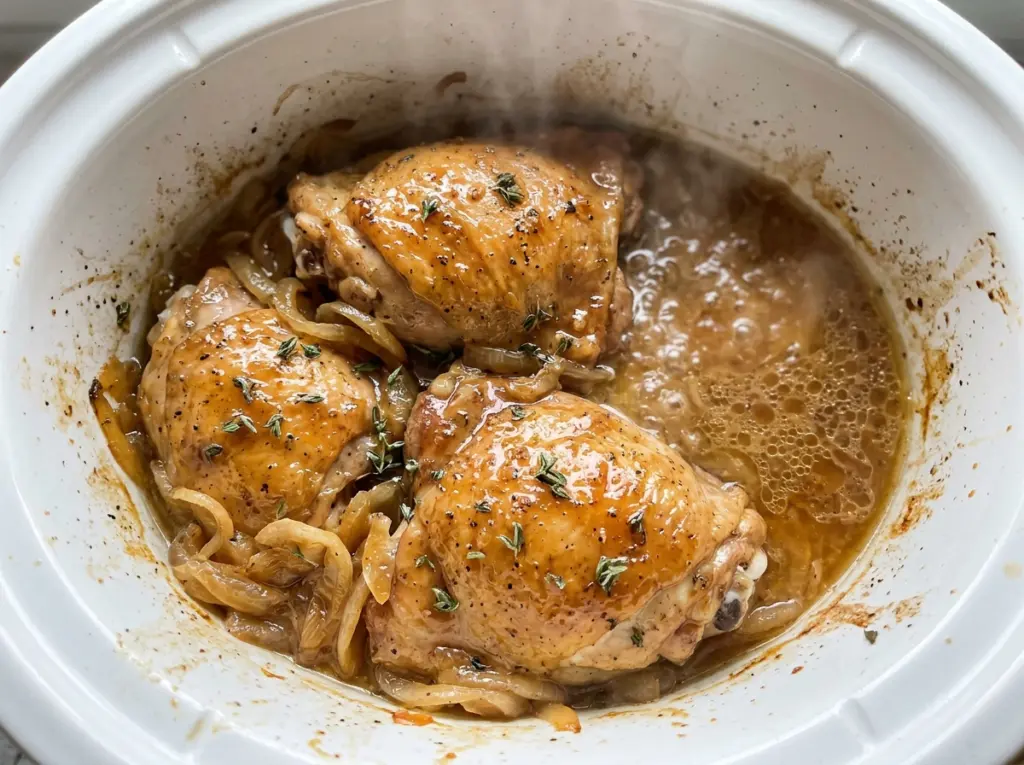
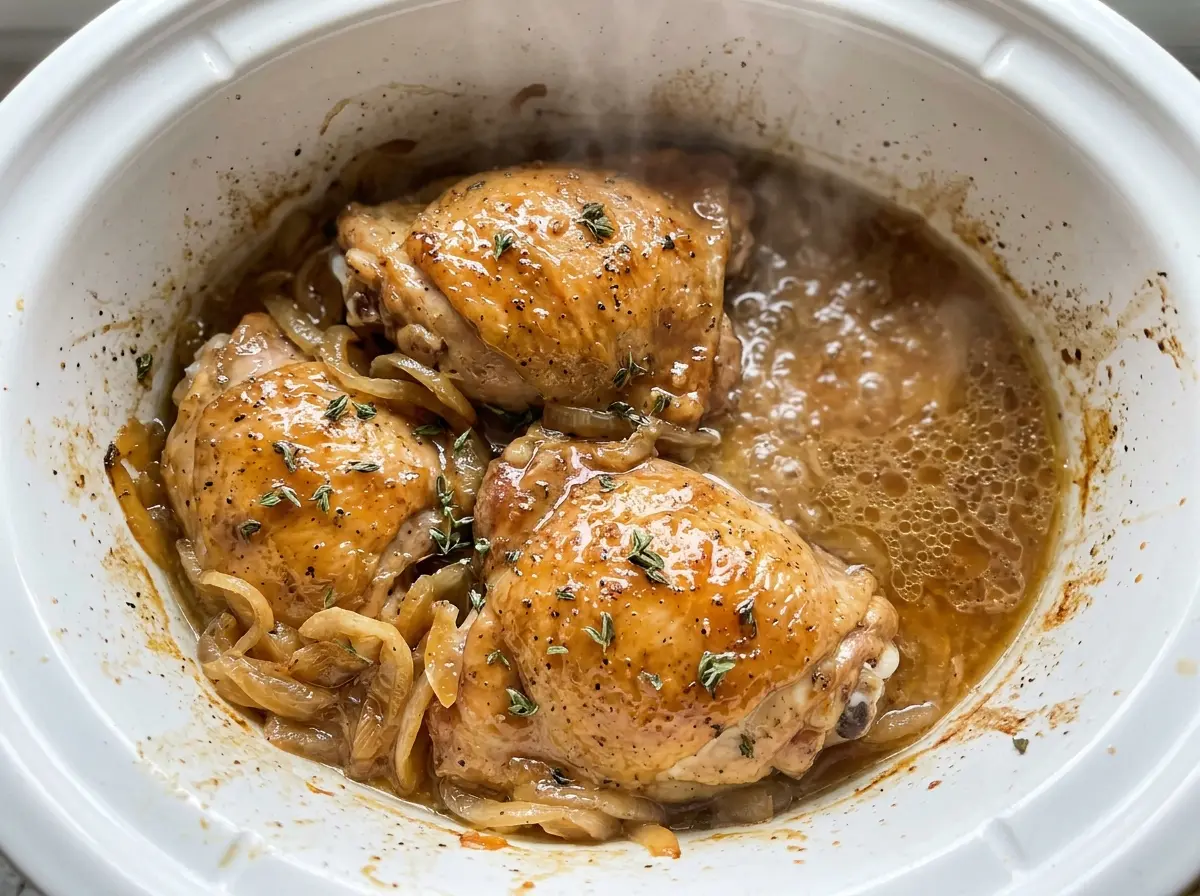
The onions soften into the cider while the turkey slowly cooks above them, and the whole bottom of the cooker turns into a savory, apple-scented bed for the meat. I brown the thighs first because that quick skillet step gives the skin and the cooking liquid a deeper flavor than the slow cooker can create on its own. It’s the small bit of stovetop work that makes these slow cooker turkey thighs with apple cider onions taste like a proper Sunday dinner.
The cider brings gentle sweetness, while Dijon and thyme keep it from tasting like dessert. The onions take their time in the covered cooker, becoming tender enough to spoon around the turkey with some of the broth. The skin won’t stay crisp after hours in a slow cooker, but the meat turns tender and the onions carry all that browned, savory flavor to the plate.
Kitchen Note
I let the thighs reach 175°F to 185°F, rather than pulling them as soon as they reach the poultry safety minimum. Probe the thickest part without touching the bone; that gives you a useful reading and tender dark meat.
Save these slow cooker turkey thighs with apple cider onions for a cozy dinner with tender meat and a savory, cider-softened onion bed.
Why Browning the Skin Won’t Make It Crisp in the Slow Cooker
That first sear is worth doing, but not because the skin will stay crackly. Once the thighs spend several hours in a covered slow cooker, the moist heat softens the skin. Browning builds a savory, browned flavor before the turkey goes into the cooker, and that flavor mingles with the cider and onions as everything cooks.
Keeping the thighs skin-side up also gives the skin a little distance from the liquid pooling around the onions. It won’t turn the slow cooker into an oven, but it keeps the browned surface from sitting directly in the cooking juices. Think of the sear as flavor-building, not a promise of crisp skin at serving time. If crisp skin is the main thing you want, this slow-cooker method isn’t the right fit; the payoff here is tender turkey and onions that have absorbed the cider, broth, and browned drippings.
What the Cider, Mustard, and Bone-In Thighs Each Bring

- Apple cider — It gives the cooking liquid a mellow apple note without making it taste like a sweet glaze. Unsweetened apple juice works as a one-for-one stand-in, though the result will taste sweeter and less rounded. Use cider, not apple cider vinegar; they aren’t interchangeable.
- Yellow onions — Thin slices soften steadily beneath the turkey and make a tender bed to spoon onto the platter. Slice them evenly so the thinner pieces don’t disappear before the thicker ones soften. Yellow onions are a good everyday choice; there’s no need to seek out a specialty variety.
- Low-sodium chicken broth — It adds savory depth and keeps the cider from carrying the entire liquid. Low-sodium broth gives you better control over the seasoning; regular broth works, but the finished liquid may taste saltier.
- Dijon mustard — Dijon adds a little sharpness that balances the apple and blends into the cooking liquid. Whole-grain mustard can replace it in the same amount; you’ll get a slightly more textured, seed-forward sauce.
- Dried thyme — Its woodsy flavor suits both turkey and onion without taking over the cider. Dried sage is a good swap if that’s what’s in your spice cabinet; use the same amount for a more earthy, savory note.
- Bone-in, skin-on turkey thighs — The bone and skin are part of what makes this cut well suited to a long, slow cook. Choose thighs that are fully thawed, as they cook more predictably than frozen poultry in a slow cooker. Patting the skin dry helps it brown in the skillet.
- Vegetable oil — A neutral oil lets the turkey brown without adding a competing flavor. Another neutral cooking oil can stand in if needed; the useful quality here is its suitability for skillet browning.
From Skillet Sear to Tender Slow-Cooked Turkey
Lay Down the Onion Bed and Mix the Cider Liquid
Spread the thinly sliced onions across the bottom of a 6-quart slow cooker. Whisk the apple cider, low-sodium chicken broth, Dijon mustard, and dried thyme in a bowl until the mustard is dispersed, then pour the mixture over the onions. The onions should be spread out rather than packed into one mound so they cook evenly beneath the turkey. The liquid belongs in the bottom with the onions, not poured over the turkey skin later.
Dry and Season the Thighs
Blot the thawed turkey thighs dry with paper towels before seasoning them all over with kosher salt and black pepper. A damp surface tends to steam in the skillet instead of browning, so take a moment to dry the skin and exposed meat well. Season across the whole surface, including around the edges. Keep the thighs ready beside the skillet so they can go straight in once the oil is hot.
Brown Both Sides in a Hot Skillet
Heat the vegetable oil in a 12-inch skillet over medium-high heat. Put the thighs in skin-side down and brown them for 5 to 7 minutes, then turn and brown the other side for about 2 minutes. If the skillet feels crowded, work in batches; crowded thighs release moisture and won’t brown as well. Transfer each browned thigh to the slow cooker with the skin facing up over the onions.
Slow-Cook Until the Thickest Part Is Tender
Cover and cook on LOW for 6 to 7 hours or on HIGH for 3 to 4 hours. Use an instant-read thermometer in the thickest part of each thigh, taking care not to touch the bone; check more than one thigh because size can vary. The turkey must reach at least 165°F for food safety, and the higher range in the Kitchen Note gives the dark meat time to turn tender. Move the cooked thighs to a platter, spoon the onions and cooking liquid around them, and let the turkey rest for 10 minutes before serving.
Three Useful Ways to Adapt the Cider-Onion Turkey
A Lower-Sugar, Less Apple-Forward Version
Replace the apple cider with additional low-sodium chicken broth, using 1 1/2 cups broth total. The onions and turkey still cook in a savory liquid, but you’ll lose the gentle apple sweetness that defines the original.
Serve It Shredded with the Cider Onions
After the 10-minute rest, pull the turkey meat from the bones and break it into large pieces. Toss it gently with some of the soft onions and cooking liquid for a more casual, spoonable serving style. The meat will look less like intact thighs, but each bite gets plenty of onion and sauce.
Use Whole-Grain Mustard for More Texture
Swap the Dijon for the same amount of whole-grain mustard. The mustard seeds stay noticeable in the cooking liquid and bring a slightly bolder, more rustic finish without changing the slow-cooker method.
Storage and Reheating
- Refrigerator: Store the turkey with the onions and cooking liquid in a covered container for 3 to 4 days. The skin softens further, but the meat stays moist when stored with some liquid.
- Freezer: Freeze cooled turkey with the onions and cooking liquid in an airtight container for up to 3 months. Thaw it in the refrigerator before reheating.
- Reheating: Reheat covered in the microwave or in a covered saucepan over low heat, with some cooking liquid, until hot throughout. Reheating uncovered over high heat dries the turkey before the center warms.
Questions That Come Up with Slow Cooker Turkey Thighs
Slow Cooker Turkey Thighs With Apple Cider Onions – Cozy Dinner Recipe
Ingredients
Equipment
Method
- Spread the onions over the bottom of a 6-quart slow cooker.
- Whisk the apple cider, chicken broth, Dijon mustard, and thyme in a bowl.
- Pour the mixture over the onions.
- Pat the turkey thighs dry.
- Season the turkey thighs all over with the salt and pepper.
- Heat the oil in a 12-inch skillet over medium-high heat.
- Brown the turkey skin-side down for 5 to 7 minutes and on the other side for about 2 minutes; work in batches if needed.
- Arrange the thighs skin-side up over the onions in the slow cooker.
- Cover and cook on LOW for 6 to 7 hours or HIGH for 3 to 4 hours, until the thickest part of each thigh reaches 175°F to 185°F on an instant-read thermometer, without touching bone; the turkey must reach at least 165°F for food safety.
- Transfer the turkey to a platter.
- Spoon the onions and cooking liquid around the turkey.
- Rest for 10 minutes before serving.