
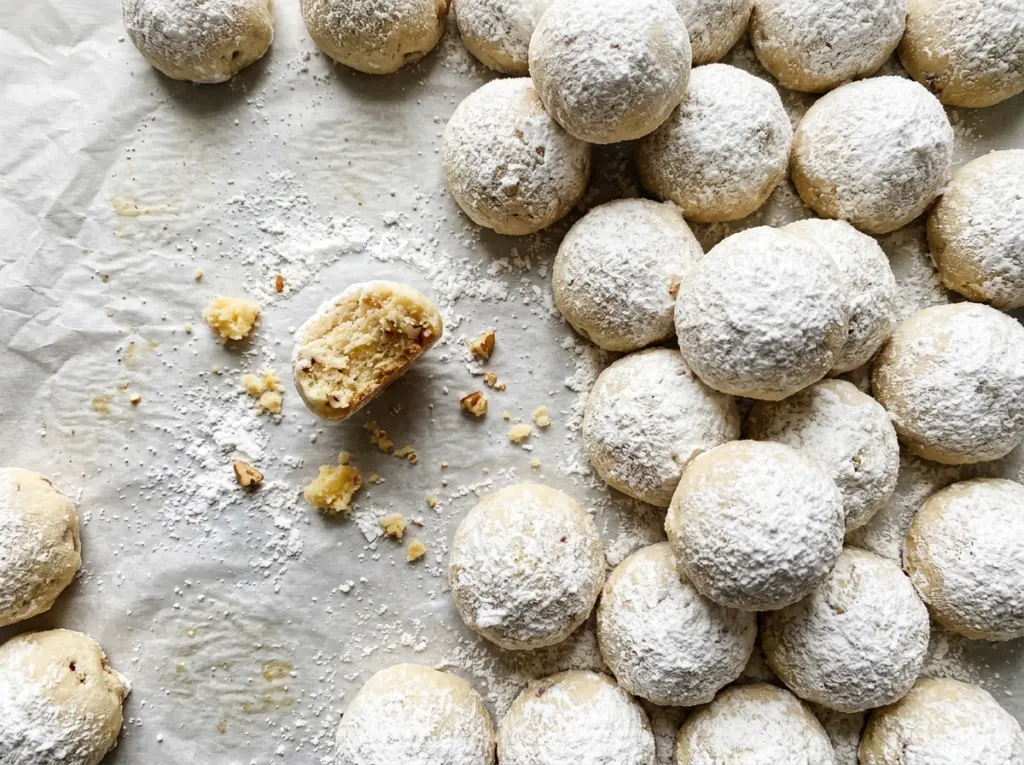
Classic Snowball Cookies with Pecans
The first clue these cookies are ready isn’t a golden top. It’s the faint color underneath, while the tops still look pale and the kitchen smells like warm butter and…

By Ava
•
•
Reading time: 9 min
Tip: save now, make later.
The first clue these cookies are ready isn’t a golden top. It’s the faint color underneath, while the tops still look pale and the kitchen smells like warm butter and pecans. I used to wait for more color on top, but that left the bottoms darker than I wanted. Now I watch the bottoms instead, and the cookies stay tender and delicate.
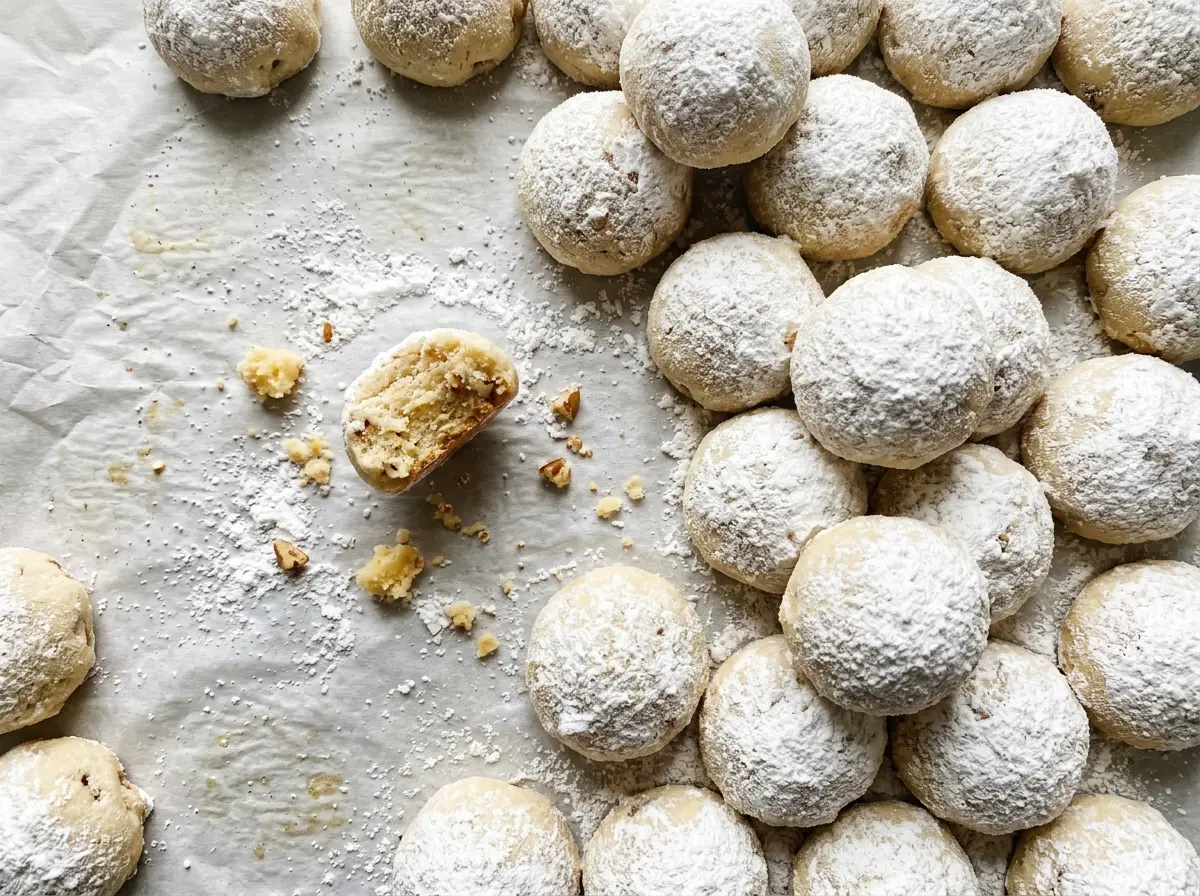
Classic snowball cookies with pecans have a soft, buttery crumb with little bits of nut in every bite. The dough comes together with powdered sugar rather than granulated sugar, which keeps the texture fine and tender. I also like that the coating happens in two passes: the first clings to the warm cookies, and the second gives them that snowy finish once they’ve cooled. Each batch makes 36 cookies, just right for sharing or keeping in a tin for a few days.
Kitchen Note
Warm cookies are fragile, so roll a few at a time rather than piling them into the sugar. A gentle turn is enough to coat them without cracking the edges.
Save these classic pecan snowball cookies for a buttery, tender cookie with a double coat of powdered sugar.
Why the Tops Stay Pale While the Bottoms Tell You They’re Done
These cookies don’t need a deeply browned top to be baked through. Their surface stays pale, so waiting for it to turn golden can push the bottoms too far and dry out the delicate crumb. Look underneath for a light golden color; that’s the visual cue that matters here. The difference can be easy to miss if you’re used to judging cookies by their tops.
Two large baking sheets give the cookies room to bake without crowding, and switching the sheets from top to bottom halfway through helps them bake more evenly. The cookies will still feel soft when they come out, which is why the short rest on the sheet matters before you handle them. Don’t mistake a pale top or a tender center for a reason to leave them in longer. Once the bottoms have that light color, let the cookies finish settling as they cool.
What Makes the Butter, Sugar, and Pecans Matter

- Butter — Softened unsalted butter blends smoothly with the powdered sugar and gives the cookies their rich, tender bite. Let it soften until you can press it easily, but don’t melt it; melted butter won’t cream the same way. If salted butter is what you have, the FAQ covers how to adjust the added salt.
- Powdered sugar — Its fine texture makes the dough delicate and gives the coating its snowy look. Keep the coating sugar separate from the portion mixed into the dough so you have enough for both passes. Fresh, dry powdered sugar coats more evenly than sugar that has clumped in a damp cupboard.
- All-purpose flour — Flour gives these small cookies their structure, while the butter keeps that structure tender rather than bready. Spoon it into the measuring cup and level it instead of packing it down; too much flour makes a dry dough that’s harder to shape.
- Pecans — Finely chopped pecans distribute through the dough without making the small cookies difficult to roll. Fresh nuts matter because stale pecans can taste flat or rancid, while an ordinary bag of fresh pecans works well. Chop them small and evenly so no large pieces protrude from the dough balls.
- Vanilla extract — Vanilla rounds out the buttery dough, but imitation vanilla works in the same quantity if that’s what’s on hand; its aroma will be less nuanced. There’s no need to seek out an expensive bottle for this batch.
- Salt — A small amount keeps the sweetness from tasting one-dimensional. Fine table salt dissolves readily in the flour mixture, so specialty salt won’t improve the texture here.
Mixing and Baking Snowball Cookies Without Overworking the Dough
Cream the Butter Until Smooth
Beat the softened butter with the portion of powdered sugar used in the dough until the mixture looks smooth, then beat in the vanilla. The mixture should be cohesive, not greasy or melted. In a separate bowl, whisk the flour and salt so the salt is distributed before it meets the butter. If the butter is cold and lumpy, give it more time to soften rather than trying to force it into a smooth mixture.
Bring the Dough Together Gently
Add the flour mixture gradually, mixing only until a soft dough forms. Scrape the bowl as needed so dry flour isn’t hiding at the bottom, then fold in the finely chopped pecans. The dough should hold together when pressed without feeling wet or sticky. Stop mixing once it comes together; extended mixing can make the cookies less tender.
Shape Even Balls for an Even Bake
Roll the dough into 1-inch balls and set them about 1 1/2 inches apart on parchment-lined baking sheets. Keep the portions close in size so they finish baking at the same time. Smooth, compact balls bake into neat rounds, while loose cracks on the surface may remain visible after baking. The parchment also makes it easier to lift the delicate cookies after their short rest.
Bake to Light Gold, Then Coat Twice
Bake at 350°F for 12 to 15 minutes, rotating the sheets from top to bottom halfway through. The tops should remain pale while the bottoms turn lightly golden. Let the cookies rest on the sheets for 5 minutes, then gently roll them in the first portion of powdered sugar while warm. Move them to a wire rack to cool completely before rolling them in the remaining powdered sugar.
Three Useful Ways to Adapt These Pecan Snowballs
A walnut version with a deeper, earthier bite
Replace the pecans with the same volume of finely chopped walnuts. They keep the nutty texture but bring a slightly more robust flavor. Chop them to a similar size so the dough still rolls into smooth little balls.
A nut-free batch with a simpler buttery crumb
Leave out the pecans for a plain snowball cookie. The dough will be less textured and the finished cookies won’t have the nutty crunch, but the butter-cookie base still holds together. For a severe allergy, use ingredients and equipment that haven’t had contact with tree nuts.
A gluten-free option with a cup-for-cup flour blend
Use a one-to-one gluten-free baking flour blend in place of the all-purpose flour, choosing a blend formulated for baking and containing xanthan gum. The crumb may be a little more delicate, so shape the balls gently and let the baked cookies rest on the sheet before coating them.
Storage and Reheating
- Refrigerator: Store in an airtight container for up to 1 week, though the cookies may become firmer and the sugar coating may absorb moisture. Room temperature is better for keeping their tender texture.
- Freezer: Freeze completely cooled cookies in an airtight container for up to 2 months, separating layers with parchment. Thaw at room temperature before serving.
- Reheating: These cookies are best at room temperature, so they don’t need reheating. Microwaving can soften the sugar coating and make the cookies greasy.
Questions That Come Up While Baking Snowball Cookies
Classic Snowball Cookies with Pecans
Ingredients
Equipment
Method
- Preheat the oven to 350°F.
- Line two large baking sheets with parchment paper.
- In a large bowl, beat the butter and 1/2 cup powdered sugar until smooth.
- Beat in the vanilla.
- In a separate bowl, whisk together the flour and salt.
- Gradually mix the flour mixture into the butter mixture until a soft dough forms.
- Fold in the pecans.
- Shape the dough into 1-inch balls.
- Arrange the balls about 1 1/2 inches apart on the prepared baking sheets.
- Bake for 12 to 15 minutes, rotating the sheets top to bottom halfway through, until the cookie bottoms are lightly golden while the tops remain pale.
- Let the cookies rest on the baking sheets for 5 minutes.
- Gently roll the cookies in 1/2 cup powdered sugar while still warm.
- Transfer the cookies to a wire rack and cool completely.
- Roll the cooled cookies in the remaining 1/2 cup powdered sugar.