
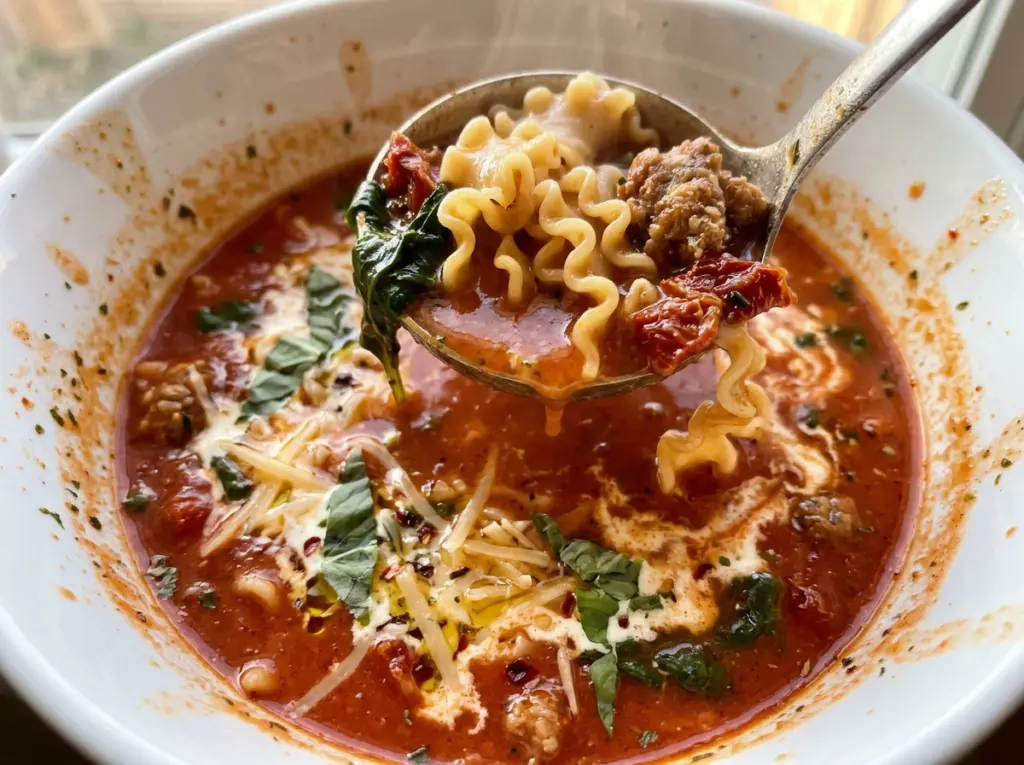
Marry Me Lasagna Soup
The sausage browns first, and the little bits left on the bottom of the pot become the start of a broth that tastes like it simmered much longer than it…

By Ava
•
•
Reading time: 9 min
Tip: save now, make later.
The sausage browns first, and the little bits left on the bottom of the pot become the start of a broth that tastes like it simmered much longer than it did. I wanted this Marry Me Lasagna Soup to have the comfort of a big pan of lasagna without a separate pot of pasta or layers to build. Here, broken lasagna noodles cook right in the tomato broth, and cream and Parmesan turn it into a rich, spoonable soup.
Oil-packed sun-dried tomatoes bring a concentrated, savory note that balances the sweet crushed tomatoes, while Italian sausage does double duty as the meat and seasoning. I add the cream only at the end, after the noodles are tender, so it stays smooth and the spinach keeps its fresh green color. Stir the noodles as they simmer, then give the finished pot a few minutes on low for the spinach to wilt and the soup to turn hot and silky. Every bowl gets a little basil on top.
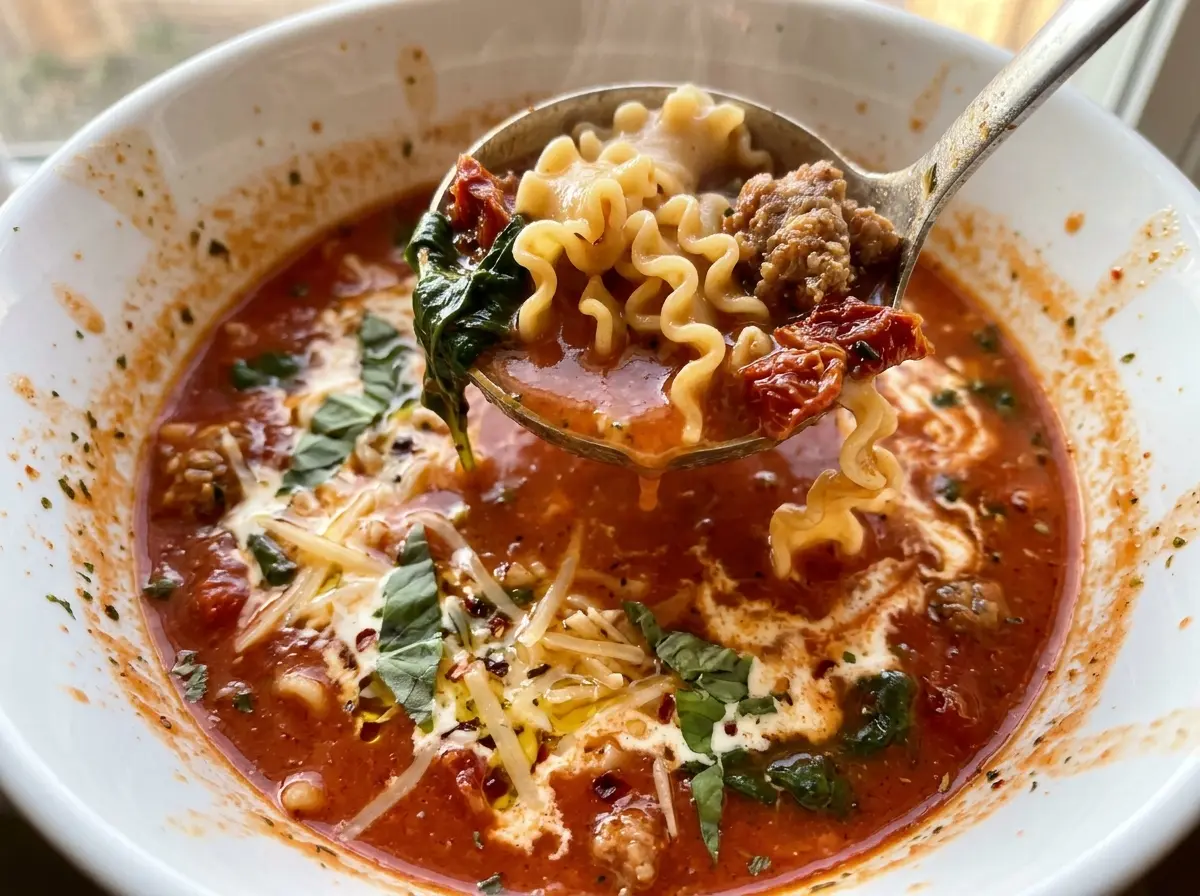
Kitchen Note
Stir the broken noodles often while they cook; the corners like to catch on the bottom of the pot. Once the spinach and cream go in, keep the heat low and let the soup warm gently rather than bubble.
Save this Marry Me Lasagna Soup for a cozy bowl of tomato broth, tender noodles, sausage, and a creamy Parmesan finish.
Why the Lasagna Noodles Go Straight Into the Broth
Cooking the noodles in the soup is more than a shortcut. As they soften, they release a little starch into the tomato broth, giving it body without needing a separate thickener. They also take on the sausage and tomato flavor as they cook, rather than arriving in the bowl as plain pasta.
There is a tradeoff: noodles continue to absorb liquid as the soup sits. That’s part of what makes the broth feel hearty right after cooking, but it also means the soup thickens in the refrigerator. Stirring often during the simmer helps the noodles cook evenly and keeps them from clumping together. Keep the pot at a steady simmer rather than a hard boil; the noodles need time to turn tender without breaking down at the edges.
Use regular lasagna noodles and break them into bite-size pieces before they go in. Their broad, ruffled edges give each spoonful that lasagna feel, and the pieces are easier to eat than full-length sheets. Once they’re tender, stop cooking the pasta and move on to the creamy finish.
Why Sausage and Sun-Dried Tomatoes Build Such a Savory Broth

- Italian sausage — Mild sausage makes a round, savory base; hot sausage brings extra heat without needing another spice. Choose fresh ground sausage, not precooked links, so it browns and seasons the broth as it cooks. If you only have links, remove the casings and crumble the meat into the pot.
- Oil-packed sun-dried tomatoes — These have a soft, easy-to-chop texture and a concentrated tomato flavor that dry-packed tomatoes don’t quite match. Drain them before chopping so excess oil doesn’t pool in the soup. If you have dry-packed tomatoes, rehydrate them until pliable before chopping; the texture will be a little firmer.
- Tomato paste and crushed tomatoes — The paste cooks briefly with the aromatics to deepen its flavor, while crushed tomatoes give the broth its tomato body. A tube or small can of tomato paste both work; avoid adding it raw to the broth, since that short cooking time helps take away its sharp edge.
- Heavy cream and Parmesan — Heavy cream gives the soup its smooth finish, and grated Parmesan adds a salty, nutty note. Freshly grated Parmesan melts more evenly than coarse shreds from a tub. If you use pre-grated Parmesan, stir it in gradually so it has time to disperse.
- Fresh basil and baby spinach — Stir these in at the end so the spinach wilts without going dull and the basil keeps its fragrant, fresh character. Baby spinach goes straight into the pot; no chopping is needed.
Building the Broth Before the Noodles Go In
Brown the Sausage Until the Pot Has Flavorful Bits
Heat the olive oil in a 6-quart Dutch oven over medium-high heat, then add the sausage. Break it into small pieces as it cooks for 6 to 8 minutes, until it’s browned and reaches 160°F. If the meat stays in large clumps, break it up with the spoon before moving on so the sausage is spread through the soup. Leave the browned bits in the bottom of the pot; they’ll loosen into the broth.
Soften the Onion and Cook the Tomato Paste
Add the diced onion and cook for 4 to 5 minutes, stirring occasionally, until it softens. Stir in the garlic, tomato paste, and chopped sun-dried tomatoes, then cook for 1 minute. The garlic should smell fragrant, and the paste should coat the onion rather than sit in a thick lump. Keep stirring during this short stage so the garlic doesn’t scorch.
Bring the Tomato Broth to a Boil, Then Simmer the Pasta
Stir in the chicken broth, crushed tomatoes, Italian seasoning, salt, and black pepper. Bring the pot to a boil over high heat, then add the broken lasagna noodles and lower the heat to maintain a steady simmer. Cook uncovered for 10 to 12 minutes, stirring often, until the noodles are tender. Check a piece near the end of the cooking time; if the center still feels firm, keep simmering and check again.
Finish Gently with Cream, Greens, and Cheese
Reduce the heat to low before stirring in the heavy cream, spinach, Parmesan, and basil. Cook for 2 to 3 minutes, just until the spinach wilts and the soup is hot. Keep the surface from boiling; a gentle finish protects the smooth texture of the cream. The spinach will shrink quickly, so stir it through the broth rather than waiting for it to disappear on its own.
Two Useful Ways to Change the Bowl
Use Hot Italian Sausage for a Spicier Soup
Swap the mild sausage for hot Italian sausage. It gives the broth a more noticeable heat and keeps the same savory, meaty base, so you don’t need to change the rest of the pot.
Make It Gluten-Free with Gluten-Free Lasagna Noodles
Replace the regular lasagna noodles with gluten-free lasagna noodles, and choose chicken broth labeled gluten-free. Break the noodles into pieces as usual, but use the package’s cooking time as your guide and start checking for tenderness early; gluten-free pasta can soften and break more quickly. The soup may have a slightly less silky broth, but it keeps the tomato, sausage, and creamy finish.
Storage and Reheating
- Refrigerator: Store leftovers in an airtight container for 3 to 4 days. The noodles will continue soaking up broth, so the soup will be thicker after chilling.
- Freezer: Freeze the soup base before adding noodles, cream, spinach, Parmesan, and basil for up to 2 to 3 months. Thaw it in the refrigerator, bring it back to a simmer, and cook the noodles in the broth before adding the finishing ingredients.
- Reheating: Warm refrigerated soup gently on the stovetop, stirring often, until it reaches 165°F. Add a splash of chicken broth if the noodles have made it too thick, and avoid boiling the finished soup, which can make the creamy broth less smooth.
Questions That Come Up While the Noodles Cook
Marry Me Lasagna Soup
Ingredients
Equipment
Method
- Heat the olive oil in a 6-quart Dutch oven over medium-high heat, then add the sausage and cook for 6 to 8 minutes, breaking it into small pieces, until browned and cooked to 160°F.
- Add the onion and cook for 4 to 5 minutes, stirring occasionally, until softened.
- Stir in the garlic, tomato paste, and sun-dried tomatoes and cook for 1 minute.
- Stir in the chicken broth, crushed tomatoes, Italian seasoning, salt, and pepper, then bring to a boil over high heat.
- Add the broken lasagna noodles, reduce the heat to maintain a steady simmer, and cook uncovered for 10 to 12 minutes, stirring often, until the noodles are tender.
- Reduce the heat to low and stir in the heavy cream, spinach, Parmesan, and basil; cook for 2 to 3 minutes, until the spinach wilts and the soup is hot, without letting it boil.