
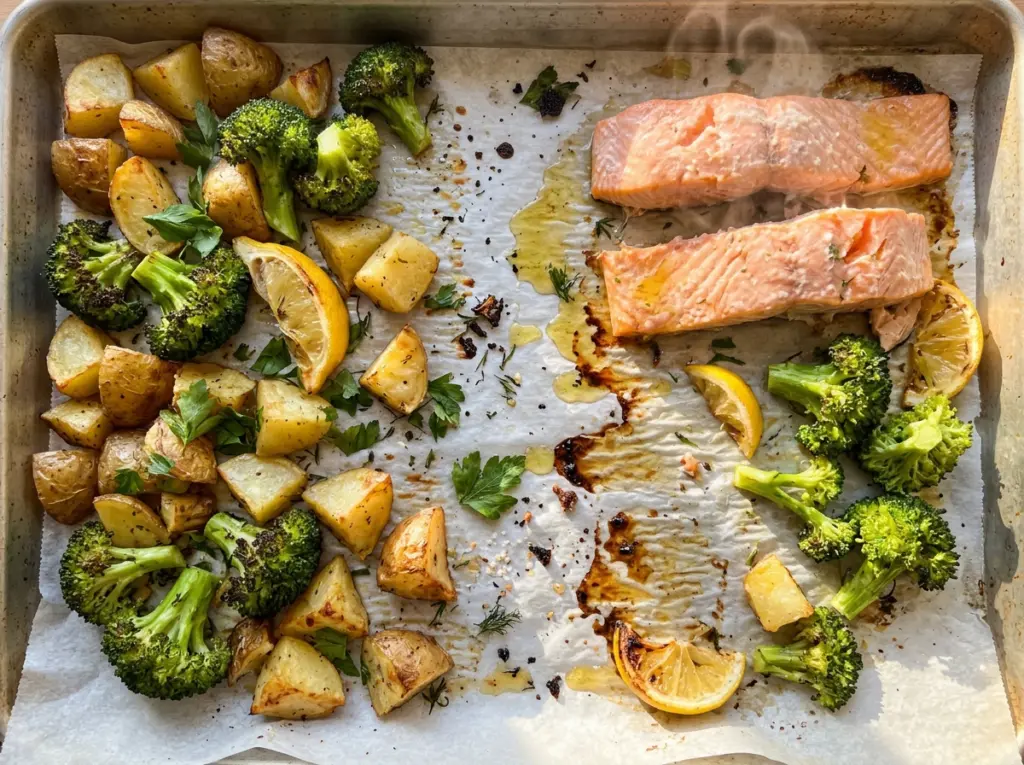
Sheet Pan Salmon and Potatoes with Veggies
The potatoes are the part that can throw off a sheet-pan salmon dinner: the fish is ready, but a thick piece of potato is still firm in the middle. Giving…

By Ava
•
•
Reading time: 8 min
Tip: save now, make later.
The potatoes are the part that can throw off a sheet-pan salmon dinner: the fish is ready, but a thick piece of potato is still firm in the middle. Giving the potatoes a head start fixes that timing mismatch. In this Sheet Pan Salmon and Potatoes with Veggies, they get a chance to brown before the broccoli and salmon join them.
I like this setup because everything finishes on one pan, but each ingredient still gets the time it needs. The salmon portions sit beside the vegetables rather than underneath them, so the broccoli can turn tender and the fish can roast without getting buried in steam.
Cut the potatoes into even pieces, keep the salmon portions close to an inch thick, and the timing stays manageable. A squeeze of lemon at the table brightens the browned potatoes, tender broccoli, and flaky salmon without adding another pan to wash.
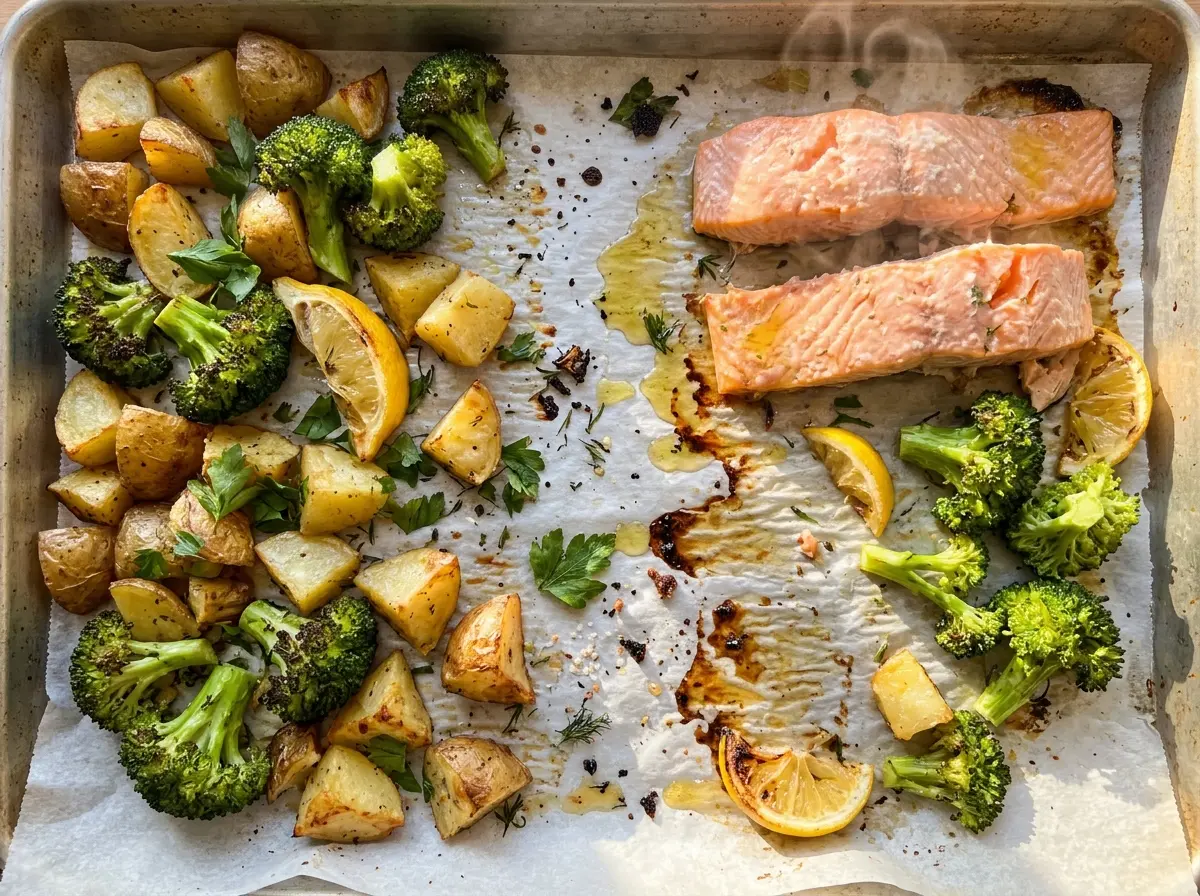
Kitchen Note
Pat the salmon dry before brushing it with oil. A dry surface helps the oil and seasoning coat the fish evenly instead of sliding off.
Save this sheet pan salmon dinner for a night when you want tender fish, browned potatoes, and broccoli without juggling multiple pans.
Why the Potatoes Need a Head Start on the Same Pan
Potatoes and salmon don’t cook at the same pace. The potatoes need a longer stretch in the oven to soften through and begin browning; salmon portions about an inch thick cook much faster. Putting everything in at once can leave you choosing between fish that’s overcooked and potatoes that still need time.
Roasting the potatoes first also gives the pan a useful rhythm. They begin to brown before the broccoli and salmon go in, and the later ingredients finish while the potatoes complete their cooking. Spreading the potatoes in a single layer matters here: pieces piled on top of one another trap steam, so they soften without developing those browned edges. Keep the vegetables and fish beside each other on the pan, not stacked, and each gets direct exposure to the oven’s heat.
The staggered timing is what makes this a practical one-pan dinner rather than a compromise. You’re not asking delicate salmon to wait around while dense potatoes catch up.
What the Salmon, Potatoes, and Broccoli Each Bring to the Pan
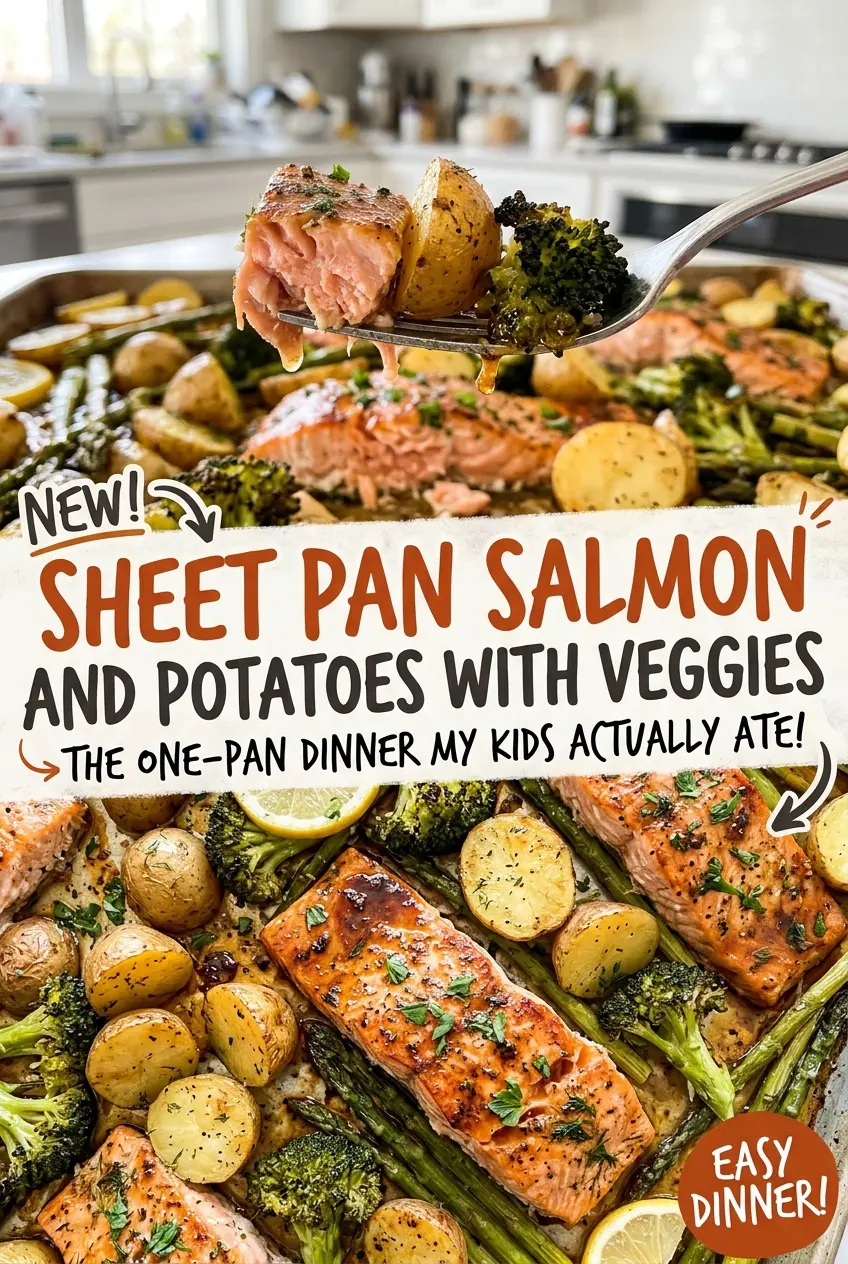
- Baby potatoes — Their small size makes them easy to quarter into pieces that roast alongside the fish after their head start. Choose firm potatoes; the least expensive bag is fine as long as the potatoes aren’t soft or sprouting. Cut them into even pieces close to 1 inch so they cook at the same rate. There isn’t a direct swap that keeps the same cooking time and texture, so I stick with potatoes for this version.
- Broccoli florets — Broccoli brings a tender, slightly crisp contrast to the salmon and potatoes. Fresh florets work well; cut them into bite-size pieces rather than tiny crumbs, which can soften too quickly. If you leave the broccoli out, the rest of the pan still works, but you’ll lose the green vegetable and its distinct texture.
- Salmon — The thickness of the portions matters more than choosing a particular color or label. Look for a firm fillet and cut it into four portions about an inch thick; portions of similar thickness finish more evenly. If you buy frozen salmon, thaw it completely before cooking and pat it dry before oiling.
- Olive oil and garlic powder — Olive oil coats the vegetables and salmon so the seasonings cling and the surfaces roast rather than dry out. A standard olive oil is all you need; there’s no benefit to using a special finishing oil here. Garlic powder spreads evenly over the broccoli and doesn’t need to be peeled or minced.
- Lemon — The wedges are there for a fresh finish at the table, not to cook on the pan. A squeeze over the salmon and vegetables cuts through their roasted richness. Choose a lemon that feels heavy for its size, which is usually easier to squeeze.
How to Stagger the Pan So Every Part Finishes Together
Give the Potatoes Their First Roast
Heat the oven to 425°F and line an 18×13-inch rimmed sheet pan with parchment paper. Toss the quartered potatoes with 1 tablespoon olive oil, 1/2 teaspoon kosher salt, and 1/4 teaspoon black pepper, then spread them in a single layer. Roast for 20 to 25 minutes, until they’re beginning to brown and are nearly tender. If they’re crowded, redistribute them so they have room on the pan.
Add the Broccoli and Prepare the Salmon
Toss the bite-size broccoli florets with 1/2 tablespoon olive oil, 1/4 teaspoon kosher salt, 1/8 teaspoon black pepper, and the garlic powder. Arrange the broccoli beside the potatoes. Pat the salmon dry, brush it with the remaining 1/2 tablespoon olive oil, and season with the remaining 1/4 teaspoon salt and 1/8 teaspoon pepper. Place the portions on the pan beside the vegetables rather than on top of them.
Roast Until the Salmon Flakes
Return the pan to the oven and roast for 12 to 15 minutes. Check the thickest part of the salmon with an instant-read thermometer; it should reach 145°F and flake easily. The broccoli should be tender, not collapsed, and the potatoes should be cooked through. Serve the salmon and vegetables with lemon wedges.
Two Useful Ways to Adapt This Salmon Sheet Pan
A lower-carb salmon and broccoli pan
Leave out the potatoes and roast the broccoli and salmon together on the prepared pan. Keep the broccoli bite-size and use the same 12-to-15-minute roasting window, checking that the salmon reaches 145°F and the broccoli is tender. You’ll have a lighter pan with no browned potato portion.
Salmon and potatoes without broccoli
Skip the broccoli and keep the potato head start, then add the salmon to the pan for its final roast. The plate will have fewer textures and no garlic-seasoned vegetable, but the salmon still gets the same lemon finish and the potatoes keep their browned edges.
Storage and Reheating
- Refrigerator: Store leftovers in an airtight container for 3 to 4 days. The potatoes and broccoli soften as they sit.
- Freezer: Freeze cooled portions in an airtight container for up to 2 to 3 months. The salmon freezes well, though the potatoes and broccoli will be softer after thawing.
- Reheating: Warm covered in a 300°F oven until the leftovers reach 165°F. High heat can dry the salmon before the vegetables warm through.
Questions About Getting This Sheet Pan Dinner Right
Sheet Pan Salmon and Potatoes with Veggies
Ingredients
Equipment
Method
- Heat the oven to 425°F.
- Line an 18x13-inch rimmed sheet pan with parchment paper.
- Toss the potatoes with 1 tablespoon olive oil, 1/2 teaspoon salt, and 1/4 teaspoon black pepper.
- Spread the potatoes in a single layer on the pan.
- Roast the potatoes for 20 to 25 minutes, until they are beginning to brown and are nearly tender.
- Toss the broccoli with 1/2 tablespoon olive oil, 1/4 teaspoon salt, 1/8 teaspoon black pepper, and the garlic powder.
- Arrange the broccoli on the pan beside the potatoes.
- Pat the salmon dry and brush it with the remaining 1/2 tablespoon olive oil.
- Season the salmon with the remaining 1/4 teaspoon salt and 1/8 teaspoon black pepper.
- Place the salmon on the pan beside the vegetables.
- Roast for 12 to 15 minutes, until the salmon reaches 145°F in its thickest part and flakes easily and the broccoli is tender.
- Serve with the lemon wedges.