
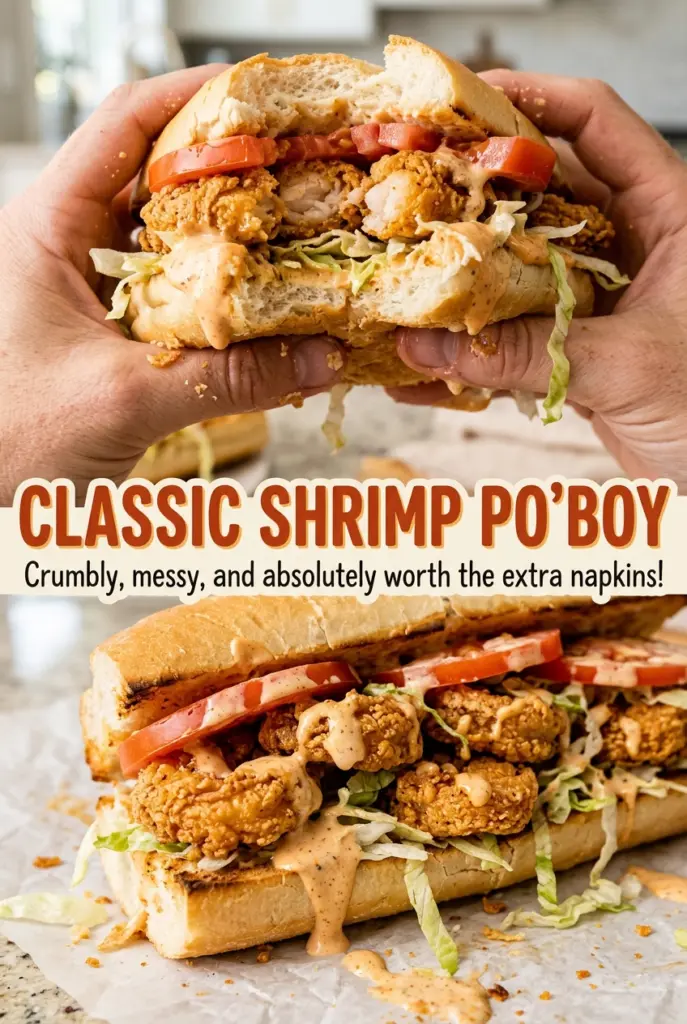
Classic Shrimp Po’Boy
When the shrimp hit the oil, the coating should start crackling almost at once. That quick sizzle is what I look for with a Classic Shrimp Po’Boy: a crisp, cornmeal-crusted…

By Ava
•
•
Reading time: 9 min
Tip: save now, make later.
When the shrimp hit the oil, the coating should start crackling almost at once. That quick sizzle is what I look for with a Classic Shrimp Po’Boy: a crisp, cornmeal-crusted shrimp tucked into a warm, butter-toasted roll, with cool lettuce and tangy remoulade to balance every bite.
I set out the lettuce, tomato, and pickles before frying so the sandwiches come together without the shrimp sitting around. The remoulade is quick to stir together, and a little time in the refrigerator lets the garlic, mustard, and lemon settle into the mayonnaise.
The coating uses both cornmeal and flour, so you get a distinct crunch without a thick, bready shell. Pile the shrimp onto the toasted rolls while they’re still crisp, add the cold toppings, and serve these sandwiches while the contrast is at its best.
Kitchen Note
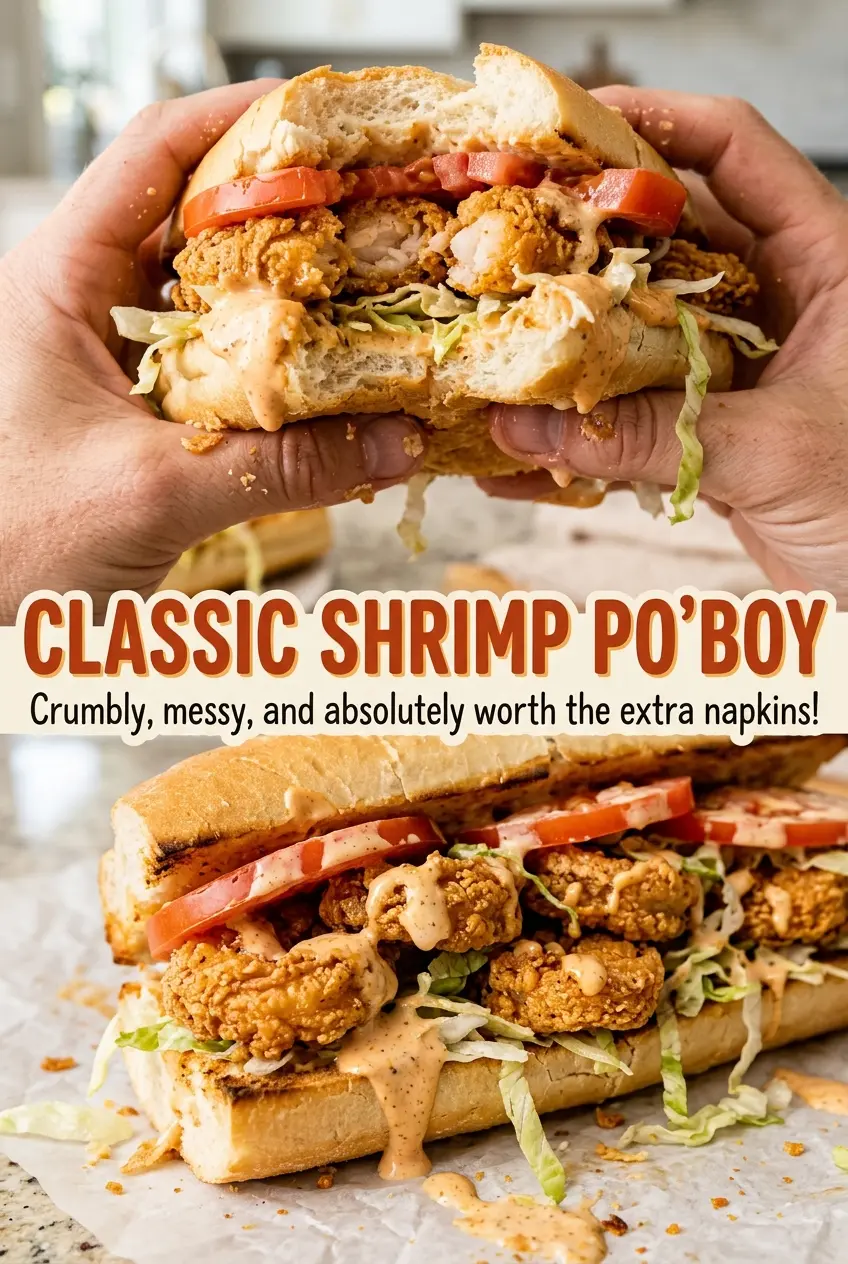
Let the excess buttermilk drip off before the shrimp go into the cornmeal mixture. A wet, dripping shrimp makes the coating clump instead of forming a light, even layer.
Save this Classic Shrimp Po’Boy for its crisp cornmeal coating, cool toppings, and punchy Creole remoulade.
Why the Cornmeal-and-Flour Coating Stays Crunchy Without Turning Heavy
A shrimp po’boy needs a coating with real texture, but too much thick batter can bury the shrimp and make the sandwich feel weighed down. Cornmeal brings the crisp, slightly coarse bite; flour softens that texture and helps the seasoned mixture cover each shrimp more evenly. Neither part has to do all the work.
The shrimp size matters here, too. Large shrimp in the 21–25-per-pound range give the coating enough surface to cling to while still cooking quickly. Smaller shrimp have less room for the crust and can overcook before a thick coating has time to turn golden. With the larger size, a short fry gives you a crunchy outside and a tender center, rather than a long wait that dries the shrimp out.
Keep the dredging simple: one dip in the buttermilk mixture, then one coat in the cornmeal mixture. That gives you the crisp shell this sandwich needs without building up a heavy layer that can loosen in the oil.
The Shrimp, Mustard, and Roll Choices That Shape a Po’Boy
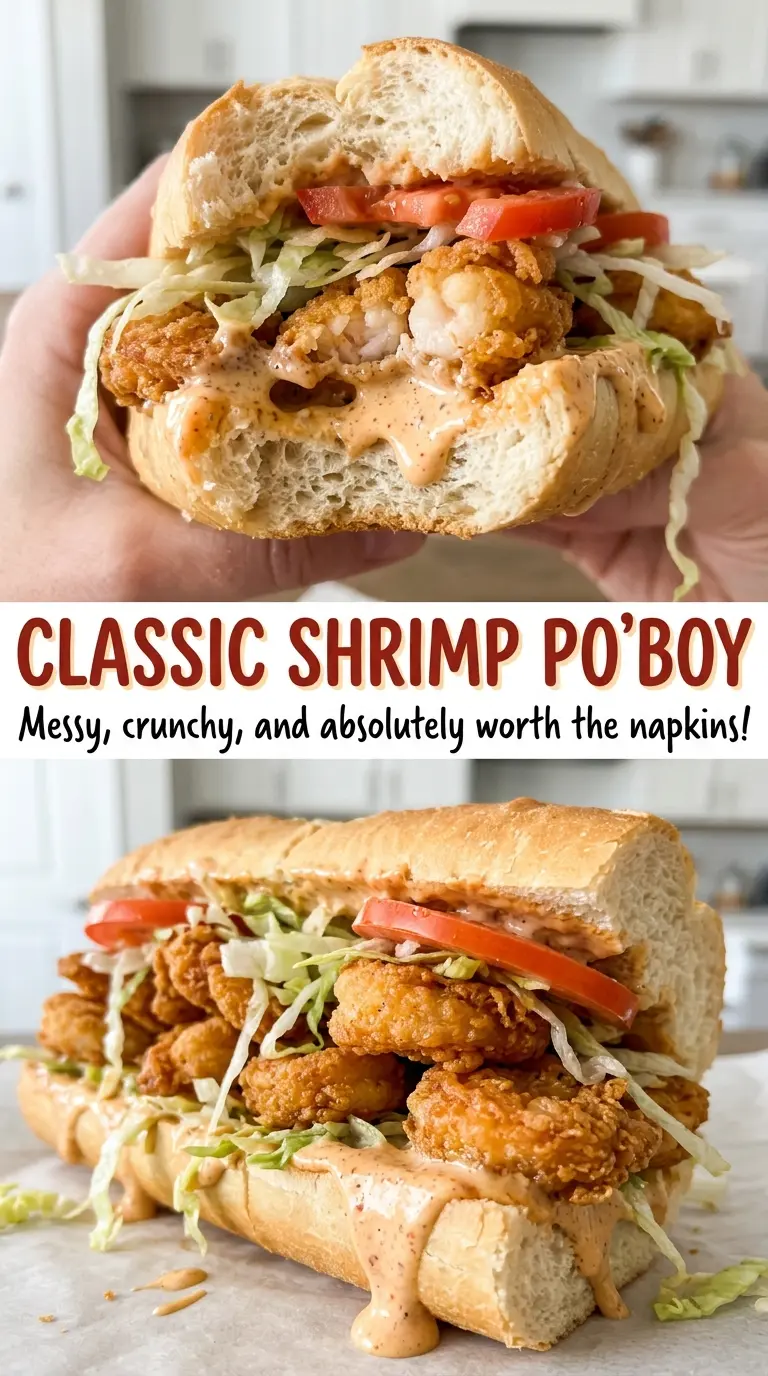
- Large shrimp — The larger size is easier to coat and gives you a satisfying shrimp-to-crust balance in each bite. Buy them peeled and deveined with the tails removed, or take the tails off before breading so nobody has to stop mid-sandwich to peel them.
- Buttermilk and Louisiana-style hot sauce — Buttermilk clings to the shrimp and gives the coating a tangy base; the hot sauce adds a gentle peppery edge. A thin milk wash won’t cling as well, so buttermilk is worth choosing when you can.
- Yellow cornmeal and all-purpose flour — The cornmeal creates the signature crisp texture, while flour keeps the crust from tasting too coarse. Fine, everyday yellow cornmeal works well here; there’s no need for a specialty grind.
- Creole mustard and mayonnaise — Mayonnaise gives the remoulade its creamy body, and Creole mustard contributes a sharper, more complex bite than plain yellow mustard. A good everyday mayonnaise works; the mustard is the ingredient where a distinctive, tangy flavor matters most.
- French rolls, iceberg, tomato, and dill pickles — The rolls need a soft inside and enough structure to hold the shrimp. Iceberg stays crisp against the warm coating, while tomato and dill pickles bring freshness and acidity to a rich, fried sandwich.
How to Fry the Shrimp Without Losing the Crunch
Stir Together the Creole Remoulade
Combine the mayonnaise, Creole mustard, lemon juice, finely grated garlic, paprika, and cayenne in a small bowl. Stir until the mixture looks even, with no streaks of mustard or garlic. Cover it and refrigerate while you prepare the sandwiches; the cool sauce is ready to spread when the shrimp come out.
Toast the Buttered Rolls
Heat the oven to 400°F. Split the French rolls lengthwise and spread the cut sides with softened butter, then arrange them cut-side up on a baking sheet. Bake for 5 to 7 minutes, just until the cut surfaces are lightly toasted; keep an eye on them near the end so the edges don’t turn hard and dark.
Set Up the Dredging Station
Whisk the buttermilk and Louisiana-style hot sauce in one shallow bowl. In a second shallow dish, mix the cornmeal, flour, Cajun seasoning, and black pepper until the seasoning is distributed throughout. Pat the shrimp dry before dipping them, and set a wire rack over a rimmed baking sheet so the cooked shrimp have a place to drain.
Fry Until Golden, Then Assemble
Heat the vegetable oil in a 5-quart Dutch oven to 350°F. Dip each shrimp in the buttermilk mixture, let the excess drip away, and coat it in the cornmeal mixture before lowering it carefully into the oil; fry in uncrowded batches for 2 to 3 minutes, turning once. Bring the oil back to 350°F between batches, and cook until the coating is golden, the shrimp are opaque, and the centers reach 145°F. Transfer them to the rack, then spread remoulade on the toasted rolls and divide the lettuce, tomato, pickles, and shrimp among them.
Three Ways to Tune This Po’Boy to Your Table
Use Whole-Grain Brown Mustard
If Creole mustard isn’t available, swap in the same amount of whole-grain brown mustard. The remoulade will still have tang and texture, though it loses some of the distinctive Creole mustard bite.
Make a Gluten-Free Po’Boy
Replace the all-purpose flour with a cup-for-cup gluten-free flour, and use gluten-free French rolls. Choose gluten-free-certified cornmeal and Cajun seasoning as well; the coating may have a slightly different texture, but it still crisps around the shrimp.
Turn It Into a Po’Boy Bowl
Skip the rolls and use the shredded iceberg as the base, then add the tomato, dill pickles, fried shrimp, and remoulade. You keep the sandwich’s crunchy, tangy contrast in a fork-friendly format.
Storage and Reheating
- Refrigerator: Store the cooked shrimp and remoulade separately in airtight containers for up to 3 days. The coating softens in storage, and assembled rolls get soggy.
- Freezer: Freeze the cooked shrimp in a single layer, then transfer them to an airtight container for up to 2 months. Skip freezing assembled sandwiches and the mayonnaise-based remoulade.
- Reheating: Set the shrimp on a rack and warm them in a 375°F oven for 8 to 10 minutes, until hot throughout. Avoid the microwave, which softens the crust.
Questions That Come Up While Making Shrimp Po’Boys
Classic Shrimp Po’Boy
Ingredients
Equipment
Method
- Stir the mayonnaise, Creole mustard, lemon juice, garlic, paprika, and cayenne together in a small bowl.
- Cover and refrigerate the remoulade while preparing the sandwiches.
- Preheat the oven to 400°F.
- Split the rolls lengthwise.
- Spread the cut sides of the rolls with butter.
- Place the rolls cut-side up on a baking sheet.
- Bake for 5 to 7 minutes, until lightly toasted.
- Whisk the buttermilk and hot sauce in a shallow bowl.
- Mix the cornmeal, flour, Cajun seasoning, and black pepper in a second shallow dish.
- Heat the vegetable oil in a 5-quart Dutch oven to 350°F.
- Set a wire rack over a rimmed baking sheet.
- Pat the shrimp dry.
- Dip the shrimp in the buttermilk mixture and let the excess drip off.
- Coat the shrimp in the cornmeal mixture.
- Fry the shrimp in uncrowded batches for 2 to 3 minutes, turning once and bringing the oil back to 350°F between batches, until golden, opaque, and 145°F.
- Transfer the shrimp to the rack to drain.
- Spread the remoulade on the toasted rolls.
- Divide the lettuce, tomato, pickles, and fried shrimp among the rolls and serve right away.