

Cauliflower Buffalo Bites
When the first tray comes out of the oven, the panko should look golden and the cauliflower should give easily when you bite into it. That crisp coating is what…

By Ava
•
•
Reading time: 8 min
Tip: save now, make later.
When the first tray comes out of the oven, the panko should look golden and the cauliflower should give easily when you bite into it. That crisp coating is what makes these cauliflower Buffalo bites feel like a satisfying snack rather than just sauced vegetables. The trick is keeping the florets big enough to stay tender inside while the outside gets plenty of crunch.
I make the coating with a quick flour-and-milk batter, then roll each floret in panko before it goes into the oven. A buttery cayenne sauce brings the familiar Buffalo flavor, and a short second bake helps it cling to the crust. These cauliflower Buffalo bites are best served hot, while the coating still has some crunch and the centers are soft.

Kitchen Note
Cut the florets close to the same 1 1/2-inch size so they finish at the same time. Turn them halfway through the first bake; the side against the pan needs that chance to brown, too.
Save these cauliflower Buffalo bites for a crunchy, oven-baked snack with a buttery cayenne kick.
Why the Buffalo Sauce Goes on After the Cauliflower Is Already Tender
Buffalo sauce is thin enough to soak into a fresh breadcrumb coating. If it goes on before the first bake, the panko has no chance to dry and turn golden; you can end up with a damp layer that clings in patches instead of a crisp crust. Baking the coated florets first gives the crumbs time to set around the cauliflower.
Then the sauce goes on when the florets are already tender. The final bake is brief, just long enough for the sauce to bubble and cling rather than sit in a puddle at the bottom of the pan. The coating won’t stay quite as crisp as it was before saucing, but it holds together and carries the buttery heat without turning soggy. That two-part bake is what makes the texture work.
Panko Is What Keeps the Coating from Turning Heavy
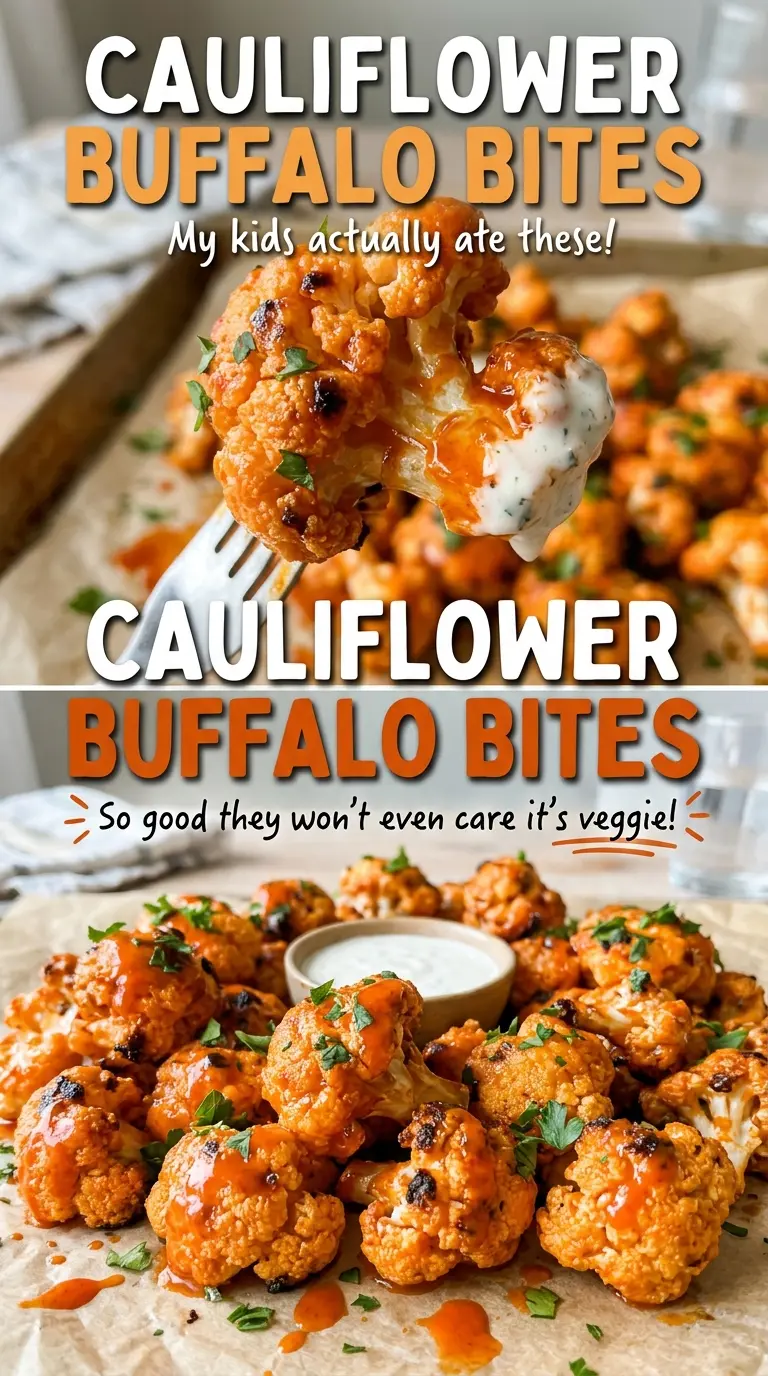
- Cauliflower — A fresh, firm head holds its shape through both bakes. Cut away the leaves and stem, then make florets close to the same size; smaller pieces can soften before larger ones are tender. Broccoli florets work as a swap, though their flavor is greener and the finished bites won’t taste quite as mild.
- Flour and milk — Together they make a smooth batter that gives the crumbs something to cling to. Whisk until no dry pockets remain; a lumpy batter leaves bare patches. For a gluten-free coating, use a cup-for-cup gluten-free flour blend in place of the all-purpose flour. Unsweetened oat milk can replace dairy milk in equal measure if you need a dairy-free batter.
- Garlic powder and paprika — These season the coating before the hot sauce goes on, so the bites have flavor beyond their heat. Garlic powder disperses more evenly than fresh garlic in this thin batter, and ordinary paprika keeps the seasoning mild. Smoked paprika will add a noticeable smoky note if that’s what you want.
- Panko — Its larger, airy flakes make a lighter crust than fine breadcrumbs. Regular plain breadcrumbs can stand in at the same volume, but they’ll form a denser, less craggy coating. Panko quality matters less than keeping it dry and loose in the dish while you work.
- Butter and cayenne hot sauce — Butter rounds out the sharp, vinegary heat and helps the sauce coat the florets. A standard cayenne pepper hot sauce, such as Frank’s RedHot Original, gives the familiar Buffalo taste; a different cayenne sauce will shift the balance of heat and tang. For a dairy-free version, use dairy-free butter in place of the unsalted butter.
Build the Crust Before You Bring in the Buffalo Sauce
Whisk a Smooth Batter and Coat Each Floret
Heat the oven to 450°F and line a large rimmed baking sheet with parchment paper. Whisk the flour, milk, garlic powder, paprika, and kosher salt in a large bowl until smooth; thick lumps make it harder to coat each piece evenly. Put the panko in a shallow dish, then dip each floret into the batter and let the excess drip back into the bowl. Roll it through the panko and arrange it on the baking sheet.
Bake Until the Crumbs Are Golden
Bake the coated cauliflower for 20 to 25 minutes, turning the florets halfway through. Look for a golden coating and test a larger piece for tenderness; the inside should no longer feel firm or raw. If the crumbs are still pale near the end of the range, give them a little more time, keeping an eye on the smaller pieces. The florets should be tender before the sauce goes on.
Stir the Sauce Off the Heat, Then Finish the Bites
Melt the butter in a small saucepan over low heat. Take the pan off the burner before stirring in the cayenne hot sauce; this keeps the sauce from being subjected to unnecessary direct heat. Transfer the baked cauliflower to a large bowl, pour the sauce over it, and toss gently so the coating stays in place. Return the florets to the baking sheet and bake for 5 to 8 minutes, until the sauce bubbles and clings to the crust.
Easy Changes for Different Diets and Heat Levels
Make the Coating Gluten-Free
Replace the all-purpose flour with the same amount of cup-for-cup gluten-free flour blend, and use gluten-free panko for the crumbs. The coating may brown a little differently, so use its golden color and the cauliflower’s tenderness as your cues rather than expecting an exact match to wheat flour.
Make the Bites Dairy-Free
Use unsweetened oat milk in place of dairy milk and dairy-free butter instead of unsalted butter, keeping each swap one-for-one. Choose a plain, unsweetened milk so it doesn’t add sweetness to the coating. The sauce will be a little less buttery in taste, but it still brings the cayenne heat.
Choose Your Heat
Keep the same amount of sauce but choose a milder or hotter cayenne pepper hot sauce to shift the heat without changing the coating. A hotter sauce makes each bite sharper, while a milder one lets the buttery flavor come through more. Check the label for cayenne pepper sauce rather than switching to a thick, sweet wing sauce, which coats differently.
Storage and Reheating
- Refrigerator: Store leftovers in an airtight container for 3 to 4 days. The coating softens as it sits in the sauce.
- Freezer: Freezing isn’t a good choice for the best texture; thawed cauliflower and panko coating turn soft.
- Reheating: Spread the bites on a baking sheet and warm them briefly in a 450°F oven until hot. The coating won’t be as crisp as freshly baked, and the microwave softens it further.
Questions That Come Up Before the First Tray Goes In
Cauliflower Buffalo Bites
Ingredients
Equipment
Method
- Heat the oven to 450°F.
- Line a large rimmed baking sheet with parchment paper.
- Whisk the flour, milk, garlic powder, paprika, and salt in a large bowl until smooth.
- Put the panko in a shallow dish.
- Dip each cauliflower floret in the batter, let excess batter drip off, roll it in the panko, and arrange it on the prepared baking sheet.
- Bake for 20 to 25 minutes, turning the florets halfway through, until the coating is golden and the cauliflower is tender.
- Melt the butter in a small saucepan over low heat.
- Remove the butter from the heat and stir in the hot sauce.
- Transfer the baked cauliflower to a large bowl, pour the buffalo sauce over it, and toss gently to coat.
- Return the florets to the baking sheet.
- Bake for 5 to 8 minutes, until the sauce is bubbling and clings to the coating.
- Serve hot.