
Baked Chicken Alfredo Casserole
The sauce bubbling around the edges is the first sign this casserole is ready, but the pasta has been working toward that moment since it left the pot. I cook…

By Ava
•
•
Reading time: 9 min
Tip: save now, make later.
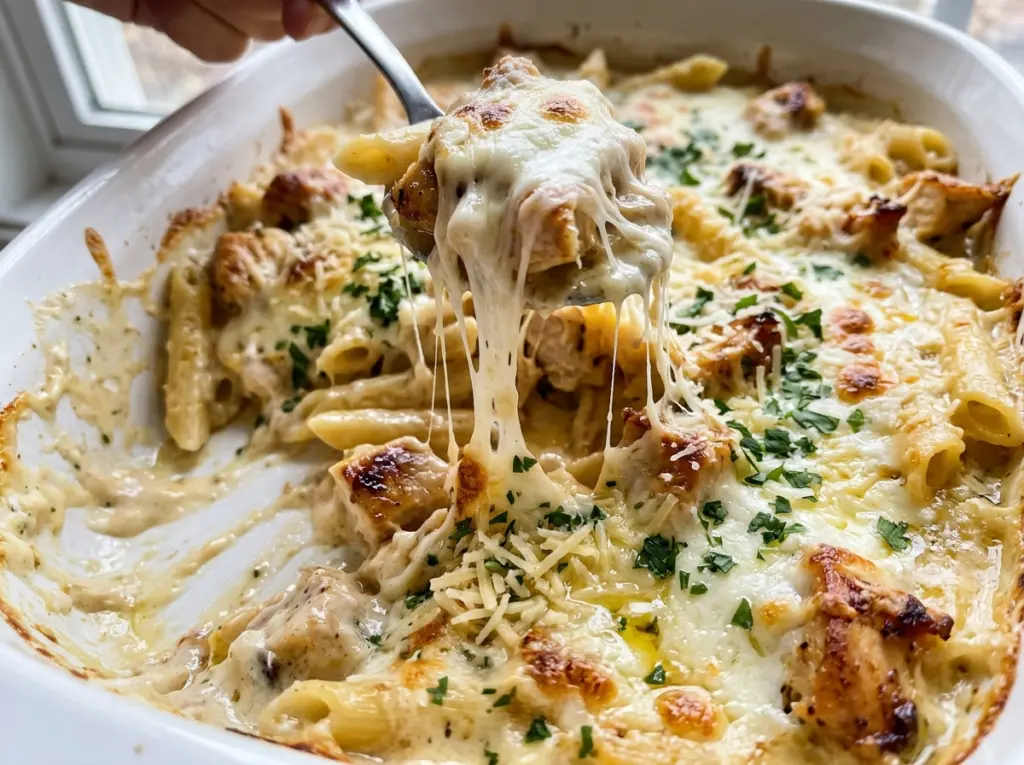
The sauce bubbling around the edges is the first sign this casserole is ready, but the pasta has been working toward that moment since it left the pot. I cook the penne a little shy of al dente so it can finish in the oven without turning soft, and the chicken gets browned in the same skillet that becomes the start of the Alfredo sauce. That’s how this Baked Chicken Alfredo Casserole gets plenty of flavor without an extra pan.
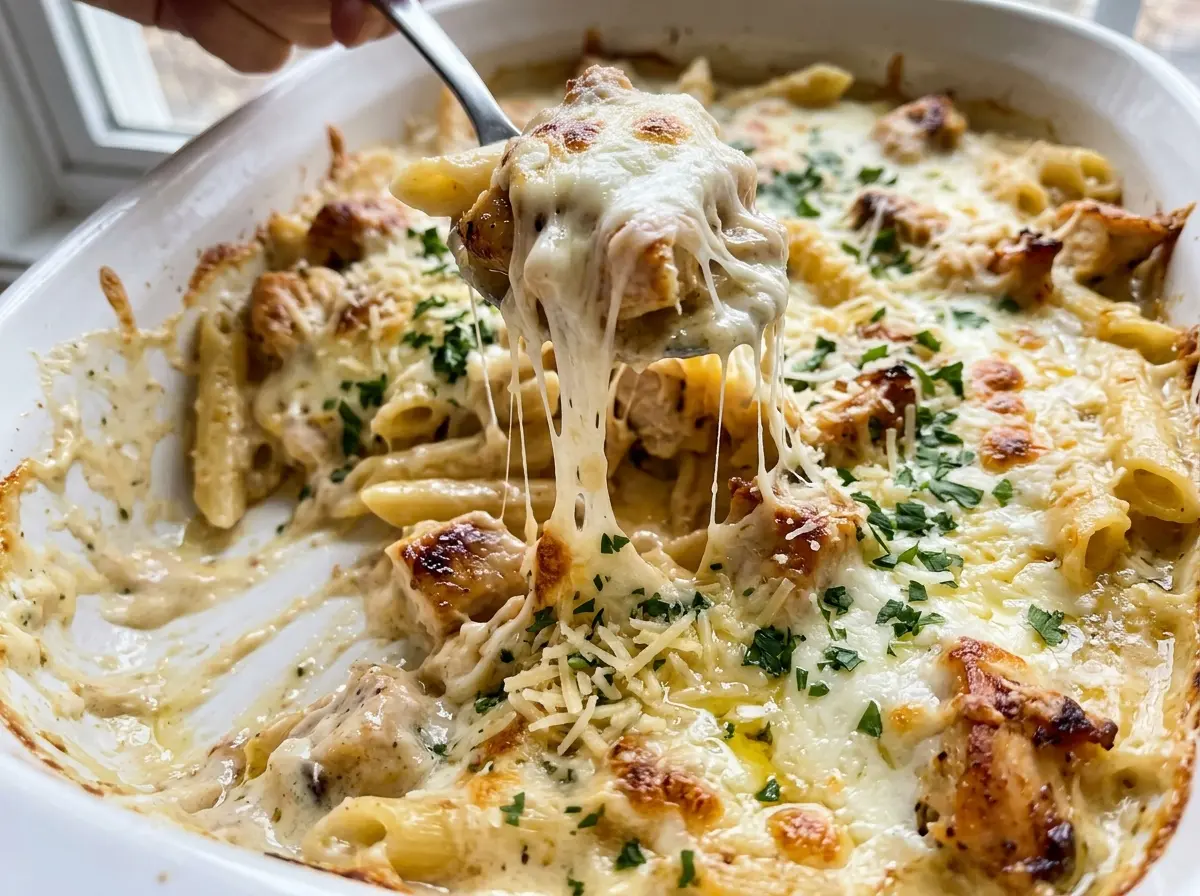
I also save some of the pasta water before draining. Its starch helps the Parmesan blend into the cream smoothly, and the sauce has enough body to coat the penne before it goes into the baking dish. Once the top is golden and the edges are bubbling, a short rest gives the sauce time to settle around the chicken and pasta. The finished casserole is creamy in the middle with a browned, stretchy cheese top.
Kitchen Note
Give the casserole its full 10-minute rest before serving. The sauce thickens around the pasta during that pause, so portions hold together instead of sliding apart on the plate.
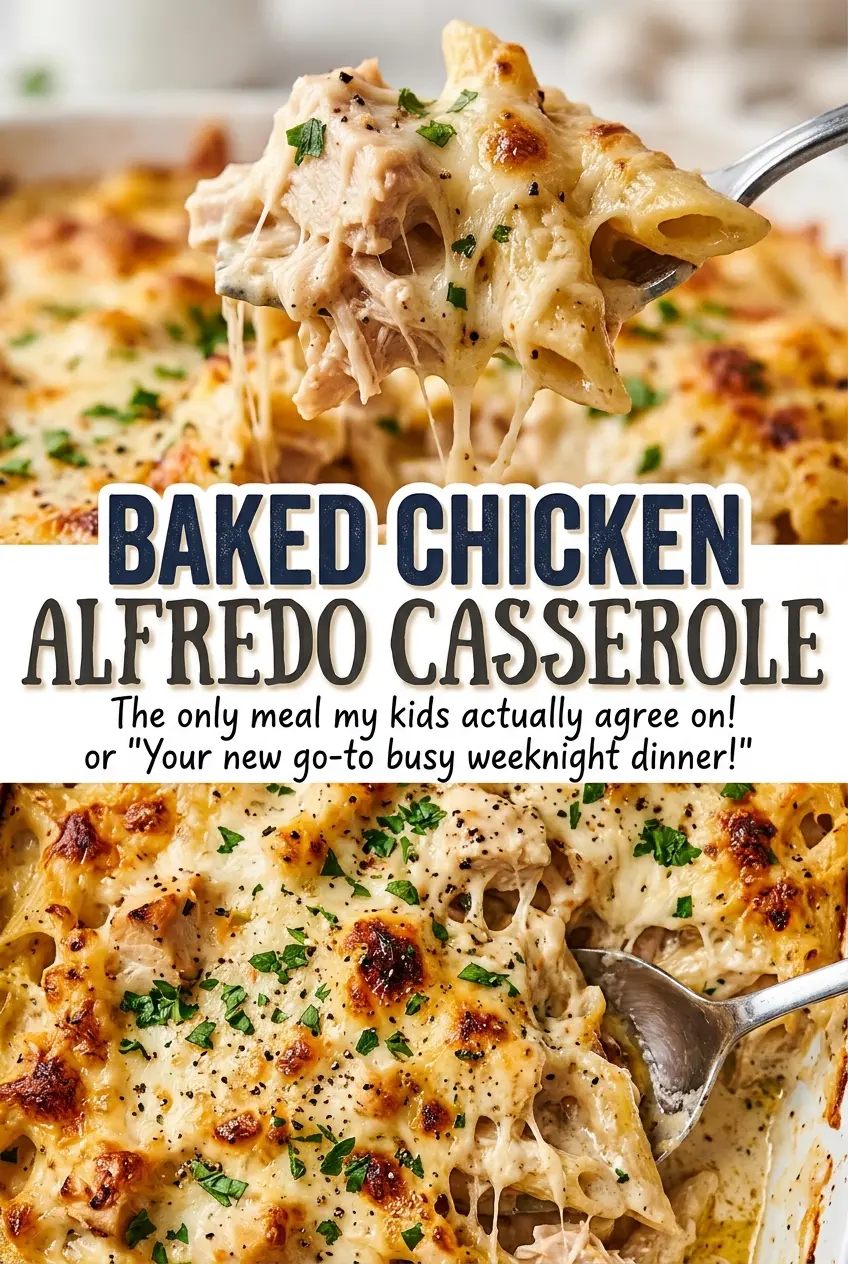
Save this Baked Chicken Alfredo Casserole for a cozy dinner: tender penne, browned chicken, and a bubbling Parmesan-mozzarella top.
Why the Alfredo Sauce Needs to Be Loose Before It Goes Into the Oven
A casserole sauce should look a touch thinner in the skillet than you’d want on a finished plate. The penne keeps absorbing liquid as it bakes, and the cream sauce also thickens as it heats around the pasta. If you start with a sauce that’s already stiff, the center can bake up dry while the cheese on top is still melting.
The reserved pasta water helps solve that problem in two ways. Its starch gives the sauce a little body, while the water loosens the cream enough to coat the pasta without leaving a heavy puddle at the bottom of the dish. Whisking the Parmesan in after the skillet comes off the heat helps it melt smoothly instead of clumping in a simmering sauce.
That balance matters more than adding extra cream or cheese. The sauce should cling to the penne before baking, and the finished casserole should still look creamy when you scoop into the middle. A bubbling edge and a golden top tell you the oven has done its part; the brief rest afterward gives the sauce time to settle.
What the Cream, Parmesan, and Mozzarella Each Do in This Casserole
- Penne — Its hollow center and ridged surface catch the sauce, and the sturdy shape holds up during baking. Regular penne is the tested choice; for a gluten-free adaptation, use gluten-free penne and follow its package timing, stopping two minutes before its al dente point.
- Chicken breasts — Cutting the chicken into even 1-inch pieces helps the pieces cook at a similar rate and gives each bite a good amount of browned surface. Fresh chicken is easiest to cut cleanly when it’s cold, and the pieces don’t need to be perfectly identical—just close in size.
- Heavy cream — Cream gives the sauce its rich body and helps it stay smooth through the bake. I wouldn’t replace it with a thinner liquid; the casserole would lose the creamy texture that makes the sauce cling to the pasta.
- Parmesan — Grated Parmesan melts into the sauce and adds a savory, nutty edge. A finely grated cheese blends more readily than coarse shreds, while the remaining portion gives the top extra flavor as it bakes.
- Mozzarella — This is the stretchy, browned layer on top. The brand matters less than using shredded mozzarella that melts well; it brings a milder flavor than Parmesan and balances the sharper cheese.
- Garlic — Minced garlic cooks briefly in the butter before the cream goes in, which gives the sauce a clear garlic flavor without leaving raw-tasting bits. Keep it moving in the pan so it doesn’t brown.
From Al Dente Penne to a Golden, Bubbling Top
Cook the penne short of al dente
Bring the water to a boil in an 8-quart pot, add the tablespoon of salt and the penne, and cook until two minutes shy of the package’s al dente time. Before draining, reserve half a cup of pasta cooking water; once it’s gone down the drain, you can’t get that starchy liquid back. The penne should still have a firm bite because it will finish cooking in the oven.
Brown the chicken in a wide skillet
Heat the olive oil in a 12-inch skillet over medium-high heat. Season the 1-inch chicken pieces with the remaining salt and the black pepper, then cook for 6 to 8 minutes, stirring occasionally, until browned and 165°F in the center. If the pieces are crowded, they’ll steam rather than brown, so give them room to contact the skillet. Transfer the cooked chicken to a plate while you make the sauce.
Turn the browned bits into Alfredo sauce
Melt the butter in the same skillet over medium heat, keeping the browned bits from the chicken in the pan. Add the minced garlic and cook for 30 seconds, just until fragrant; garlic that darkens quickly can taste bitter. Stir in the heavy cream and let it simmer gently for 3 to 4 minutes. Take the skillet off the heat before whisking in the reserved pasta water and 1 cup of Parmesan, then keep whisking until the sauce looks smooth.
Coat, top, and bake until bubbling
Return the penne to the pot, add the chicken and sauce, and stir until the pasta is coated. Transfer everything to the greased 9×13-inch baking dish, then cover the top with the mozzarella and the remaining Parmesan. Bake uncovered at 375°F for 20 to 25 minutes, until the sauce bubbles around the edges and the cheese turns golden. Let it rest for 10 minutes before serving so the creamy center has time to settle.
Three Useful Ways to Adapt the Casserole
Make it gluten-free with penne
Replace the regular penne with gluten-free penne, keeping the amount the same. Gluten-free pasta can soften quickly, so use its package’s al dente timing and pull it two minutes early before it goes into the casserole.
Leave out the chicken for a meat-free bake
Skip the chicken and its skillet-cooking step, then combine the cooked penne with the Alfredo sauce and bake with both cheeses on top. The casserole will be lighter and more focused on the creamy pasta; the chicken-free version doesn’t need a replacement to make a satisfying pan.
Give the top a sharper Parmesan finish
Keep the total cheese amounts the same, but reserve more of the Parmesan for the top and use less of it in the sauce. The top will taste more savory and less stretchy, while the mozzarella still gives it a soft, melted layer.
Storage and Reheating
- Refrigerator: Refrigerate leftovers within 2 hours and keep them for 3 to 4 days. The pasta absorbs more sauce as it sits, so leftovers will be thicker than the freshly baked casserole.
- Freezer: Freeze individual portions in airtight containers for up to 2 months for the best quality. Thaw overnight in the refrigerator; the cream sauce may separate a little after freezing, but the flavor will still be good.
- Reheating: Cover a portion and warm it in a 350°F oven until hot throughout, or microwave it in short bursts. A small splash of water helps loosen the sauce; reheating uncovered for too long can dry out the pasta.
Questions That Come Up While Making Chicken Alfredo Casserole
Baked Chicken Alfredo Casserole
Ingredients
Equipment
Method
- Heat the oven to 375°F.
- Grease a 9x13-inch baking dish.
- Bring the 4 quarts water to a boil in an 8-quart pot.
- Add 1 tablespoon kosher salt and the penne, and cook until 2 minutes shy of the package’s al dente time.
- Reserve 1/2 cup pasta cooking water, then drain the pasta.
- Heat the olive oil in a 12-inch skillet over medium-high heat.
- Season the chicken with the remaining 1/2 teaspoon salt and the black pepper.
- Cook the chicken for 6 to 8 minutes, stirring occasionally, until browned and it reaches 165°F.
- Transfer the chicken to a plate.
- Melt the butter in the same skillet over medium heat.
- Add the garlic and cook for 30 seconds.
- Stir in the heavy cream and simmer gently for 3 to 4 minutes.
- Remove the skillet from the heat and whisk in the reserved pasta water and 1 cup Parmesan until smooth.
- Return the pasta to the pot, add the chicken and sauce, and stir to coat.
- Transfer the mixture to the prepared baking dish.
- Top with the mozzarella and remaining 1/2 cup Parmesan.
- Bake uncovered for 20 to 25 minutes, until the sauce is bubbling around the edges and the top is golden.
- Let the casserole rest for 10 minutes before serving.