
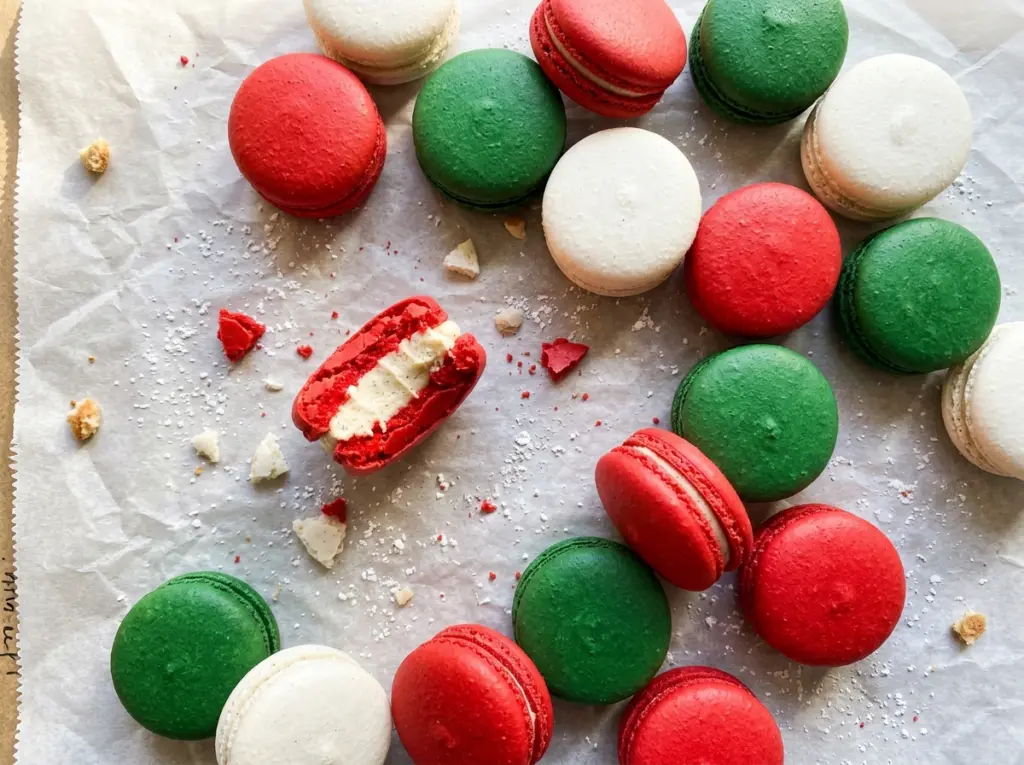
Christmas Macarons
A piped macaron can look smooth and ready for the oven, then crack because its surface hasn’t had time to dry. I give these shells a proper rest before baking;…

By Ava
•
•
Reading time: 10 min
Tip: save now, make later.
A piped macaron can look smooth and ready for the oven, then crack because its surface hasn’t had time to dry. I give these shells a proper rest before baking; that pause is part of the recipe, not dead time. The result is a crisp red shell with a tender center and a cool peppermint buttercream tucked between each pair.
Christmas macarons reward a gentle hand more than a complicated trick. The almond flour and confectioners’ sugar need to be sifted, and the meringue needs to stay airy as you fold them together. I watch the batter as I work instead of counting folds, because a few extra strokes can change how it pipes. Once the shells are baked and filled, a rest in the refrigerator lets the texture settle into that delicate contrast of crisp outside and soft middle.
Kitchen Note
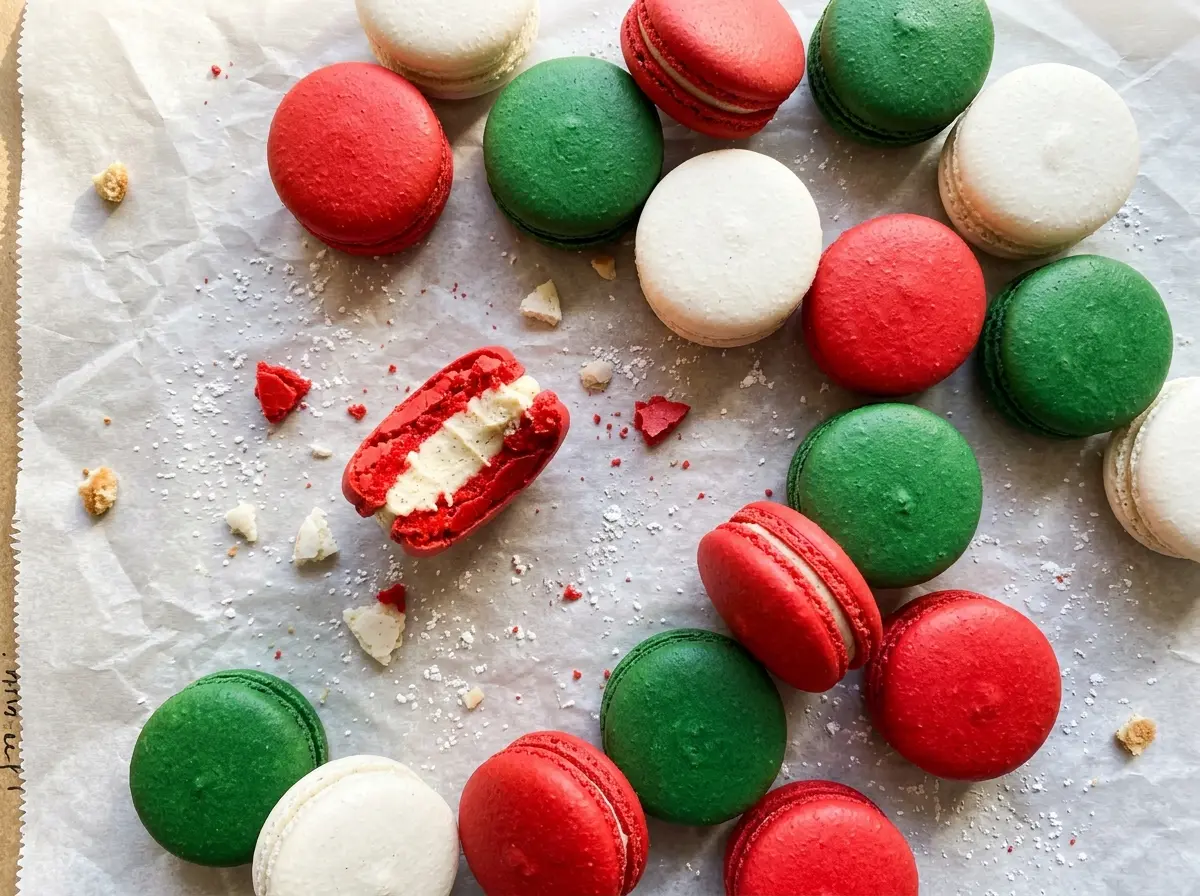
Don’t rush the shells into the oven while their tops still feel tacky. The dry surface gives the batter a chance to bake into a smooth shell instead of splitting as it expands.
Save these Christmas macarons for a festive bake: red shells, peppermint buttercream, and a crisp-tender bite.
The Fold Is Where Macarons Go Flat—not the Oven
Macaron batter is delicate because it depends on a balance: the meringue holds air, while the almond flour mixture adds weight. Fold too little and the batter stays stiff, leaving peaks and uneven rounds when you pipe. Fold too much and you press out the air that gives the shells their lift, so the rounds can spread thin and bake up flat.
This is why I pay attention to how the batter moves rather than trying to follow a fixed number of strokes. The finished batter should flow in a thick ribbon, and a figure eight drawn with it should disappear back into the bowl in about 10 seconds. That cue gives you a useful stopping point before the mixture loses its structure. Scrape around the bowl as you fold so no dry almond mixture gets trapped at the bottom, but keep each turn measured instead of stirring briskly.
Why Superfine Almond Flour Matters More Than the Red Color
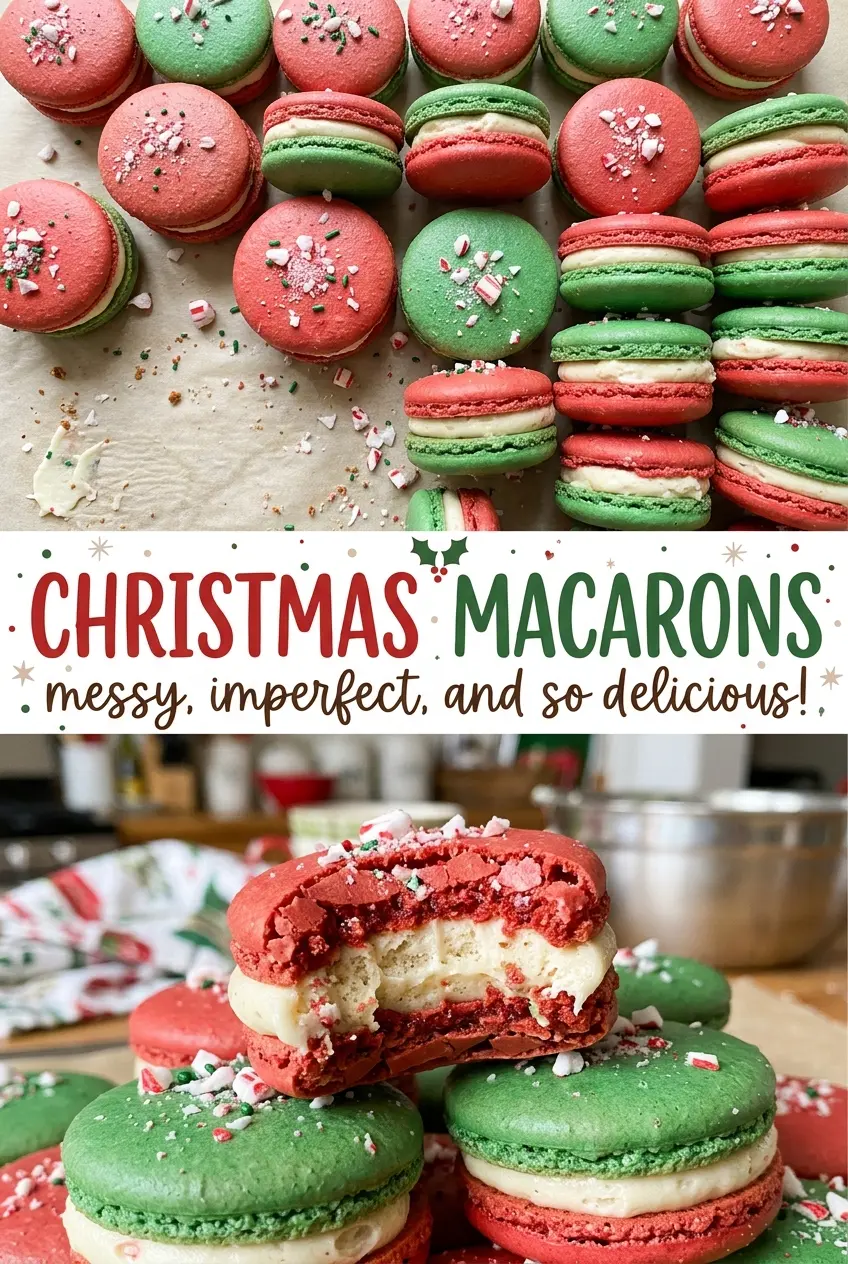
- Blanched almond flour gives the shells their fine, tender structure. Choose a finely milled flour; coarse almond meal leaves visible flecks and can make the batter uneven. There isn’t a straightforward nut-free replacement that behaves the same way in these shells.
- Confectioners’ sugar blends into the almond flour without the grit you’d get from granulated sugar. Sifting the two together breaks up lumps before they reach the meringue, which matters more here than buying a premium brand.
- Egg whites and granulated sugar form the meringue that supports the shells. Room-temperature whites whip readily, and the granulated sugar should be added gradually so it dissolves into the foam rather than weighing it down all at once.
- Red gel food coloring adds color without thinning the batter. Liquid coloring can add extra moisture, so stick with gel for this batch; the shade can vary a little by brand.
- Butter, heavy cream, and peppermint extract make a smooth, cool-tasting filling. Use softened butter so it beats fluffy without lumps. For a different flavor, swap the peppermint extract for vanilla extract; the filling will be familiar and mellow instead of minty.
From Glossy Meringue to Filled Macarons
Whip a Stable Red Meringue
Heat the oven to 300°F with a rack in the center, and line two large baking sheets with parchment paper. Sift the almond flour with the shell portion of the confectioners’ sugar into a medium bowl. Beat the room-temperature egg whites until foamy, add the cream of tartar, then gradually beat in the granulated sugar. Keep beating on high for 5 to 7 minutes, until the meringue is stiff and glossy, then mix in the red gel coloring.
Fold Until the Batter Flows
Add the sifted almond mixture to the meringue in three additions. Fold gently, scraping the sides and base of the bowl so the mixture combines evenly without losing all its air. Stop when the batter falls in a thick ribbon and a figure eight disappears back into the bowl in about 10 seconds. If it still drops in clumps, keep folding carefully; if it pours freely, it has gone too far.
Pipe, Rest, and Bake One Sheet at a Time
Transfer the batter to a piping bag fitted with a 1/2-inch round tip, then pipe 1 1/2-inch rounds about 1 inch apart on the prepared sheets. Tap each sheet firmly on the counter two or three times to release air bubbles. Let the rounds stand for 30 to 60 minutes before baking. Bake one sheet at a time for 15 to 18 minutes, until the tops are set and the shells don’t wobble when gently nudged; cool them completely on the sheets, about 20 minutes, before lifting them from the parchment.
Beat the Filling and Sandwich the Shells
Beat the softened butter in a medium bowl on medium-high for 2 minutes, until smooth and fluffy. Add the remaining confectioners’ sugar and the salt, mixing on low until combined, then add the heavy cream and peppermint extract. Beat on medium-high for 1 to 2 minutes, until the buttercream looks fluffy. Pair shells by size, pipe about 1 teaspoon of filling onto the flat side of half of them, and press the remaining shells gently on top until the filling reaches the edges.
Three Easy Ways to Change the Color or Filling
Trade the Red Shells for Green
Use green gel food coloring in place of the red, keeping the same quantity. The shells keep their almond flavor and texture, with a different holiday color; avoid liquid coloring, which can loosen the batter.
Make the Buttercream Dairy-Free
Replace the butter with a firm, stick-style dairy-free butter and use unsweetened dairy-free cream instead of heavy cream, measuring each replacement in the same amount as the original. The filling may be a little softer, so choose a butter alternative that is made for baking rather than a soft tub spread.
Make a Vanilla Filling
Replace the peppermint extract with the same amount of vanilla extract. The buttercream loses its cool mint note and tastes softer alongside the almond shells, while the mixing method stays the same.
Storage and Serving
- Refrigerator: Keep assembled macarons in an airtight container for up to 3 days. Their centers soften as the shells absorb a little moisture from the filling.
- Freezer: Freeze assembled macarons in an airtight container for up to 1 month, with parchment between layers. Thaw them in the refrigerator so condensation doesn’t collect on the shells.
- Serving: After the 12-to-24-hour refrigerator rest, let the macarons stand at room temperature for 20 minutes before serving. Don’t warm them in the oven; heat can soften the buttercream and damage the shells.
Questions That Come Up When Making Christmas Macarons
Christmas Macarons
Ingredients
Equipment
Method
- Preheat the oven to 300°F with a rack in the center, and line two large baking sheets with parchment paper.
- Sift the almond flour and 6 ounces of the confectioners' sugar together into a medium bowl.
- In a large bowl with an electric mixer, beat the egg whites until foamy.
- Add the cream of tartar and gradually beat in the granulated sugar.
- Beat on high for 5 to 7 minutes until stiff, glossy peaks form, then beat in the red gel food coloring.
- Fold the almond flour mixture into the meringue in three additions until the batter flows in a thick ribbon and a figure eight drawn with the batter disappears back into the bowl in about 10 seconds.
- Transfer the batter to a piping bag fitted with a 1/2-inch round tip and pipe 1 1/2-inch rounds onto the prepared sheets, spacing them about 1 inch apart.
- Firmly tap each sheet on the counter two or three times to release air bubbles.
- Let the shells stand for 30 to 60 minutes, until their tops feel dry and are not tacky when lightly touched.
- Bake one sheet at a time for 15 to 18 minutes, until the tops are set and the shells do not wobble when gently nudged.
- Cool completely on the sheets, about 20 minutes, before lifting them from the parchment.
- Beat the softened butter in a medium bowl with an electric mixer on medium-high speed for 2 minutes, until smooth and fluffy.
- Add the remaining 4 ounces of confectioners' sugar and the salt, and mix on low until combined.
- Add the heavy cream and peppermint extract, then beat on medium-high for 1 to 2 minutes until fluffy.
- Pair shells by size.
- Pipe about 1 teaspoon of buttercream onto the flat side of half of them, and sandwich with the remaining shells, pressing gently until the filling reaches the edges.
- Store the macarons in an airtight container in the refrigerator for 12 to 24 hours.
- Let them stand at room temperature for 20 minutes before serving.