
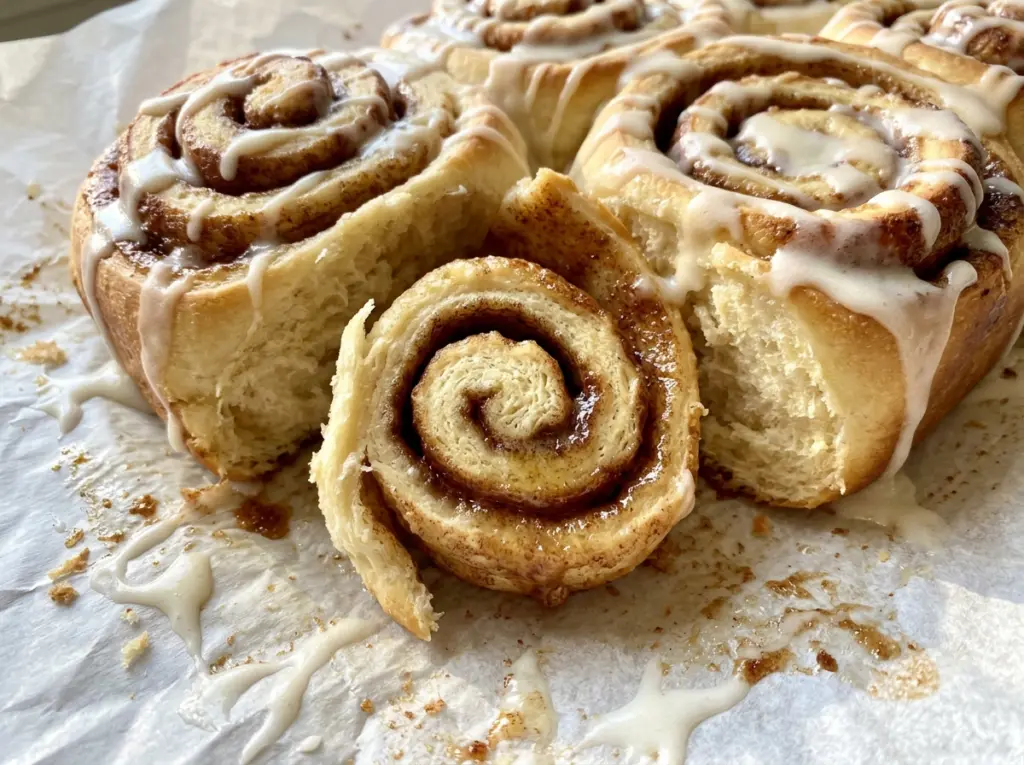
Best Homemade Cinnamon Rolls
When the milk is between 105°F and 110°F, it should feel warm, not hot. That first temperature check matters: the yeast needs a gentle start, and milk that’s too hot…

By Ava
•
•
Reading time: 10 min
Tip: save now, make later.
When the milk is between 105°F and 110°F, it should feel warm, not hot. That first temperature check matters: the yeast needs a gentle start, and milk that’s too hot can work against it. I use that short five-minute rest to get the dough started while I gather the eggs and butter.
These Best Homemade Cinnamon Rolls get their soft, rich texture from a dough kneaded until smooth and elastic, then given time to rise twice. The first rise builds the dough; the second happens after the rolls are filled and cut, so they puff right in the baking dish. I keep the extra flour for kneading nearby, but add it only if the dough needs it. Once the tops turn golden and the centers are set, a brief rest gives the cream cheese frosting a warm surface to soften over. The finished rolls have tender spirals with cinnamon and brown sugar tucked through every bite.
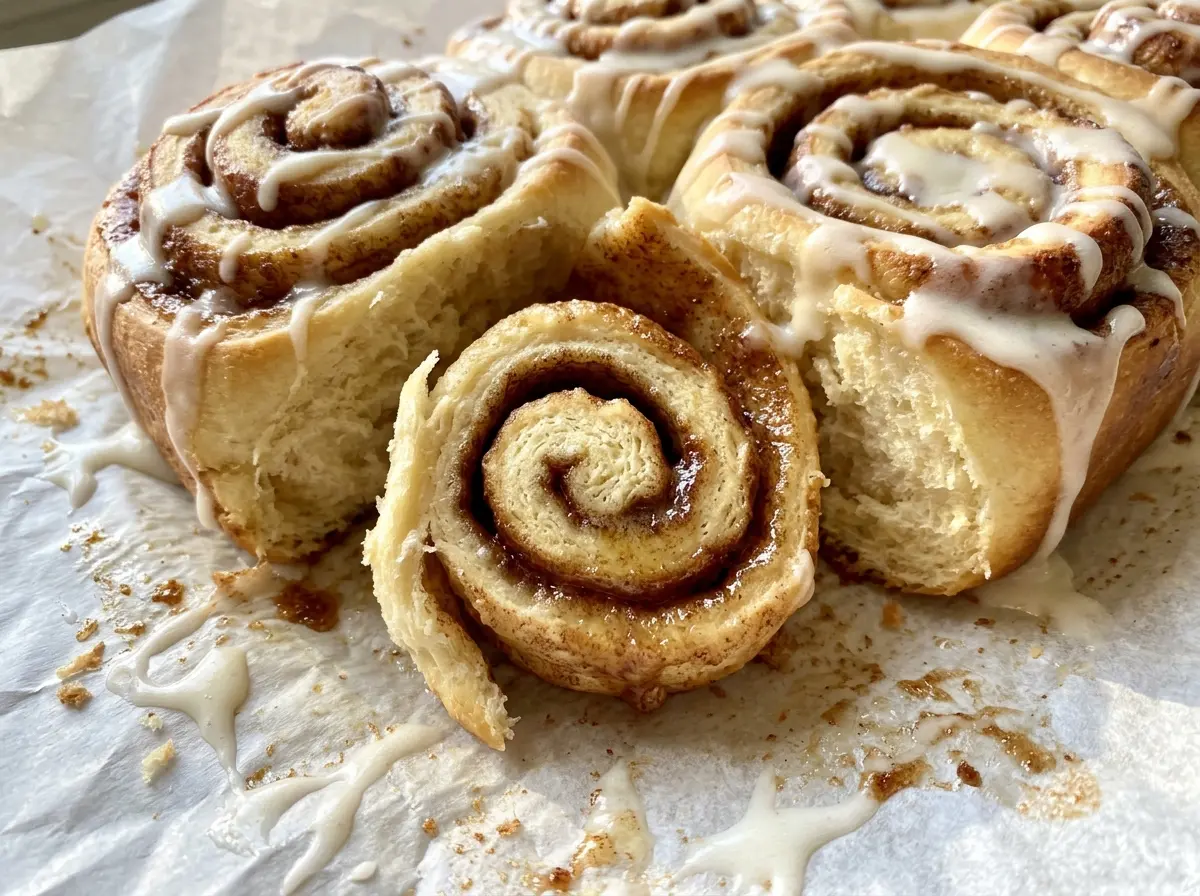
Kitchen Note
The dough should feel smooth and elastic before it goes into the bowl for its first rise. Add the extra flour a little at a time, and stop as soon as the dough is manageable; using all of it automatically can make the rolls heavier.
Save these homemade cinnamon rolls for a morning when you want soft, cinnamon-swirled centers under a smooth cream cheese frosting.
Why These Rolls Need Two Rises, Not One Long Wait
The dough has two different jobs to do, and the rise after shaping isn’t just extra time. During the first rise, the dough expands until it has doubled. After you roll, fill, and cut it, the shaped pieces need another 30 to 45 minutes to become puffy in the pan. That second rise lets the dough relax around the cinnamon-sugar filling before it goes into the oven.
Watch the dough rather than expecting every kitchen to follow the clock to the minute. For the first rise, look for a noticeably enlarged dough that has doubled in size. After cutting, the rolls should look rounded and fuller, not tight little spirals. Skipping the second rise leaves less time for that puffiness to develop, and the rolls won’t have the same tender, pull-apart texture. Keeping both rises separate gives the dough time to change at each stage without asking one long rise to do all the work.
Why Whole Milk, Room-Temperature Eggs, and Soft Butter Matter

- Whole milk and instant yeast — Whole milk gives the dough a richer feel than water, while instant yeast is the type used for this timing and mixing method. Check the milk with a thermometer before stirring in the yeast; very hot liquid can interfere with the rise. I wouldn’t swap in a different yeast type without adjusting the method.
- Egg and egg yolk — The whole egg and extra yolk contribute richness and help make the dough tender. Room-temperature eggs blend more evenly into the warm milk-and-butter mixture than cold eggs straight from the refrigerator. There isn’t a tested egg-free swap for this dough.
- Unsalted butter — The melted, cooled butter enriches the dough, while softened butter spreads across the rolled dough to hold the cinnamon-sugar filling in place. For the filling, it should be soft enough to spread evenly without tearing the dough. Unsalted butter also keeps the added fine salt in the dough predictable.
- All-purpose flour — This flour gives the dough enough structure to knead into a smooth, elastic ball and roll into a rectangle. A scoop-and-pack approach can add more flour than you intend, so spoon it into the measuring cup and level it. A cup-for-cup gluten-free flour swap isn’t tested here; the dough relies on gluten development during kneading.
- Light brown sugar and ground cinnamon — The packed brown sugar melts into the butter as the rolls bake, and cinnamon gives the filling its familiar warm spice. Freshly opened cinnamon has a clearer aroma, but there’s no need for an expensive brand. Keep the sugar packed when measuring so the filling stays in the intended balance.
- Cream cheese and powdered sugar — Softened cream cheese gives the frosting its tang, and powdered sugar makes it smooth enough to spread. Let both the cream cheese and butter soften before beating so the frosting doesn’t stay lumpy. Vanilla rounds out the frosting; use a familiar extract rather than replacing it with a different flavoring.
From Elastic Dough to Puffy Cinnamon Spirals
Mixing and Kneading Until the Dough Springs Together
Coat a large bowl and a 9×13-inch baking dish with nonstick cooking spray. Stir the warm milk, instant yeast, and granulated sugar together in the bowl, then let the mixture stand for 5 minutes before adding the egg, yolk, and melted, cooled butter. Stir in the flour and salt until you have a shaggy dough, then knead it on a lightly floured surface for 8 to 10 minutes. It’s ready when the surface looks smooth and the dough feels elastic; add up to 2 tablespoons flour only as needed while kneading.
Rolling, Filling, and Giving the Cut Rolls Room to Puff
Return the dough to the prepared bowl, cover it, and let it rise in a warm place for 1 to 1 1/2 hours, until doubled. Stir the brown sugar and cinnamon together while it rises. Roll the dough into a 16×12-inch rectangle, spread the softened butter evenly over it, and distribute the cinnamon-sugar mixture across the surface. Roll it tightly from a long side into a 16-inch log, cut it into 12 equal rolls, and set them cut side up in the prepared dish; cover and let them rise for 30 to 45 minutes, until puffy.
Baking to Set Centers Before Adding the Frosting
Heat the oven to 350°F and bake the rolls for 22 to 27 minutes. Look for golden tops and centers that are set; pale tops or doughy-looking centers need more time within that range. While the rolls bake, beat the softened cream cheese and butter until smooth, then beat in the powdered sugar and vanilla until creamy. Let the rolls rest for 10 minutes before spreading on the frosting, so it softens over the warm rolls instead of disappearing into them.
Two Ways to Change the Finish Without Reworking the Dough
Leave the rolls unfrosted
Skip the cream cheese, butter, powdered sugar, and vanilla frosting. The cinnamon rolls will still bake as filled, soft spirals, but the finish will be less creamy and less sweet. This is the simplest option if you want the brown sugar and cinnamon to stand out on their own.
Turn them into plain sweet rolls
Leave out the brown sugar, cinnamon, and filling butter, then roll and cut the dough as usual. The result is a soft, lightly sweet roll rather than a cinnamon roll, with no sticky spiral filling. This changes the character of the batch, but keeps the same dough and baking dish.
Storage and Reheating
- Refrigerator: Keep frosted rolls covered in the refrigerator for up to 4 days. The frosting firms up when cold, and the rolls won’t feel as soft straight from the fridge.
- Freezer: Freeze cooled rolls in an airtight container for up to 2 months; unfrosted rolls keep their texture best. Thaw them in the refrigerator before warming, then frost if you haven’t already.
- Reheating: Warm an individual unfrosted roll in the microwave in short 10-second bursts until just warm, then add frosting. Long heating can make the dough tough and melt the cream cheese topping.
Questions That Come Up While Making Cinnamon Rolls
Best Homemade Cinnamon Rolls
Ingredients
Equipment
Method
- Coat a large bowl and a 9x13-inch baking dish with nonstick cooking spray.
- In the prepared bowl, stir together the whole milk warmed to 105°F to 110°F, instant yeast, and granulated sugar; let stand for 5 minutes.
- Stir in the egg, egg yolk, and melted butter until combined.
- Stir in the all-purpose flour and fine salt until a shaggy dough forms.
- Knead the dough on a lightly floured surface for 8 to 10 minutes, adding up to 2 tablespoons flour as needed, until smooth and elastic.
- Return the dough to the prepared bowl, cover, and let rise in a warm place for 1 to 1 1/2 hours, until doubled in size.
- Stir together the packed light brown sugar and ground cinnamon in a small bowl.
- Roll the dough into a 16x12-inch rectangle.
- Spread the softened butter evenly over the dough.
- Sprinkle the cinnamon-sugar mixture over the butter.
- Roll the dough up tightly from a long side into a 16-inch log.
- Cut the log into 12 equal rolls and arrange them cut side up in the prepared baking dish.
- Cover the rolls and let rise for 30 to 45 minutes, until puffy.
- Heat the oven to 350°F.
- Bake the rolls for 22 to 27 minutes, until golden brown and the centers are set.
- While the rolls bake, beat the softened cream cheese and softened butter in a medium bowl until smooth.
- Beat in the powdered sugar and vanilla extract until creamy.
- Let the rolls rest for 10 minutes.
- Spread the frosting over the rolls and serve warm.