
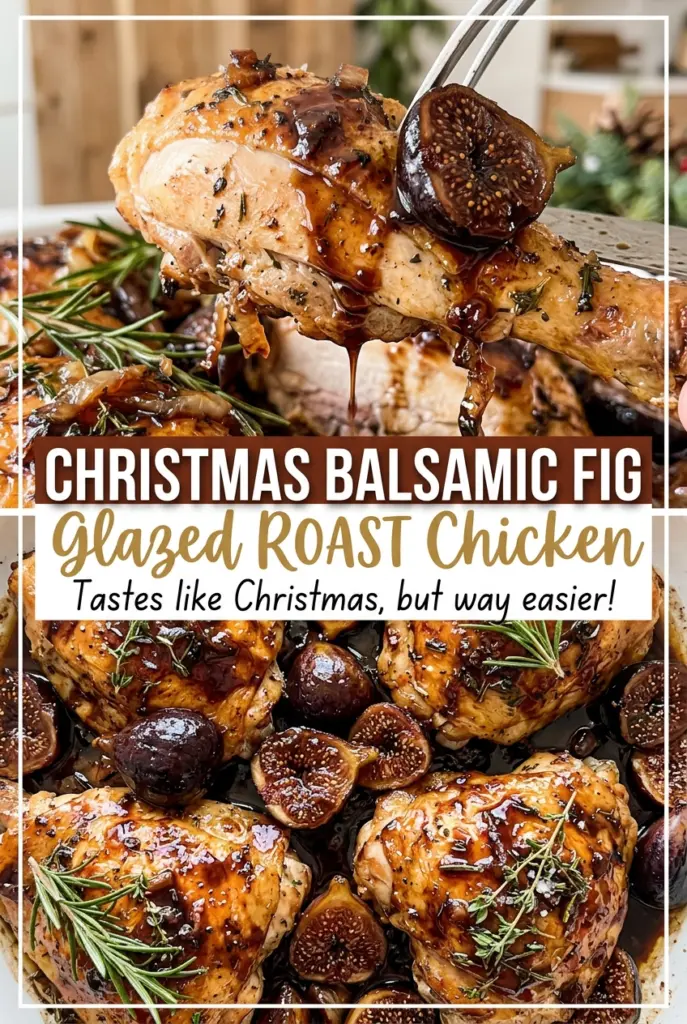
Christmas Balsamic Fig Glazed Roast Chicken
The glaze starts to cling to the spoon before it ever touches the chicken: fig preserves soften into the balsamic and Dijon, turning glossy and just thick enough to brush…

By Ava
•
•
Reading time: 9 min
Tip: save now, make later.
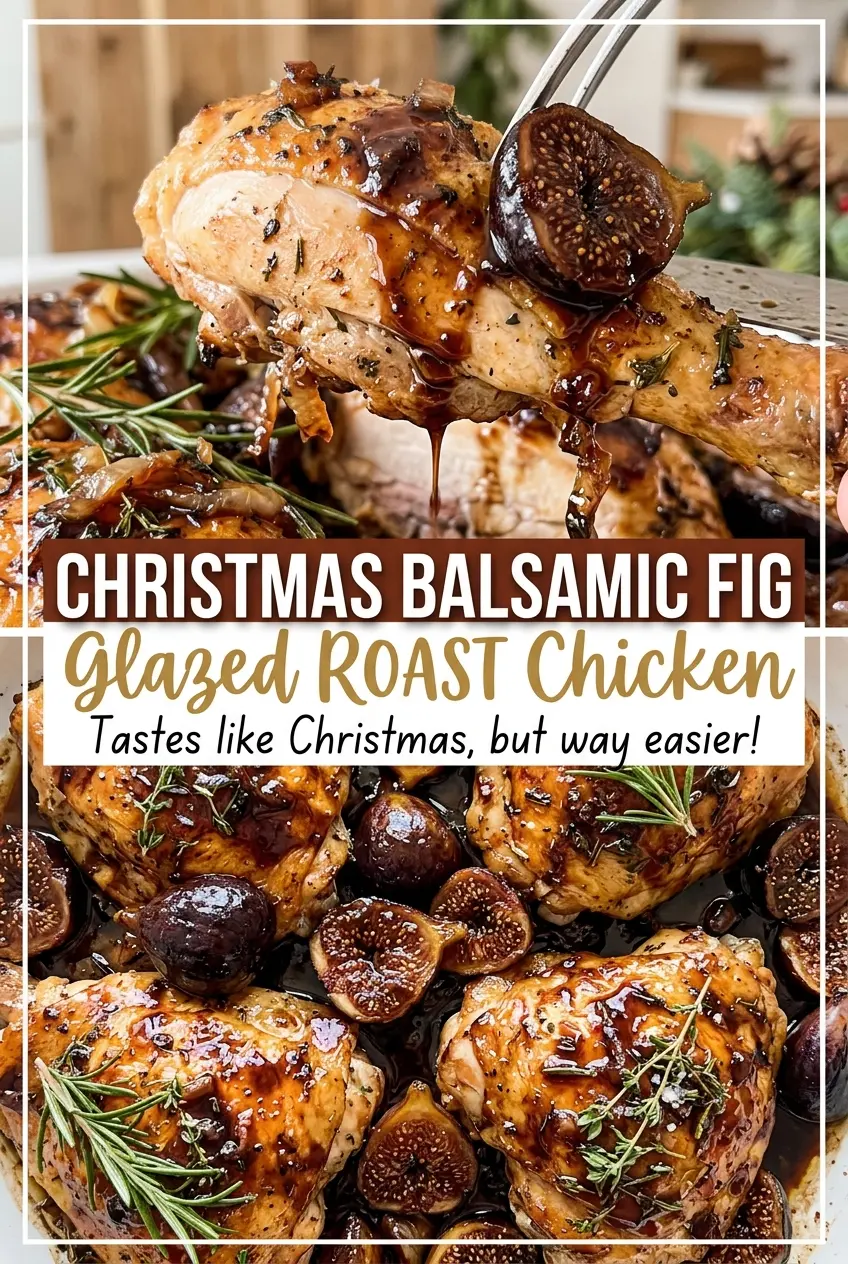
The glaze starts to cling to the spoon before it ever touches the chicken: fig preserves soften into the balsamic and Dijon, turning glossy and just thick enough to brush on. For this Christmas balsamic fig glazed roast chicken, that timing matters. Fig preserves have plenty of sugar, and putting them on too early can leave the skin darker than you want before the meat is cooked through.
I roast the chicken plain for the first part of its time in the oven, then brush on the glaze and let it finish roasting. The cavity holds lemon, onion, and thyme, which bring a gentle aroma to the meat without competing with the sweet-tart finish. After a short rest, the skin is lacquered and the reserved glaze gives each serving an extra spoonful of fig and balsamic.
Kitchen Note
Keep the glaze at a gentle simmer, not a hard boil. It’s ready when it looks smooth and has thickened just enough to coat a spoon; it will tighten a little more as it cools.
Save this balsamic fig roast chicken for a glossy, sweet-tart centerpiece with extra glaze ready for the table.
Why the Fig Glaze Goes on After the First 45 Minutes
Preserves bring concentrated fruit and sugar, which is what gives the finished chicken its shiny, sticky coating. That same sugar can darken quickly in a hot oven. If the glaze went on at the start, the outside would spend the entire roast exposed to the heat while the center of a whole chicken still needed time to cook.
Letting the chicken roast unglazed first gives the skin a head start. At the 45-minute mark, brush the remaining glaze over the surface and return the pan to the oven so the coating can set during the final stretch. That later window is also easier to watch: if the skin is taking on color faster than you like, a loose foil tent shields it while the chicken finishes. You still get a browned roast, but the fig coating stays glossy instead of turning bitter or overly dark.
The thermometer, not the color of the glaze, tells you when the chicken is ready. A browned surface can be finished before the meat is, and a pale spot doesn’t mean the whole bird needs to stay in the oven longer if the thickest parts have reached the right temperature.
What Fig Preserves, Balsamic, and Dijon Each Bring to the Glaze
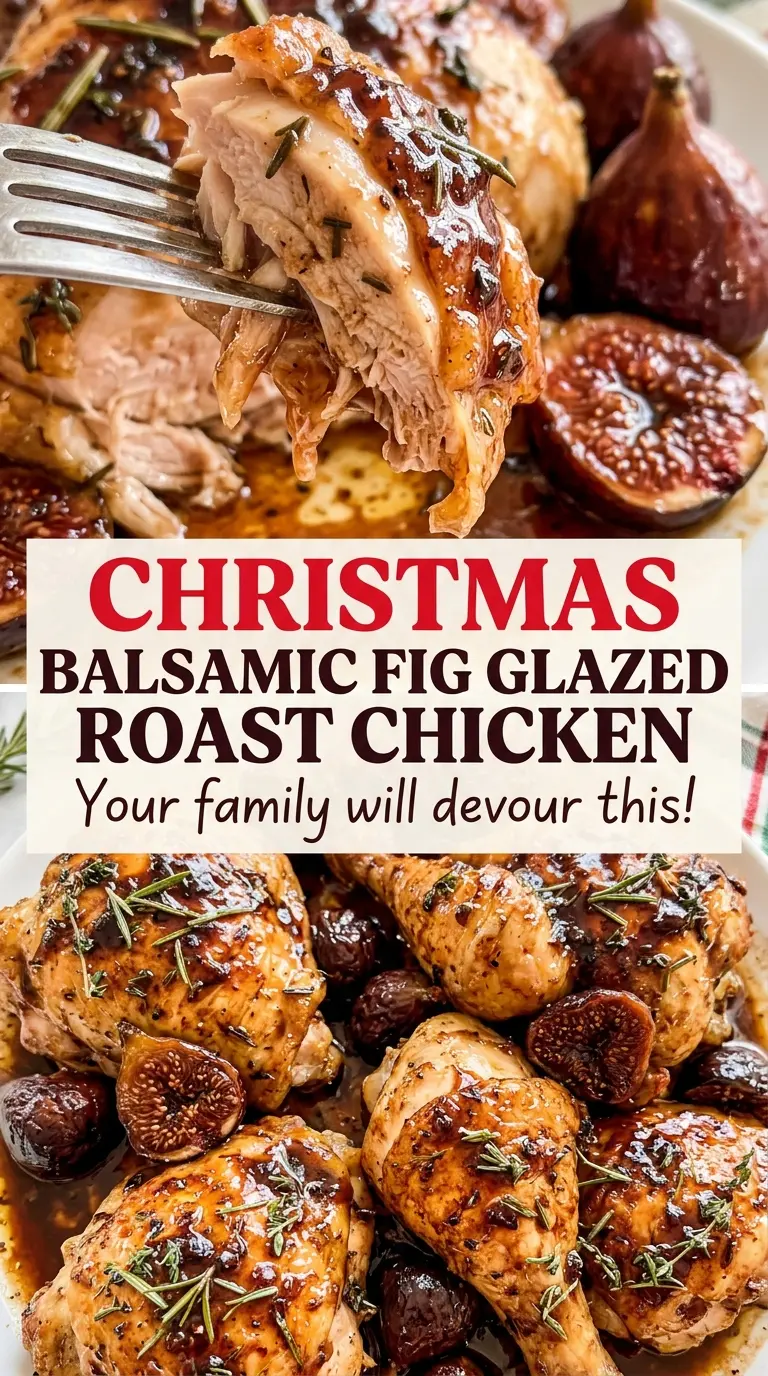
- Fig preserves — They supply the fruit, sweetness, and body that make this a glaze rather than a thin vinegar brush. A straightforward jar is fine; you don’t need a specialty preserve. Apricot preserves can stand in at the same quantity, though the result will be brighter and less distinctly fig-forward.
- Balsamic vinegar — Its tartness keeps the preserves from tasting flat, while its dark, rounded flavor suits roast chicken. Use a balsamic you enjoy, but an everyday bottle works well here; a thick, syrupy aged balsamic isn’t necessary.
- Dijon mustard — Dijon brings a little savory sharpness and helps the glaze taste balanced. A smooth, standard Dijon is the best fit for an even coating; whole-grain mustard can replace it in an equal measure, but you’ll see and feel the mustard seeds in the finished glaze.
- Whole chicken — A bird in the specified size range gives the roasting time a useful starting point and serves six. Patting it dry before adding the oil helps the skin roast rather than stay damp. The giblets should be removed before seasoning.
- Onion, lemon, and fresh thyme — These go inside the cavity to lend a light aromatic note as the chicken roasts. Fresh thyme gives a cleaner herbal fragrance than dried thyme in this whole-sprig use, and a firm lemon is easy to halve and tuck inside.
Roasting the Chicken Before the Glaze Sets
Simmer the Fig-Balsamic Glaze
Combine the fig preserves, balsamic vinegar, and Dijon in a small saucepan. Bring the mixture to a gentle simmer over medium-low heat, stirring for 4 to 6 minutes until it’s smooth and slightly thickened. Transfer 1/4 cup to a clean bowl for serving before the rest comes near the raw chicken. If the glaze is still loose, give it another moment at a gentle simmer rather than turning up the heat.
Season and Set Up the Bird
Heat the oven to 400°F and put a rack inside a roasting pan. Rub the patted-dry chicken all over with olive oil, then season it with kosher salt and freshly ground black pepper. Place the quartered onion, halved lemon, and thyme sprigs in the cavity, then tuck the wing tips underneath the body. Set the chicken breast-side up on the rack so hot air can circulate around it.
Roast Before Brushing
Roast the chicken for 45 minutes without glaze. The skin should begin to take on color, but don’t use that appearance alone to judge doneness; the bird still has its glazed roasting time ahead. Keeping the first part of the roast uncoated also prevents the preserves from sitting in the oven for the full cooking time. Leave the oven at 400°F.
Glaze, Finish, and Rest
Brush the remaining glaze over the chicken after the first roast, then return it to the oven for 35 to 55 minutes. Check the thickest part of the breast and the innermost thigh with a thermometer; both should read 165°F. If the skin darkens too quickly, loosely tent the chicken with foil while it finishes. Rest it for 15 minutes before carving, then serve with the glaze you set aside.
Small Changes That Keep the Fig-and-Balsamic Character
Use a More Textured Mustard
Swap the Dijon for an equal measure of whole-grain mustard. The glaze will have visible seeds and a slightly more rustic finish, while keeping the same sweet-tart fig and balsamic base.
Make the Glaze Gluten-Free
For a gluten-free version, replace the Dijon with a gluten-free Dijon mustard in the same measure. The texture and flavor stay close to the original, so the fig preserves and balsamic remain the focus.
Skip the Cavity Aromatics
Leave out the onion, lemon, and thyme if you want the glaze to be the only pronounced flavor. The chicken will still roast on the rack, but the meat won’t have the same gentle citrus and herbal aroma.
Storage and Reheating
- Refrigerator: Refrigerate carved chicken in a covered container within 2 hours and use it within 3 to 4 days. The skin softens in the refrigerator, though the meat stays suitable for leftovers.
- Freezer: Freeze carved portions in airtight freezer containers or tightly wrapped portions. For best quality, use them within 2 to 6 months.
- Reheating: Warm portions covered in a 325°F oven until hot throughout, or heat smaller portions in the microwave. Uncover near the end if you want the surface to dry slightly; reheating uncovered the whole time can dry out the meat.
Questions That Come Up While Roasting This Chicken
Christmas Balsamic Fig Glazed Roast Chicken
Ingredients
Equipment
Method
- Combine the fig preserves, balsamic vinegar, and Dijon mustard in a small saucepan.
- Bring to a gentle simmer over medium-low heat and cook, stirring, for 4 to 6 minutes, until smooth and slightly thickened.
- Transfer 1/4 cup to a clean bowl for serving.
- Preheat the oven to 400°F and set a rack inside a roasting pan.
- Rub the chicken all over with the olive oil, then season with the salt and pepper.
- Place the onion, lemon, and thyme in the cavity and tuck the wing tips under the body.
- Set the chicken breast-side up on the rack and roast for 45 minutes.
- Brush the remaining glaze over the chicken.
- Roast for 35 to 55 minutes more, until a thermometer inserted in the thickest part of the breast and the innermost thigh reads 165°F; loosely tent with foil if the skin darkens too quickly.
- Rest the chicken for 15 minutes before carving, then serve with the reserved glaze.