
Chocolate Yule Log
The first thing you notice is how thin the chocolate cake is once it comes out of the oven. It looks delicate, but it needs to bend around its filling…

By Ava
•
•
Reading time: 10 min
Tip: save now, make later.
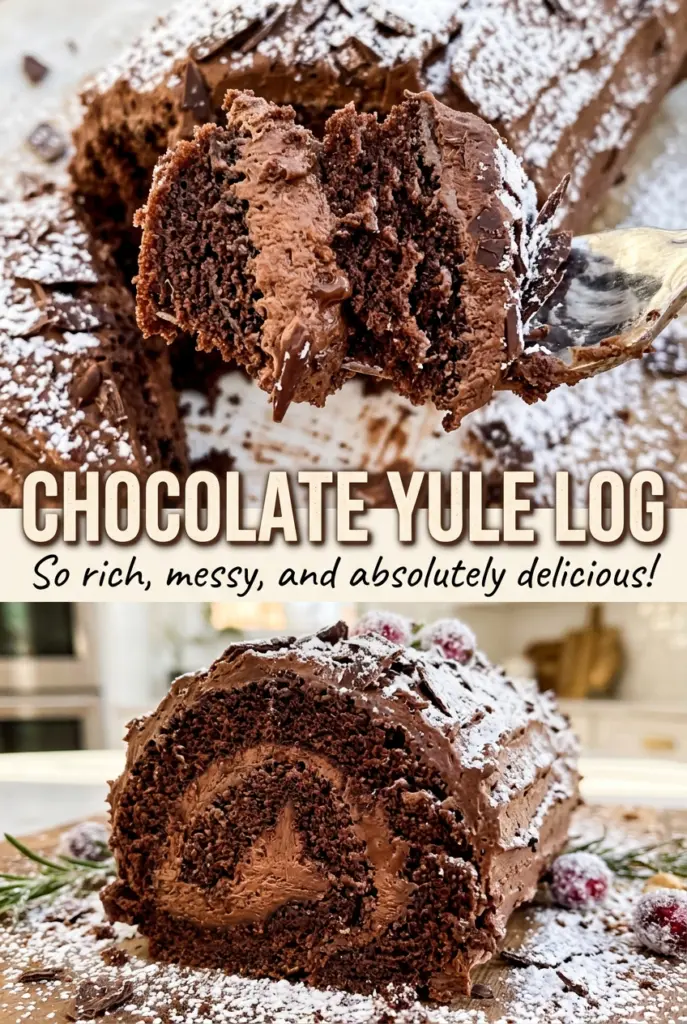
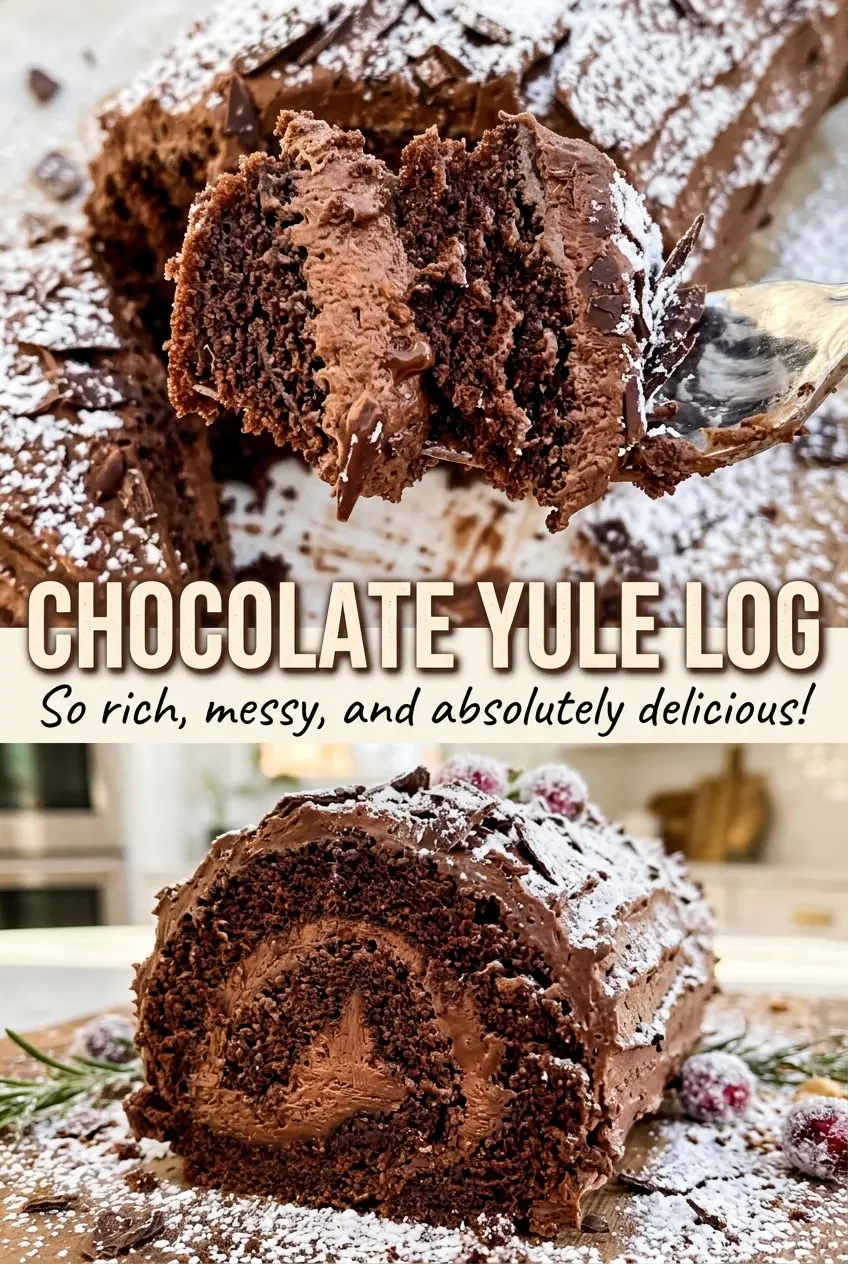
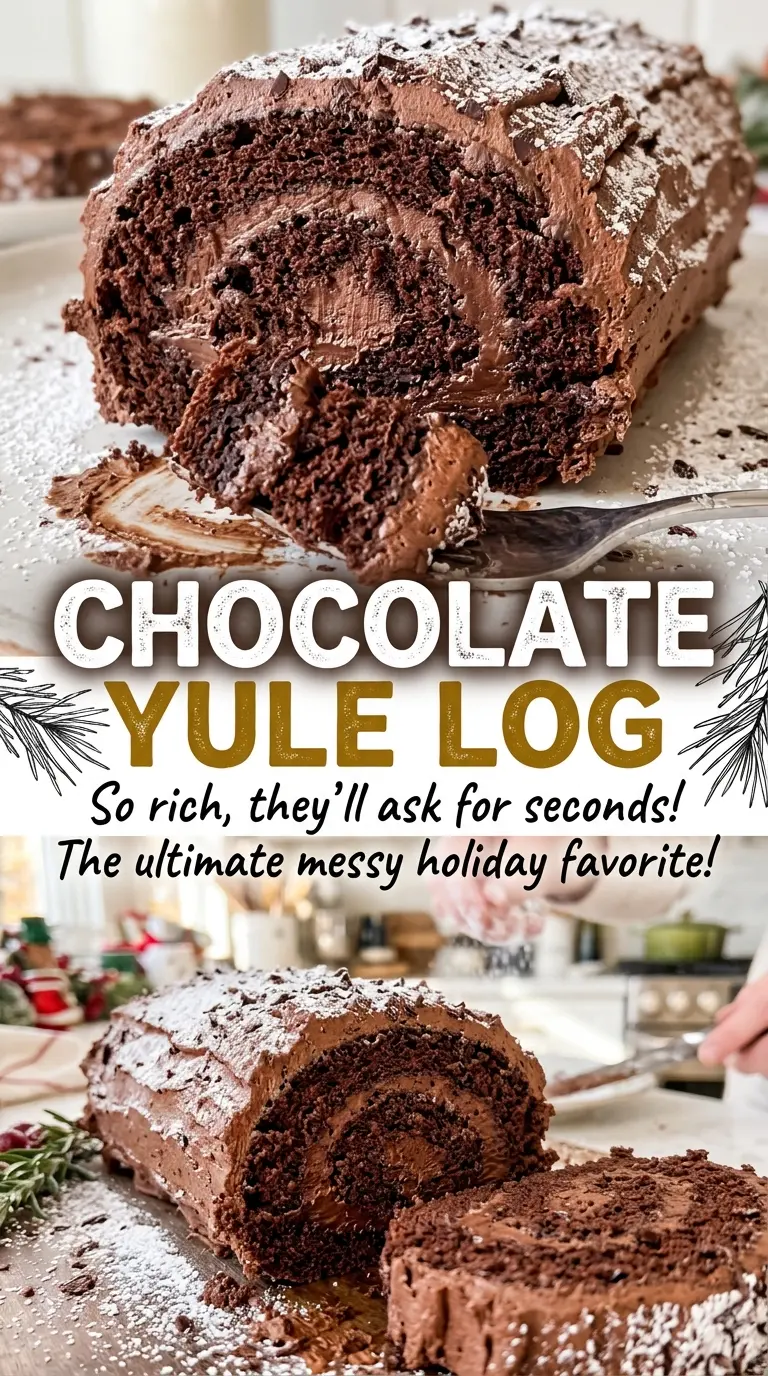
The first thing you notice is how thin the chocolate cake is once it comes out of the oven. It looks delicate, but it needs to bend around its filling rather than stand tall like a layer cake. This Chocolate Yule Log brings that soft sponge together with whipped cream and a smooth chocolate coating, then a few fork lines give it the familiar bark-like finish.
I like that the log feels festive without needing an elaborate decoration. The filling stays light against the richer ganache, and the little cut branch makes the shape look intentional even if your fork lines wander a bit. Give the cake time to cool before filling it, and you’ll have a neat spiral waiting under that chocolate exterior.
Kitchen Note
Don’t rush the ganache while it cools. Stir it every 10 minutes, and wait until it’s thick but still easy to spread; if it’s too loose, it’ll slide off the curved cake instead of coating it.
Save this Chocolate Yule Log for a dessert with a soft cream spiral, smooth ganache, and an easy fork-drawn bark finish.
Why Rolling the Chocolate Sponge While It’s Warm Prevents a Cracked Log
A thin sponge cools quickly, and once it’s cold, asking it to bend into a tight curve can make it split. Rolling it while it’s still warm gives the cake a chance to cool in that shape, so it’s less likely to fight you when you unroll it to add the filling. The parchment goes along for the roll, keeping the layers from sticking to each other.
The eggs give this cake its flexible, airy structure. The yolks are beaten with sugar until pale and thick, while the whites are whipped separately and folded in gently. That’s why it helps to spread the batter evenly rather than leaving a thick mound in the center: a uniformly thin sheet bakes at the same pace and is easier to roll. A sponge that’s baked too long dries out and becomes less forgiving, so use the spring-back cue instead of waiting for the top to darken.
When you unroll the cooled cake, take your time and let it relax on the parchment. A small crack at the edge isn’t a disaster; the filling and ganache cover much of the surface, and the finished log doesn’t need to look machine-made to be charming.
How the Eggs, Chocolate, and Cream Shape This Yule Log
- Eggs — Separating the yolks and whites creates a tender cake with enough lift to roll. Room-temperature eggs whip more readily than cold ones, so set them out before you begin.
- Unsweetened cocoa powder — Cocoa gives the sponge its chocolate flavor without adding extra liquid. Use a cocoa you enjoy tasting on its own; there’s no need to buy a specialty brand for this cake.
- Semisweet chocolate — Finely chopped pieces melt evenly when hot cream is poured over them. A baking bar is easy to chop, though semisweet chocolate chips work if that’s what you have; the ganache may take a little more stirring to turn smooth.
- Heavy cream — The cream has two jobs: it makes the chocolate coating and whips into the filling. Keep the portions separate as you prep, since one is heated and the other is beaten cold with confectioners’ sugar.
- All-purpose flour — The modest amount helps the sponge hold together without making it heavy. Whisk it with the cocoa and leavening before it goes into the yolks so the dry ingredients are distributed throughout the batter.
Building a Flexible Sponge and a Clean Chocolate Finish
Whip the Yolks and Whites Separately
Whisk the flour, cocoa powder, baking powder, and salt together in a small bowl so the dry mixture is ready before you start folding. Beat the yolks with the measured portion of sugar and vanilla on medium-high until pale and thick, about 3 to 4 minutes. In a clean bowl, beat the whites to soft peaks, then gradually add the remaining sugar and continue until the peaks are stiff and glossy. If the whites are still loose, they won’t give the sponge the same lift.
Fold the Batter Without Losing Its Air
Fold the flour mixture into the yolk mixture, then add the beaten whites in three additions. Use broad, gentle strokes and turn the bowl as you go; stop when no large white streaks remain rather than stirring until the batter looks completely uniform. Rough mixing knocks out the air you just built into the whites. Spread the batter evenly across the prepared 10×15-inch jelly-roll pan, including the corners.
Bake Just Until the Top Springs Back
Bake at 350°F for 10 to 12 minutes. The top should spring back when you touch it lightly, rather than feeling wet or leaving a dent. While the cake is warm, loosen its edges and invert it onto a clean sheet of parchment, then peel away the pan liner. Roll the cake and clean parchment together from a short end, set it seam-side down, and let it cool for 45 to 60 minutes.
Turn Chopped Chocolate Into Spreadable Ganache
Put the finely chopped semisweet chocolate in a heatproof bowl. Heat the portion of heavy cream for the ganache over medium heat until it’s steaming with bubbles at the edge, about 3 to 5 minutes, then pour it over the chocolate. Leave it undisturbed for 5 minutes before stirring until smooth. Let it cool at room temperature, stirring every 10 minutes, until it’s thick but spreadable, which takes about 30 to 45 minutes.
Fill, Shape, and Draw the Bark Lines
Beat the remaining heavy cream with the confectioners’ sugar until firm peaks form, about 2 to 3 minutes. Carefully unroll the cooled cake and spread the whipped cream over it, leaving a 1/2-inch border; roll it back up without the parchment. Set the log seam-side down on a serving platter and refrigerate it for 30 minutes. Cut a 2-inch piece from one end on a diagonal, attach it to the side with a little ganache, then coat the log and branch with the rest and drag fork tines through the ganache to make bark lines.
Three Ways to Adapt the Chocolate Yule Log
Use Bittersweet Chocolate for a Deeper Finish
Swap the semisweet chocolate for the same amount of finely chopped bittersweet chocolate. The coating will taste less sweet and more intense, which makes the whipped cream filling stand out; allow the ganache to reach the same thick, spreadable consistency before decorating.
Make a Gluten-Free Sponge
Replace the all-purpose flour with the same volume of a measure-for-measure gluten-free baking blend made for cakes. Choose a blend that contains xanthan gum, and use certified gluten-free cocoa and chocolate if you’re baking for someone who needs to avoid gluten. The sponge may feel a little more delicate, so handle it gently as you roll and unroll it.
Keep the Log Straight and Branch-Free
Skip cutting and attaching the diagonal end piece, and coat the whole rolled cake as one straight log. You’ll still get the same creamy spiral and chocolate bark finish, with one less shaping step and a simpler silhouette.
Make-Ahead and Serving
- Refrigerator: Keep the finished log covered and refrigerated for up to 3 days. The whipped cream filling is softest and the bark lines look sharpest on the first day.
- Freezer: I don’t recommend freezing the assembled log; the whipped cream can lose its smooth texture as it thaws.
- Serving: Keep it chilled until serving. Don’t leave it sitting out for an extended stretch, since the whipped cream filling softens as it warms.
Questions About Rolling and Finishing a Chocolate Yule Log
Chocolate Yule Log
Ingredients
Equipment
Method
- Preheat the oven to 350°F.
- Grease a 10x15-inch jelly-roll pan with the butter, line it with parchment, and lightly butter the parchment with any remaining butter.
- Whisk the flour, cocoa powder, baking powder, and salt together in a small bowl.
- Beat the egg yolks with 1/2 cup of the granulated sugar and the vanilla on medium-high speed until pale and thick, about 3-4 minutes.
- Fold in the flour mixture.
- In a clean bowl, beat the egg whites to soft peaks.
- Gradually beat in the remaining 1/4 cup granulated sugar until stiff, glossy peaks form.
- Gently fold the whites into the yolk mixture in three additions.
- Spread the batter evenly in the prepared pan.
- Bake at 350°F for 10-12 minutes, until the top springs back when lightly touched.
- While the cake is warm, loosen the edges and invert it onto a clean sheet of parchment.
- Peel off the pan liner.
- Roll the cake and clean parchment together from a short end.
- Cool seam-side down for 45-60 minutes.
- Put the chocolate in a heatproof bowl.
- Heat 3/4 cup of the heavy cream in a small saucepan over medium heat until steaming with bubbles at the edge, about 3-5 minutes.
- Pour the hot cream over the chocolate.
- Let stand for 5 minutes.
- Stir until smooth, then cool at room temperature, stirring every 10 minutes, until thick but spreadable, about 30-45 minutes.
- Beat the remaining 1 cup heavy cream with the confectioners' sugar until firm peaks form, about 2-3 minutes.
- Carefully unroll the cooled cake.
- Spread the whipped cream over it leaving a 1/2-inch border.
- Roll it back up without the parchment.
- Place the cake seam-side down on a serving platter and refrigerate for 30 minutes.
- Cut a 2-inch piece from one end on a diagonal.
- Attach it to the side of the log with a little ganache.
- Spread the remaining ganache over the log and branch.
- Drag fork tines through it to make bark lines.
- Refrigerate until serving.