
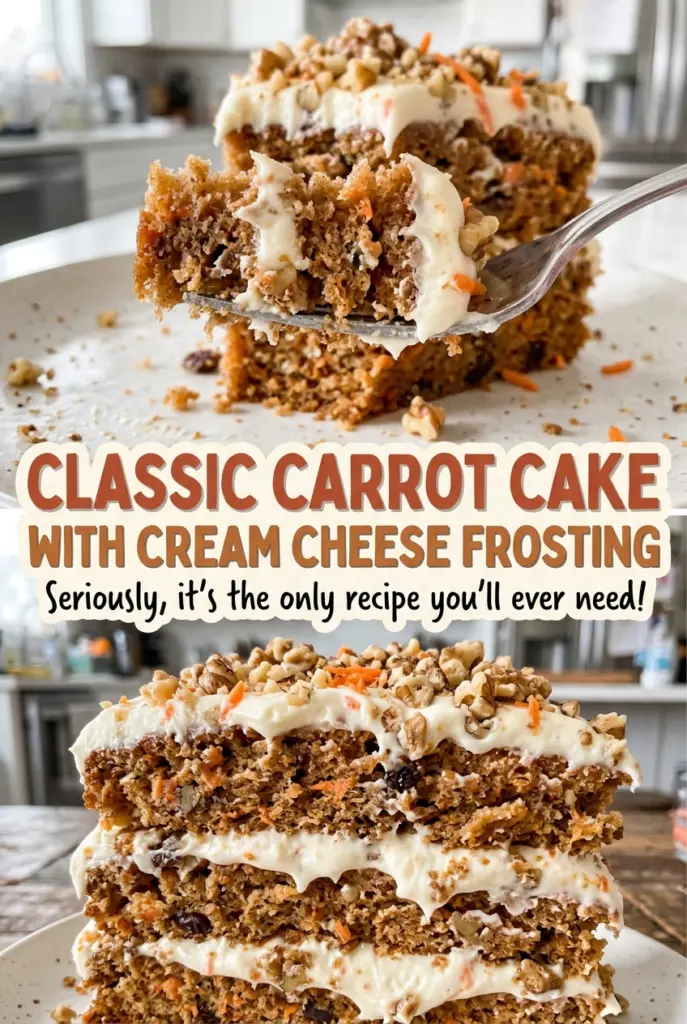
Classic Carrot Cake with Cream Cheese Frosting
When the cake comes out of the oven, the edges are set and the middle still gives a little when you press gently near the center. That’s the moment I…

By Ava
•
•
Reading time: 9 min
Tip: save now, make later.
When the cake comes out of the oven, the edges are set and the middle still gives a little when you press gently near the center. That’s the moment I look for before checking it with a toothpick. These classic carrot cake squares bake in a 9×13-inch pan, so there’s no stacking or trimming, and the cream cheese frosting goes right over the cooled cake.
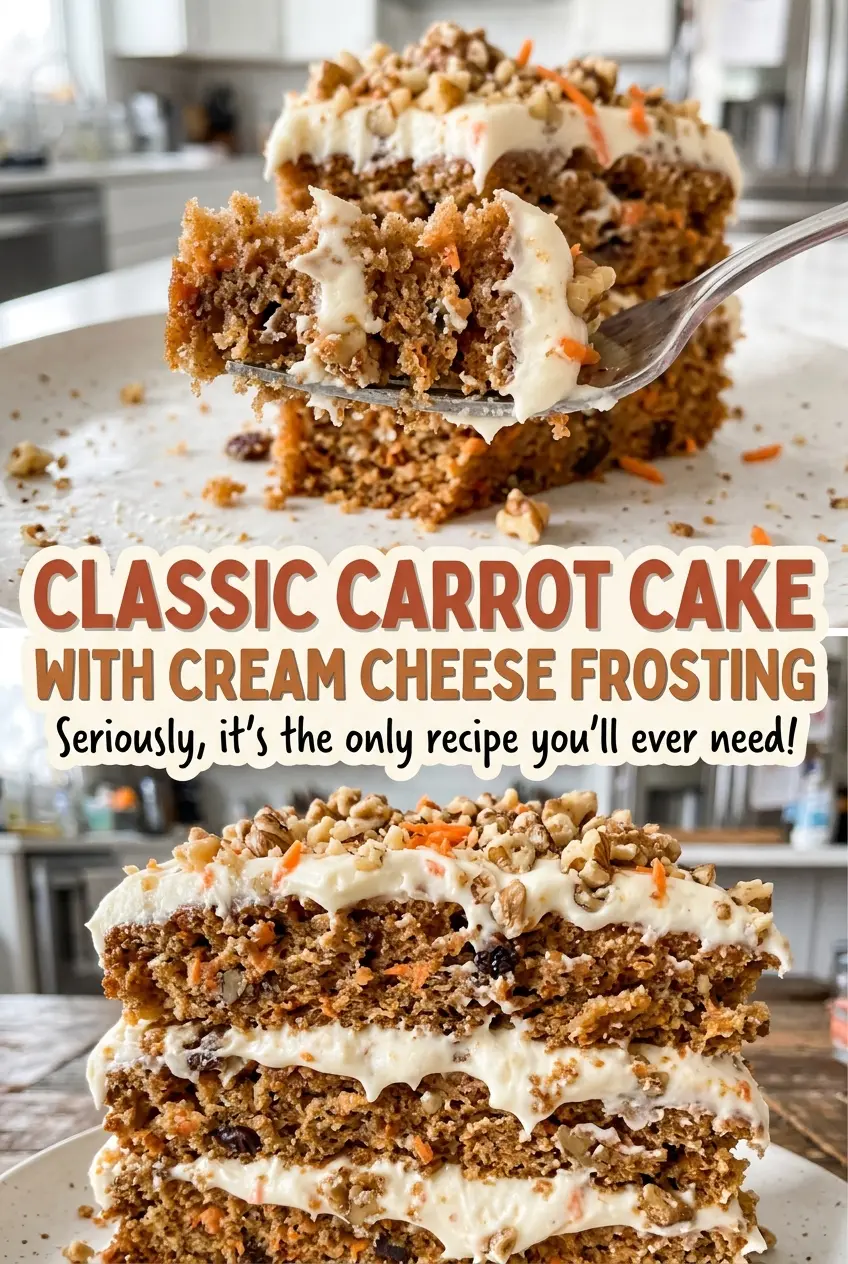
Finely grated carrots are what make each bite tender instead of stringy, and vegetable oil keeps the crumb moist without asking you to cream butter and sugar first. I whisk the wet ingredients together, fold in the dry mixture just until it disappears, then let the cake cool completely before frosting. The result is a warmly cinnamon-scented cake with a smooth, tangy layer on top.
Kitchen Note
Use room-temperature eggs so they whisk smoothly into the sugar and oil instead of making the mixture feel stiff. I set them out before I measure and grate the carrots.
Save this classic carrot cake with cream cheese frosting for a tender cinnamon crumb and an easy pan-to-table finish.
Why Finely Grated Carrots Make a More Even Cake
Carrot texture has a bigger effect here than it might seem. Fine shreds spread through the batter instead of gathering into long strands, so you get carrot in each forkful and a more even crumb from edge to center. The carrots also bring moisture; when they’re grated finely, that moisture is distributed through the batter rather than concentrated in a few dense patches.
Use the small holes on a box grater or the fine-grating attachment on a food processor. Pre-shredded carrots are cut for salads and tend to be too thick and dry for this batter. If the pieces look like long matchsticks, run a knife through them before mixing. You’re after delicate shreds, not carrot puree; a puree would add a different amount of moisture and change the cake’s texture.
Once the flour goes in, stir only until the dry streaks disappear. A few strokes too many can make a quick-mixed cake tighter than you want, and there’s no benefit to beating the batter smooth.
What the Carrots, Oil, and Cream Cheese Bring to This Cake
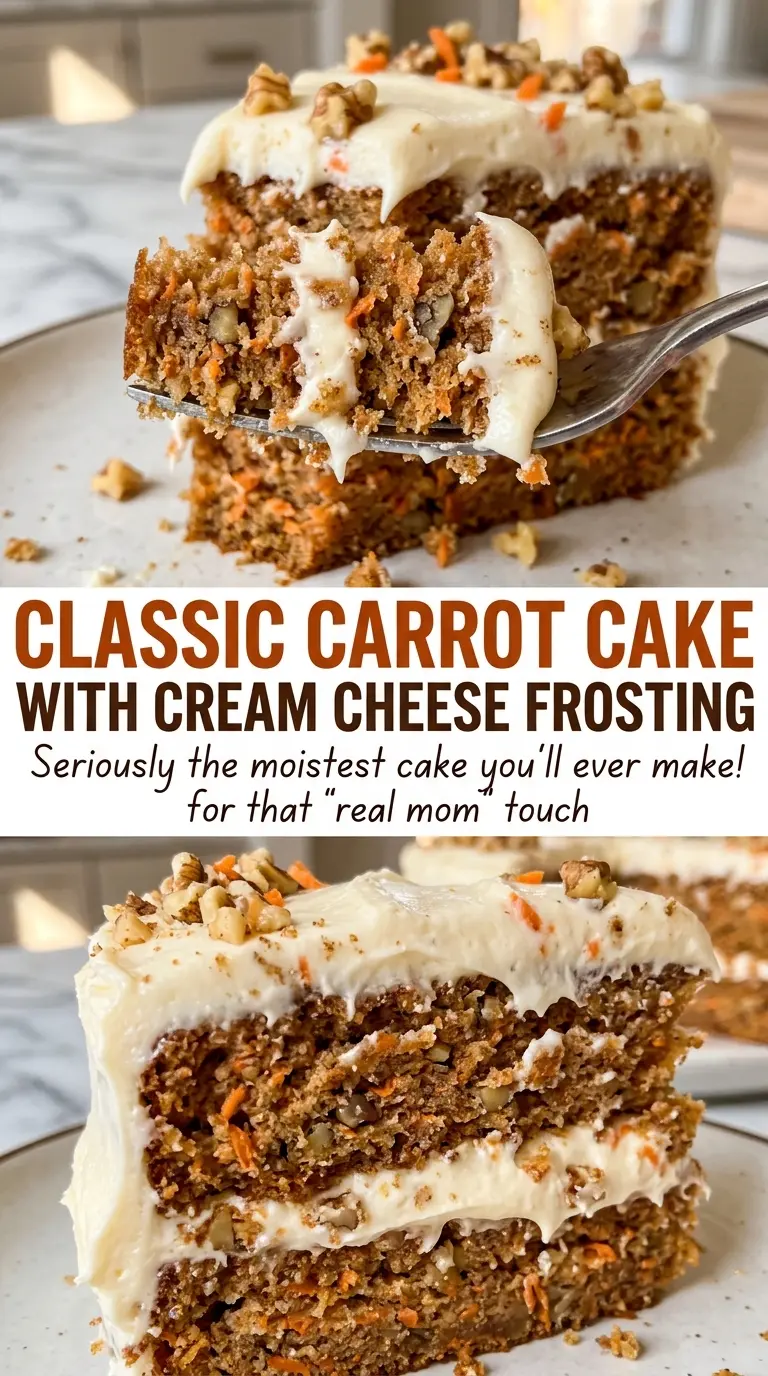
- Finely grated carrots — Fresh carrots give the cake its tender, moist crumb and gentle sweetness. Grate them just before mixing for the freshest texture; bagged shreds are usually too coarse. If you need a quicker option, finely chop pre-shredded carrots until the pieces are small.
- Vegetable oil — Oil keeps the cake soft and moist without needing a creaming step. A neutral-tasting oil matters more than a premium label; canola oil works in the same amount if that’s what you have, with little change in flavor.
- All-purpose flour and baking soda — Flour gives the cake its structure, while baking soda helps it rise. Measure the flour without packing it into the cup, since too much can make the crumb dry. For a gluten-free adaptation, a cup-for-cup baking flour blend that includes xanthan gum is the most practical swap; expect a slightly different crumb.
- Ground cinnamon — Cinnamon gives the cake its familiar warm spice. A fresh, fragrant jar makes a noticeable difference, but there’s no need for specialty cinnamon here.
- Cream cheese and unsalted butter — Both need to be softened so they beat into a smooth frosting rather than leaving small lumps. Regular block-style cream cheese gives the frosting body; spreadable cream cheese from a tub is softer and can make it loose.
- Powdered sugar — Powdered sugar sweetens and thickens the frosting. Add it gradually on low speed to keep it from puffing out of the bowl and to give the cream cheese and butter time to blend evenly.
Mixing and Baking the Cake Without Overworking It
Whisk the dry ingredients first
Heat the oven to 350°F and coat a 9×13-inch baking pan with nonstick cooking spray. Whisk the flour, baking soda, cinnamon, and salt together in a medium bowl until the cinnamon is evenly spread through the flour. This quick mix prevents a pocket of baking soda or cinnamon from landing in one spot. Set the bowl aside while you build the carrot mixture.
Build the carrot mixture, then stop stirring early
In a large bowl, whisk the eggs and granulated sugar until combined, then whisk in the vegetable oil and vanilla. Stir in the finely grated carrots so they’re dispersed before the flour mixture goes in. Add the dry ingredients and stir just until no dry streaks remain; the batter doesn’t need to look perfectly smooth. Scrape the bottom of the bowl once, where flour can hide, and then leave it alone.
Bake until the center gives a few moist crumbs
Spread the batter evenly in the prepared pan so it bakes at the same pace across the whole surface. Bake for 40 to 50 minutes, checking the center with a toothpick near the end of that window. A few moist crumbs are the cue to take it out; wet batter means it needs more time, while a completely clean toothpick can mean the cake has gone farther than necessary. Let the cake cool completely in the pan, about 2 hours.
Beat a smooth frosting and finish the cake
Beat the softened cream cheese and butter with an electric mixer on medium speed until smooth, about 2 minutes. Beat in the powdered sugar a cup at a time on low speed, then beat in the vanilla and salt until smooth. If the cream cheese or butter is still cold, small lumps may remain, so give them time to soften before you start. Spread the frosting over the completely cooled cake, then cut it into 12 pieces.
Two Ways to Adapt This Carrot Cake
Make it gluten-free with a cup-for-cup blend
Replace the all-purpose flour with the same amount of a gluten-free baking blend labeled for direct, cup-for-cup replacement, ideally one that already contains xanthan gum. The cake will still have the carrot-and-cinnamon character, though the crumb may be a little more delicate. Let it cool fully in the pan before cutting so the slices hold together.
Serve it as an unfrosted carrot snack cake
Skip the cream cheese frosting when you want a simpler, less-sweet square. The cake still has the cinnamon and carrot flavor, but without the cool, tangy topping it tastes more like a plain snack cake. This is also a useful option when you’re serving people who prefer to choose their own topping.
Storage and Reheating
- Refrigerator: Keep frosted cake covered in the refrigerator for up to 4 days. The cake firms up when cold, so let a piece sit at room temperature briefly before serving if you prefer a softer crumb.
- Freezer: Freeze individual slices for up to 2 months. Set them on a tray until the frosting is firm, then wrap each slice well and store it in a freezer-safe container; thaw in the refrigerator so the frosting stays in place.
- Reheating: No reheating is needed. Let a chilled slice stand at room temperature until the cake softens; microwaving can melt the cream cheese frosting and make it slide off.
Questions That Come Up When Baking Carrot Cake
Classic Carrot Cake with Cream Cheese Frosting
Ingredients
Equipment
Method
- Heat the oven to 350°F.
- Coat a 9x13-inch baking pan with nonstick cooking spray.
- Whisk the flour, baking soda, cinnamon, and salt together in a medium bowl.
- In a large bowl, whisk the eggs and granulated sugar until combined.
- Whisk in the oil and vanilla, then stir in the grated carrots.
- Add the flour mixture to the carrot mixture and stir just until no dry streaks remain.
- Spread the batter evenly in the prepared pan.
- Bake for 40 to 50 minutes, until a toothpick inserted in the center comes out with a few moist crumbs.
- Cool the cake completely in the pan, about 2 hours.
- Beat the cream cheese and butter in a large bowl with an electric mixer on medium speed until smooth, about 2 minutes.
- Beat in the powdered sugar a cup at a time on low speed.
- Beat in the vanilla and salt until smooth.
- Spread the frosting over the cooled cake.
- Cut into 12 pieces.