
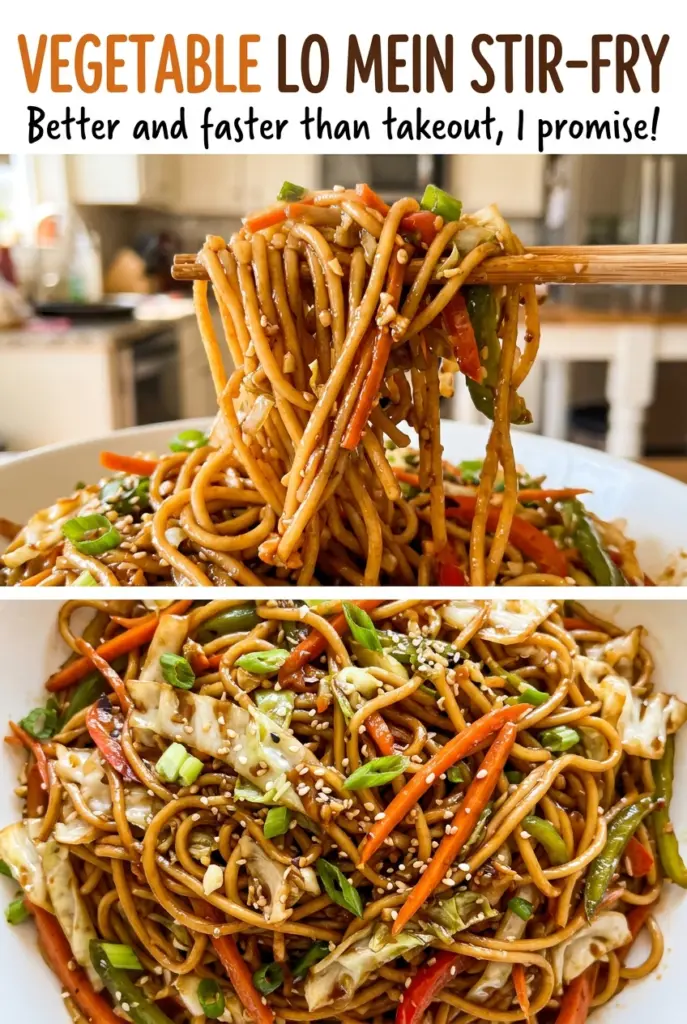
Vegetable Lo Mein Stir-Fry
The vegetables hit a hot wok and start to hiss, and that’s the moment this stir-fry comes together. I used to pile everything in at once, which left the cabbage…

By Ava
•
•
Reading time: 8 min
Tip: save now, make later.
The vegetables hit a hot wok and start to hiss, and that’s the moment this stir-fry comes together. I used to pile everything in at once, which left the cabbage limp before the carrots had softened. Cooking the vegetables in two batches keeps them moving against the hot pan, so they stay tender with a little bite.
For this vegetable lo mein, I whisk the sauce before it goes near the wok, then toss it with the hot noodles and vegetables until it clings to every strand. The dried lo mein noodles give the dish its chewy, springy texture, while fresh ginger and garlic bring a quick fragrance to the pan. The scallion greens go in at the very end, where they keep their fresh, mild bite. You get a glossy tangle of noodles with vegetables that still taste bright.
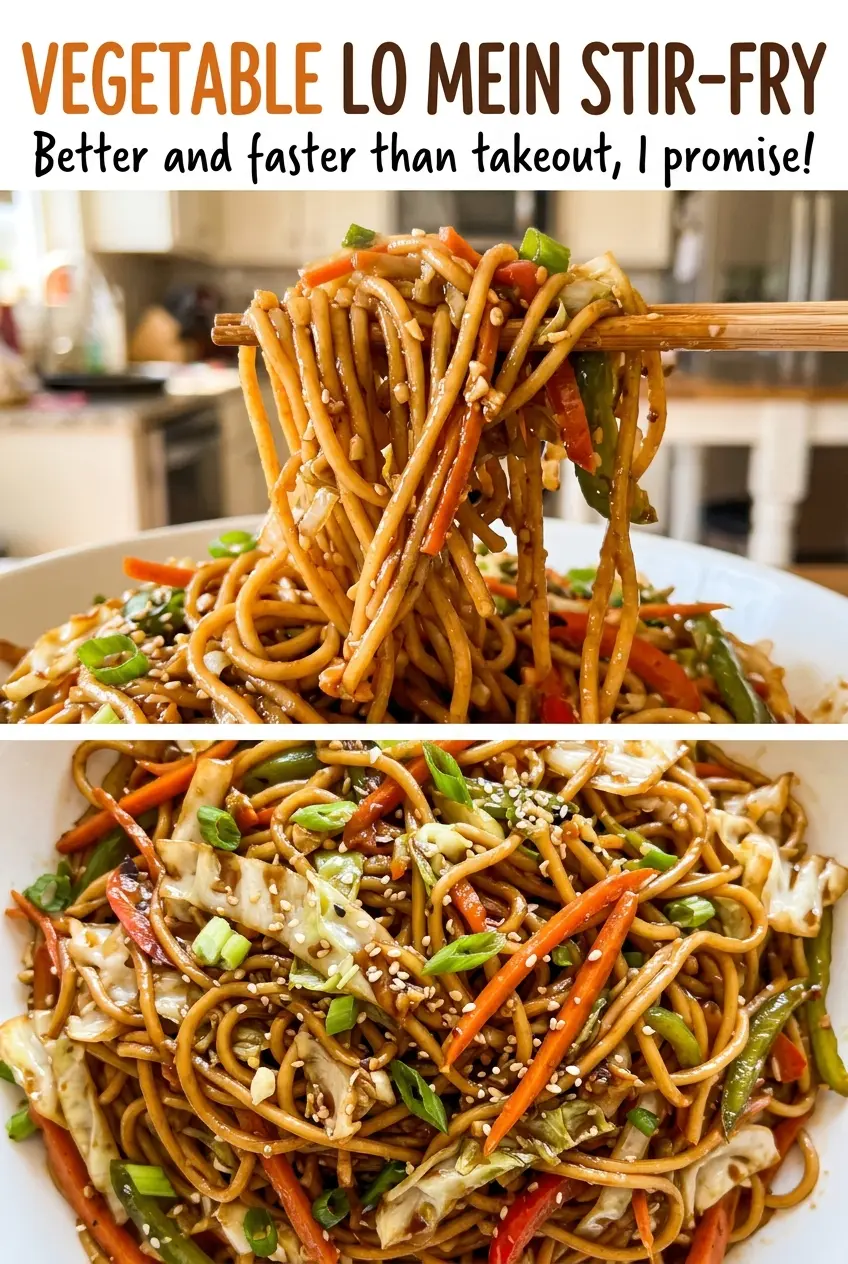
Kitchen Note
Keep the scallion greens out of the wok until the noodles are coated. They soften almost instantly, and adding them last leaves their flavor fresh instead of cooked down.
Save this vegetable lo mein for a quick, colorful stir-fry with chewy noodles and crisp-tender vegetables.
Why the Vegetables Need Two Turns in the Wok
It’s easy to think a bigger pile of vegetables will save time, but crowded vegetables give off moisture faster than a wok can cook it away. Instead of getting that quick, hot stir-fry, they steam together and soften unevenly. Dividing the carrot, bell pepper, cabbage, and snow peas into two batches gives each piece more contact with the hot pan.
Use half the oil for the first batch, then move those vegetables to a plate while the second batch cooks. Two to three minutes is enough for them to start turning tender without losing all their texture. They’ll go back into the wok with the noodles, so they get another brief turn in the heat at the end. This approach takes a little more attention, but it’s what keeps the finished bowl from tasting like boiled vegetables tucked into noodles.
What Gives the Sauce Its Glossy Coat

- Lo mein noodles — Dried lo mein noodles cook up pleasantly chewy and hold their shape as they’re tossed with sauce. If you can’t find them, dried spaghetti works in the same weight and can be cooked according to its package directions; the strands will be thinner and less springy.
- Soy sauce and oyster sauce — Soy sauce brings the salty, savory base, while oyster sauce adds a rounder, deeper note. For a vegetarian version, use mushroom-based vegetarian oyster sauce in place of the oyster sauce. Tamari can replace soy sauce measure for measure, though the finished sauce will taste a little different.
- Brown sugar, cornstarch, and sesame oil — Brown sugar softens the sauce’s salty edge, and cornstarch helps it cling to the noodles rather than run to the bottom of the bowl. Toasted sesame oil gives the sauce a distinct nutty aroma; keep it in the sauce rather than using it as the cooking oil, since vegetable oil is what the hot wok needs.
- The vegetables, garlic, and ginger — Cut the carrot into thin matchsticks and slice the pepper and scallions thinly so they cook quickly. Fresh garlic and ginger have a sharper, livelier aroma than dried versions here, and the snow peas are best trimmed shortly before cooking so they stay crisp.
From Boiling Water to Glossy Wok-Tossed Noodles
Whisk the Sauce Smooth
Whisk the soy sauce, oyster sauce, water, packed brown sugar, cornstarch, and toasted sesame oil together in a small bowl. Keep whisking until you can’t see dry cornstarch on the bottom or sides of the bowl. The mixture should look evenly blended, not streaky. Set it close to the stove so it’s ready when the noodles and vegetables are in the wok.
Cook and Drain the Noodles
Bring a large pot of water to a boil and cook the dried lo mein noodles according to the package directions. Check the texture at the end of the stated cooking time; the strands should be tender but still hold together when lifted. Drain them well so excess water doesn’t thin the sauce. Keep them ready for the final toss.
Stir-Fry the Vegetables in Batches
Heat a 14-inch wok over high heat until it’s very hot, then add half the vegetable oil and half of the carrot, red bell pepper, cabbage, and snow peas. Stir-fry for two to three minutes, moving the vegetables around so they cook quickly rather than sit in one spot. Transfer them to a plate while you cook the remaining vegetables in the remaining oil. If the wok doesn’t sound lively and hot, give it a moment to heat before adding the next batch.
Build the Finish in the Hot Wok
Add the scallion whites, garlic, and ginger to the wok and stir-fry for 30 seconds, just until fragrant. Add the drained noodles, cooked vegetables, and sauce, then toss over high heat for one to two minutes. The sauce should coat the strands and everything should be hot; keep the noodles moving so they don’t sit against the wok. Stir in the scallion greens just before serving.
Simple Swaps for a Different Bowl of Lo Mein
Make It Vegetarian with Mushroom Oyster Sauce
Replace the oyster sauce with the same amount of mushroom-based vegetarian oyster sauce. It keeps the savory depth while making the sauce vegetarian; check that the noodles and remaining sauces suit your needs, too.
Let Fresh Ginger Take the Lead
For a more pronounced ginger note, increase the minced fresh ginger to two teaspoons. It gives the sauce a brighter, sharper finish without changing the quick stir-fry method.
Swap the Green Cabbage for More Red Pepper
Leave out the cabbage and use an equal volume of thinly sliced red bell pepper instead. The result is sweeter and softer, with less of the cabbage’s crisp, slightly earthy bite.
Storage and Reheating
- Refrigerator: Store leftovers in an airtight container for up to 3 to 4 days. The vegetables and noodles soften as they sit.
- Freezer: This stir-fry doesn’t freeze especially well; the noodles and vegetables tend to lose their texture after thawing.
- Reheating: Warm leftovers in a skillet over medium heat with a small splash of water, stirring until hot. Avoid prolonged high heat, which can dry out the noodles before the vegetables warm through.
Questions That Come Up While Making Vegetable Lo Mein
Vegetable Lo Mein Stir-Fry
Ingredients
Equipment
Method
- Whisk the soy sauce, oyster sauce, water, brown sugar, cornstarch, and toasted sesame oil in a small bowl until the cornstarch is dissolved.
- Cook the lo mein noodles in a large pot of boiling water according to the package directions, then drain well.
- Heat a 14-inch wok over high heat until very hot.
- Add 1 tablespoon of the vegetable oil and stir-fry half of the carrot, bell pepper, cabbage, and snow peas for 2 to 3 minutes; transfer to a plate.
- Repeat with the remaining oil and vegetables.
- Add the scallion whites, garlic, and ginger to the wok and stir-fry for 30 seconds.
- Add the drained noodles, cooked vegetables, and sauce; toss over high heat for 1 to 2 minutes, until the sauce coats the noodles and everything is hot.
- Stir in the scallion greens.