

Chewy Brown Sugar Pumpkin Cookies (No Cakey Texture)
The first sign these cookies are on track is a dough that feels softer than a classic brown sugar cookie but not wet or loose. Pumpkin brings plenty of moisture,…

By Ava
•
•
Reading time: 9 min
Tip: save now, make later.
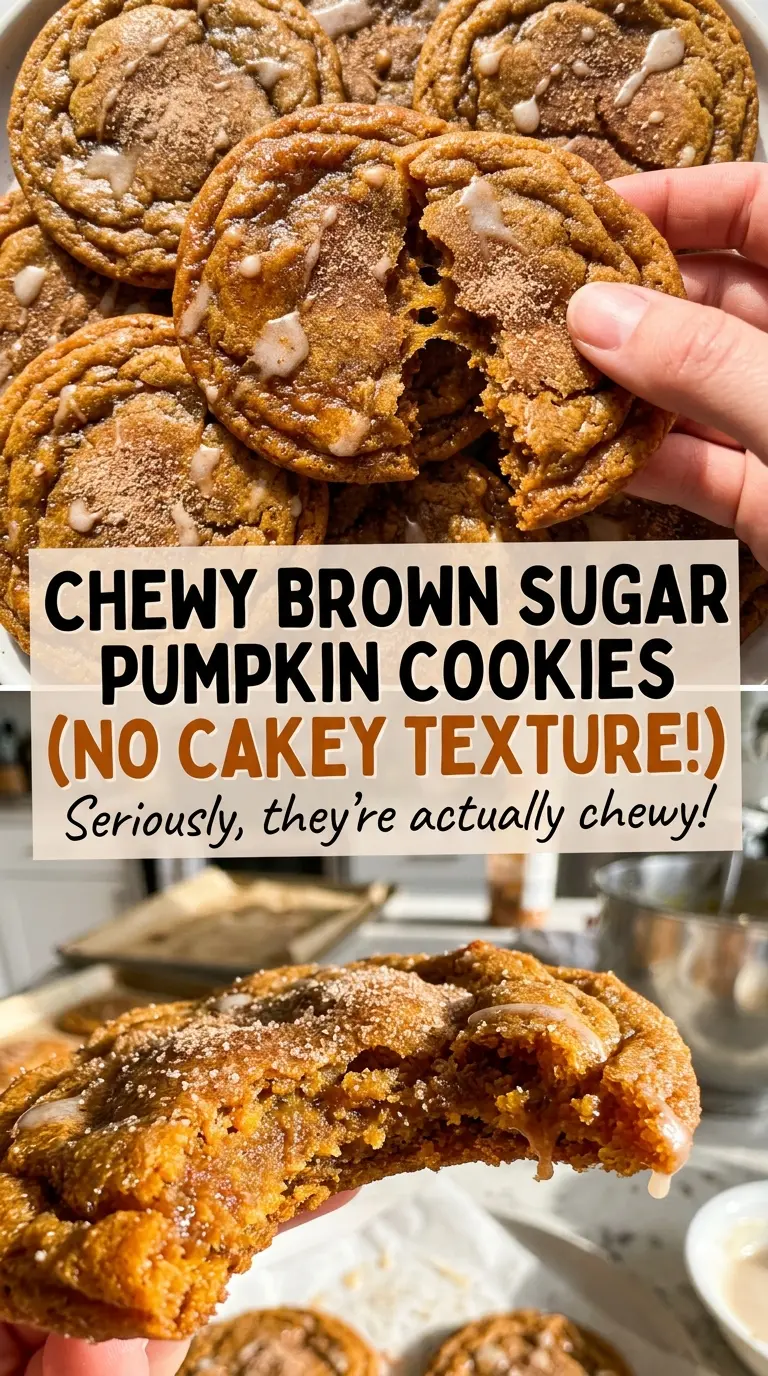
The first sign these cookies are on track is a dough that feels softer than a classic brown sugar cookie but not wet or loose. Pumpkin brings plenty of moisture, and too much of it can push a cookie toward cakey before the edges have a chance to set. These chewy brown sugar pumpkin cookies get their soft centers from a small, measured amount of pumpkin rather than a scoop straight from the can.
I press the puree between paper towels until it’s thick and concentrated, then whisk it into melted butter, brown sugar, granulated sugar, an egg yolk, and vanilla. There’s no creaming step to fill the dough with air, and the short chill gives the flour time to absorb the moisture before baking. The result is a tender cookie with lightly browned edges, a soft middle, and cinnamon-ginger warmth in every bite.

Kitchen Note
Leave the cookies on the baking sheets for the full 10 minutes before moving them. They’re delicate when hot, and that short rest lets the edges firm up without drying out the centers.
Save these chewy brown sugar pumpkin cookies for a fall bake: soft middles, warm spices, and no cakey texture.
Why These Pumpkin Cookies Aren’t Beaten Until Fluffy
Traditional cookies often start by beating softened butter and sugar until airy. Here, the butter is melted, cooled, and whisked with the sugars only until they’re combined. That gives you a cohesive base without building in the extra air that can make a pumpkin cookie read more like a little cake.
The pumpkin still brings moisture, so the dough needs structure from the flour and a little time to settle before it goes into the oven. The goal isn’t a stiff dough; it should be soft enough to scoop, but it shouldn’t look shiny or pour like batter. Chilling helps it hold its shape while the edges bake through, leaving the middle tender instead of puffy. It’s a small difference in handling, but it changes the bite from cakey to chewy.
What the Pumpkin, Sugars, and Spices Bring to the Dough
- Canned pumpkin puree — Plain puree is the right choice; pumpkin pie filling is already sweetened and spiced. A store brand works well. Blotting matters more than choosing a premium can because watery puree can throw off the dough’s texture.
- Melted unsalted butter — Butter carries the brown sugar flavor and gives the dough its rich, tender bite. A standard grocery-store butter is fine; use unsalted so the salt level stays in your control. For a dairy-free batch, use baking sticks made to replace butter, not soft tub spread.
- Light brown sugar and granulated sugar — Brown sugar gives the cookies their molasses note and chew, while granulated sugar keeps the sweetness from tasting heavy. Dark brown sugar works in place of light brown for a deeper molasses flavor and a slightly richer-tasting cookie.
- Egg yolk — The yolk adds richness and helps bind the dough without the extra liquid from an egg white. It’s not a direct swap for a whole egg; using the full egg changes the moisture balance and can move the texture toward cakey.
- All-purpose flour — Spoon it into the measuring cup and level the top rather than packing the cup. Too much flour makes the cookies dry and tight. A one-to-one gluten-free baking flour blend can replace it, though the cookies may have a slightly different, less supple crumb.
- Cinnamon, ginger, nutmeg, and baking soda — Fresh, fragrant ground spices make a noticeable difference, but everyday pantry jars are fine if they still smell lively. Baking soda provides the lift and browning; baking powder isn’t a direct replacement because it behaves differently in the dough.
- Vanilla extract — Pure vanilla gives a rounded aroma, while imitation vanilla works if that’s what you have. There’s no need for an expensive bottle here; the brown sugar and spices do most of the talking.
From Blotted Pumpkin to Soft-Centered Cookies
Thicken the Pumpkin and Prepare the Pans
Heat the oven to 350°F and line two rimmed baking sheets with parchment paper. Sandwich the pumpkin puree between layers of paper towels and press until about one-third cup remains. It should look thicker and less glossy than it did straight from the can. If the towels are soaked through, replace them and keep blotting rather than leaving excess liquid in the bowl.
Whisk the Butter-Sugar Base
Let the melted butter cool for 10 minutes, then whisk it with both sugars until combined. Whisk in the egg yolk and vanilla, followed by the blotted pumpkin. The mixture will look thick and unified, not pale and fluffy. If the butter is still hot, give it more time to cool before adding the yolk.
Bring the Dough Together and Chill
In a separate bowl, whisk the flour, baking soda, salt, cinnamon, ginger, and nutmeg so the spices are spread through the flour. Stir that mixture into the pumpkin base just until no dry streaks remain; stop as soon as the flour disappears. Cover the dough and chill it for 45 to 60 minutes. Don’t keep stirring to make it perfectly smooth, since extra mixing can make the finished cookies tougher.
Scoop, Bake, and Let the Edges Set
Scoop the dough into 1 1/2-tablespoon portions, arranging 12 on each prepared sheet with about 2 inches between them. Bake both sheets for 10 to 12 minutes, rotating their positions halfway through. Look for lightly browned, set edges while the centers still appear soft; waiting for the centers to look firm in the oven can leave the cookies overbaked. Let them cool on the sheets for 10 minutes, then move them to a wire rack to cool completely.
Three Ways to Change the Spice or Make a Special-Diet Batch
Make the spice more cinnamon-forward
Replace the ground ginger with the same measure of additional cinnamon. You’ll lose ginger’s gentle warmth and get a more familiar cinnamon-cookie flavor, while keeping the pumpkin and brown sugar combination intact.
Make them dairy-free
Use dairy-free baking sticks in place of the unsalted butter, measuring them in the same amount. Melt and cool them just as you would the butter. The cookies keep their soft texture, though the flavor may be a little less buttery depending on the brand.
Bake a gluten-free version
Swap the all-purpose flour for a cup-for-cup gluten-free baking blend intended for cookies. A blend that includes a binder is the easiest choice. Expect a slightly different crumb, and use the same visual cues for doneness rather than waiting for the centers to look firm.
Storage and Reheating
- Refrigerator: Refrigeration isn’t needed. Keep the cooled cookies in an airtight container at room temperature for up to 4 days; the refrigerator can make them firm.
- Freezer: Freeze fully cooled cookies in an airtight container for up to 2 months, separating layers with parchment. Thaw at room temperature.
- Reheating: Warm a cookie in the microwave for about 5 seconds, then add another short burst if needed. Long heating can make the edges tough and the sugar-heavy cookie overly firm.
Questions That Come Up When Baking Pumpkin Cookies
Chewy Brown Sugar Pumpkin Cookies (No Cakey Texture)
Ingredients
Equipment
Method
- Heat the oven to 350°F.
- Line two rimmed baking sheets with parchment paper.
- Press the pumpkin puree between layers of paper towels, blotting until about 1/3 cup remains.
- Melt the unsalted butter and let it cool for 10 minutes.
- Whisk the cooled melted butter with the brown sugar and granulated sugar until combined.
- Whisk in the egg yolk and vanilla extract.
- Whisk in the blotted pumpkin puree.
- In a separate bowl, whisk together the all-purpose flour, baking soda, kosher salt, cinnamon, ginger, and nutmeg.
- Stir the flour mixture into the pumpkin mixture just until no dry streaks remain.
- Cover the dough and chill for 45 to 60 minutes.
- Scoop the dough into 1 1/2-tablespoon portions.
- Arrange 12 portions on each prepared baking sheet, spacing them about 2 inches apart.
- Bake both sheets for 10 to 12 minutes, until the edges are set and lightly browned while the centers still look soft.
- Rotate the sheets' positions halfway through baking.
- Let the cookies cool on the baking sheets for 10 minutes.
- Transfer the cookies to a wire rack to cool completely.