
Biscoff Cinnamon Rolls
As the rolls bake, the edges turn golden before the centers do, and the kitchen starts smelling like cinnamon toast. These Biscoff cinnamon rolls bring that warm spice together with…

By Ava
•
•
Reading time: 10 min
Tip: save now, make later.
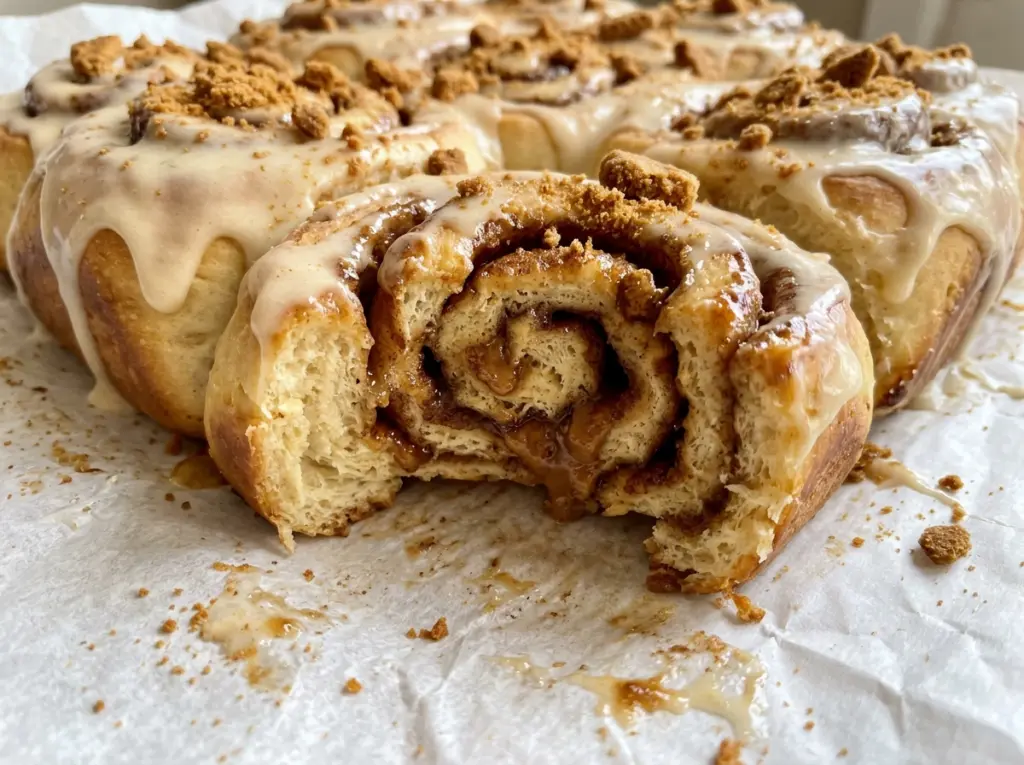
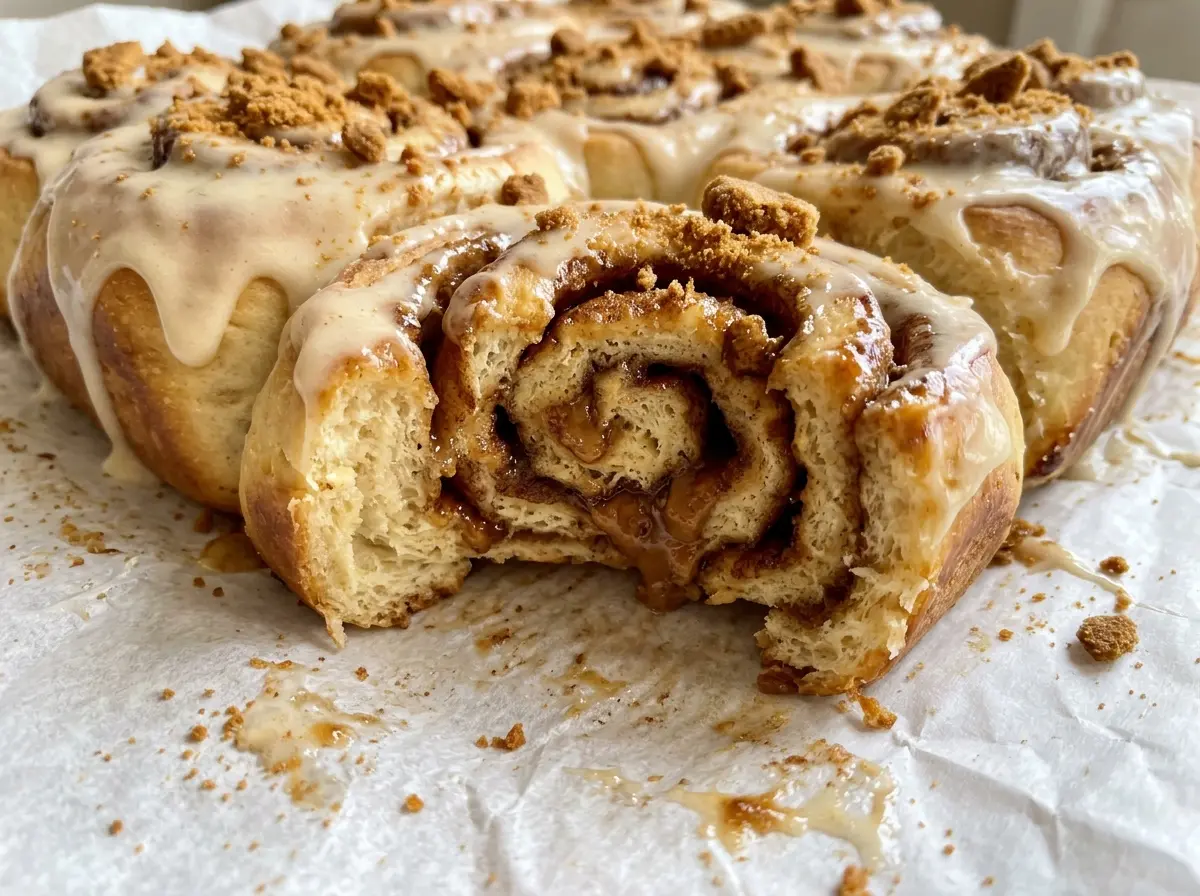
As the rolls bake, the edges turn golden before the centers do, and the kitchen starts smelling like cinnamon toast. These Biscoff cinnamon rolls bring that warm spice together with a soft, rich dough and a smooth cream cheese frosting. They’re a little more special than a basic cinnamon roll, but the process is familiar: mix, knead, let the dough rise, then fill and bake.
I keep the melted butter cooled before it goes into the dough, and I give the dough time to rise until it’s doubled rather than watching the clock alone. The filling is spread in two layers: softened Biscoff first, then cinnamon sugar. That gives every roll a clear swirl instead of a filling that disappears into the dough. Once the rolls have rested for 10 minutes, the frosting softens over the warm tops without running straight off.
Kitchen Note
Let the melted butter cool before you add it to the dough. Butter that’s still hot can work against the yeast and make the eggs clump, so give it a few minutes while the yeast turns foamy.
Save these Biscoff cinnamon rolls for a weekend bake: soft dough, a cinnamon-sugar ribbon, and cookie butter in every swirl.
Why the Cinnamon Sugar Goes on Top of the Biscoff
Cookie butter is already thick and sweet, so I spread it across the dough first and keep the cinnamon sugar separate. That order matters when you roll the dough into a log. The Biscoff makes a smooth, sticky layer, while the brown sugar and cinnamon create a distinct spiced ribbon through the finished rolls.
Mixing the filling into one paste would make it harder to spread evenly across the rectangle. It can also leave some parts of the dough with more filling than others. Instead, work the softened spread over the surface in an even layer, then sprinkle the cinnamon-sugar mixture over it. A few small bare patches aren’t a problem; a thick mound in one spot is more likely to squeeze out as you roll.
The 12-by-16-inch rectangle gives you room to create a long log with plenty of visible spirals. Starting at a long edge keeps the rolls a manageable size and gives the filling a chance to wind through each piece. Once they’re cut and risen, the spirals sit faceup in the baking dish, where you can see the cinnamon-sugar layers set as they bake.
What Each Ingredient Brings to These Biscoff Rolls
- Whole milk — It gives the dough richness and helps make the crumb soft. Use the stated temperature range when you warm it; milk that’s too hot can interfere with the yeast. A standard grocery-store whole milk works well here.
- Active dry yeast — This is the leavening that gives the dough its rise, and the foamy start confirms it’s working before you mix in the rest. Use fresh yeast for a dependable rise. Instant yeast isn’t a direct swap without changing the activation method and timing.
- Egg and egg yolk — The whole egg helps bind the dough, while the extra yolk adds richness. Room-temperature eggs blend more smoothly into the milk and butter mixture. There isn’t a tested egg-free replacement for this enriched dough.
- Unsalted butter — Butter rounds out the dough and keeps it tender. Regular grocery-store butter is fine; unsalted lets the measured fine salt stay in control. Salted butter would change the seasoning, so I stick with unsalted.
- All-purpose flour — It gives the rolls enough structure to hold their shape without making the crumb tough. A basic, unbleached or bleached all-purpose flour works; no specialty flour is needed. The reserved flour is there only if the dough needs a little help while kneading.
- Biscoff cookie butter — Its sweet, spiced cookie flavor is what makes these rolls different from a standard cinnamon roll. Choose the smooth spread and soften it enough to spread evenly without tearing the dough. Another spread would change the defining flavor and may not behave the same way.
- Light brown sugar and cinnamon — Brown sugar brings a moist sweetness, and ground cinnamon gives the filling its familiar warmth. Fresh, fragrant cinnamon makes the biggest difference; the brown sugar can be a standard pantry staple.
- Cream cheese — Softened cream cheese gives the frosting its slight tang and thick, smooth finish. A basic block-style cream cheese works well. I don’t have a direct dairy-free replacement that keeps this frosting’s texture.
- Powdered sugar and vanilla — Powdered sugar makes the frosting smooth, while vanilla rounds out the cream cheese. Standard powdered sugar and vanilla extract are both good choices here; the more expensive versions aren’t necessary.
From Foamy Yeast to Soft, Swirled Rolls
Wake Up the Yeast, Then Mix the Dough
Stir the warm milk, active dry yeast, and granulated sugar together in a large bowl. Give the mixture 5 to 10 minutes to turn foamy; if the surface stays flat, pause before adding the eggs and butter because the yeast may not be active. Whisk in the room-temperature egg, egg yolk, and cooled melted butter until combined. Stir in the flour and salt until there are no dry pockets and the dough looks shaggy.
Knead Until Smooth, Then Let It Double
Turn the dough onto a lightly floured surface and knead for 8 to 10 minutes, using the reserved tablespoon of flour as needed. At first it will feel uneven, then become smoother and more elastic; adding all the extra flour at once can make it stiff. Put the dough in a large bowl coated with nonstick cooking spray and turn it to coat. Cover and leave it in a warm place for 1 to 1 1/2 hours, until doubled in size.
Layer the Filling and Shape the Spirals
Stir the brown sugar and cinnamon together in a small bowl. Roll the dough into a 12-by-16-inch rectangle, spread the softened Biscoff evenly over it, and sprinkle on the cinnamon sugar. Starting at a long edge, roll the dough into a log and cut it into 12 equal pieces. Arrange the pieces cut side up in a sprayed 9-by-13-inch baking dish, cover, and let them rise for 30 to 45 minutes, until puffy, while the oven heats to 350°F.
Bake Until the Centers Set, Then Frost Warm
Bake the rolls for 23 to 28 minutes, until the tops are golden and the centers are set. The middle rolls may look paler than the ones around the edge, so check their centers rather than waiting for every top to brown evenly. Beat the softened cream cheese, powdered sugar, and vanilla until the frosting is smooth. Let the rolls rest in the pan for 10 minutes, then spread the frosting over them while they’re warm.
Two Ways to Change the Finish Without Changing the Dough
Leave the frosting off
For a less-sweet finish, skip the cream cheese frosting and serve the rolls plain. The dough and Biscoff-cinnamon filling still make a complete roll, though you’ll lose the tangy contrast and creamy top.
Frost after the rolls cool
For a thicker, more defined layer of frosting, wait until the rolls are completely cool before spreading it on. The frosting will sit on top instead of softening into the warm surface, so the finish looks neater and tastes less melty.
Storage and Reheating
- Refrigerator: Keep frosted rolls covered and refrigerated for 3 to 4 days. The dough will firm up in the cold, and the frosting will stay set.
- Freezer: Freeze baked rolls without frosting. Once cool, wrap them individually and place them in a sealed freezer bag for up to 2 months; thaw overnight in the refrigerator, then frost.
- Reheating: Warm an individual roll in the microwave in 10-second bursts until just warm. Stop before it gets hot, or the frosting will melt and the dough can turn tough.
Questions That Come Up While Making Biscoff Cinnamon Rolls
Biscoff Cinnamon Rolls
Ingredients
Equipment
Method
- Stir the warm milk, yeast, and granulated sugar together in a large bowl and let stand for 5–10 minutes, until foamy.
- Whisk in the egg, egg yolk, and melted butter until combined.
- Stir in 3 1/2 cups flour and the salt until a shaggy dough forms.
- Knead on a lightly floured surface for 8–10 minutes, using the reserved 1 tablespoon flour as needed, until smooth and elastic.
- Spray a large bowl with cooking spray, place the dough in it, and turn to coat.
- Cover and let rise in a warm place for 1–1 1/2 hours, until doubled in size.
- Stir the brown sugar and cinnamon together in a small bowl.
- Roll the dough into a 12x16-inch rectangle.
- Spread the Biscoff evenly over the dough.
- Sprinkle the cinnamon-sugar mixture over the top.
- Starting at a long edge, roll the dough into a log.
- Cut the log into 12 equal pieces.
- Arrange the pieces cut side up in a sprayed 9x13-inch baking dish.
- Cover the rolls and let rise for 30–45 minutes, until puffy, while the oven preheats to 350°F.
- Bake for 23–28 minutes, until the tops are golden and the centers are set.
- Beat the cream cheese, powdered sugar, and vanilla in a medium bowl until smooth.
- Let the rolls rest in the pan for 10 minutes.
- Spread the frosting over the warm rolls.