
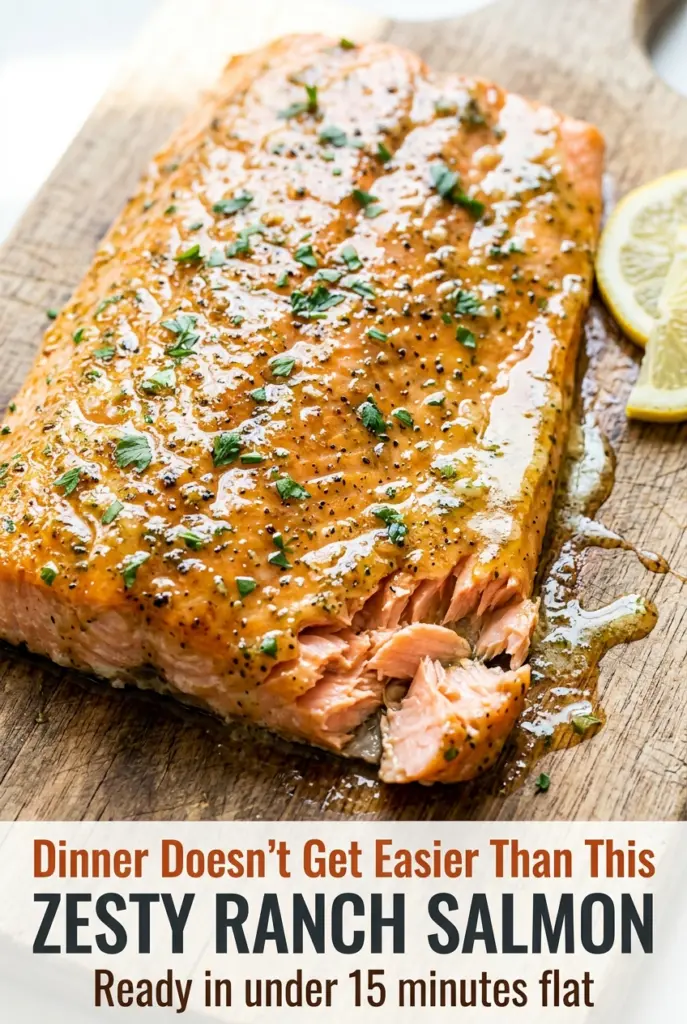
Zesty Ranch Salmon
Flaky salmon with a golden ranch-butter crust is the kind of dinner that disappears fast, even when the table starts with people claiming they "don’t really need fish." The butter…

By Ava
•
•
Reading time: 8 min
Tip: save now, make later.
Flaky salmon with a golden ranch-butter crust is the kind of dinner that disappears fast, even when the table starts with people claiming they “don’t really need fish.” The butter melts into the top of the fillets, the ranch seasoning turns savory and tangy, and the quick broil gives you those toasted edges that make every bite a little more interesting than plain baked salmon.
What makes this version work is the way the ranch butter acts like both seasoning and insulation. Softened butter spreads evenly, clings to the fish, and helps the salmon stay moist while the oven does the work. The lemon juice and zest keep the richness in check, and the garlic gives the crust a deeper, rounder flavor than a seasoning packet alone.
Below, you’ll find the small details that keep the salmon tender instead of dry, plus a few smart swaps if you’re working with skin-on fillets, want to change the herbs, or need a dairy-free plan.
The ranch butter melted into the salmon and the broil gave the top this perfect little crust. Mine hit 130°F right on time and stayed so moist, even the thickest piece flaked cleanly.
This zesty ranch salmon is the kind of weeknight dinner that earns a permanent spot in the rotation.
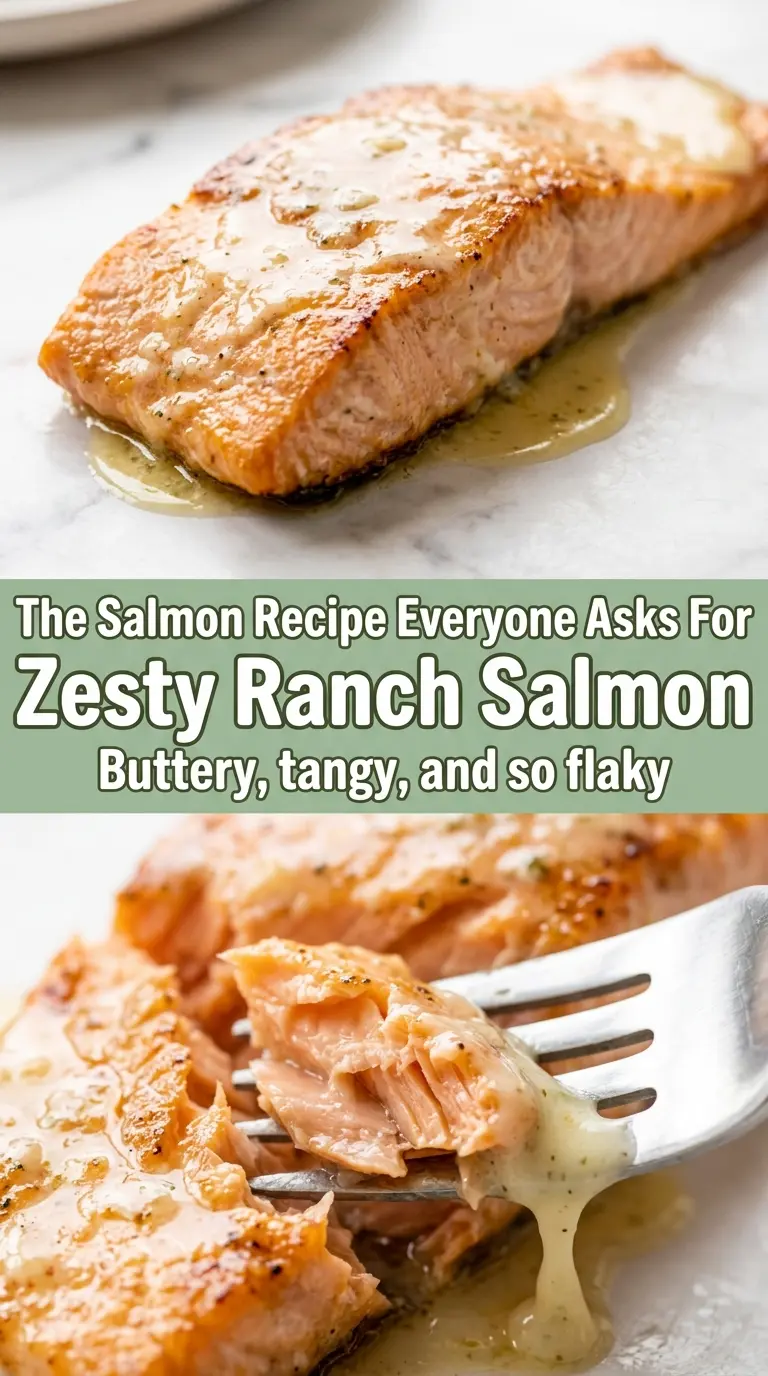
The ranch butter crust that keeps salmon from drying out
The biggest mistake with baked salmon is treating the top like garnish instead of protection. Here, the butter mixture does three jobs at once: it seasons the fish, helps the surface brown, and keeps the heat from hitting the salmon too aggressively. That’s why the fillets stay tender while the top gets that lightly blistered, savory crust.
Broiling at the end matters more than people think. If you broil too early, the butter can separate before the salmon is cooked through. Bake first, then give it a short blast under the broiler once the fish is almost done. That’s the difference between a nice finish and an oily pan.
- Salmon fillets — Use fillets that are close in thickness so they finish at the same time. Skin-on or skinless both work, but skin-on gives you a little more forgiveness if your oven runs hot.
- Unsalted butter — Softened butter is what lets the seasoning spread evenly. Salted butter works in a pinch, but the ranch mix already brings plenty of salt, so taste that mixture before adding anything else.
- Dry ranch seasoning mix — This is the backbone of the flavor. Homemade ranch seasoning can work, but the packet has the right balance of herbs, garlic, onion, and salt for a quick crust.
- Lemon juice and zest — Juice brings brightness, while zest carries the aromatic oil that stays present even after baking. Don’t skip the zest if you want the salmon to taste fresh instead of just rich.
- Garlic — Fresh minced garlic gives the butter a sharper, more savory edge than garlic powder. If all you have is powder, use a small pinch so it doesn’t turn dusty or bitter under the broiler.
How to bake the salmon so the top browns before the fish dries out
Mix the ranch butter until it’s smooth and spreadable
Stir the softened butter, ranch seasoning, garlic, lemon juice, lemon zest, and black pepper until the mixture looks uniform and pasty, not streaked. If the butter is too cold, it won’t spread cleanly and you’ll tear the salmon trying to coat it. If it’s melted, it will run off the fish before it has a chance to brown.
Coat the fillets in a thick, even layer
Lay the salmon on the lined sheet and spread the butter over the top in a generous layer, pressing lightly so it sticks. Leave the sides alone; the top is where you want the flavor and browning to happen. If the layer looks thin, you’ll lose too much seasoning in the pan.
Bake just until the center is barely opaque
Slide the salmon into the 400°F oven and bake until the thickest part flakes with a fork and reaches 130°F. The fish should look mostly opaque with just a hint of translucence in the center when you check early. If you wait until it looks fully firm in the oven, it’s already on the dry side by the time it hits the plate.
Broil only long enough to color the butter
Switch to broil for 1 to 2 minutes and stay close to the oven door. You’re looking for bubbling butter and a few deep golden spots, not a full brown crust. Broilers move fast, and once the dairy darkens too much, the flavor turns sharp instead of nutty.
How to adapt this when you’re short on one key ingredient
Make it dairy-free without losing the crust
Use a good dairy-free butter with a firm texture, not a tub spread. The flavor will be slightly less rich, but it still creates a coating that holds the seasoning and browns under the broiler.
Use skin-on salmon for extra insurance
Skin-on fillets buy you a little protection against overcooking, especially if your pieces are uneven. The skin won’t crisp in this recipe, but it helps keep the flesh moist and makes the fillets easier to lift off the pan.
Swap the ranch packet for homemade seasoning
If you don’t have a packet, use a mix of dried dill, parsley, garlic powder, onion powder, salt, and pepper. You’ll get a softer, more herb-forward flavor and less of that classic ranch punch, but the salmon still comes out balanced and savory.
Storage and Reheating
- Refrigerator: Store leftovers in an airtight container for up to 2 days. The crust will soften, but the salmon stays good if you don’t let it sit out.
- Freezer: You can freeze cooked salmon, but the texture gets a little softer after thawing. Wrap it tightly and use within 1 month for the best result.
- Reheating: Warm it gently in a 275°F oven, covered loosely with foil, just until heated through. High heat dries salmon fast and can make the butter topping separate.
Answers to the questions worth asking
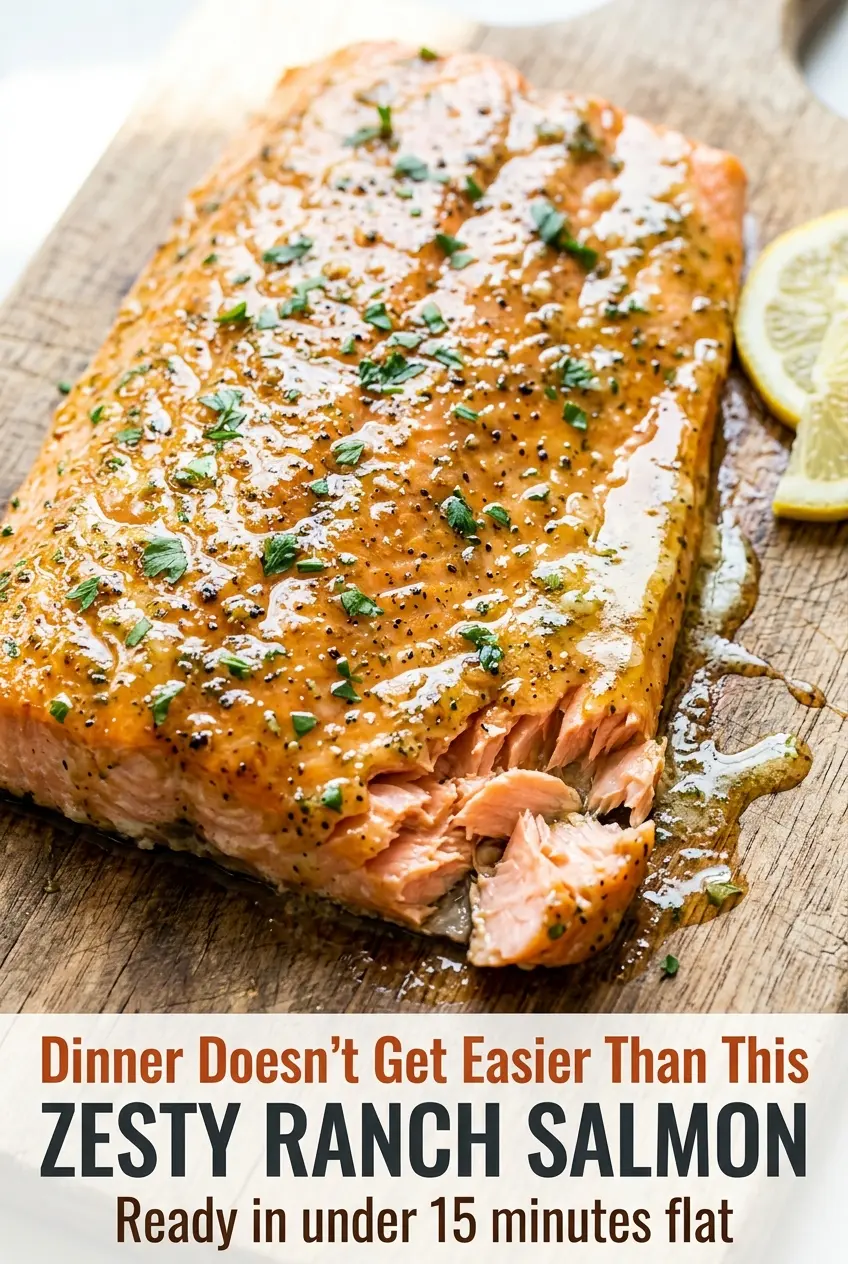
Zesty Ranch Salmon
Ingredients
Equipment
Method
- Preheat the oven to 400°F. Line a baking sheet with foil or parchment and pat the salmon fillets dry with a paper towel.
- In a small bowl, mash together the softened unsalted butter, dry ranch seasoning mix, minced garlic, lemon juice, lemon zest, and black pepper until fully combined into a smooth paste.
- Arrange the salmon fillets on the baking sheet and spread the ranch butter generously over the top of each piece, pressing gently so it clings.
- Bake at 400°F for 10-12 minutes, until the salmon flakes easily with a fork and reaches an internal temperature of 130°F.
- Switch the oven to broil and cook for 1-2 minutes more, watching closely, until the top is golden and slightly bubbling.
- Let the salmon rest for 2 minutes, then top with fresh parsley and serve with lemon slices.