
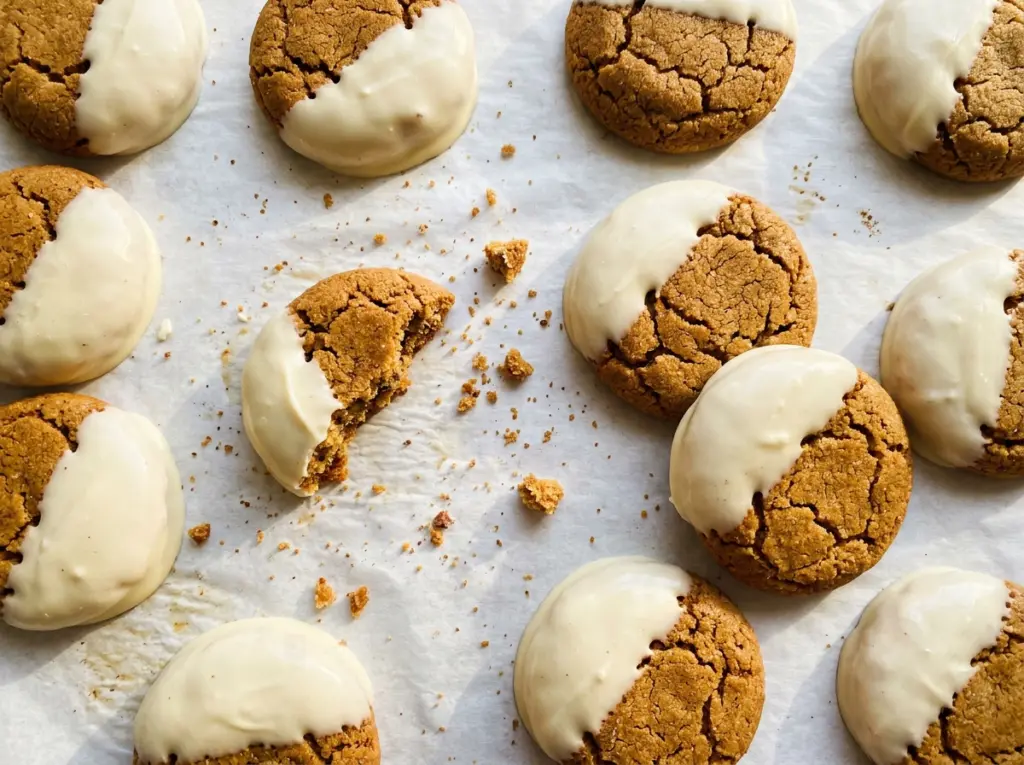
White Chocolate Dipped Gingersnap Cookies
As the first tray bakes, the dough balls puff and their tops split into little crags; that crackle is the cue I watch for before I pull them. I leave…

By Ava
•
•
Reading time: 9 min
Tip: save now, make later.
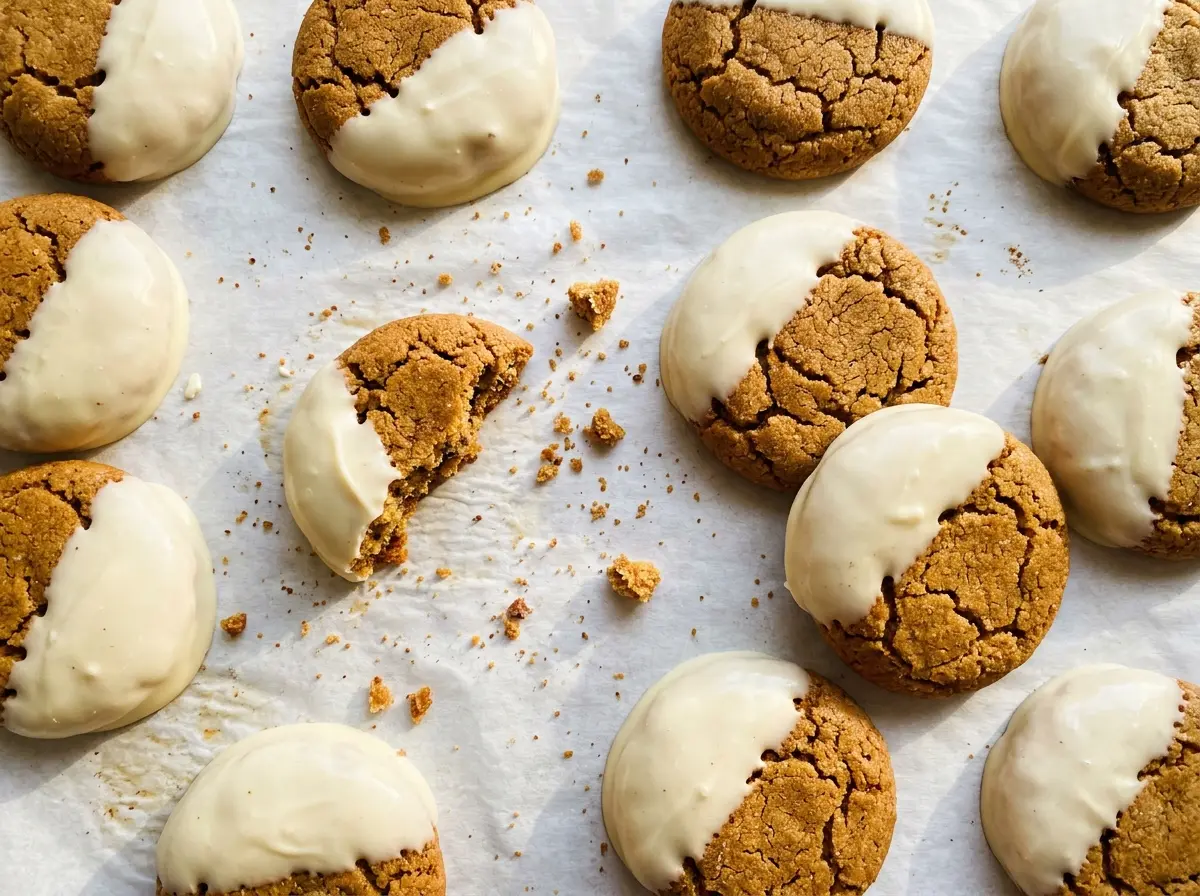
As the first tray bakes, the dough balls puff and their tops split into little crags; that crackle is the cue I watch for before I pull them. I leave them on the pan for five minutes because they’re tender right out of the oven, then move them to a rack to finish cooling. The result is a warmly spiced cookie with a sugar-dusted, crackled surface.
These white chocolate dipped gingersnap cookies get a half dip, not a full dunk. White chocolate adds a creamy sweetness at the edge of each bite, while the uncovered half keeps the ginger, cinnamon, and cloves in the foreground. The contrast is what makes the coating feel like part of the cookie instead of a blanket over it.
One batch makes 30 cookies, and the cookies are good even before they’re dipped. Once the chocolate sets, each bite starts with a little sweetness and finishes with the unmistakable warmth of ginger and molasses.
Kitchen Note
Wait until the cookies are completely cool before dipping them. Even a little residual warmth can make the white chocolate run instead of holding a neat half-coat; give the coating time to firm on the parchment before moving the cookies.
Save these white chocolate dipped gingersnap cookies for a crackled, warmly spiced batch finished with a sweet half-dip.
Why Blackstrap Molasses Throws Off a Gingersnap
Molasses isn’t just there to sweeten the dough. It gives these cookies their deep, rounded gingerbread flavor and contributes to the soft, workable dough you roll in sugar. Unsulphured molasses has the mellow sweetness this spice mix needs; blackstrap is much more concentrated and bitter, so the flavor can turn sharp and heavy instead of warm.
That difference matters even though the amount looks small beside the flour and sugar. Blackstrap also tends to be thicker, which can change how the dough handles and how the baked cookie tastes. Use regular unsulphured molasses for the intended balance, and don’t try to compensate for blackstrap by adding extra sugar. The ginger, cinnamon, and cloves should come through clearly, with molasses underneath rather than taking over.
Why a Baking Bar Gives These Gingersnaps a Cleaner Dip

- White chocolate baking bar — A finely chopped bar melts into a fluid coating that’s easier to dip than many white chocolate chips, which can contain stabilizers that make them thicker. Choose a bar you enjoy eating; the flavor is easy to notice against the spice. White chocolate melting wafers are a workable alternative, though they may taste sweeter and less creamy.
- All-purpose flour — It gives the cookies enough structure to hold their shape as they bake. Spoon it into the measuring cup and level the top rather than packing it down; too much flour can leave the dough stiff and the cookies dry.
- Softened unsalted butter — Soft butter creams with the sugar and helps create an even dough. It should give slightly when pressed, not look shiny or melted. Unsalted butter also lets the salt level stay controlled.
- Ground spices — Ginger leads, with cinnamon and cloves adding depth behind it. Fresh, fragrant spices make a noticeable difference here; if yours have been sitting open in the cupboard for years, the cookies will taste flatter.
- Granulated sugar — Sugar goes both into the dough and on the outside. The coating gives the baked tops their sparkling, crackled look, so stick with granulated sugar rather than swapping in brown sugar for rolling.
From Chilled Dough to a Neat Half-Dip
Whisk the spices and cream the butter
Heat the oven to 350°F and line an 18×13-inch baking sheet with parchment. Whisk the flour with the ginger, baking soda, cinnamon, cloves, and salt so the leavener and spices are distributed before they meet the butter. Beat the softened butter with 1 cup of the sugar on medium for 2 to 3 minutes, until it looks pale and fluffy. If the butter is still firm, it won’t cream evenly; if it’s melted, the dough can turn greasy.
Mix gently, then chill the dough
Beat in the egg and molasses until combined, scraping down the bowl where needed. Add the flour mixture and mix on low only until the last dry streaks disappear. Stop there; prolonged mixing can make the cookies tougher. Cover the dough and refrigerate it for 30 minutes so it’s easier to scoop and roll.
Roll, sugar-coat, and bake in batches
Put the remaining sugar in a shallow bowl, scoop the dough into 1-tablespoon portions, and roll each into a ball before coating it in sugar. Arrange about 15 balls 2 inches apart on the prepared sheet; crowding them can leave too little room for the cookies to spread. Bake for 10 to 12 minutes, until the tops are crackled and the edges are set. Cool on the sheet for 5 minutes, transfer to a rack, and let the baking sheet cool completely before baking the remaining dough.
Melt the chocolate and dip halfway
Place the finely chopped white chocolate in a microwave-safe bowl and heat it at 50% power for 30 seconds. Stir, then continue in 15-second intervals, stirring each time, until the chocolate is smooth; white chocolate scorches easily, so don’t rush it with full power. Dip half of each completely cooled cookie, letting the excess drip back into the bowl. Set the cookies on parchment until the coating is firm, about 30 to 45 minutes.
Three Smart Ways to Change the Spice or Chocolate
A darker chocolate finish
Use a chopped dark chocolate baking bar in place of the white chocolate and dip the cookies the same way. The less-sweet, slightly bitter coating makes the ginger and molasses taste bolder, so choose a chocolate you like on its own.
A sharper ginger bite
Add another 1/2 teaspoon of ground ginger to the dry ingredients for a more assertive, warming finish. The added ginger doesn’t change the method, but it makes the spice stand up more strongly to the white chocolate.
A gluten-free batch
Replace the all-purpose flour with a cup-for-cup gluten-free baking blend that includes xanthan gum. Keep the same mixing and chilling method; the finished cookies may have a slightly more delicate or grainy texture, depending on the blend.
Storage and Reheating
- Refrigerator: Refrigeration isn’t necessary. Store the cookies in an airtight container at room temperature for up to 5 days; chilling can firm them and may leave condensation on the chocolate as they warm.
- Freezer: Freeze fully set cookies in an airtight container with parchment between layers for up to 2 months. Thaw them in the closed container at room temperature before uncovering.
- Reheating: Don’t reheat dipped cookies, since heat will soften or melt the white chocolate. Let chilled or thawed cookies come to room temperature before serving.
Questions That Come Up With These Crackled, Chocolate-Dipped Cookies
White Chocolate Dipped Gingersnap Cookies
Ingredients
Equipment
Method
- Heat the oven to 350°F and line an 18x13-inch baking sheet with parchment paper.
- Whisk the flour, ginger, baking soda, cinnamon, cloves, and salt in a medium bowl.
- Beat the butter and 1 cup of the sugar with an electric mixer on medium speed until light and fluffy, 2 to 3 minutes.
- Beat in the egg and molasses until combined, scraping down the bowl as needed.
- Add the flour mixture and mix on low just until no dry streaks remain.
- Cover and refrigerate the dough for 30 minutes.
- Put the remaining 1/3 cup sugar in a shallow bowl.
- Scoop the dough into 1-tablespoon portions, roll into balls, and coat in the sugar.
- Arrange about 15 balls 2 inches apart on the prepared sheet.
- Bake for 10 to 12 minutes, until the tops are crackled and the edges are set.
- Cool the cookies on the sheet for 5 minutes, then transfer to a wire rack.
- Cool the baking sheet completely before baking the remaining dough.
- Put the chopped white chocolate in a microwave-safe bowl and microwave at 50% power for 30 seconds.
- Stir, then continue microwaving in 15-second intervals, stirring each time, until smooth.
- Dip half of each completely cooled cookie into the melted chocolate.
- Let the excess chocolate drip back into the bowl, then place the cookies on parchment until the coating is firm, about 30 to 45 minutes.