
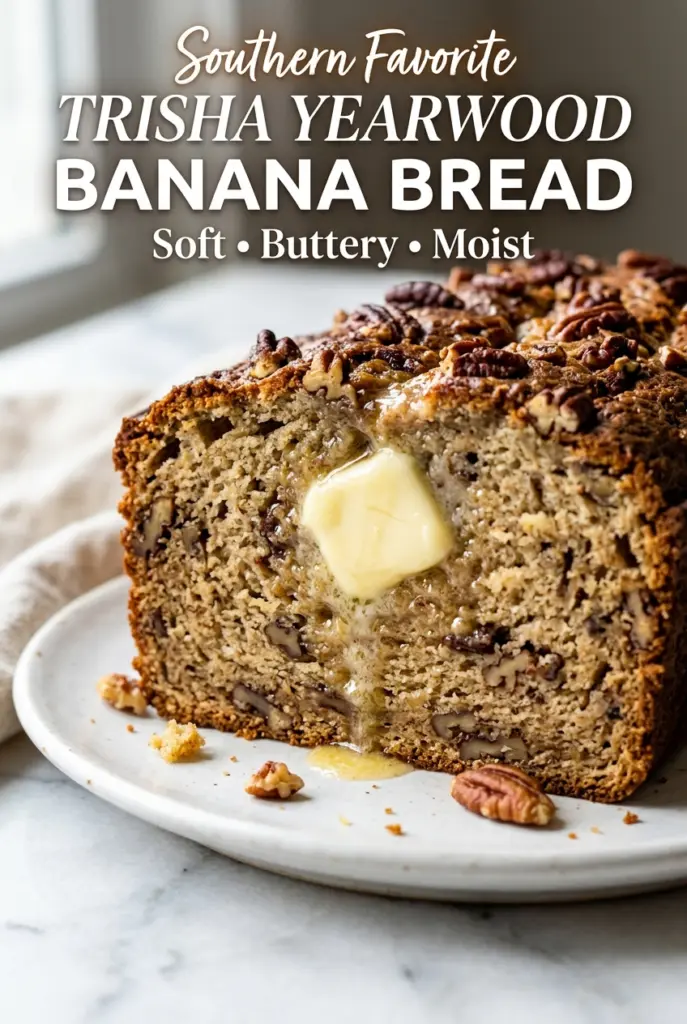
Trisha Yearwood Banana Bread
Banana bread earns its keep when the crumb stays soft for days and the top bakes into a deep golden dome with just enough sweetness to stand on its own.…

By Ava
•
•
Reading time: 9 min
Tip: save now, make later.
Banana bread earns its keep when the crumb stays soft for days and the top bakes into a deep golden dome with just enough sweetness to stand on its own. This version hits that balance beautifully. It leans buttery and tender instead of dense, with ripe bananas carrying the flavor and toasted pecans giving each slice a little crunch.
The difference is in the mixing and the moisture. Creaming the butter and sugar first gives the loaf lift, while buttermilk keeps the texture plush without making it heavy. The bananas should be very ripe — the kind with lots of brown spots — because that’s where the strongest banana flavor comes from. A quick fold at the end keeps the bread tender instead of tough.
Below you’ll find the small details that matter: when to stop mixing, how to tell the center is baked through, and how to adapt the loaf if you want to skip the nuts or make it ahead.
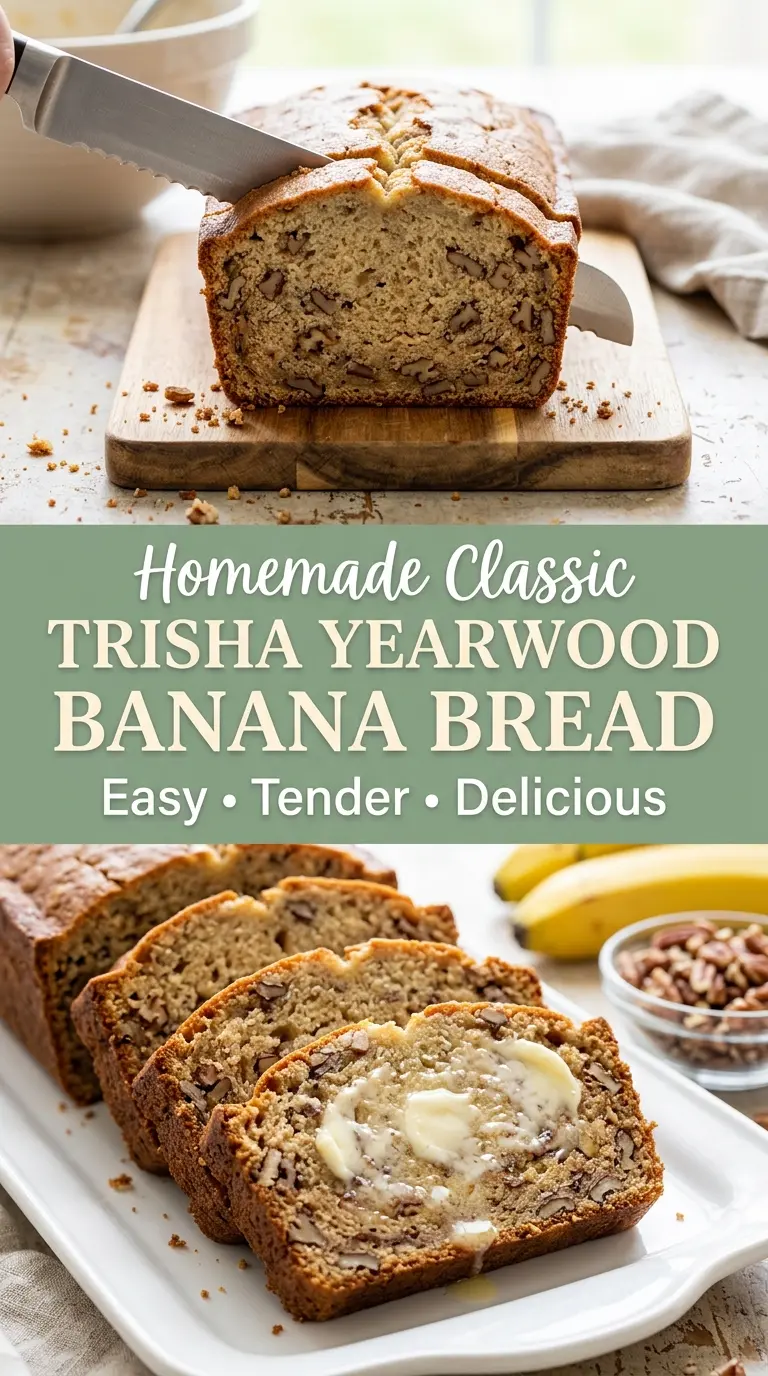
The loaf came out moist all the way through, and the toasted pecans on top gave it a great little crunch. I baked mine at 65 minutes and it sliced cleanly once it cooled.
Save this Trisha Yearwood Banana Bread for a moist, buttery loaf with toasted pecans and a tender crumb.
The Trick to Banana Bread That Stays Soft Instead of Heavy
The most common banana bread problem is a loaf that looks done on the outside but turns gummy in the middle, or bakes up so dense it eats like cake that forgot to rise. That usually comes from two things: overmixing once the flour goes in, and using bananas that aren’t ripe enough to bring enough moisture and sweetness to the batter. Here, the batter is mixed just until the flour disappears, then left alone. That restraint matters more than almost anything else.
Cremeing the butter and sugar first also gives the bread a better structure than a one-bowl dump method. It traps air, which helps the loaf rise evenly instead of sinking in the center. The buttermilk matters too. It loosens the batter just enough to keep the crumb soft without making the loaf wet or fragile.
What Each Ingredient Is Actually Doing in This Loaf
- Unsalted butter — This gives the bread its rich, bakery-style flavor and helps create the soft crumb when it’s creamed with the sugar. Salted butter will work in a pinch, but the loaf may taste a little less clean and balanced.
- Granulated sugar — Sugar sweetens the loaf, but it also helps tenderize the crumb and brown the top. If you cut it too much, the bread turns dry faster.
- Ripe bananas — These are the main flavor and moisture source. Use bananas with a lot of brown spotting; yellow bananas won’t give you the same depth or softness.
- Buttermilk — This keeps the batter supple and adds a slight tang that keeps the banana flavor from tasting flat. If you don’t have it, mix 1/4 cup milk with 3/4 teaspoon lemon juice or vinegar and let it sit for 5 minutes.
- Pecans — Toasting them first wakes up their flavor and keeps them from tasting dull in the finished loaf. Walnuts work too, but pecans fit the Southern style better.
How to Mix, Bake, and Know When It’s Actually Done
Creaming the Butter and Sugar
Beat the softened butter and sugar together until the mixture looks pale and fluffy, not just blended. That usually takes 2 to 3 minutes with a mixer. If the butter is too cold, it won’t cream properly; if it’s greasy and melting, the loaf can bake up dense. Add the eggs one at a time so the batter stays smooth and emulsified, then stir in the vanilla, bananas, and buttermilk.
Folding in the Dry Ingredients
Whisk the flour, baking soda, and salt together first, then fold them into the wet mixture just until no dry streaks remain. Stop the second the batter comes together. If you keep stirring, the gluten tightens and the bread turns tough instead of tender. Fold in the toasted pecans last so they stay evenly distributed without breaking up the batter.
Baking to the Right Center
Scrape the batter into the loaf pan and bake until the top is deeply golden and a toothpick in the center comes out clean or with a few moist crumbs. The loaf usually needs 60 to 70 minutes, but the exact time depends on your pan and your oven. If the top browns too fast before the center is done, lay a loose sheet of foil over it for the last 15 minutes. Let it cool in the pan for 15 minutes before moving it, or it can tear while it’s still delicate.
Three Ways to Adapt This Banana Bread Without Losing What Makes It Good
Skip the Pecans for a Classic Loaf
Leave the nuts out entirely and the bread turns softer and more uniform, with a smoother slice and a slightly more old-fashioned texture. You won’t miss the crunch if you want a plain banana bread for toast or buttered slices.
Make It Dairy-Free
Use a plant-based butter and swap the buttermilk for unsweetened non-dairy milk mixed with a little lemon juice or vinegar. The loaf still bakes up tender, though the flavor loses some of that classic buttery note.
Turn It Into Muffins
Divide the batter into lined muffin cups and bake until the tops spring back and a tester comes out clean, usually around 18 to 22 minutes. You’ll get a faster bake and more of the browned edge, but the crumb stays just as tender.
Storage and Reheating
- Refrigerator: Store the cooled loaf tightly wrapped for up to 5 days. The crumb stays moist, though the banana flavor softens a little after day two.
- Freezer: This freezes well. Wrap the whole loaf or individual slices in plastic, then foil, and freeze for up to 3 months.
- Reheating: Warm slices at room temperature, in a toaster oven, or for 10 to 15 seconds in the microwave. Don’t overheat it or the bread turns dry and the bananas lose their soft texture.
The Questions People Usually Ask After the First Slice
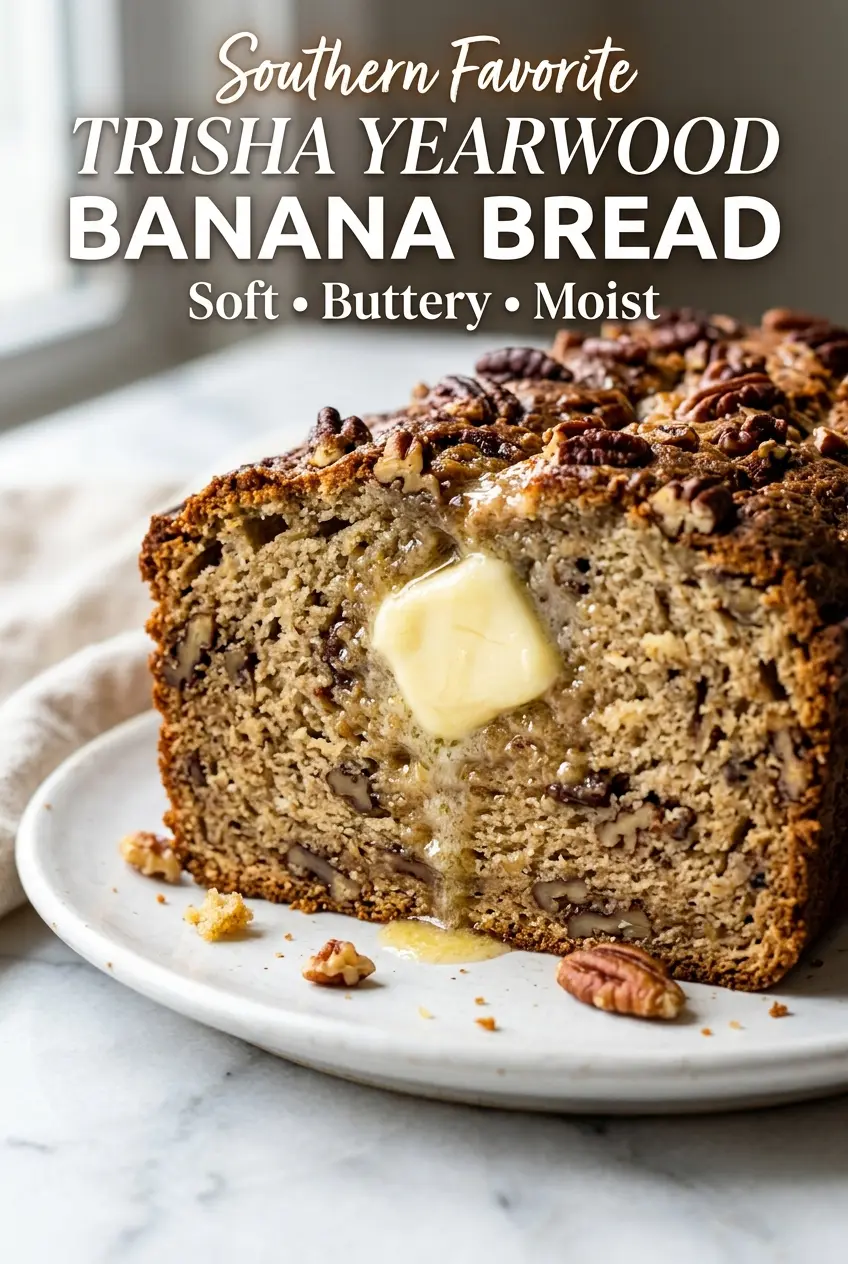
Trisha Yearwood Banana Bread
Ingredients
Equipment
Method
- Preheat the oven to 350°F. Grease and line a 9×5-inch loaf pan with parchment paper so the loaf lifts out cleanly.
- Beat the softened butter and granulated sugar together for 2–3 minutes until light and fluffy, scraping the bowl as needed. The mixture should look paler and increase slightly in volume.
- Add the eggs one at a time, beating well after each addition. Continue until the batter looks smooth and glossy, then mix in the vanilla extract.
- Stir in the mashed bananas and buttermilk until smooth. Stop once no dry banana streaks remain for a uniform batter.
- Whisk together the all-purpose flour, baking soda, and salt in a separate bowl. Make sure the baking soda is evenly distributed through the flour.
- Fold the dry ingredients into the banana mixture until just combined. The batter should be thick and lumpy and you must not overmix.
- Fold in the toasted chopped pecans, distributing them evenly throughout the batter. Fold gently so you don’t break up the crumb-forming structure.
- Pour the batter into the prepared loaf pan and sprinkle the top with coarse sugar, if desired. Bake for 60–70 minutes until the loaf is golden brown and a toothpick inserted in the center comes out clean.
- Cool the bread in the pan for 15 minutes. Transfer to a wire rack to cool completely before slicing so the center sets.