

Crockpot Chicken Spaghetti
Crockpot Chicken Spaghetti turns into the kind of creamy, comforting dinner that disappears fast because every strand of pasta gets coated in a rich, cheesy sauce and the chicken stays…

By Ava
•
•
Reading time: 10 min
Tip: save now, make later.
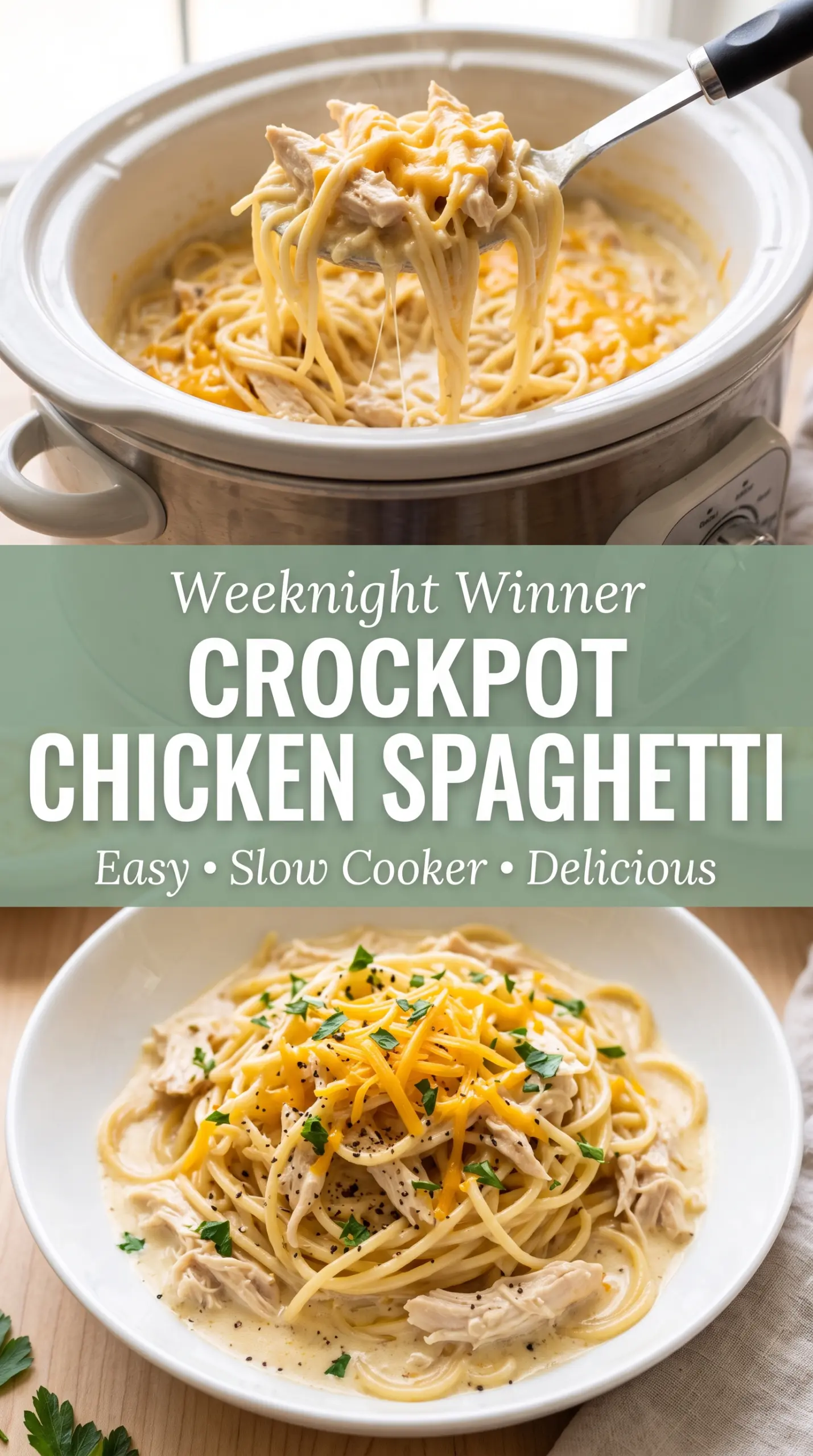
Crockpot Chicken Spaghetti turns into the kind of creamy, comforting dinner that disappears fast because every strand of pasta gets coated in a rich, cheesy sauce and the chicken stays tender enough to shred with almost no effort. The slow cooker does the heavy lifting here, but the real payoff is in the texture: juicy chicken, a velvety tomato-cheese sauce, and spaghetti that soaks up all that flavor without turning mushy.
What makes this version work is the layering. The chicken cooks right in the sauce, so it picks up flavor as it goes instead of tasting plain and then getting coated at the end. Cream cheese gives the sauce body, cheddar brings the sharp finish, and Rotel adds just enough acidity and heat to keep the whole dish from tasting flat. I also like cooking the pasta separately and folding it in at the end, because that keeps the noodles from going soft in the crockpot.
Below, I’ll walk through the small details that keep the sauce smooth and the pasta from overcooking, plus a few swaps if you need to adjust the recipe for what’s already in your kitchen.
The sauce turned out creamy without being greasy, and the chicken shredded so easily after 6 hours on low. I loved that the spaghetti stayed firm instead of getting mushy like other slow cooker pasta recipes I’ve tried.
Creamy Crockpot Chicken Spaghetti like this is worth pinning for busy nights when you want a hands-off dinner with real comfort-food payoff.
The Sauce Breaks When Everything Goes in Too Hot and Too Soon
Crockpot pasta dishes go wrong when the dairy gets hit with high heat for too long or the pasta cooks directly in a thick sauce until it absorbs every last bit of moisture. This recipe avoids both problems by letting the chicken, soup, tomatoes, cream cheese, and broth cook together first, then adding the spaghetti only after the sauce has already been loosened and built. That order matters. It keeps the cream cheese from turning grainy and keeps the noodles from swelling into a soft, heavy mess.
Another common failure is stirring too early. When you layer everything in and leave it alone, the cream cheese melts more evenly and the chicken stays nestled in moisture instead of drying out from too much agitation. Once the chicken shreds, the sauce should look glossy and thick but still loose enough to coat a spoon. If it looks stiff before the pasta goes in, a splash of broth brings it back.
What the Cream Cheese, Rotel, and Cheddar Are Each Doing
- Cream cheese — This is what gives the sauce its body and that smooth, clingy texture. Use full-fat cream cheese if you can; reduced-fat versions tend to loosen and can taste a little thin. Soften it first so it melts into the sauce without leaving little lumps.
- Rotel diced tomatoes with green chilies — This does more than add heat. The tomatoes bring acidity, which keeps the sauce from tasting heavy, and the chilies give the dish a subtle kick. If you need a milder version, use regular diced tomatoes and add a few spoonfuls of mild salsa or just leave the heat out entirely.
- Sharp cheddar — Sharp cheddar gives the finished dish its flavor. Mild cheddar will melt fine, but it won’t taste as bold against the cream sauce. Shred it yourself if possible; pre-shredded cheese contains anti-caking agents that can make the sauce less silky.
- Chicken breasts — Boneless, skinless breasts shred cleanly and stay easy to portion. Thighs also work if you want a richer result, and they’re a good swap if you’re worried about breasts drying out in your slow cooker. Just keep an eye on cook time, because thighs can stay tender a little longer.
The Part Where You Keep the Chicken Juicy and the Pasta Al Dente
Seasoning the Base
Set the chicken in the crockpot first, then sprinkle the spices directly over the top so they season the meat as it cooks. The garlic powder, onion powder, smoked paprika, and Italian seasoning all need that long, gentle heat to bloom into the sauce instead of tasting flat. Pour the soup, tomatoes, cream cheese, cheddar, and broth over everything and leave it unstirred. That layered setup helps the chicken poach in moisture while the dairy melts gradually.
Cooking Until the Chicken Shreds Cleanly
Cook on low if you have the time. The slower heat gives the sauce a smoother finish and is more forgiving with chicken breasts. You’re looking for chicken that reaches 165°F and pulls apart with two forks without resistance. If it feels stringy and stubborn, it needs a little more time, not a harder stir.
Finishing the Sauce Before the Pasta Goes In
Pull the chicken out and shred it before stirring the sauce. That lets the cream cheese fully melt into the liquid instead of clinging to the meat in soft pockets. Once the shredded chicken goes back in, the sauce should look creamy and smooth. If you still see a few bits of cream cheese, keep stirring gently for a minute or two while the residual heat does the work.
Adding the Spaghetti at the End
Cook the spaghetti separately until just al dente, then drain it well before folding it into the crockpot. If the pasta goes in wet, it thins the sauce and can turn the whole dish watery. After the noodles are coated, top with the remaining cheddar and cover for just long enough to melt it. Any longer and the pasta keeps softening from the trapped heat.
How to Adapt Crockpot Chicken Spaghetti Without Losing the Texture
Make It a Little Milder
Use regular diced tomatoes instead of Rotel and skip any extra spice additions. You’ll lose the gentle heat and a little of the brightness, so add a pinch more Italian seasoning or a few drops of hot sauce at the table if you want to bring the flavor back without overwhelming it.
Use Chicken Thighs for a Richer Finish
Boneless, skinless thighs work well here and stay very tender in the slow cooker. They bring a little more richness than breasts and are more forgiving if your crockpot runs hot. The sauce will taste a bit deeper, though it may look slightly less lean once everything is combined.
Go Gluten-Free
Use a gluten-free cream of chicken soup and gluten-free spaghetti. The sauce itself doesn’t need any other changes, but you’ll want to cook the pasta just to the edge of done so it can finish in the sauce without getting fragile.
Storage and Reheating
- Refrigerator: Store leftovers in an airtight container for up to 4 days. The pasta will absorb some sauce, so expect it to thicken as it sits.
- Freezer: It freezes, but the texture of the pasta softens after thawing. If you want the best result, freeze the chicken and sauce separately before adding fresh pasta later.
- Reheating: Reheat gently on the stovetop or in the microwave with a splash of broth or milk. High heat is the mistake here — it can make the sauce look broken and push the pasta from tender to mushy.
Answers to the Questions Worth Asking

Crockpot Chicken Spaghetti
Ingredients
Equipment
Method
- Place the chicken breasts into the crockpot and sprinkle evenly with garlic powder, onion powder, smoked paprika, Italian seasoning, salt, and black pepper.
- Add cream of chicken soup, Rotel diced tomatoes with green chilies (undrained), cream cheese, 1.5 cups shredded sharp cheddar cheese, and chicken broth over the chicken; do not stir.
- Cover and cook on Low for 6–7 hours or High for 3–4 hours, until the chicken reaches an internal temperature of 165°F and shreds easily (visual cue: fork-tender chicken).
- Remove the chicken and shred it with two forks, then return the shredded chicken to the crockpot.
- Stir until cream cheese is fully melted and the sauce looks smooth and creamy (visual cue: no cream cheese lumps).
- Cook the spaghetti according to the package directions until al dente, then drain well (visual cue: noodles still have a slight bite).
- Fold the cooked spaghetti into the crockpot until completely coated with the creamy sauce (visual cue: pasta evenly glossy and sauce-clinging).
- Sprinkle the remaining 1/2 cup shredded sharp cheddar cheese over the top, cover, and let melt for 5–10 minutes (visual cue: cheese is fully melted).
- Garnish with chopped fresh parsley and serve hot.