
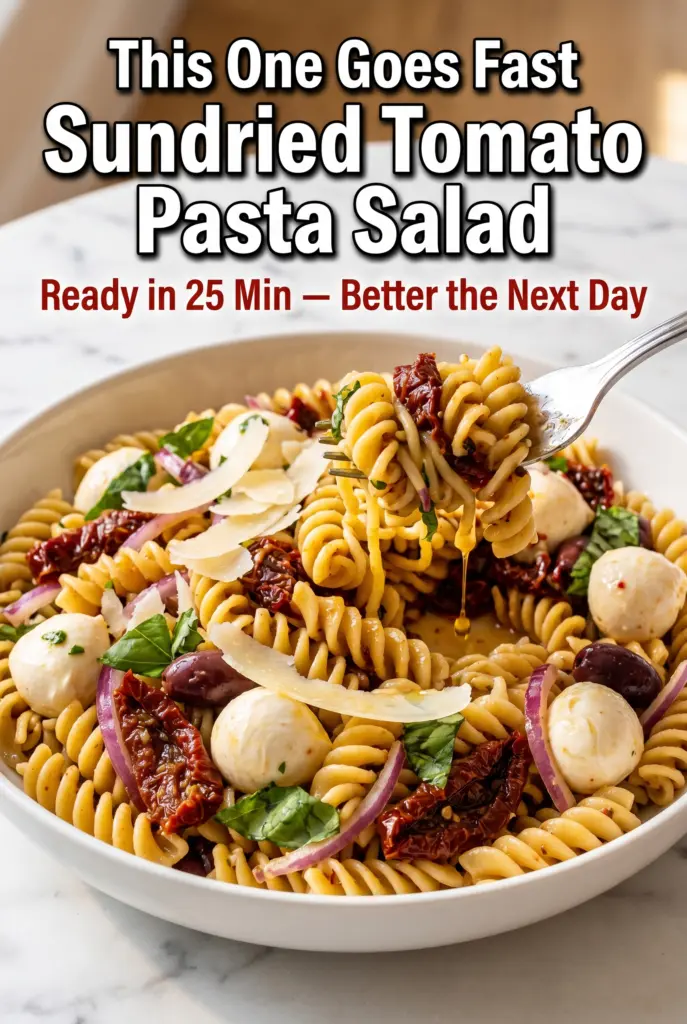
Sundried Tomato Pasta Salad
Chewy rotini, briny olives, and creamy mozzarella turn this sundried tomato pasta salad into the kind of bowl people hover around with a second serving in mind. The dressing clings…

By Ava
•
•
Reading time: 10 min
Tip: save now, make later.
Chewy rotini, briny olives, and creamy mozzarella turn this sundried tomato pasta salad into the kind of bowl people hover around with a second serving in mind. The dressing clings to every twist of pasta, and the reserved oil from the sun-dried tomatoes gives the whole dish a deeper, more savory edge than a plain vinaigrette ever could. It eats like a proper main-dish salad when lunch needs to be cold, fast, and still worth looking forward to.
What makes this version work is the timing. The pasta gets dressed while it’s still warm, which lets it absorb the oregano, garlic, and vinegar instead of sitting there coated on the outside. The mozzarella stays soft, the red onion keeps a little bite, and the arugula or basil goes in at the end so it doesn’t wilt into the bowl before you’re ready to serve.
Below, I’ve laid out the small details that matter most: how to keep the pasta from tasting flat, which ingredients carry the flavor, and what to do if you want to make it ahead for a potluck or lunch box.
The dressing soaked into the rotini instead of pooling at the bottom, and the sun-dried tomato oil gave it a richer taste than I expected. I took the leftovers to work the next day and it was even better cold.
Love a pasta salad with real Mediterranean bite? Save this sun-dried tomato pasta salad for potlucks, lunches, and make-ahead dinners that taste better after a chill.
The Trick to Pasta Salad That Stays Bold After Chilling
Most pasta salads go dull in the fridge because the dressing sits on the surface instead of getting into the pasta. Rotini fixes part of that problem with all its little grooves, but the real move is tossing it with the dressing while it’s still warm. Warm pasta drinks up the vinegar, garlic, and herb oil in a way cold pasta never will.
The other thing that keeps this salad from turning limp is restraint. The arugula or basil goes in at the end, the mozzarella stays in larger pieces, and the red onion gets sliced thin enough to bite through without taking over. You get contrast in every forkful instead of one soft, samey bowl.
What Each Ingredient Is Actually Doing in This Dish
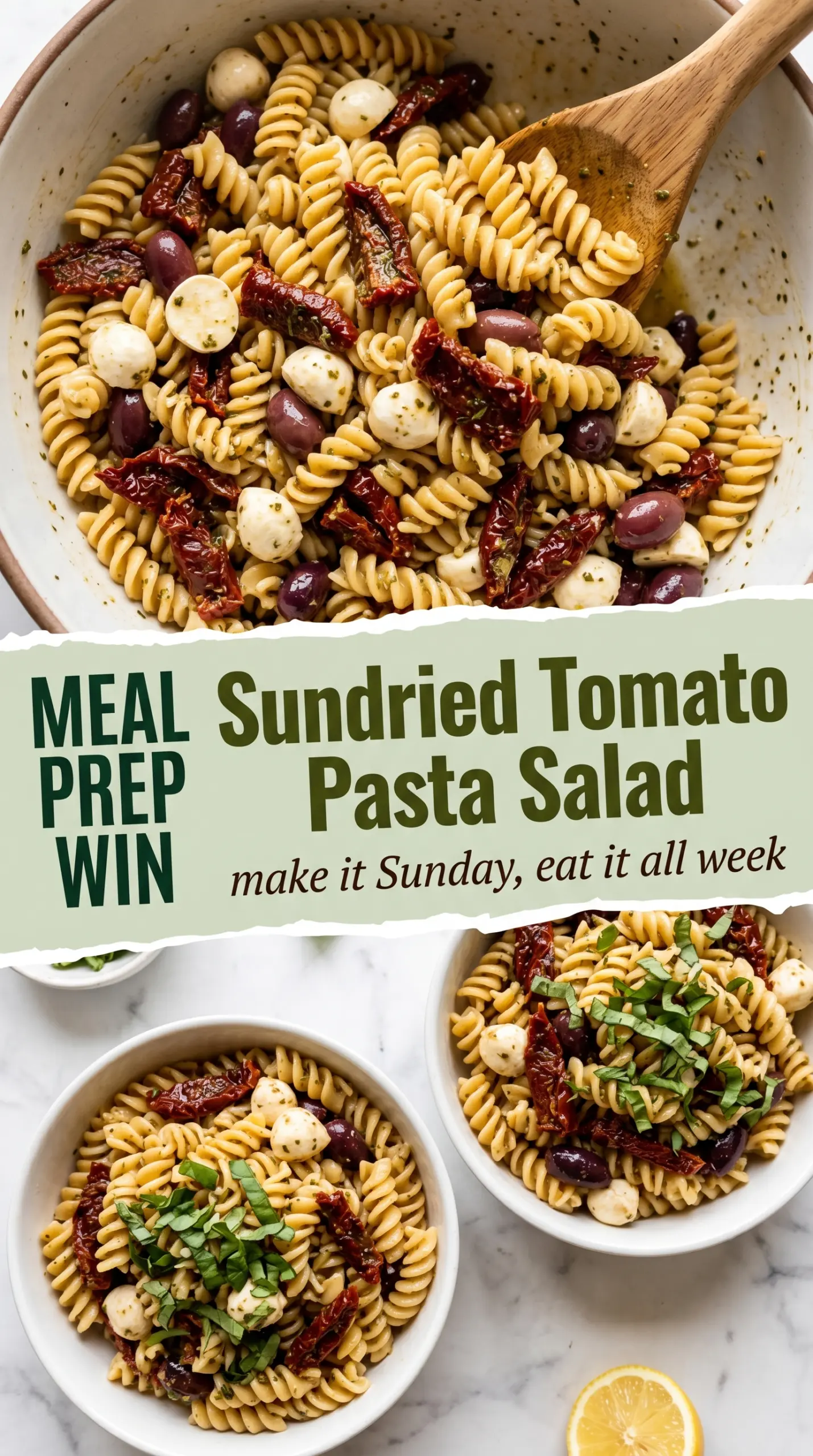
- Rotini pasta — The spirals catch the dressing better than smooth shapes, which is why this salad tastes seasoned all the way through instead of just glossy on the outside. Any short pasta with ridges works, but rotini gives you the best bite for this style.
- Sun-dried tomatoes in oil — These carry both sweetness and concentrated tomato flavor, and the reserved oil doubles down on both. If you use dry-packed sun-dried tomatoes, rehydrate them and add extra olive oil, but the finished salad won’t have quite the same depth.
- Fresh mozzarella balls — Ciliegine keep their soft, milky texture and give the salad little creamy pockets. You can cube a larger ball if that’s what you have, but don’t swap in low-moisture mozzarella unless you want a firmer, saltier result.
- Red wine vinegar and Dijon — Vinegar gives the salad lift, while Dijon helps the dressing emulsify so it clings instead of separating. That tiny bit of mustard matters more than it looks on the spoon.
- Reserved sun-dried tomato oil — This is the ingredient that makes the dressing taste like it belongs here. Don’t replace it with all plain olive oil unless you have to; if you do, add an extra spoonful of chopped sun-dried tomatoes for more punch.
Building the Bowl in the Right Order
Cook the Pasta to the Edge of Done
Boil the rotini in well-salted water until it’s just al dente, with a little firmness left at the center. Pasta salad gets softer as it sits, so if you cook it all the way through, it can turn mushy after chilling. Drain it, then give it a brief rinse under cold water so the cooking stops before it crosses that line.
Whisk the Dressing Until It Turns Smooth
Combine the reserved tomato oil, olive oil, vinegar, Dijon, garlic, oregano, red pepper flakes, salt, and pepper in a small bowl. Whisk until it looks slightly thickened and no oil is floating separately on top. If the dressing breaks apart, keep whisking for another few seconds; Dijon helps pull it back together.
Toss the Warm Pasta First
Pour about two-thirds of the dressing over the warm rotini and toss until every piece looks lightly coated. This is the step that gives you flavor inside the pasta instead of only on the surface. If you wait until the pasta is fully cold, it won’t absorb nearly as much.
Fold in the Finishers Gently
Add the sun-dried tomatoes, mozzarella, olives, red onion, and roasted peppers, then toss just enough to distribute them. Finish with the arugula or basil and Parmesan shavings so the greens stay fresh and the cheese stays visible. Taste at the end and add the rest of the dressing if the pasta has soaked up more than you expected.
Three Smart Ways to Make This Pasta Salad Work for Your Table
Make It Dairy-Free Without Losing the Creamy Bite
Leave out the mozzarella and Parmesan, then add extra roasted peppers or a handful of marinated artichokes for another soft, savory element. The salad will taste brighter and a little sharper, which works well if you want the dressing to stay front and center.
Turn It Gluten-Free Without Changing the Flavor Balance
Use a sturdy gluten-free rotini that holds its shape after chilling. Cook it just to the point of tenderness, because gluten-free pasta goes from firm to soft fast once it’s dressed. Rinsing after cooking matters here even more, since it helps keep the texture from getting sticky.
Add Protein for a Fuller Meal
Chopped grilled chicken, chickpeas, or salami all fit here, but each changes the feel of the dish in a different way. Chicken keeps it light, chickpeas make it more filling without adding heaviness, and salami leans saltier and more picnic-style.
Storage and Reheating
- Refrigerator: Keeps for 3 to 4 days. The pasta absorbs more dressing as it sits, so expect a slightly drier salad on day two unless you save a little extra dressing.
- Freezer: Not a good freezer salad. The mozzarella changes texture and the pasta softens after thawing, so this one is best made fresh and eaten from the fridge.
- Reheating: Serve it cold or let it sit at room temperature for 15 to 20 minutes. If it tastes tight after chilling, add a splash of olive oil or a spoonful of reserved dressing and toss again instead of heating it.
Answers to the Questions Worth Asking
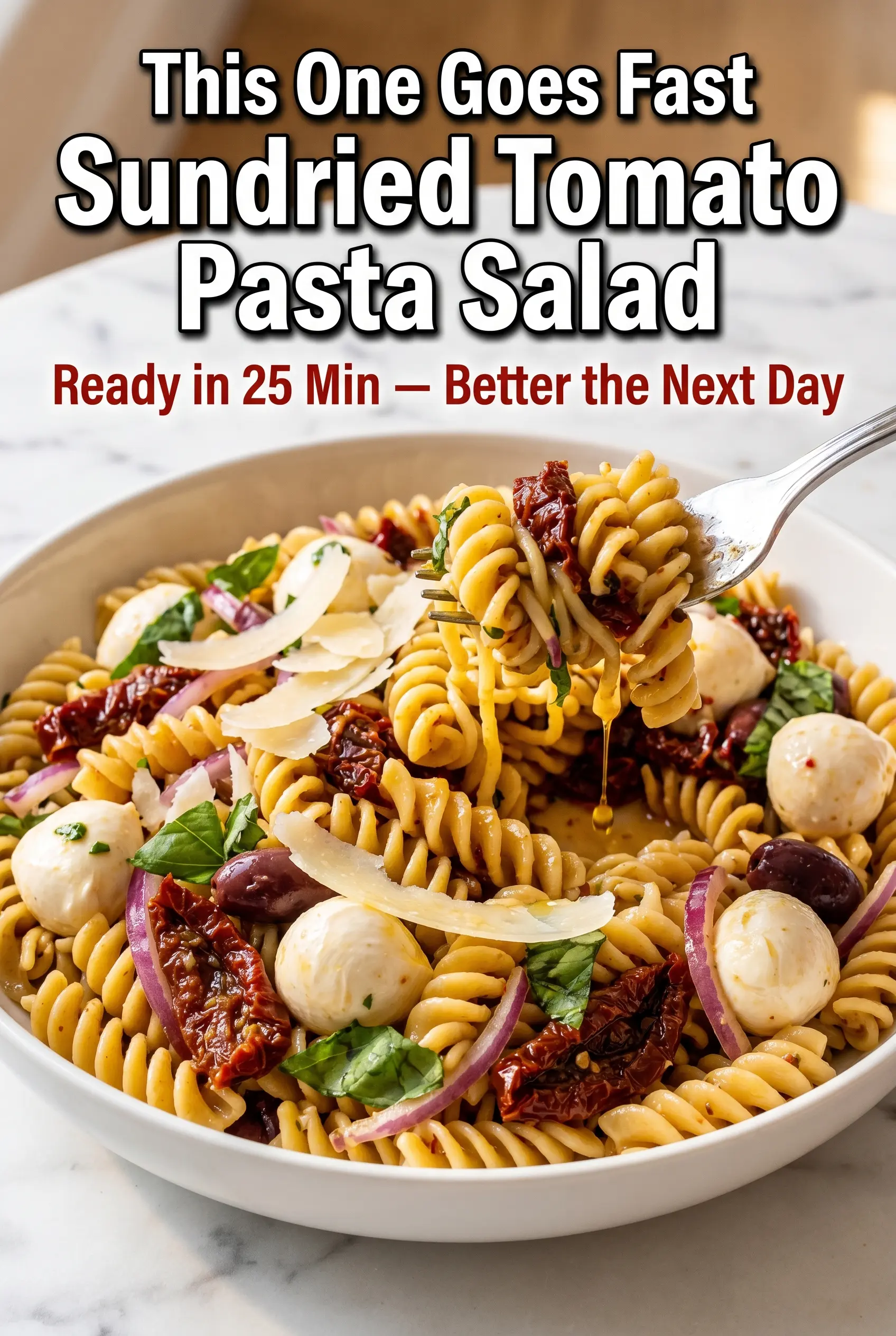
Sundried Tomato Pasta Salad
Ingredients
Equipment
Method
- Bring a large pot of well-salted water to a boil, then add the rotini pasta. Cook according to package instructions until al dente, about the time shown on the box, then drain.
- Rinse the drained rotini briefly under cold water to stop cooking, then transfer it to a large mixing bowl. Spread it out slightly so steam escapes and it can absorb the dressing.
- In a small bowl, whisk together reserved oil from sun-dried tomatoes, olive oil, red wine vinegar, Dijon mustard, garlic clove, dried oregano, red pepper flakes, salt, and black pepper until emulsified. Whisk for about 30 seconds until it looks glossy and uniform.
- Pour about two-thirds of the dressing over the warm rotini and toss to coat. The pasta should look lightly glossy, and you should see the twists darken as it absorbs.
- Add sun-dried tomatoes in oil, fresh mozzarella balls (ciliegine), Kalamata olives, medium red onion, and roasted red peppers, then toss gently to combine. Use gentle motions so the mozzarella stays in soft, visible pieces.
- Fold in baby arugula or fresh basil leaves and Parmesan shavings. Toss just until the greens wilt slightly and the Parmesan disperses.
- Taste the pasta salad and add the remaining dressing as needed, adjusting salt and black pepper. Add small splashes and toss between adjustments until balanced.
- Cover and refrigerate for at least 20 minutes before serving to let the flavors meld. Chill until cold, then toss once more before serving for even coating.