
Sun Dried Tomato Parmesan Crusted Salmon
The panko topping should turn golden while the salmon stays moist underneath, but that only happens if the crust stays put. When the fish is damp, the mustard and topping…

By Ava
•
•
Reading time: 8 min
Tip: save now, make later.
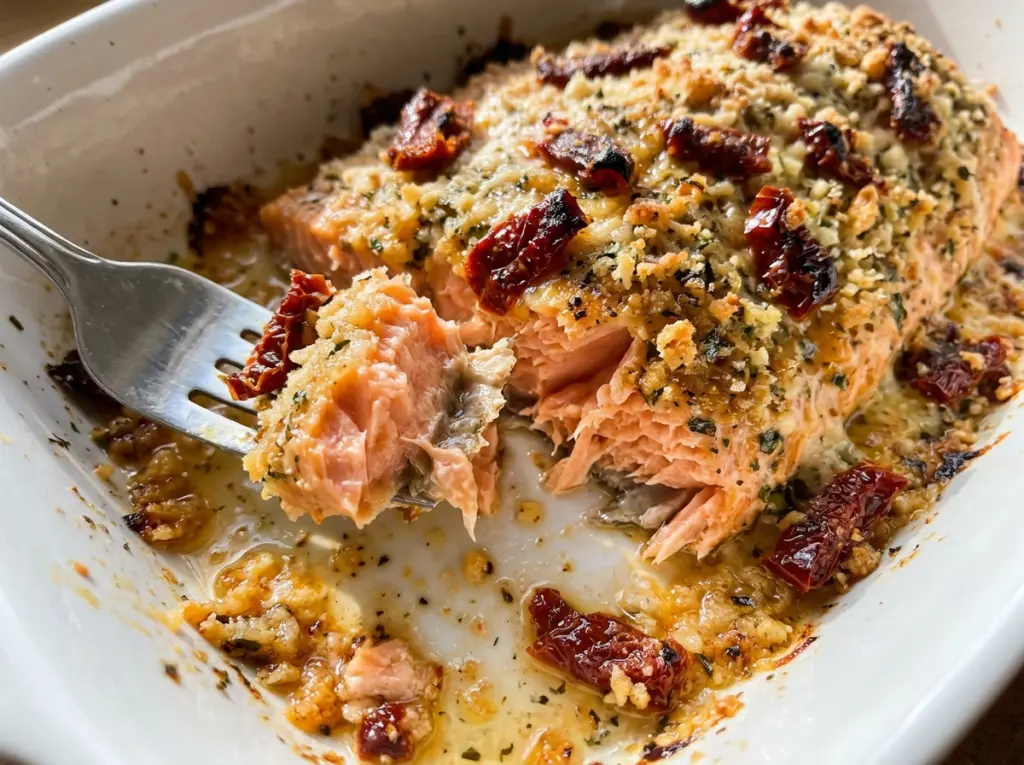
The panko topping should turn golden while the salmon stays moist underneath, but that only happens if the crust stays put. When the fish is damp, the mustard and topping can slide around instead of settling into an even layer. Patting the tops dry first takes a few seconds and makes a noticeable difference in this sun dried tomato Parmesan crusted salmon.
I mix the crust until the panko and finely chopped tomatoes are coated with olive oil, then spread Dijon over each fillet before pressing the mixture on top. The mustard adds a tangy layer and helps the crumbs cling, while Parmesan brings a savory, browned finish. After a short rest, each piece is ready with a crisp top and tender salmon beneath it.
Kitchen Note
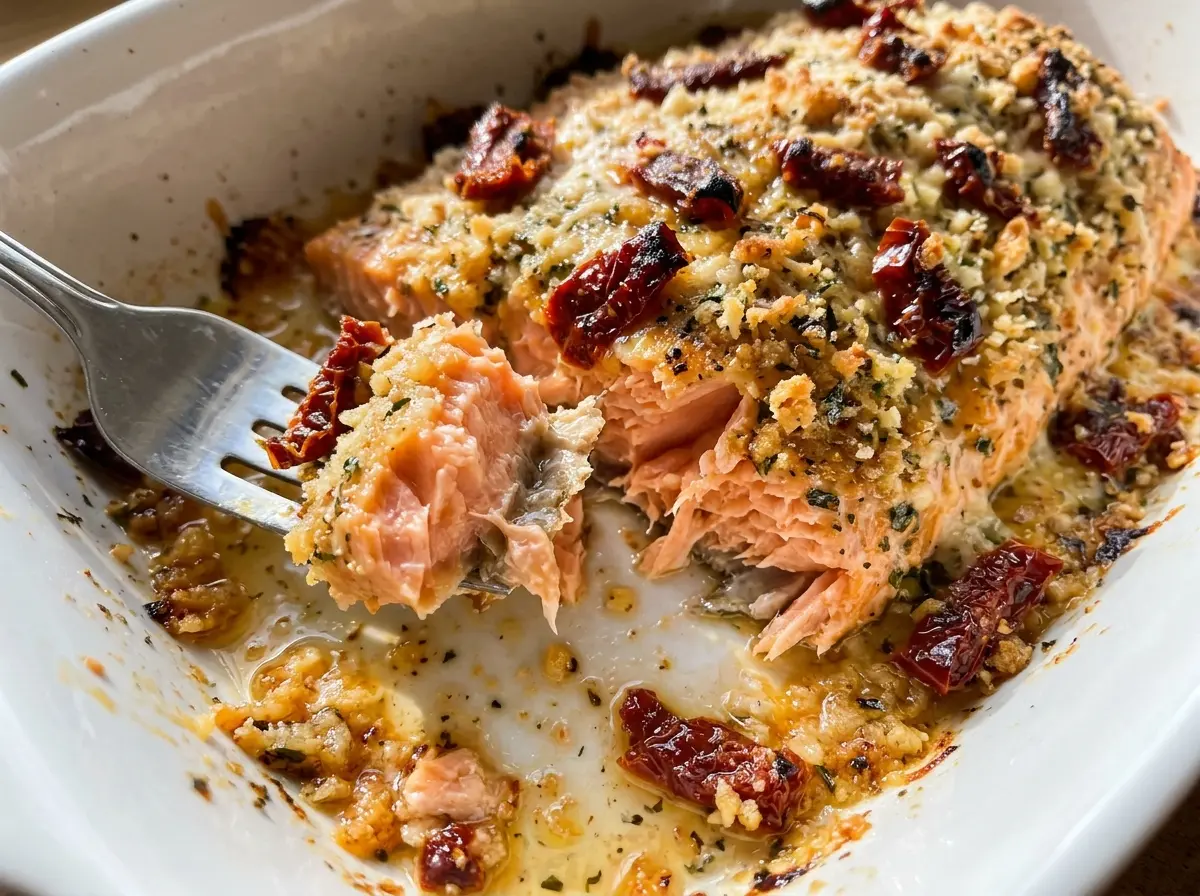
The crust mixture should look evenly moistened, not slick with oil. Press it gently onto the mustard so it forms a layer instead of scattering across the pan.
Save this sun dried tomato Parmesan crusted salmon for its crisp, savory topping and tender, flaky fish.
Why the Crust Slips Off Salmon That Wasn’t Patted Dry
Salmon has a naturally moist surface, and any extra water between the fish and the mustard makes it harder for the topping to hold. In the oven, that moisture turns to steam. The result can be a loose crust that shifts when you serve the fillets, even if the crumbs themselves browned nicely.
Pat the tops dry with paper towels before spreading on the Dijon. You don’t need to press hard enough to mash the fish; just remove the visible moisture, then coat the surface with mustard and press the crust over it. Keeping the fillets skin-side down also gives them a steady base on the parchment-lined pan while the topping browns. A little care at this point means the crust stays where you put it, instead of sliding off in one piece.
There’s no need to turn the salmon during baking. The topping gets direct heat from above while the fish cooks on the lined sheet, and the skin helps keep the fillets together as you lift them off the pan.
What Panko, Parmesan, and Oil-Packed Tomatoes Each Bring
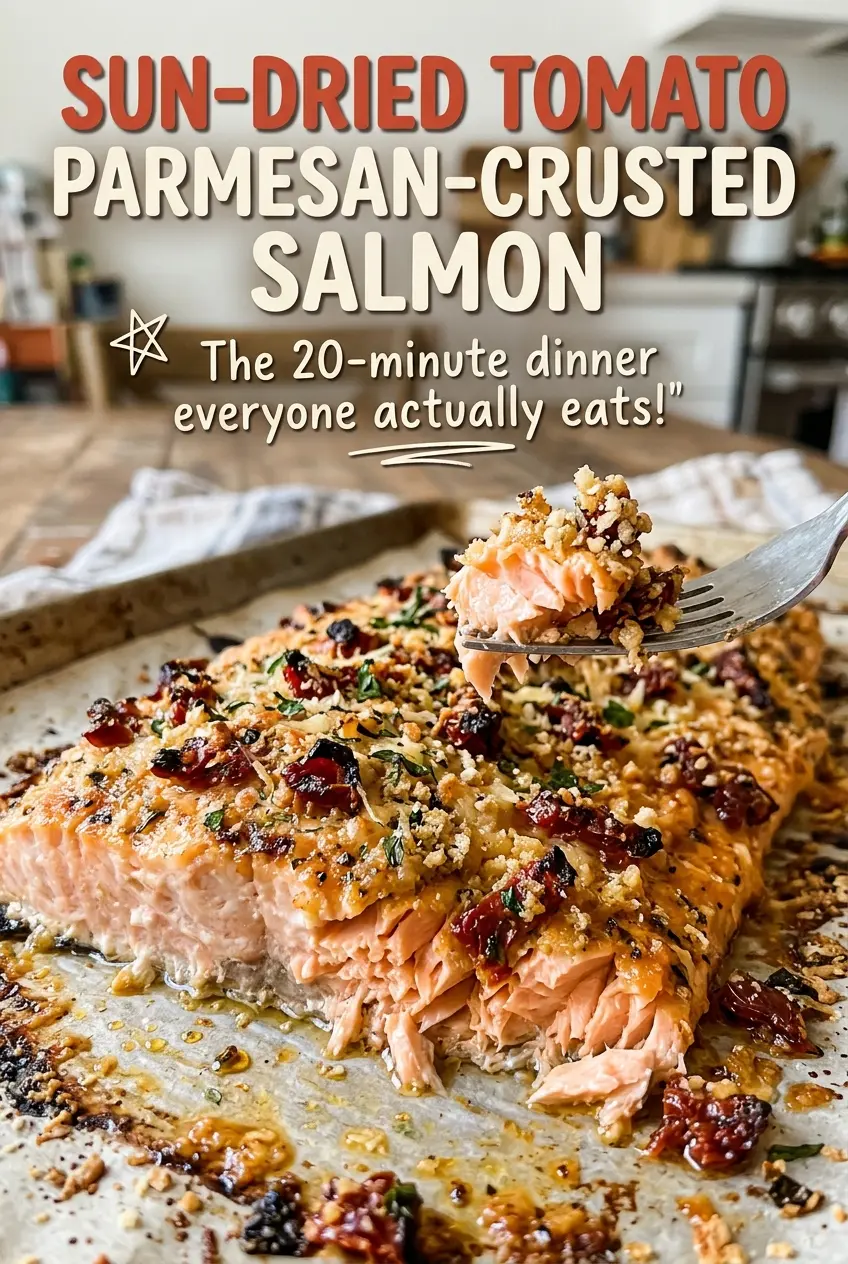
- Panko breadcrumbs — Their coarse, airy flakes give the topping a lighter crunch than fine breadcrumbs. For a gluten-free version, use gluten-free panko in the same amount; the crust will still be crisp, though the crumb size varies by brand.
- Finely grated Parmesan — Fine shreds mix evenly with the panko and brown into the crust. Grate a wedge if you can; pre-grated Parmesan is convenient, but its finer, drier texture may make the topping less cohesive. Pecorino Romano can replace it in the same amount for a sharper, saltier crust.
- Oil-packed sun-dried tomatoes — They bring concentrated tomato flavor and a little chew, while their oil helps moisten the crumbs. Drain them well and chop them finely so they distribute through the topping rather than weighing down a few spots. Dry-packed tomatoes aren’t a direct swap unless they’re softened first, so oil-packed tomatoes are the straightforward choice here.
- Dijon mustard — Its smooth texture spreads in a thin layer and gives the crust something to cling to, with a mild tang underneath the Parmesan. Whole-grain mustard works if you don’t mind visible seeds and a more textured layer; spread it evenly over the tops just as you would Dijon.
- Salmon fillets — Look for skin-on pieces that are about the same thickness so they cook at a similar pace. The skin helps the fillets hold their shape on the pan, while the thickest part gives you the best spot to check doneness.
- Fresh parsley and garlic — Parsley keeps the rich cheese and tomato from feeling heavy, and fresh minced garlic gives the crust a direct, savory bite. Chopped fresh basil can stand in for the parsley in the same amount for a sweeter, more distinctly Italian-style aroma.
Building the Tomato Parmesan Crust and Baking the Salmon
Mix a Crust That Clings Together
Heat the oven to 400°F and line a rimmed baking sheet with parchment paper. In a small bowl, stir together the panko, finely grated Parmesan, drained and finely chopped sun-dried tomatoes, chopped parsley, minced garlic, and olive oil. Keep stirring until the oil is distributed through the crumbs and the tomatoes aren’t clumped in one place. If the mixture looks patchy, scrape the bottom of the bowl and stir again before topping the fish.
Spread the Mustard Before Adding the Crumbs
Arrange the skin-on salmon fillets skin-side down on the prepared baking sheet and pat their tops dry. Spread Dijon mustard over each top, then season with kosher salt and black pepper. Divide the crust mixture across the fillets and press it evenly over the surface. A light, even layer is easier to brown than a tall mound concentrated in the middle.
Bake Until the Center Is Ready
Bake the salmon for 12 to 16 minutes. The topping should look golden, and the thickest part of each fillet should reach 145°F; check the fish with an instant-read thermometer rather than relying on the crust color alone. Fillets can vary a little, so check each one at its thickest point. Rest the salmon for 3 minutes before serving so the juices settle and the crust has a moment to firm up.
Simple Swaps for a Different Crust
Make the crust gluten-free
Replace the panko with the same amount of gluten-free panko. It keeps the crunchy texture this topping needs; the exact browning may differ a little between brands, so use the color of the crust along with the salmon’s doneness to judge the bake.
Give it a sharper, saltier cheese finish
Use finely grated Pecorino Romano in place of the Parmesan, keeping the amount the same. It browns into the topping but tastes saltier and more assertive, so the crust will have a bigger savory edge.
Swap parsley for fresh basil
Use chopped fresh basil in place of the parsley, keeping the amount the same. Basil gives the tomato-and-cheese topping a sweeter, more aromatic note without changing how the crust comes together.
Storage and Reheating
- Refrigerator: Store leftover salmon in a covered container for 3 to 4 days. The crust softens as it sits, but the fish stays tender.
- Freezer: Freeze cooked portions in an airtight container, with parchment between pieces if stacking, for up to 2 to 3 months for best quality. Thaw overnight in the refrigerator; expect the crust to lose some of its crunch.
- Reheating: Warm covered in a 300°F oven until the center reaches 165°F, uncovering for the last few minutes if you want to dry the topping slightly. High heat can dry out the salmon before the middle is hot.
Questions That Come Up When Baking This Salmon
Sun Dried Tomato Parmesan Crusted Salmon
Ingredients
Equipment
Method
- Heat the oven to 400°F.
- Line a rimmed baking sheet with parchment paper.
- In a small bowl, stir together the panko, Parmesan, sun-dried tomatoes, parsley, garlic, and olive oil.
- Arrange the fillets skin-side down on the baking sheet.
- Pat the tops dry.
- Spread the Dijon mustard over the fillets.
- Season with the salt and pepper.
- Press the crust mixture evenly onto the tops.
- Bake for 12 to 16 minutes, until the crust is golden and the thickest part of each fillet reaches 145°F.
- Rest for 3 minutes before serving.