
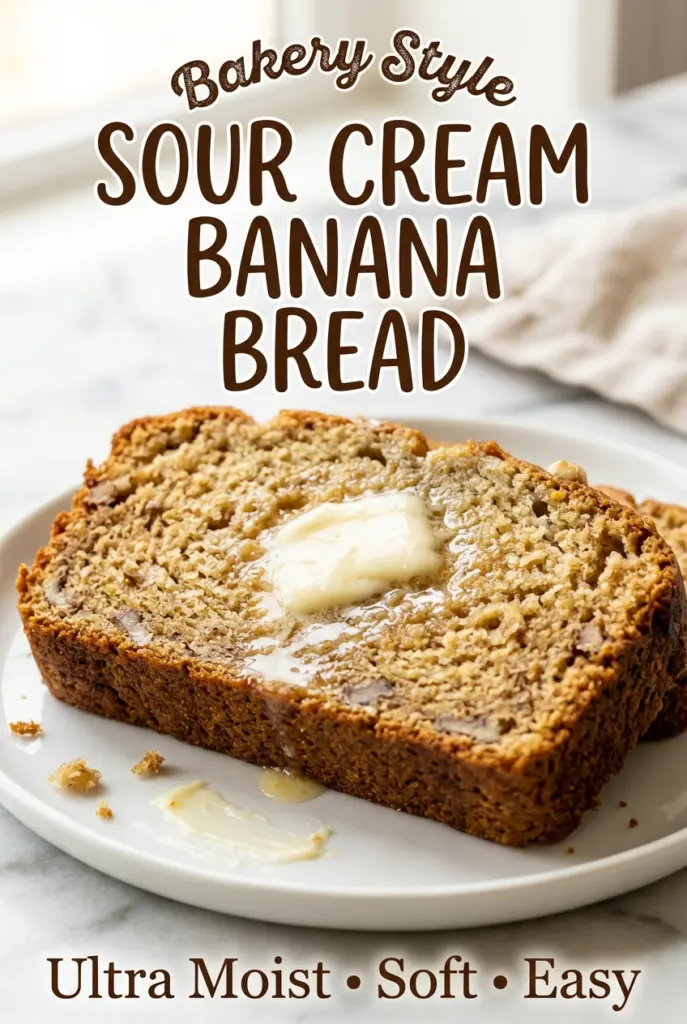
Sour Cream Banana Bread
Deep banana flavor, a soft buttery crumb, and a loaf that stays moist for days — that’s what makes sour cream banana bread worth baking again and again. The sour…

By Ava
•
•
Reading time: 9 min
Tip: save now, make later.
Deep banana flavor, a soft buttery crumb, and a loaf that stays moist for days — that’s what makes sour cream banana bread worth baking again and again. The sour cream doesn’t just add richness; it keeps the bread tender without making it heavy, so each slice holds together cleanly and still feels plush when you bite into it.
The texture comes from a few small choices that matter. Softened butter and sugar get beaten until light, which gives the loaf some lift before the bananas go in. Then the dry ingredients are folded in just until combined. Overmixing is what turns quick bread dense and tight, and bananas already bring plenty of moisture on their own.
If you’ve made banana bread before and ended up with a loaf that sank in the middle or tasted bland after the first day, this version solves both problems. Below, I walk through the one detail that keeps the crumb tender, plus a few smart swaps and storage notes that make this loaf easy to keep on hand.
The loaf came out so moist and fluffy, and the sour cream gave it this rich texture without tasting tangy. Mine needed the full 65 minutes, and the center still sliced perfectly after cooling.
Save this sour cream banana bread for the days when you want a tender loaf with a soft crumb and extra-moist slices.
The Sour Cream Trick That Keeps Banana Bread Soft Instead of Dense
Banana bread can turn heavy fast when the batter gets overworked or the moisture balance is off. Sour cream helps here because it brings fat and acidity, which tenderize the crumb and support a fine, even texture. It also gives you a little margin for error if your bananas are extra ripe and very soft.
The other thing that matters is mixing order. Creaming the butter and sugar first traps air, which gives the loaf a lighter structure. Once the flour goes in, the batter should look just barely blended. A few streaks are better than a tough loaf. If you stir until the batter looks perfectly smooth, you’ve probably gone too far.
What Each Ingredient Is Doing in This Loaf
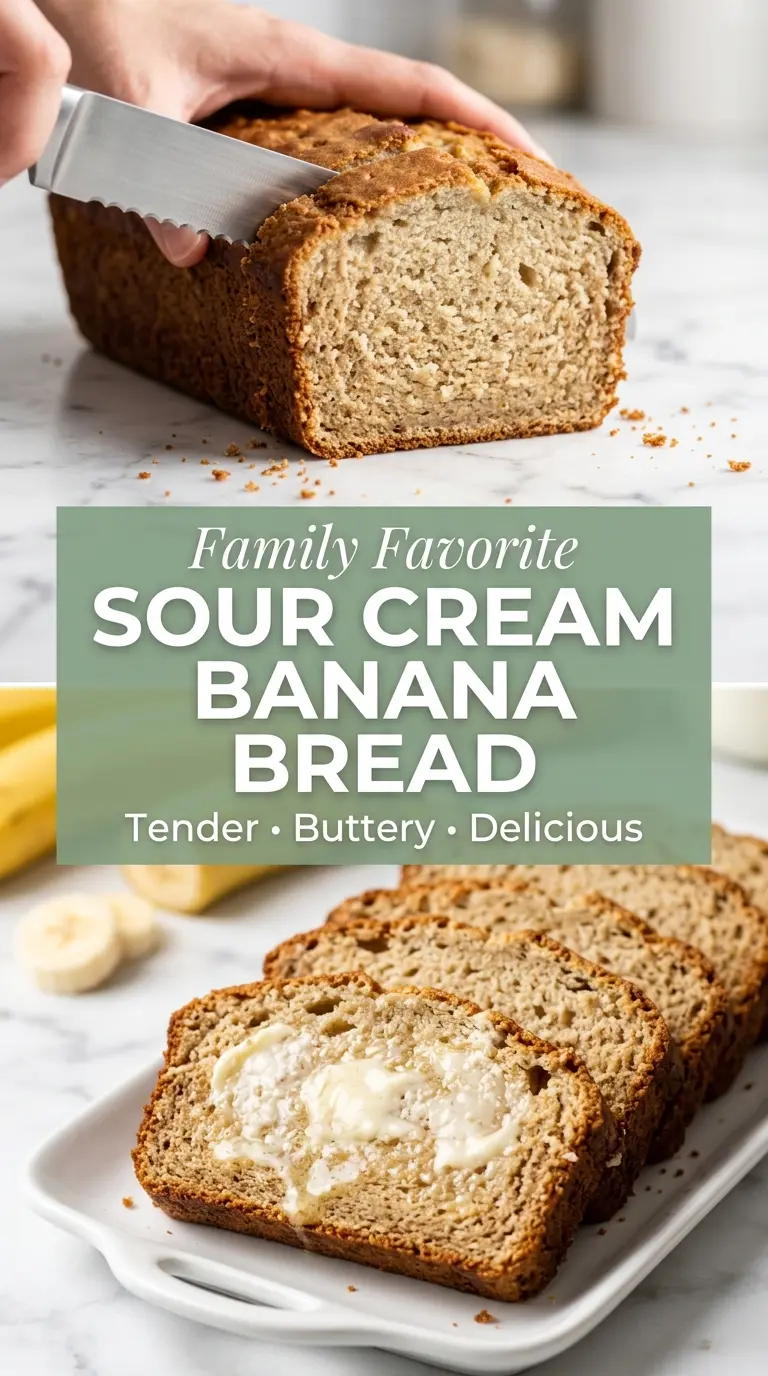
- Butter — Softened butter is what gives this bread its rich, bakery-style crumb. Cold butter won’t cream properly, and melted butter changes the texture into something denser and less structured.
- Granulated sugar — Sugar sweetens, but it also helps the loaf brown and stay moist. You need the full amount for balance because banana bread can taste flat if you cut it too far.
- Bananas — Use very ripe bananas with brown spots. They mash smoothly and bring the strongest flavor. Pale bananas don’t give you the same sweetness or aroma, and the loaf will taste unfinished.
- Sour cream — This is the ingredient that keeps the crumb tender and plush. Plain Greek yogurt can work in a pinch, but use full-fat yogurt and expect a slightly tangier finish.
- Baking soda and baking powder — The combination gives the loaf lift without making it taste soapy. The banana and sour cream both bring enough acidity to activate the soda properly.
- Cinnamon — Optional, but it adds warmth without taking over the banana flavor. Keep it subtle or skip it entirely if you want the loaf to taste more classic.
Building the Batter Without Deflating It
Cream the butter and sugar until the mix looks lighter
Beat the softened butter and sugar together for 2 to 3 minutes, until the mixture looks pale and fluffy. That step adds air and sets the loaf up for a tender rise. If the butter still looks greasy or packed at the bottom of the bowl, it wasn’t soft enough, and the texture of the bread will be tighter.
Work in the eggs, bananas, and sour cream in that order
Add the eggs one at a time so the batter stays smooth and stable. Mix in the vanilla, then stir in the mashed bananas and sour cream until the batter looks creamy and even. If the bananas are still in big chunks, they’ll bake into wet pockets instead of blending into the loaf.
Fold the flour in just until the streaks disappear
Whisk the dry ingredients first so the baking soda and baking powder are evenly distributed. When you add them to the wet mixture, fold with a spatula and stop as soon as you no longer see dry flour. A few tiny lumps are fine. A smooth, heavily stirred batter usually means a tougher loaf.
Bake until the center is set but still springy
Pour the batter into the loaf pan and bake until the top is deeply golden and a toothpick comes out clean or with just a few moist crumbs. The center should feel set when lightly pressed, not jiggly. If the top browns too quickly before the middle is done, tent it loosely with foil for the last 15 minutes.
How to Adapt This Loaf Without Losing the Good Texture
Greek Yogurt Instead of Sour Cream
Use full-fat plain Greek yogurt in the same amount. The loaf will still stay moist, but the flavor will be a little tangier and the crumb may be just slightly less rich. Don’t use nonfat yogurt if you want the same soft texture.
Make It Dairy-Free
Swap the butter for a good plant-based baking stick and use unsweetened dairy-free yogurt in place of the sour cream. The crumb will be a touch less buttery, but the loaf still bakes up soft and sliceable. Coconut yogurt works too, though it brings a faint coconut note.
Add Nuts or Chocolate Chips
Fold in up to 3/4 cup chopped walnuts, pecans, or chocolate chips at the very end. Tossing them with a spoonful of flour helps keep them from sinking. Walnuts add a toasty bite, while chocolate chips make the loaf feel more dessert-like.
Storage and Reheating
- Refrigerator: Store tightly wrapped for up to 5 days. The crumb stays moist, but the loaf will taste firmer straight from the fridge.
- Freezer: This freezes well. Slice it first, wrap the slices individually, and freeze for up to 3 months so you can thaw only what you need.
- Reheating: Warm slices in a toaster oven or microwave just until soft and fragrant. Long reheating dries out the edges and makes the crumb seem stale before it actually is.
Answers to the Questions Worth Asking
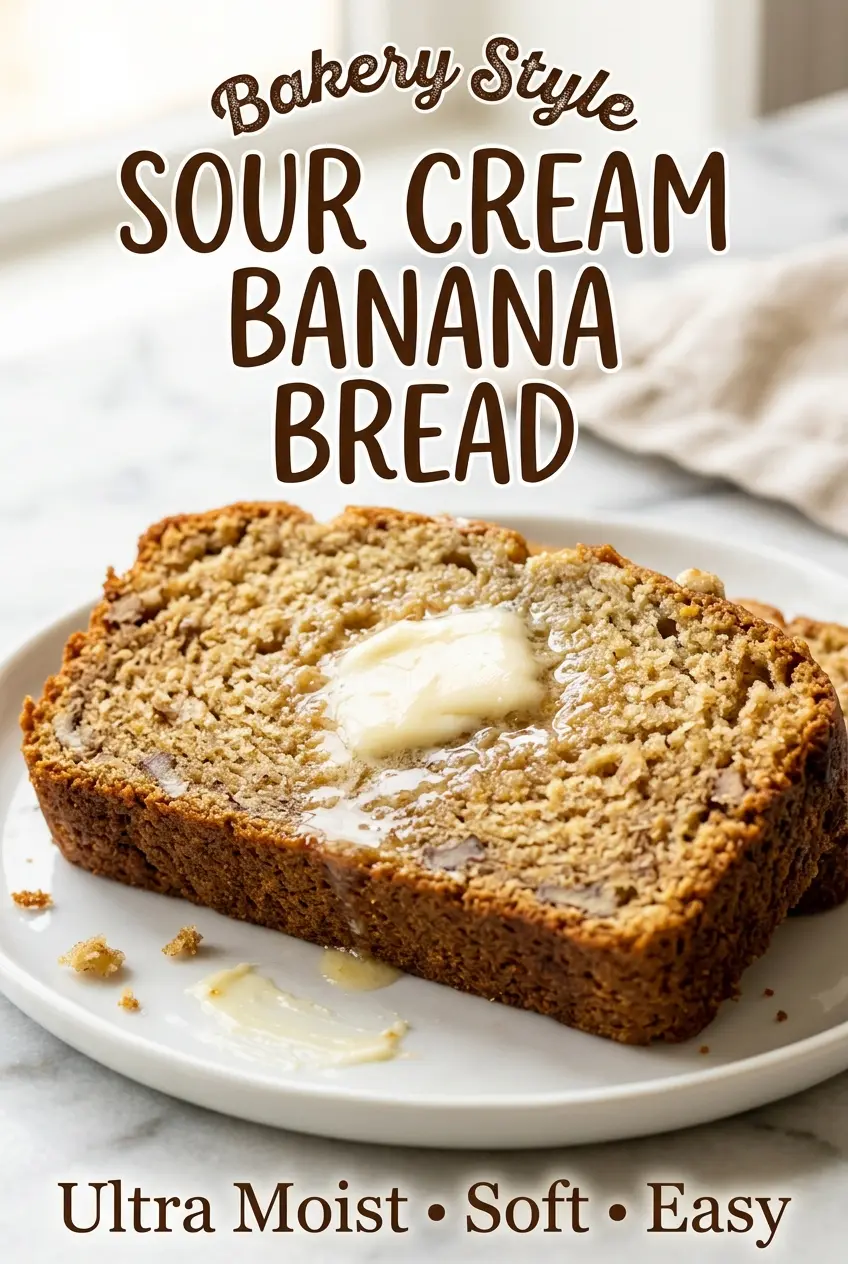
Sour Cream Banana Bread
Ingredients
Equipment
Method
- Preheat the oven to 350°F. Grease and line a 9×5-inch loaf pan with parchment paper.
- Beat the softened butter and granulated sugar together for 2–3 minutes until light and fluffy. Scrape the sides once during mixing to keep the batter even.
- Add the eggs one at a time, beating well after each addition. Mix in the vanilla extract until fully incorporated.
- Stir in the mashed bananas and sour cream until smooth and creamy. Stop mixing as soon as no streaks remain.
- Whisk together the all-purpose flour, baking soda, baking powder, salt, and ground cinnamon if using. Whisk until the cinnamon is evenly dispersed.
- Fold the dry ingredients into the banana mixture until just combined. Do not overmix so the loaf stays tender and moist.
- Pour the batter into the prepared loaf pan. Sprinkle the top with coarse sugar if desired.
- Bake for 60–70 minutes, or until the loaf is golden brown and a toothpick inserted into the center comes out clean. If the top browns early, tent loosely with foil for the remaining bake time.
- Cool the bread in the pan for 15 minutes, then transfer it to a wire rack to cool completely before slicing. Letting it cool fully helps the crumb set so slices hold together.