
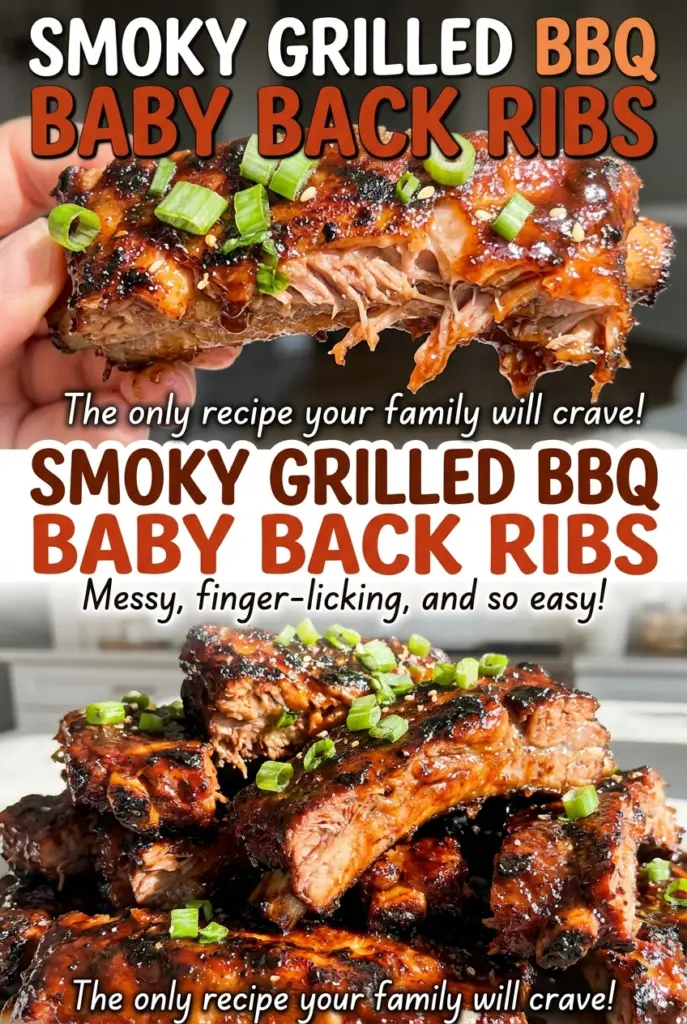
Smoky Grilled BBQ Baby Back Ribs
The lid comes up after the first stretch on the grill and the ribs have a faint red-brown color, while the hickory smoke hangs around the grate. That’s the point…

By Ava
•
•
Reading time: 9 min
Tip: save now, make later.
The lid comes up after the first stretch on the grill and the ribs have a faint red-brown color, while the hickory smoke hangs around the grate. That’s the point where patience matters: the meat still needs time before it’ll turn tender. I cook these smoky grilled BBQ baby back ribs over indirect heat first, then wrap them with apple juice so they soften without sitting directly over the flame.
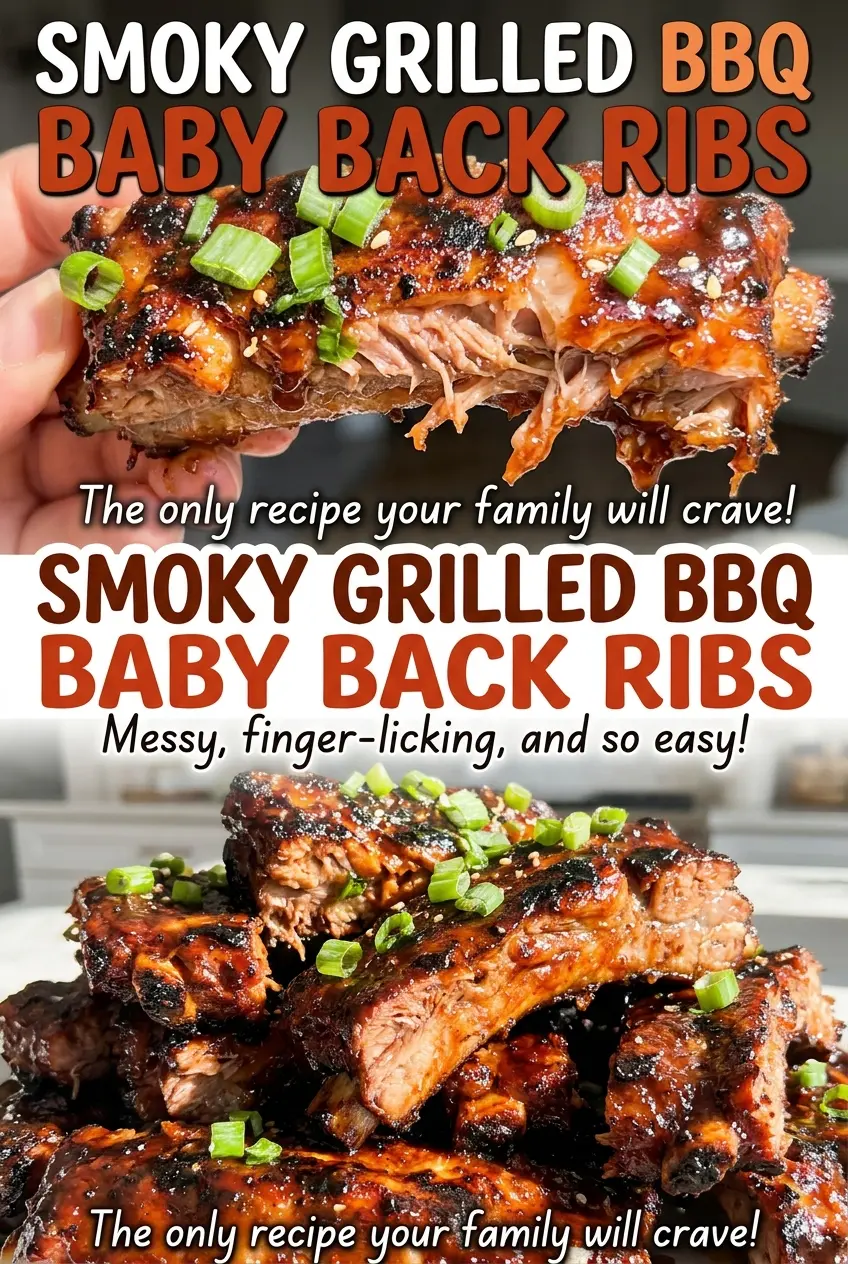
The order makes a difference. A dry rub gets time with the smoke before the ribs are wrapped, and the barbecue sauce goes on only at the end, where it can turn sticky instead of scorching. After a short rest, the meat slices neatly between the bones and carries smoke, spice, and a glossy coat of sauce.
Kitchen Note
The membrane can be slippery, so loosen one corner first and grip it with a paper towel as you pull. If it tears, catch another edge and keep going; removing it leaves the seasoning and smoke with less of a barrier on the bone side.
Save these smoky grilled BBQ baby back ribs for a cookout, with hickory smoke and a sticky barbecue glaze.
Why the BBQ Sauce Goes on After the Foil, Not Before
There are two sweet ingredients in play here: brown sugar in the rub and barbecue sauce on the finish. Put the sauce on before the long smoke or the foil stage, and it spends too much time heating; the sugars can darken before the meat is tender. Keeping the sauce back protects that glossy finish for the short final stretch.
The two-zone setup matters for the same reason. The ribs sit over the unlit side, so they cook with steady indirect heat rather than the harsher heat directly above the flame or coals. During the first two hours, the exposed surface has time to take on hickory smoke. The foil stage then gives the ribs a covered, moist stretch with apple juice, and the final uncovered minutes let the sauce turn tacky. Think of the sauce as a glaze, not a braising liquid; it belongs at the end, when the meat is already tender.
What the Smoke, Apple Juice, and Rub Each Bring to These Ribs
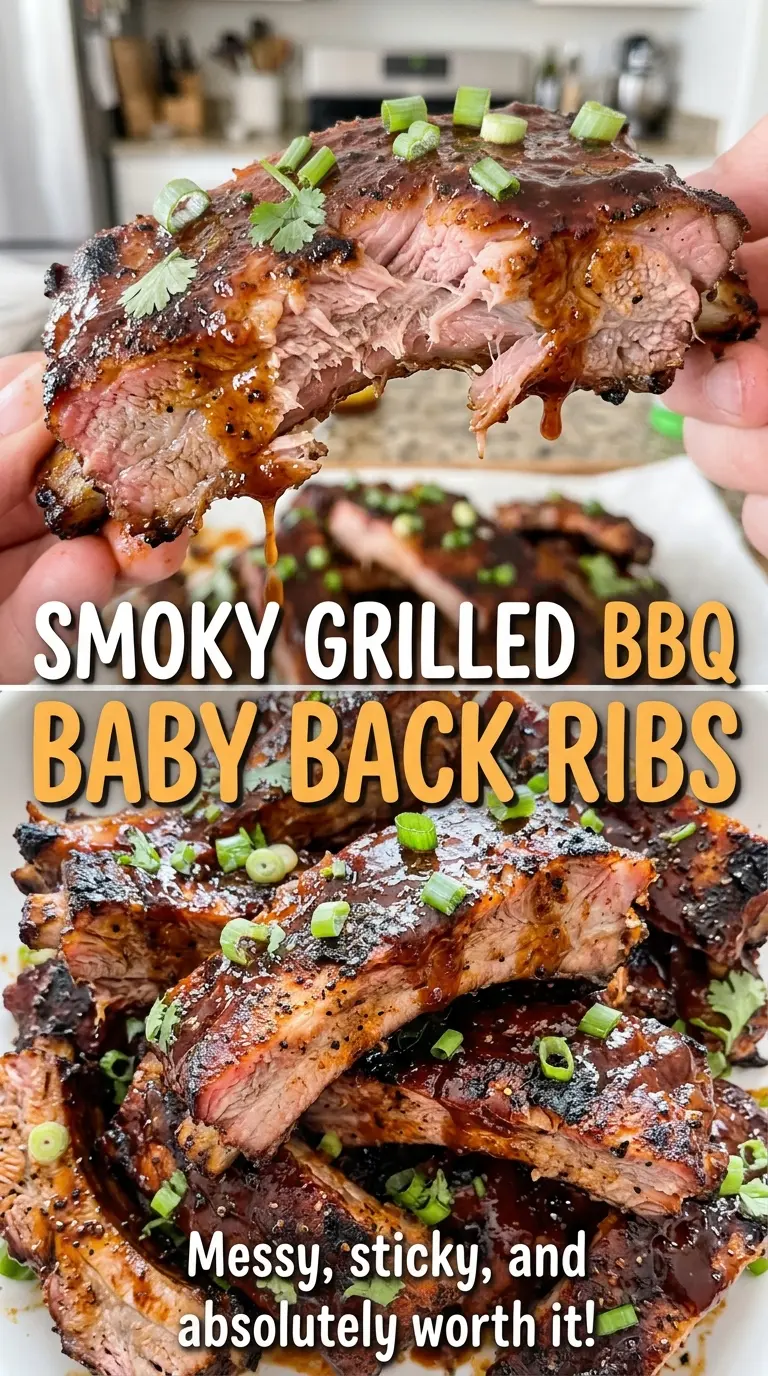
- Baby back ribs — The racks are relatively lean and cook on a different schedule from larger rib cuts, which is why I stick with baby backs for the timing here. Look for meaty racks without a strong odor; choose ones that are similar in size so they finish at about the same pace.
- Brown sugar and smoked paprika — Brown sugar rounds out the pepper and cayenne, while smoked paprika adds a smoky note even before the wood chips do their work. Fresh paprika has a clearer aroma; an older jar still seasons the ribs but tastes flatter. Plain paprika can stand in if needed, though you’ll lose some of that smoke flavor.
- Hickory wood chips — These provide the grill smoke that gives the ribs their defining character. Use chips intended for grilling, and don’t confuse smoked paprika with actual wood smoke; each contributes something different. Leaving the chips out still cooks the ribs, but the hickory aroma won’t be there.
- Apple juice — The juice goes into the foil with the ribs, where the tight packet holds in moisture as the meat cooks. Use ordinary apple juice rather than a thick concentrate; its lighter sweetness complements the rub without overwhelming it.
- Barbecue sauce — Since it’s brushed on at the end, choose a sauce you like straight from the bottle. A thinner sauce may need the full glazing time to turn sticky. A thick one coats readily, but spread it evenly so it doesn’t sit in heavy patches.
The Grill Stages That Take These Ribs from Smoky to Tender
Seasoning the Racks Evenly
Loosen and remove the thin membrane from the bone side of each rack. Stir the brown sugar, smoked paprika, kosher salt, black pepper, garlic powder, onion powder, and cayenne together until the color looks uniform. Rub the ribs with neutral oil, then coat them on all sides with the seasoning mixture. Press the rub into the surface rather than letting it fall away when you move the racks.
Letting Hickory Smoke Reach the Meat
Set up a two-zone grill and bring it to 275–300°F. On a gas grill, put the chips in a smoker box or a foil pouch with holes; on charcoal, scatter them over the coals. Place the ribs bone-side down on the unlit side and close the lid. Keep the grill in its temperature range as the ribs cook for 2 hours; if it climbs, adjust the vents or burners rather than shifting the ribs over direct heat.
Wrapping for the Tender Stage
Set each rack on its own large sheet of heavy-duty foil and pour apple juice around it. Wrap each packet tightly, taking care to seal the edges so the juice stays inside. Return the packets to the indirect-heat side for 45–60 minutes. Test the meat between the bones with a skewer; if it doesn’t slide in easily, reseal the foil and cook for another 15 minutes.
Setting the Glaze and Resting
Open the foil carefully, since hot steam will escape, and brush barbecue sauce over both sides of the ribs. Return them bone-side down to indirect heat for 10–15 minutes, until the glaze looks sticky. Check the meat with an instant-read thermometer inserted away from the bone; it should register at least 145°F. Transfer the racks to a cutting board and let them rest for 10 minutes before slicing between the bones.
Three Ways to Adjust the Rub or Glaze Without Losing the Method
Make the rub milder
Leave out the cayenne for a gentler seasoning, while keeping the smoked paprika, pepper, and garlic in place. The ribs will still have a savory, smoky rub, just without the cayenne’s lingering heat.
Choose a different barbecue sauce
Use a sweeter, tangier, or spicier barbecue sauce in the glaze, keeping the same brushing and grilling stage. This changes the finish without altering the smoke-and-foil cook; very spicy sauce will make the whole bite hotter.
Use gluten-free barbecue sauce
For a gluten-free version, replace the regular barbecue sauce with a gluten-free barbecue sauce. The glaze will work the same way; the particular sauce you choose determines whether the finish tastes sweeter, smokier, or more tangy.
Storage and Reheating
- Refrigerator: Store leftovers covered for 3–4 days. The sauce will lose some of its fresh sticky texture as it chills.
- Freezer: Freeze sliced or unsliced ribs in an airtight freezer container for up to 2–3 months. Thaw them in the refrigerator before reheating.
- Reheating: Wrap the ribs in foil and warm them in a 300°F oven until the center reaches 165°F. Keep them covered; reheating uncovered can dry the meat and make the glaze tacky before the ribs are hot through.
Questions I Get Asked About Grilling Baby Back Ribs
Smoky Grilled BBQ Baby Back Ribs
Ingredients
Equipment
Method
- Remove the thin membrane from the bone side of each rack by loosening it with a knife and pulling it off with a paper towel.
- Stir together the brown sugar, smoked paprika, salt, black pepper, garlic powder, onion powder, and cayenne.
- Rub the ribs with the oil, then coat them evenly with the seasoning mixture.
- Set up a two-zone grill for indirect cooking and preheat it to 275–300°F.
- Place the hickory wood chips in a smoker box or foil pouch with holes on a gas grill, or scatter them over the coals on a charcoal grill.
- Place the ribs bone-side down over the unlit side of the grill, close the lid, and cook for 2 hours, maintaining 275–300°F.
- Set each rack on a large sheet of heavy-duty foil, pour 1/4 cup apple juice around each rack, and wrap the foil tightly around the ribs.
- Return the foil-wrapped ribs to the indirect-heat side and cook for 45–60 minutes, until a skewer slides easily into the meat between the bones.
- Reseal the foil and cook another 15 minutes if needed.
- Carefully unwrap the ribs and brush both sides with the barbecue sauce.
- Return the ribs bone-side down over indirect heat for 10–15 minutes, until the glaze is sticky and the meat registers at least 145°F on an instant-read thermometer inserted away from the bone.
- Transfer the ribs to a cutting board and rest for 10 minutes before slicing between the bones.