
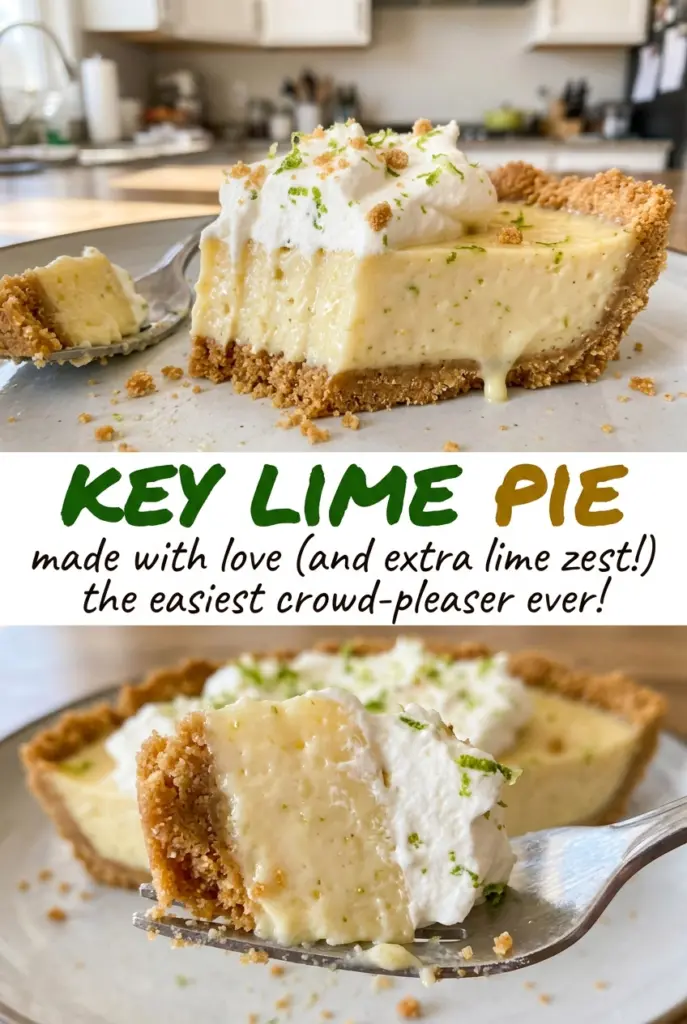
Key Lime Pie
The moment I grate Key lime zest, the kitchen smells sharp and floral, long before the pie goes into the oven. That bright aroma is a good preview of the…

By Ava
•
•
Reading time: 8 min
Tip: save now, make later.
The moment I grate Key lime zest, the kitchen smells sharp and floral, long before the pie goes into the oven. That bright aroma is a good preview of the filling: sweet from condensed milk, tart from the juice, and full of lime without tasting harsh. In this Key lime pie, a buttery graham cracker crust gives the cool custard a crisp, toasted edge.
I like how the flavors stay distinct without competing. The crust brings a little sweetness and crunch, while the filling is smooth and distinctly citrusy. Finely grated zest adds fragrance throughout, so each slice tastes like more than just sweetened lime juice. It’s a classic combination, made with familiar ingredients and a pie plate that serves eight.
Kitchen Note
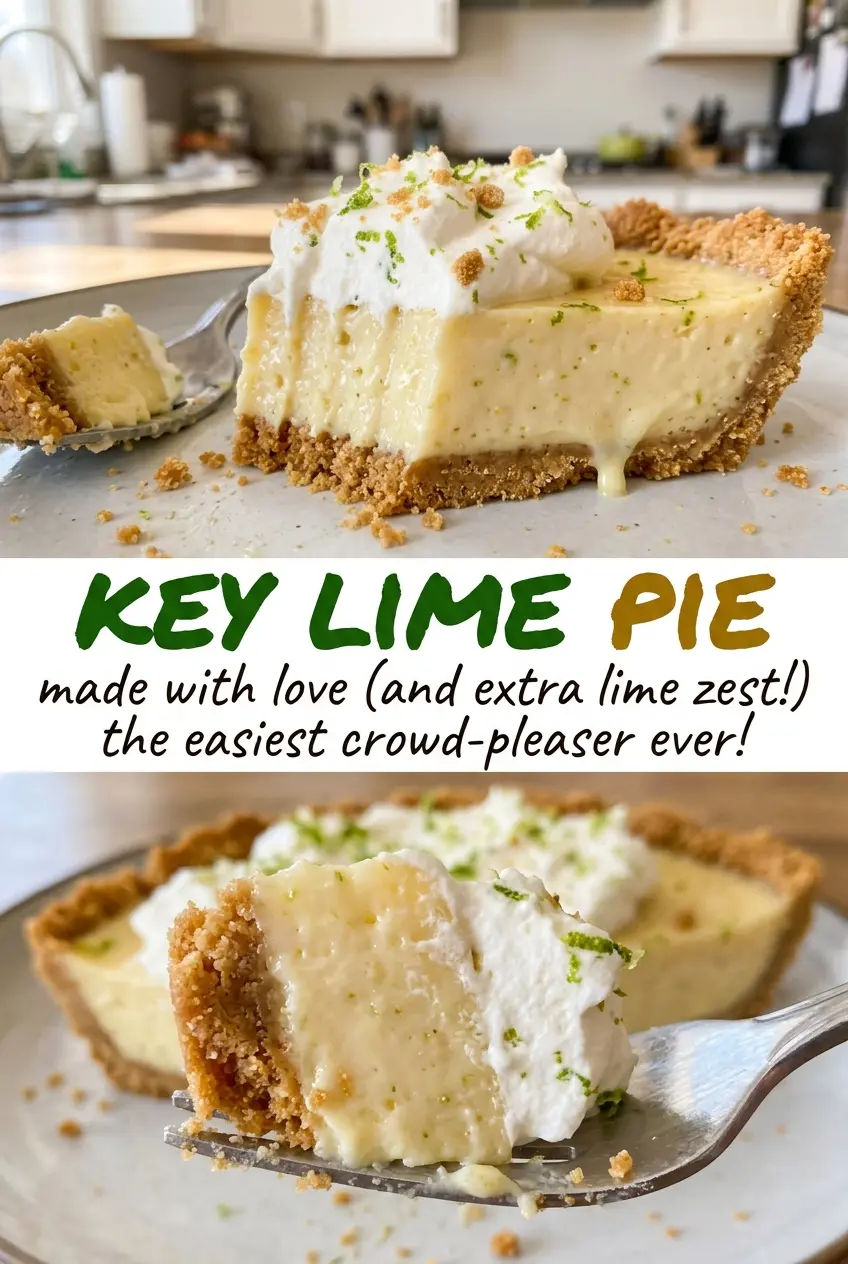
Press the crumbs firmly over the bottom and all the way up the sides of the pie plate. A loose, thin patch is the first place the crust tends to break when you serve a slice.
Save this Key lime pie for its tart, smooth filling and crisp graham cracker crust—an easy dessert to make ahead and serve chilled.
Why the Center Should Still Have a Little Wobble
Key lime pie can look unfinished when it first comes out of the oven. The edges should be set, but the middle should still move slightly when the pie plate is nudged. Baking until the entire surface looks firm risks taking the custard past its best texture; it continues to firm as it cools and chills.
For a reliable read, I look at the center and the edges together rather than judging by color. A slight wobble in the middle is different from a liquid filling that ripples across the whole pie. The instant-read thermometer provides an additional check: the center should reach 160°F. That combination of visual cues and temperature helps you avoid both an underbaked middle and a stiff, overbaked filling.
The chill matters as much as the oven. A pie that feels soft while warm needs time in the refrigerator for the custard to settle into a sliceable texture. Give it the full cooling and chilling time before cutting; rushing this part can leave the first piece slumped even when the filling was baked correctly.
What Each Ingredient Brings to This Key Lime Pie
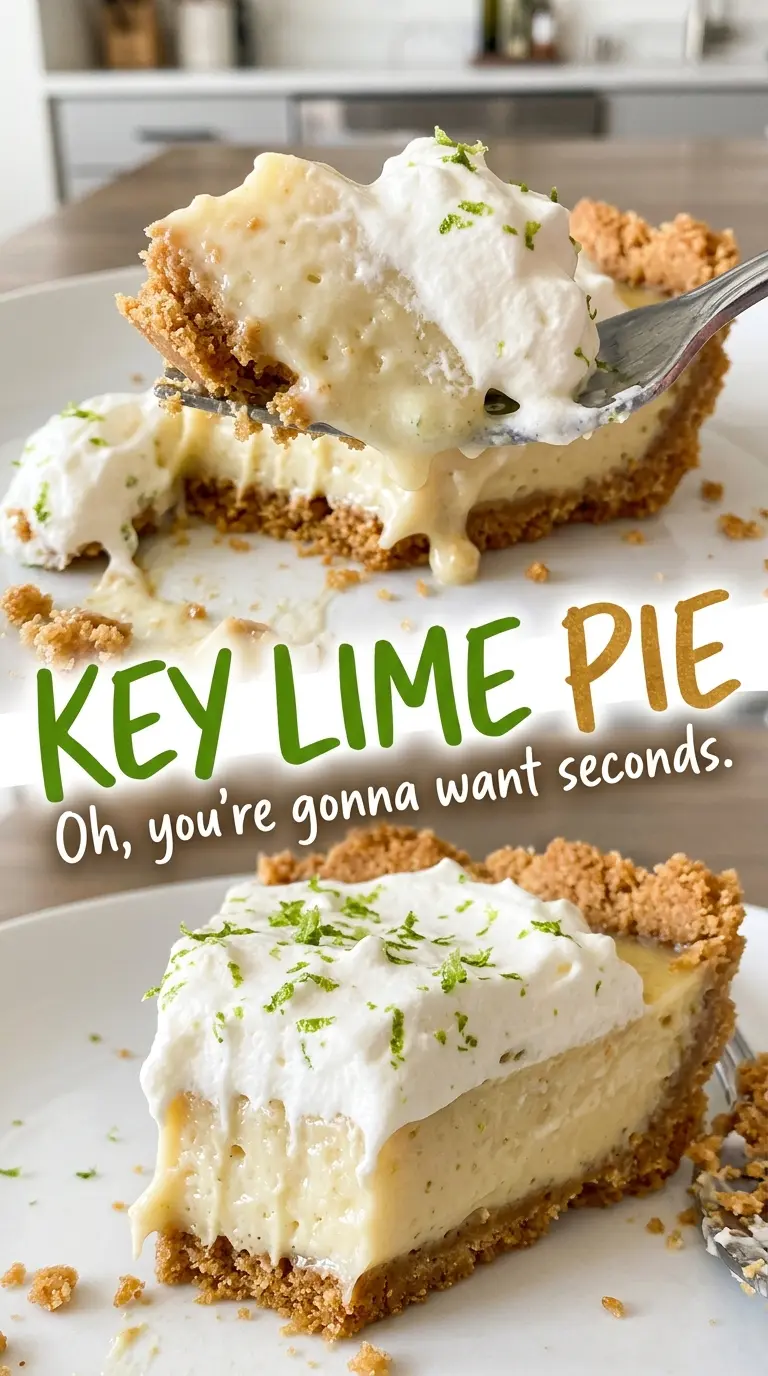
- Key lime juice and zest — The juice gives the filling its clean tartness, while the finely grated zest carries fragrant citrus oils. Key limes have a distinctive flavor, but regular limes are a workable substitute if Key limes aren’t available; use the same amount of juice and finely grated zest. The zest should be fine enough to disperse through the filling rather than leave chewy pieces.
- Sweetened condensed milk — This thick, sweet milk gives the filling much of its body as well as its sweetness. Evaporated milk isn’t an equivalent swap; it’s thinner and unsweetened, so the custard won’t have the same balance or consistency. Use the canned sweetened condensed milk called for here rather than trying to adjust a different dairy product.
- Egg yolks — Yolks help the lime mixture bake into a rich, tender custard. Separate the eggs carefully so no whites slip into the bowl; the filling is built around yolks, not whole eggs. Fresh eggs are a sensible choice, but there’s no need to seek out specialty eggs for this pie.
- Graham cracker crumbs — Fine crumbs make a crust that presses together evenly and holds its shape once baked. Packaged crumbs are convenient, and homemade crumbs work too as long as they’re finely crushed. For a gluten-free pie, use gluten-free graham-style crumbs in the same quantity.
- Unsalted butter — Melted butter binds the dry crumbs and helps the crust bake into a firm, rich base. Standard unsalted butter is all you need; a premium brand won’t change the crust as much as getting the crumbs thoroughly coated will.
Build the Crust Before You Whisk the Filling
Press and Bake the Graham Cracker Base
Heat the oven to 350°F. Stir the graham cracker crumbs, granulated sugar, and melted butter together in a medium bowl until the crumbs are evenly moistened. Press the mixture over the bottom and up the sides of a 9-inch pie plate, then bake for 8 to 10 minutes, until fragrant and set. Let the crust cool slightly before adding the filling; pouring custard into a piping-hot crust makes the next step harder to handle.
Whisk a Smooth Lime Custard
Whisk the egg yolks in a medium bowl for about 1 minute, until they look slightly thickened. Whisk in the sweetened condensed milk and finely grated Key lime zest until combined. Add the Key lime juice gradually, whisking as you pour, and stop when the filling looks smooth. Adding the juice in a steady stream gives you time to blend it evenly instead of leaving streaks at the bottom of the bowl.
Bake to a Gentle Set, Then Chill
Pour the filling into the slightly cooled crust and bake for 15 to 18 minutes. The edges should look set while the center retains a slight wobble; check the middle with an instant-read thermometer for 160°F. If the edges are still loose, give the pie a little more time within the stated range and check again rather than waiting for the center to look completely firm. Cool the pie completely on a wire rack, then refrigerate it for at least 3 hours before serving.
Two Easy Ways to Adapt the Pie
Make It with Regular Limes
When Key limes are hard to find, swap in regular lime juice and finely grated regular lime zest, using the same amounts. The pie will still have a bright citrus tang, though its flavor will be less distinctly floral than a version made with Key limes.
Make a Gluten-Free Crust
Replace the graham cracker crumbs with the same amount of gluten-free graham-style crumbs, keeping the sugar and melted butter unchanged. The crust may have a slightly different crunch depending on the crumbs you use, but it still presses into the pie plate and bakes with the same method.
Make-Ahead and Serving
- Refrigerator: Keep the cooled pie covered and refrigerated for up to 4 days. The crust softens gradually as it sits.
- Freezer: Freeze the chilled pie whole or in slices, wrapped tightly, for up to 1 month for best texture. Thaw it in the refrigerator before serving.
- Serving: Serve cold, straight from the refrigerator. Reheating isn’t needed and will soften the custard.
Questions That Come Up While Making Key Lime Pie
Key Lime Pie
Ingredients
Equipment
Method
- Preheat the oven to 350°F.
- Stir together the graham cracker crumbs, granulated sugar, and melted unsalted butter in a medium bowl.
- Press the mixture firmly over the bottom and up the sides of a 9-inch pie plate.
- Bake the crust for 8 to 10 minutes, until fragrant and set.
- Let the crust cool slightly.
- Whisk the egg yolks in a medium bowl for about 1 minute, until slightly thickened.
- Whisk in the sweetened condensed milk and finely grated Key lime zest.
- Gradually whisk in the Key lime juice until the filling is smooth.
- Pour the filling into the crust.
- Bake for 15 to 18 minutes, until the edges are set, the center has a slight wobble, and the filling reaches 160°F on an instant-read thermometer.
- Cool the pie completely on a wire rack.
- Refrigerate for at least 3 hours before serving.