
Slow Cooker French Dip Sandwiches
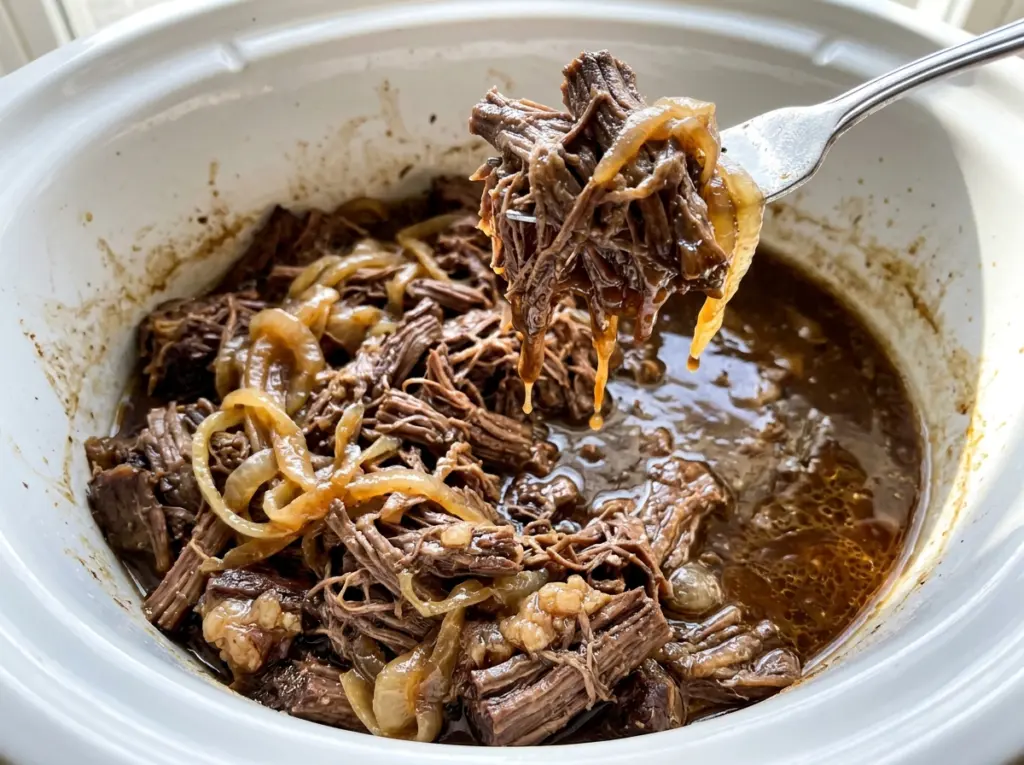
The roast should give way under a fork when you lift the slow-cooker lid, with a savory broth gathered underneath. I used to think the liquid belonged right on the…

By Ava
•
•
Reading time: 8 min
Tip: save now, make later.
The roast should give way under a fork when you lift the slow-cooker lid, with a savory broth gathered underneath. I used to think the liquid belonged right on the sandwich, but that turns the toasted roll soggy before you get to the last bite. These slow cooker French dip sandwiches are better assembled with the beef and provolone on the roll and the cooking liquid served alongside for dipping.
Boneless chuck roast holds up to a long, gentle cook and turns tender enough to pull apart with two forks. I lay the onion underneath it, then add the broth and seasonings around the roast so they flavor the cooking liquid as everything cooks. A quick broil gives the hoagie rolls a little structure, and the provolone melts over the warm shredded beef. Each bite has tender beef, a soft roll, and a dunk of savory broth.
Kitchen Note
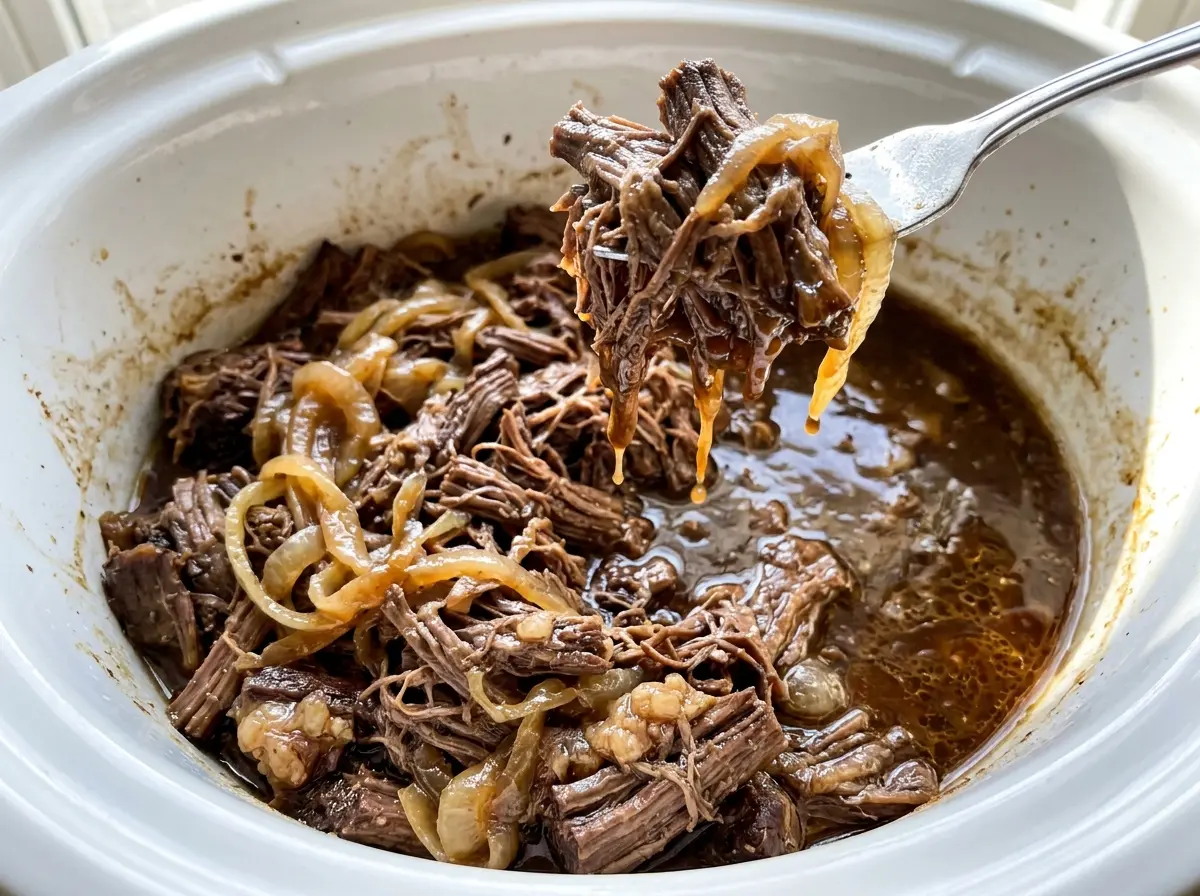
When you skim the cooking liquid, look for the shiny layer sitting on top and take off just the excess. The darker broth underneath is what you want to keep for dipping.
Save these slow cooker French dip sandwiches for a low-effort dinner with tender chuck and a broth made for dipping.
Why French Dip Broth Should Stay Thin Enough to Dip
A French dip needs a flavorful cooking liquid, not a thick gravy. The broth starts with beef, onion, garlic, Worcestershire, thyme, and a bay leaf, and it picks up more flavor as the chuck cooks. That combination makes a savory dip with enough body to cling lightly to the bread without coating it like a sauce.
There are two useful parts to that: the roast cooks in the liquid, and the liquid gets served separately. Keeping it in a bowl lets you choose how much to dip with each bite. It also means the toasted roll stays intact longer instead of soaking up broth before the sandwich reaches the table. Don’t thicken the liquid; its pourable texture is exactly what makes it useful here.
The broth is worth treating as part of the meal rather than as leftover cooking liquid. Once the beef is shredded and the excess fat is skimmed, set the liquid out with the sandwiches. A quick dunk adds moisture and seasoning without burying the beef or the melted provolone.
What the Chuck, Broth, and Provolone Each Bring

- Boneless beef chuck roast — Chuck has the connective tissue that softens during the long cook, giving you beef that shreds instead of turning into dry slices. Choose a roast with some marbling, then trim the excess fat before it goes into the slow cooker.
- Yellow onion and garlic — The onion sits under the roast and softens in the cooking liquid, while minced garlic spreads through the broth. Slice the onion thinly so it softens evenly, and mince the garlic rather than leaving large pieces that are harder to distribute.
- Beef broth and Worcestershire sauce — The broth gives you enough liquid for both cooking and dipping; Worcestershire adds a savory, tangy note that keeps the dip from tasting flat. Since broth brands vary in saltiness, taste the finished liquid before adding any extra salt at the table.
- Dried thyme and bay leaf — Dried thyme brings a steady herbal note through the long cook, and the bay leaf quietly flavors the broth. The bay leaf is for infusing the liquid, not eating, so take it out before shredding.
- Hoagie rolls and provolone — Hoagie rolls give the beef room and hold up better after a quick toast than soft sandwich bread. Provolone melts into a smooth layer over the beef; use slices that cover the filling without hanging far over the edges of the roll.
From Fork-Tender Chuck to Toasted, Melty Hoagies
Build the slow-cooker base
Arrange the thinly sliced onion across the bottom of a 6-quart slow cooker, then set the trimmed chuck roast on top. Sprinkle the roast with kosher salt and black pepper. Add the minced garlic, beef broth, Worcestershire sauce, dried thyme, and bay leaf around the meat so the seasonings flavor the liquid as it cooks.
Cook until the beef yields to a fork
Cover and cook on LOW for 8 to 9 hours or HIGH for 4 to 5 hours. The roast is ready when a fork slides in easily and the meat pulls apart without a fight. If it still feels firm and resists shredding, it needs more time; don’t try to force it into strands before it’s tender.
Shred the beef and ready the dip
Move the roast to a cutting board and discard the bay leaf. Skim excess fat from the cooking liquid, then use two forks to pull the beef into shreds. Keep the strands easy to pile onto the rolls rather than shredding them into tiny pieces that can fall out as you dip.
Toast the rolls, then melt the cheese
Heat the oven broiler and set the split hoagie rolls cut-side up on a baking sheet. Broil for 1 to 2 minutes, just until the cut sides are lightly toasted. Divide the shredded beef among the rolls and top each with a slice of provolone, then broil for another 1 to 2 minutes until the cheese melts. Serve with the cooking liquid for dipping.
Three Ways to Change Up the Beef-and-Broth Sandwich
Make the cooked onions part of the filling
For a more onion-forward sandwich, lift some of the softened onion from the slow cooker and tuck it onto the beef before adding provolone. It brings a softer, sweeter texture to the filling without changing the broth you serve for dipping.
Leave off the provolone for a dairy-free version
Skip the cheese and assemble the beef on the toasted hoagie rolls. The sandwich loses the creamy, melted layer, but the beef and its dipping broth still carry the meal; no replacement ingredient is needed.
Serve the hoagies open-faced
Keep the toasted roll halves open on the baking sheet, divide the beef between them, and melt a slice of provolone over each. This makes an easy open-faced version with more toasted bread exposed for dipping.
Storage and Reheating
- Refrigerator: Store the beef with its cooking liquid in an airtight container for 3 to 4 days. Keep the rolls separate; assembled sandwiches soften in storage.
- Freezer: Freeze the beef with some cooking liquid in a freezer-safe container for up to 3 months. Thaw it in the refrigerator before reheating.
- Reheating: Warm the beef and liquid together in a saucepan, stirring, until the beef reaches 165°F. Toast the rolls and assemble just before serving; reheating an assembled sandwich in the broth will leave the bread soggy.
Questions That Come Up Before the Roast Is Ready
Slow Cooker French Dip Sandwiches
Ingredients
Equipment
Method
- Arrange the onion in the bottom of a 6-quart slow cooker.
- Place the chuck roast on top of the onion.
- Sprinkle the roast with the salt and pepper.
- Add the garlic, beef broth, Worcestershire sauce, thyme, and bay leaf around the roast.
- Cover and cook on LOW for 8 to 9 hours or HIGH for 4 to 5 hours, until the beef is fork-tender.
- Transfer the beef to a cutting board.
- Discard the bay leaf.
- Skim excess fat from the cooking liquid.
- Shred the beef with two forks.
- Heat the oven broiler.
- Arrange the split rolls cut-side up on a baking sheet.
- Broil the rolls for 1 to 2 minutes, until lightly toasted.
- Divide the shredded beef among the rolls.
- Top each roll with a slice of provolone.
- Broil for 1 to 2 minutes, until the cheese is melted.
- Serve with the cooking liquid for dipping.