
Slow Cooker Beef and Barley Soup
When the beef first hits the hot skillet, you want to hear a steady sizzle and see the edges turn deeply brown. That little bit of color gives Slow Cooker…

By Ava
•
•
Reading time: 8 min
Tip: save now, make later.
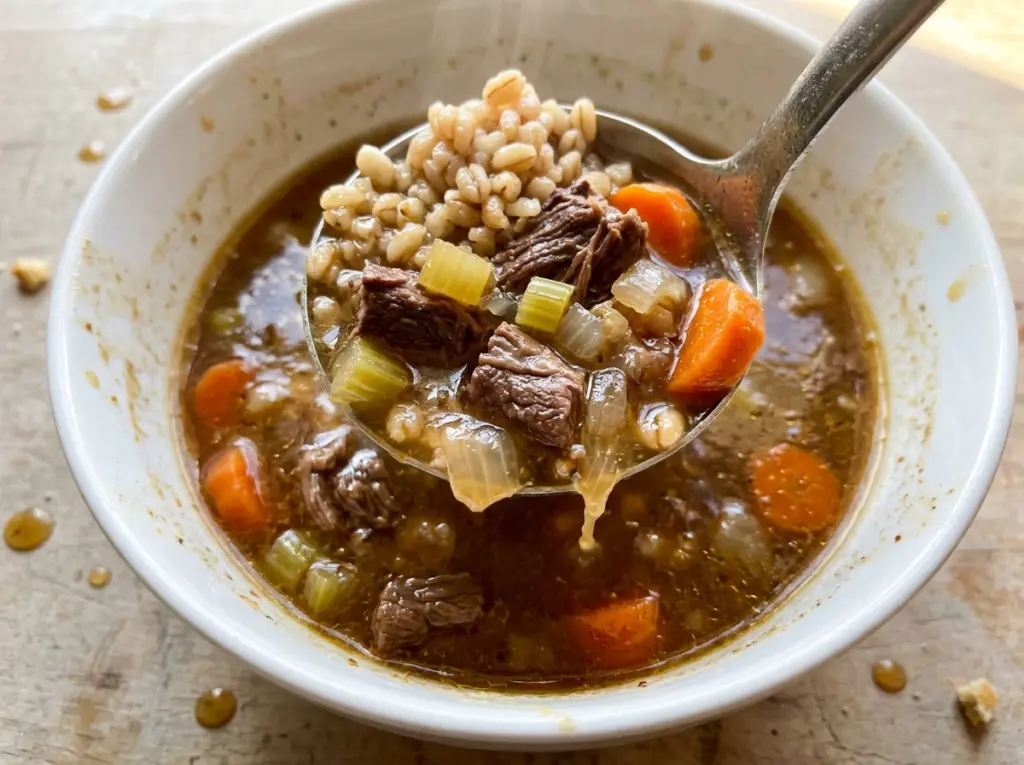
When the beef first hits the hot skillet, you want to hear a steady sizzle and see the edges turn deeply brown. That little bit of color gives Slow Cooker Beef and Barley Soup a richer base than beef cooked straight in the slow cooker, and it’s worth working in batches to get it.
I use chuck cut into 1-inch pieces because it has the time to turn fork-tender during the long cook. The vegetables, broth, Worcestershire, thyme, and bay leaf go right into the slow cooker with the browned beef, so the soup builds flavor without a separate stovetop step.
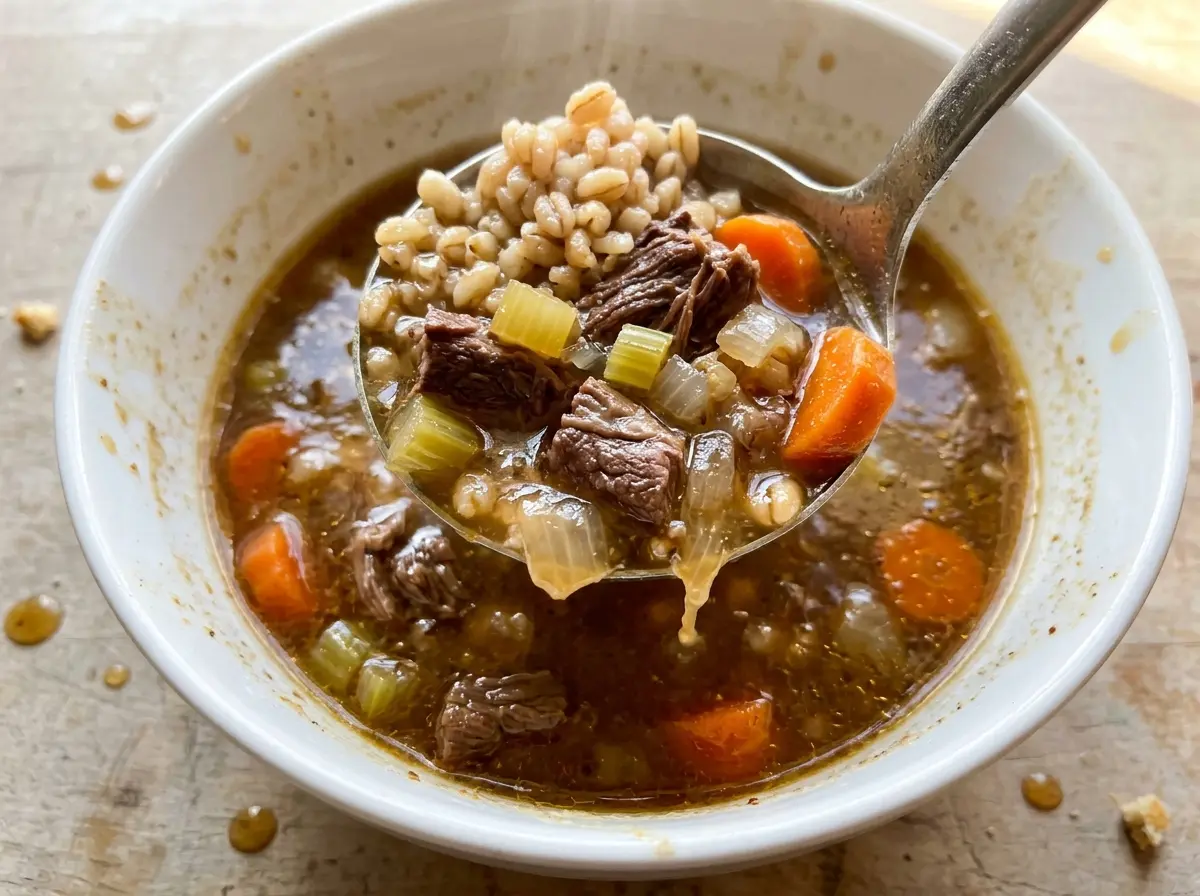
Pearl barley goes in later, once the beef is tender. It cooks in the savory broth without spending the whole day in the slow cooker, leaving you with tender grains, soft vegetables, and beef that breaks easily with a fork.
Kitchen Note
Let the oil heat over medium-high before you add the beef. If the skillet is still warming, the meat can release liquid before it has a chance to brown.
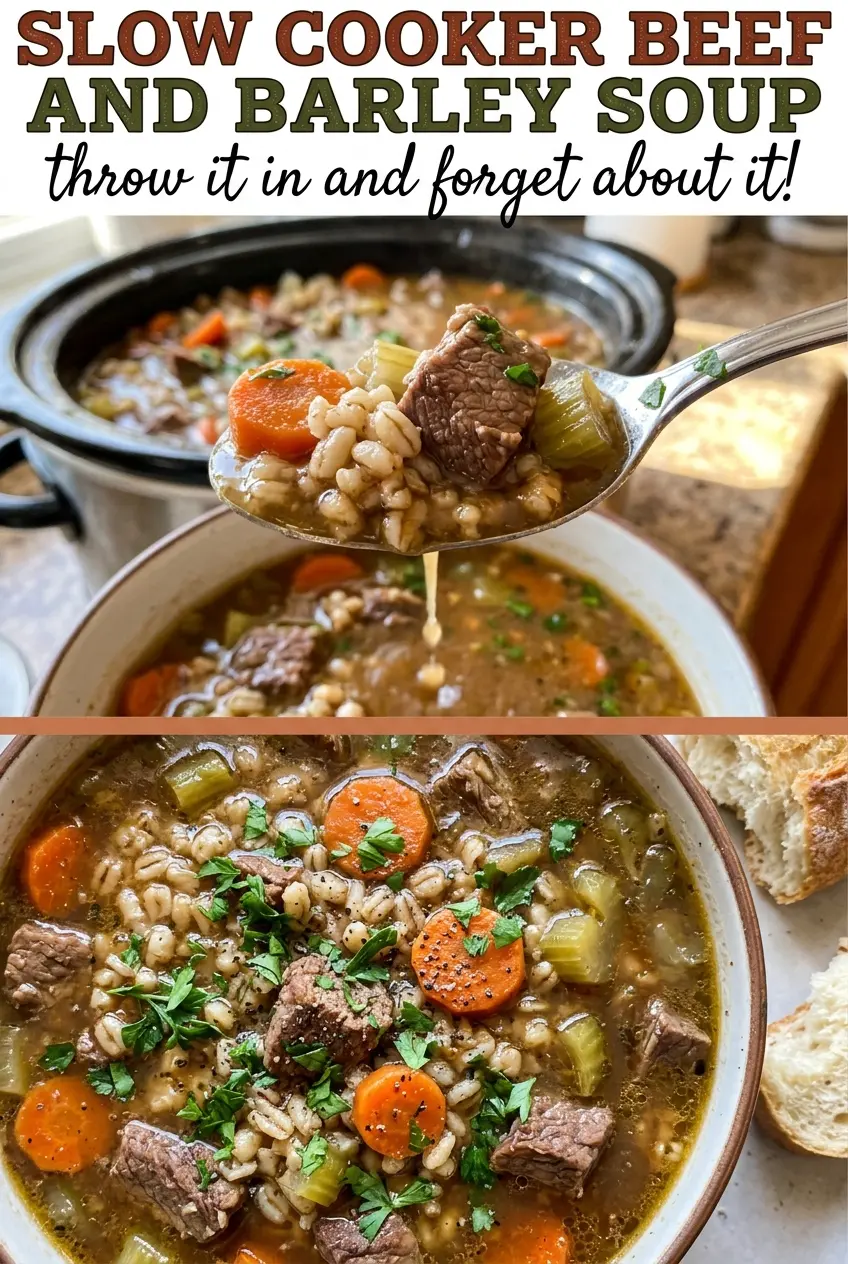
Save this slow cooker beef and barley soup for a cozy, hands-off meal with fork-tender chuck and pearl barley.
Why Pearl Barley Belongs at the End, Not in the First Hour
Barley doesn’t just sit in soup; it takes up liquid as it cooks. If it spends the entire slow-cooker time in the broth, it has a much longer window to soften and swell than it needs. Cooking it after the beef is tender gives the grains their own shorter finish, rather than asking them to hold up through hours of slow cooking.
That timing also lets you judge the soup in two distinct stages. First, the chuck has time to become fork-tender while the vegetables and seasonings flavor the broth. Then the pearl barley cooks on HIGH until tender. The finished soup should feel substantial, but it’s still a broth-based soup, not a thick stew. If you want the beef and barley to stay distinct rather than blur into a soft, starchy texture, keeping the barley for the end makes a noticeable difference.
What the Chuck, Broth, and Pearl Barley Each Bring
- Beef chuck — Chuck is a good fit for a long, moist cook because it becomes tender over time. Cut it into even 1-inch pieces so the pieces cook at a similar pace. A uniform cut matters more here than finding a premium grade.
- Pearl barley — Pearl barley gives the soup its tender, pleasantly chewy grains. Rinse it before adding it to the slow cooker, as that quick prep is part of getting it ready for its shorter cooking stage. Quick-cooking barley isn’t a like-for-like swap for this timing.
- Low-sodium beef broth — The broth is the base of the soup, while the beef and vegetables add flavor as they cook. Low-sodium broth keeps the salt level more manageable alongside the seasoned beef and Worcestershire sauce. Choose a broth you enjoy sipping; an inexpensive one is fine if it tastes balanced.
- Worcestershire sauce and dried thyme — Worcestershire adds savory depth, and thyme gives the broth its herbal note. Both are small additions with a clear role, so I wouldn’t leave out the Worcestershire unless you’re comfortable with a less rounded, less tangy broth.
- Onion, carrots, celery, garlic, and bay leaf — This group gives the broth an aromatic base and gentle sweetness. Fresh, firm carrots and celery are worth choosing because they hold their shape through the long cook. The bay leaf is there to infuse the broth; remove it before serving.
- Olive oil, kosher salt, and black pepper — The oil helps the beef brown in the skillet, while salt and pepper season the meat before it goes into the slow cooker. Standard olive oil works well here; there’s no need to use an expensive finishing oil.
Brown the Beef First, Then Let the Slow Cooker Do the Work
Brown the Chuck in Batches
Heat the olive oil in a 12-inch skillet over medium-high heat. Season the 1-inch beef pieces with kosher salt and black pepper, then brown them on all sides in batches. Transfer each browned batch to a 6-quart slow cooker as you go. If the skillet is crowded, the beef won’t brown as evenly.
Build the Broth in the Slow Cooker
Add the diced onion, sliced carrots, sliced celery, minced garlic, beef broth, Worcestershire sauce, dried thyme, and bay leaf to the slow cooker with the beef. Stir to combine so the aromatics and seasonings are distributed through the broth. The vegetables should be nestled among the beef rather than sitting in a separate layer. Cover the slow cooker before cooking.
Cook Until the Beef Turns Fork-Tender
Cook on LOW for 7 to 8 hours or on HIGH for 4 to 5 hours. The most useful doneness cue is the texture of the beef: a fork should slide in easily, and a piece should give way without a firm, chewy center. The vegetables will soften as the beef cooks, adding their flavor to the broth. Don’t add the barley during this stage.
Finish with Pearl Barley
Stir the rinsed pearl barley into the slow cooker once the beef is fork-tender. Cover and cook on HIGH for 45 to 60 minutes, until the barley is tender when you bite into it. Keep the lid on during this finish so the slow cooker stays hot. Remove the bay leaf before serving.
Two Useful Ways to Adapt the Soup
A gluten-free, barley-free version
Use certified gluten-free low-sodium beef broth and Worcestershire sauce, and leave out the pearl barley and its cooking stage. The soup will be brothier and won’t have the chewy grains, but the beef and vegetables still make a hearty bowl. This adaptation depends on using certified gluten-free versions of both packaged ingredients.
A milder broth without Worcestershire
Leave out the Worcestershire sauce if you prefer a simpler, less tangy broth. The beef, thyme, and vegetables will still flavor the soup, though it will lose some of the deep savory note that Worcestershire brings.
Storage and Reheating
- Refrigerator: Refrigerate within 2 hours and keep for 3 to 4 days. The barley will continue to absorb broth, so the chilled soup will be thicker than it was in the slow cooker.
- Freezer: Freeze in airtight containers for up to 2 to 3 months. The beef freezes well; the barley may soften further after thawing.
- Reheating: Reheat gently in a saucepan, stirring as it warms, until it reaches 165°F. Avoid a hard boil, which can make the barley softer and the beef more prone to breaking apart.
Questions That Come Up With Slow Cooker Beef and Barley Soup
Slow Cooker Beef and Barley Soup
Ingredients
Equipment
Method
- Heat the olive oil in a 12-inch skillet over medium-high heat.
- Season the beef with the salt and pepper.
- Brown the beef in batches on all sides, transferring each batch to a 6-quart slow cooker.
- Add the onion, carrots, celery, garlic, beef broth, Worcestershire sauce, thyme, and bay leaf to the slow cooker.
- Stir to combine.
- Cover and cook on LOW for 7 to 8 hours or HIGH for 4 to 5 hours, until the beef is fork-tender.
- Stir in the barley.
- Cover and cook on HIGH for 45 to 60 minutes, until the barley is tender.
- Remove the bay leaf before serving.