
Simple Herb Roasted Cauliflower
At the halfway turn, the dried herbs have settled into the oil and the kitchen smells savory, with thyme and oregano coming through clearly. I give the florets one turn,…

By Ava
•
•
Reading time: 8 min
Tip: save now, make later.
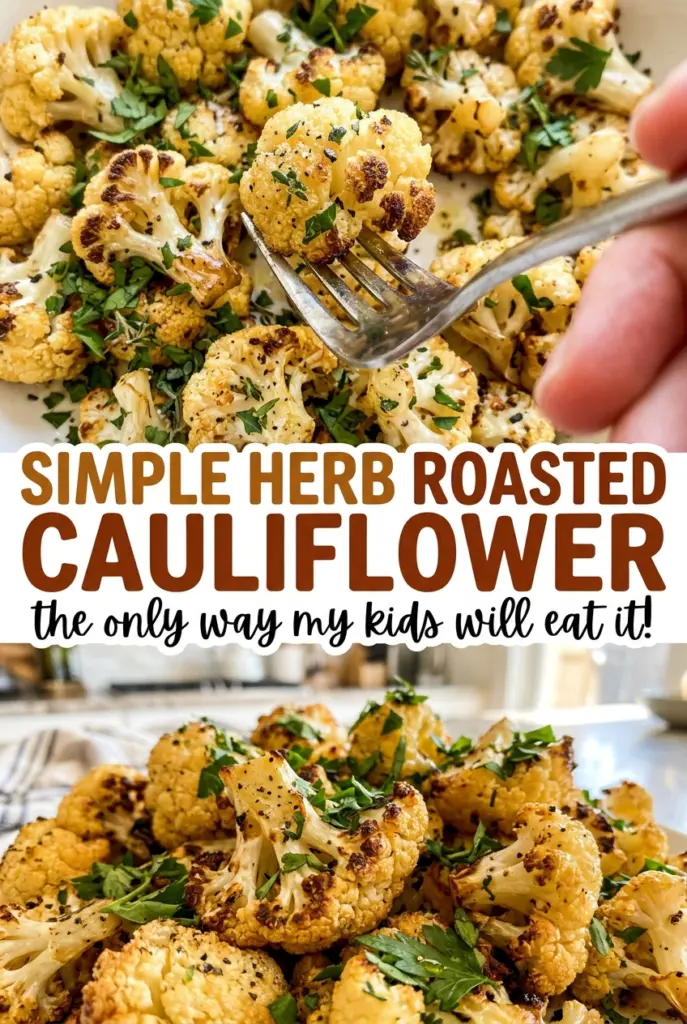
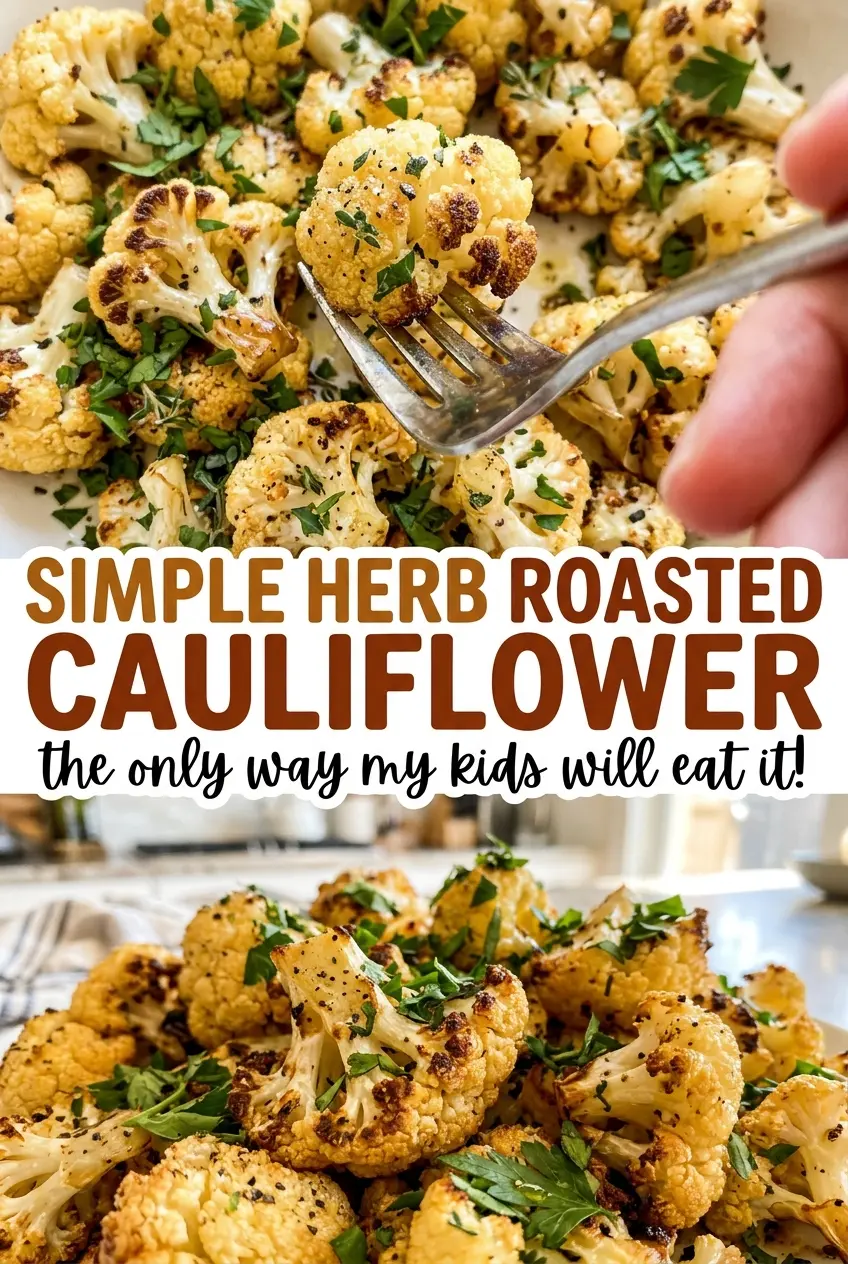
At the halfway turn, the dried herbs have settled into the oil and the kitchen smells savory, with thyme and oregano coming through clearly. I give the florets one turn, then let them roast until they’re tender and browned in spots. That’s the balance I want from simple herb roasted cauliflower: enough color to bring out its nutty side, with a center that still has a little bite.
This is a short ingredient list, so each part has a job. Olive oil helps the herbs and garlic powder cling to the cauliflower, while the dried herbs stay fragrant in the hot oven. There’s no sauce to make or extra seasoning to add at the table; the florets come out ready to serve.
The batch serves four and fits naturally alongside a weeknight meal, but I also like having a few florets left for lunch. The flavor stays simple enough to pair with plenty of main dishes, and the browned edges give each bite a little more character than steamed cauliflower.
Kitchen Note
Keep the florets bite-size and close in size, rather than mixing tiny crumbs with large chunks. The smaller pieces can brown too quickly while a much larger piece is still firm in the middle.
Save this simple herb roasted cauliflower for a no-fuss side with browned edges and a tender bite.
Why a crowded cauliflower pan turns pale instead of spotty
Cauliflower gives off moisture as it heats. When florets are piled over one another, that moisture has less room to escape, so the pieces soften before their surfaces have a chance to brown. A little extra oil won’t solve that problem; the space around the florets matters more.
Use the large rimmed baking sheet and arrange the pieces in a single layer. They don’t need to be far apart, but they shouldn’t be stacked or tucked underneath one another. Exposed surfaces roast more evenly, and the parts touching the hot pan can develop those browned patches that make the texture interesting.
This is also why I wouldn’t judge the batch by color alone. A few golden-brown spots are the goal, not a uniformly dark surface. Once the florets are tender when pierced with a fork, they’re ready—even if some pieces have more color than others. Keeping the layer open gives the cauliflower a better shot at that combination of tenderness and browning.
What the olive oil and dried herbs contribute to these florets
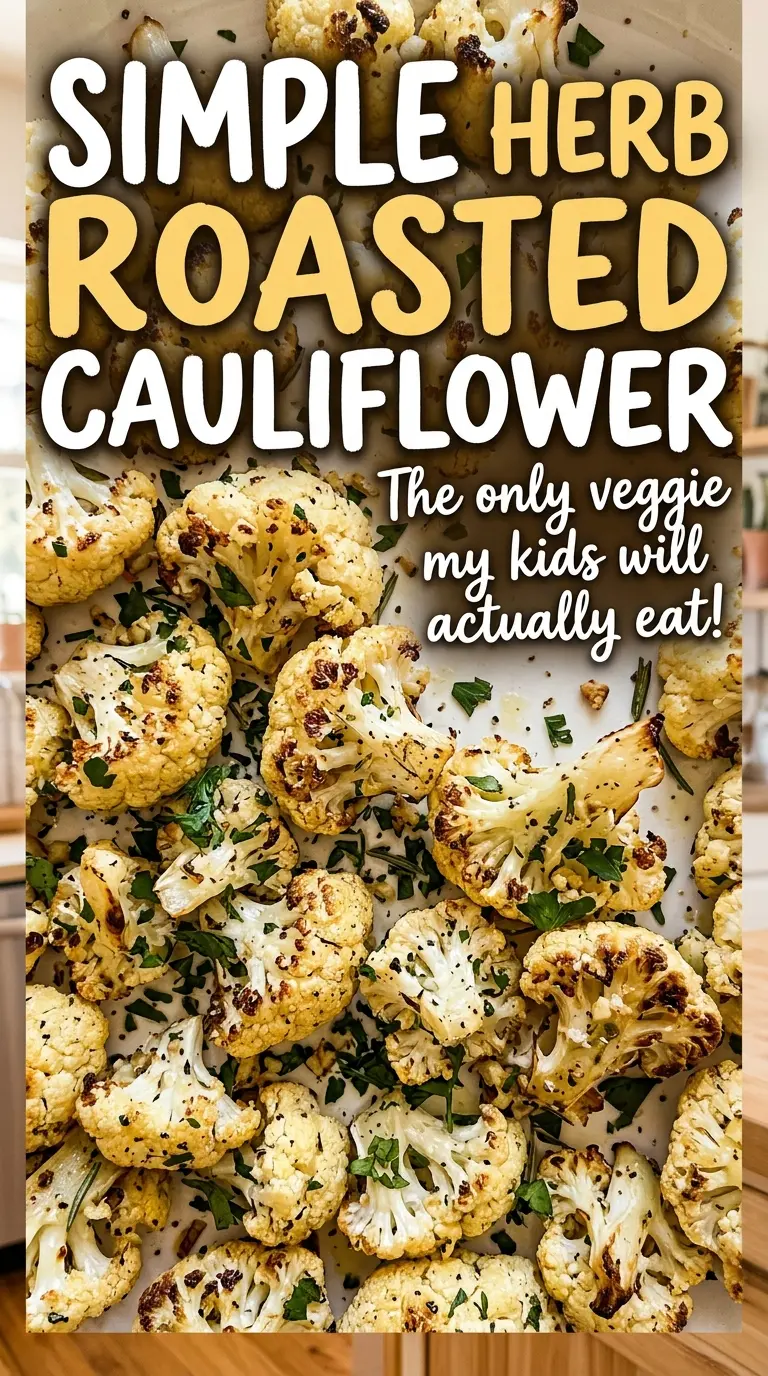
- Cauliflower — A firm, compact head is easiest to cut into florets that roast at a similar pace. Look for crisp leaves and an even-colored head; a few small surface marks aren’t a problem if the cauliflower underneath is firm.
- Olive oil — It carries the dried seasonings over the florets and helps the surfaces roast rather than dry out. A basic everyday olive oil works well here; there’s no need to use an expensive finishing oil because the cauliflower roasts at high heat.
- Dried thyme and oregano — Dried herbs are practical in this oven-roasted dish because they distribute through the oil and season the florets evenly. You can make the blend more thyme-forward by leaving out the oregano, though the result will taste less earthy and more herbal.
- Garlic powder — It spreads more evenly over the cauliflower than fresh chopped garlic would and gives the coating a gentle savory note. For a garlic-free version, leave it out; the herbs still season the florets, but the finished flavor will be less savory.
- Kosher salt and black pepper — These bring the herb coating into focus without taking over. For a lower-sodium batch, omit the kosher salt; the cauliflower will taste less rounded, but the thyme, oregano, garlic powder, and pepper still add plenty of character.
From an even coating to browned edges: the three stages
Heat the oven and prepare the pan
Heat the oven to 425°F and line a large rimmed baking sheet with parchment paper. Getting the oven hot before the cauliflower goes in helps the florets begin roasting right away. The rim keeps pieces from sliding off when you turn them, and the parchment makes the finished vegetables easier to lift from the pan.
Coat every floret in the seasoning
Put the cauliflower in a large bowl with the olive oil, dried thyme, dried oregano, garlic powder, kosher salt, and black pepper. Toss until the oil and seasonings are distributed across the florets, rather than collecting at the bottom of the bowl. If you see a dry-looking patch, keep tossing until the coating looks even. Transfer everything to the prepared sheet.
Roast until tender, turning once
Spread the cauliflower in a single layer and roast for 25 to 30 minutes, turning it once halfway through. The florets should be browned in spots, not uniformly dark. Pierce a larger piece with a fork near the end of roasting; it should pass through the center without a hard, raw-feeling resistance. If the pieces are tender and spotted with color, take the sheet out.
Three small changes that shift the herb roast
Make it thyme-forward
Leave out the oregano and use thyme as the only dried herb. The flavor turns more gently herbal and less earthy, while the roasting method stays the same.
Leave out the garlic powder
Omit the garlic powder for a milder, less savory version. The thyme and oregano still coat the cauliflower, so you don’t need to replace the missing seasoning with another ingredient.
Make a lower-sodium batch
Omit the kosher salt. You’ll lose some of the seasoning’s rounded, savory finish, but the herbs, garlic powder, and black pepper still bring flavor to the roasted florets.
Storage and Reheating
- Refrigerator: Store leftovers in a covered container for 3 to 4 days. The florets soften in the refrigerator and won’t keep the same freshly roasted edges.
- Freezer: I don’t recommend freezing this cauliflower; it thaws softer and loses much of its browned texture.
- Reheating: Spread the leftovers on a baking sheet and warm them in a 425°F oven until hot throughout. A microwave works, but it makes the florets softer rather than restoring their roasted edges.
Questions that come up before the sheet goes in the oven
Simple Herb Roasted Cauliflower
Ingredients
Equipment
Method
- Heat the oven to 425°F.
- Line a large rimmed baking sheet with parchment paper.
- Toss the cauliflower with the olive oil, thyme, oregano, garlic powder, salt, and pepper in a large bowl until evenly coated.
- Spread the cauliflower in a single layer on the baking sheet.
- Roast for 25 to 30 minutes, turning once halfway through, until browned in spots and tender when pierced with a fork.