
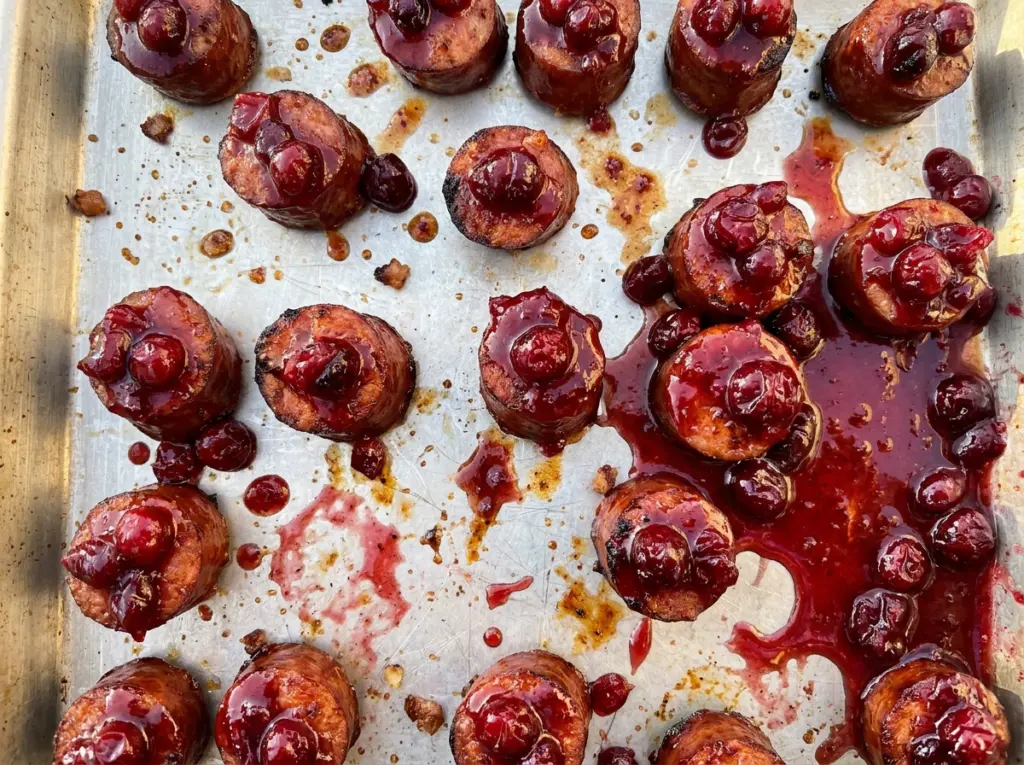
Sheet Pan Smoked Sausage Cranberry Bites
When the sausage rounds hit the hot sheet pan, they start to brown at the edges and give off just enough savory aroma to make the cranberry glaze smell even…

By Ava
•
•
Reading time: 8 min
Tip: save now, make later.
When the sausage rounds hit the hot sheet pan, they start to brown at the edges and give off just enough savory aroma to make the cranberry glaze smell even brighter. I keep the glaze off the pan for that first roast; it’s the difference between browned sausage and rounds that simmer in a sweet coating. These Sheet Pan Smoked Sausage Cranberry Bites are easy to serve warm, and the parchment makes cleanup much less of a project.
The glaze brings whole-berry cranberry sauce together with Dijon, a little brown sugar, cider vinegar, and black pepper. That balance matters: the mustard and vinegar cut through the sausage’s smoky richness, while the berries cling to the rounds instead of disappearing into a thin sauce. Tossing the sausage in the glaze only after it’s browned gives every bite a sticky, tart-sweet finish, with little cranberry pieces tucked around the edges.
Kitchen Note
Cut the sausage into even 1/2-inch rounds. When the slices are close in thickness, they brown at a similar pace instead of leaving thin, dry edges beside thicker, softer centers.
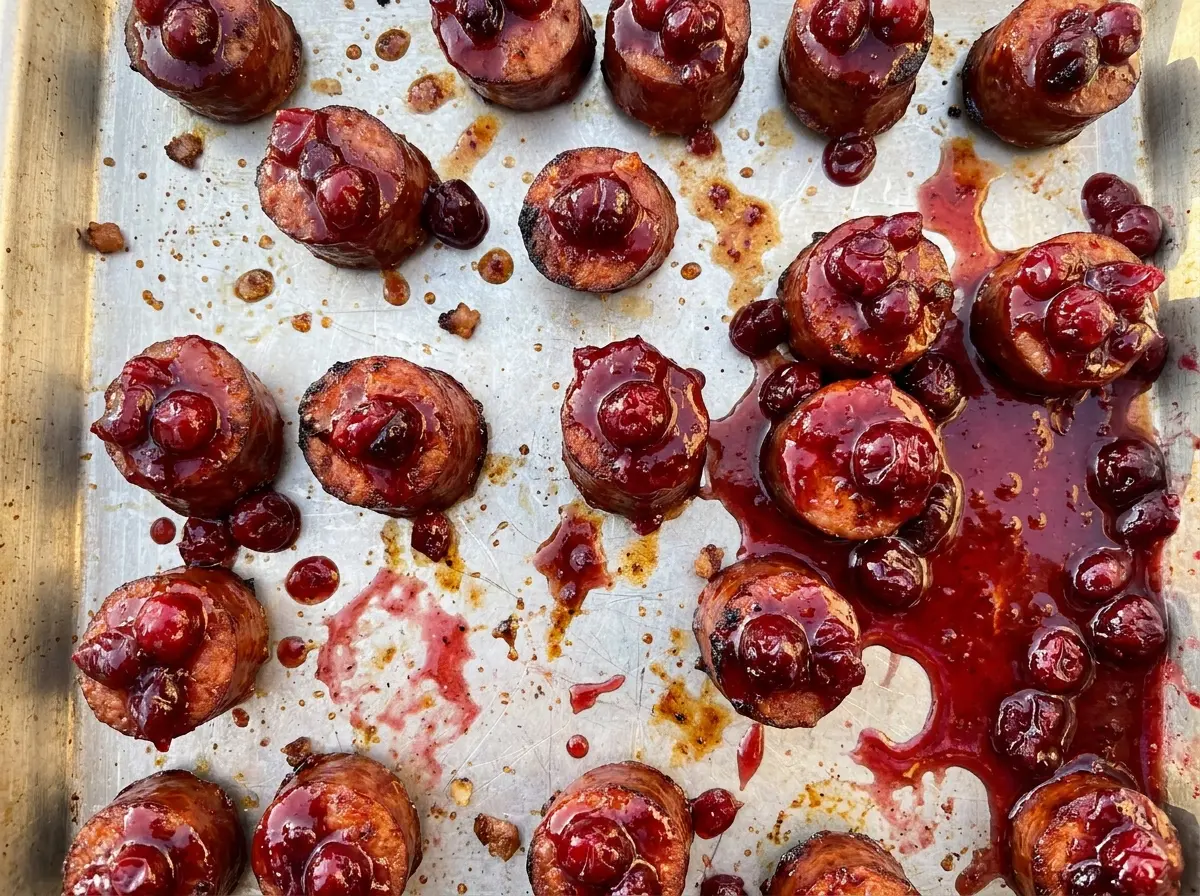
Save these Sheet Pan Smoked Sausage Cranberry Bites for a party platter with browned sausage and a bright, sticky cranberry glaze.
Why the Cranberry Glaze Goes on After the Sausage Browns
Cranberry sauce and brown sugar bring moisture and sweetness, which is exactly what makes the coating cling so nicely at the end. Put that glaze on the sausage before the first roast, though, and the rounds won’t have the same chance to brown against the hot pan. The sugary coating can darken before the sausage develops those lightly browned edges, and the extra moisture makes browning harder.
Roasting the rounds plain first gives them a head start on color. Then the hot sausage warms the cranberry mixture as you toss, helping it spread over the cut surfaces without turning the bowl into a cold, heavy coating. A short return to the oven heats the glaze through and lets it bubble at the edges. You get a glossy coating with tart cranberry flavor, rather than a thick layer of sauce masking the smoky sausage.
What Gives This Cranberry Glaze Its Sweet-Tart Balance

- Whole-berry cranberry sauce — The berries give the glaze little pockets of tartness and keep its texture from feeling flat. A jellied cranberry sauce works as a same-volume swap if that’s what you have; the coating will be smooth, without the berry pieces. Choose the style you prefer, but the whole-berry version gives the bites their most distinctive finish.
- Dijon mustard — Dijon brings a clean, sharp tang that keeps the cranberry and brown sugar from reading like a dessert glaze. A whole-grain mustard can stand in, though you’ll get a more textured coating and a slightly less smooth mustard flavor. A basic jar of Dijon works well; there’s no need for a specialty mustard.
- Packed light brown sugar — Its mild molasses note rounds out the vinegar and mustard without taking over the cranberry. Dark brown sugar can replace it in the same quantity for a deeper, more pronounced molasses taste. Pack either brown sugar into the measuring spoon so the glaze stays balanced.
- Apple cider vinegar — This gives the coating a fruity acidity that suits the cranberry sauce. White wine vinegar is a workable same-quantity substitute, though it tastes a little less apple-like. Measure carefully; too much sharpness can overpower the sausage.
- Fully cooked smoked sausage — The recipe depends on sausage that’s already cooked, so the oven time can focus on browning and heating the glaze. Fully cooked turkey smoked sausage can replace pork smoked sausage in the same amount; it may be leaner, with a slightly different smoky flavor. Keep the pieces cut to the same thickness for consistent roasting.
The Two Roasts That Give These Bites Their Sticky Edges
Stir the glaze before the oven is hot
Heat the oven to 400°F and line an 18×13-inch rimmed sheet pan with parchment paper. In a large bowl, stir together the whole-berry cranberry sauce, Dijon, packed light brown sugar, apple cider vinegar, and black pepper. Break up any dense clumps of cranberry sauce so the mustard and vinegar are distributed through the mixture. Keep the bowl nearby for the hot sausage, but leave the glaze off the pan for now.
Brown the rounds on parchment
Arrange the sausage rounds in a single layer on the prepared pan, with a little space between the pieces. Roast for 12–15 minutes, until the rounds are lightly browned. They should look browned around their edges rather than pale and wet; if the pan is crowded, the pieces have less room to brown. Use the color cue along with the time range, since sausage brands and ovens can vary.
Toss, glaze, and let the edges bubble
Transfer the hot sausage to the bowl and toss until the rounds are coated. Spread them back across the sheet pan, then roast for 5–7 minutes, until the glaze is hot and bubbling at the edges. Watch for bubbling around the pan rather than waiting for the coating to become dark or dry. Rest the bites for 5 minutes before serving so the hot glaze settles onto the sausage.
Easy Ways to Change the Sausage or Glaze
Choose a spicier smoked sausage
Use fully cooked spicy smoked sausage in place of the regular smoked sausage, keeping the same package size and cut. Its heat gives the sweet-tart cranberry coating a bolder finish. The recipe’s glaze stays the same, so the mustard and vinegar still keep the bites from tasting overly sweet.
Make a smooth cranberry coating
Swap jellied cranberry sauce for the whole-berry sauce, keeping the same amount. It coats the sausage in a more even, smooth layer and loses the little berry pieces, but the mustard, vinegar, and pepper still give it the same sweet-tangy direction.
Make the bites gluten-free
Choose gluten-free fully cooked smoked sausage, and use cranberry sauce and Dijon labeled gluten-free as well. The same roasting method gives you the same sticky, browned bites; the main difference is that sausage brands can vary in seasoning and texture.
Storage and Reheating
- Refrigerator: Store leftovers in a covered container for 3–4 days. The glaze will thicken as it chills.
- Freezer: Freeze in an airtight container for up to 2 months. Thaw overnight in the refrigerator; the glaze may look a little looser after thawing.
- Reheating: Warm in a covered skillet over low heat or in the microwave, stirring or turning the bites so they heat evenly. Reheat leftovers to 165°F; high heat can make the glaze scorch before the sausage is hot.
Questions That Come Up Before You Put the Pan in the Oven
Sheet Pan Smoked Sausage Cranberry Bites
Ingredients
Equipment
Method
- Heat the oven to 400°F and line an 18x13-inch rimmed sheet pan with parchment paper.
- In a large bowl, stir together the cranberry sauce, Dijon mustard, brown sugar, vinegar, and black pepper.
- Arrange the sausage rounds in a single layer on the prepared pan.
- Roast for 12–15 minutes, until the rounds are lightly browned.
- Transfer the hot sausage to the bowl with the cranberry glaze and toss to coat, then spread the rounds back on the sheet pan.
- Roast for 5–7 minutes, until the glaze is hot and bubbling at the edges, then rest for 5 minutes before serving.