
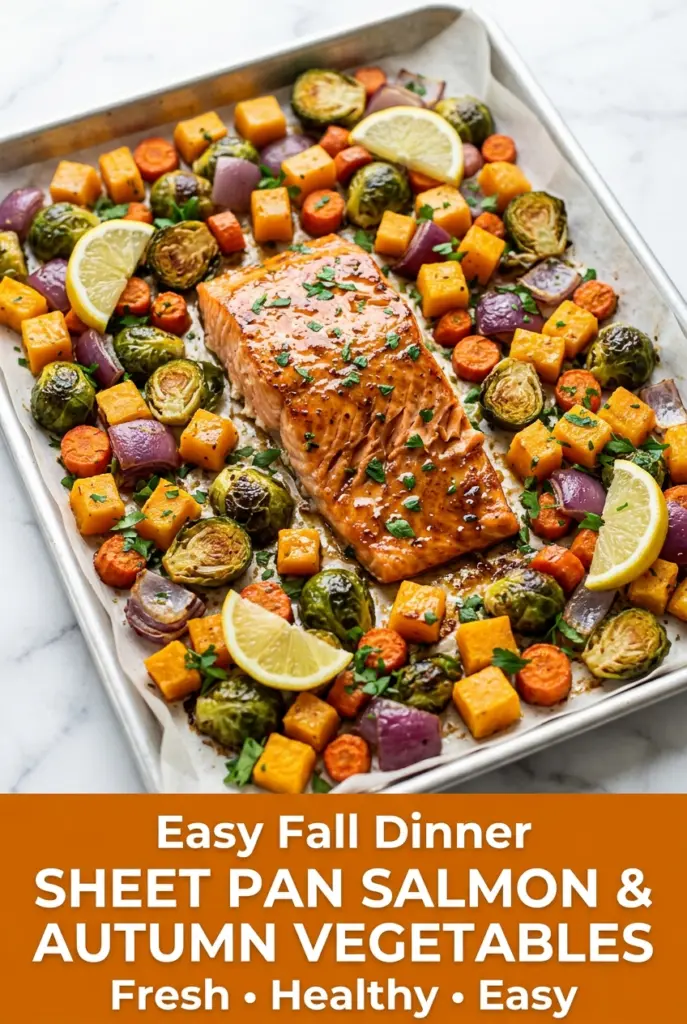
Sheet Pan Salmon and Autumn Vegetables
Roasted salmon and caramelized autumn vegetables make the kind of dinner that tastes like more work than it is. The salmon turns tender and flaky while the Brussels sprouts and…

By Ava
•
•
Reading time: 10 min
Tip: save now, make later.
Roasted salmon and caramelized autumn vegetables make the kind of dinner that tastes like more work than it is. The salmon turns tender and flaky while the Brussels sprouts and squash pick up crisp, browned edges, and the maple Dijon glaze ties everything together with just enough sweetness to balance the smoky garlic seasoning. One pan, no separate sides, and no saucepans to babysit. That’s the kind of dinner that earns a permanent spot in the rotation.
What makes this version work is timing. The vegetables need a head start because squash and Brussels sprouts take longer to soften and brown than salmon does. If you add the fish too early, it dries out before the vegetables are ready. The glaze also goes on at the end, not at the beginning, so the maple syrup doesn’t scorch and the Dijon stays bright instead of dull.
Below you’ll find the small details that keep the vegetables roasting instead of steaming, plus a couple of easy ways to swap in what you already have on hand without losing that same hearty, balanced result.
The glaze caramelized beautifully and the salmon stayed moist while the vegetables got those browned edges I always want from a sheet pan dinner. Even my picky eater went back for the Brussels sprouts.
Save this sheet pan salmon and autumn vegetables dinner for the night you want flaky fish, caramelized vegetables, and one simple maple Dijon glaze.
The Shortcut That Keeps Salmon Tender While the Vegetables Finish Roasting
Salmon and roasted vegetables don’t always want the same amount of oven time, and that’s where a lot of sheet pan dinners go wrong. If everything goes in together from the start, the fish usually overcooks before the squash softens and the Brussels sprouts take on any color. The better move is to roast the vegetables first until they’re partway there, then add the salmon only when the pan has enough heat left to finish both at the same time.
The other trap is crowding. If the vegetables sit in a thick pile, they steam and turn soft instead of caramelizing. Spread them into a single layer with a little breathing room, and don’t be alarmed if the pan looks full at first — they shrink as they roast. That extra surface contact is what gives you those browned edges and sweet spots that make the whole pan taste finished.
What the Glaze and Seasoning Are Actually Doing Here
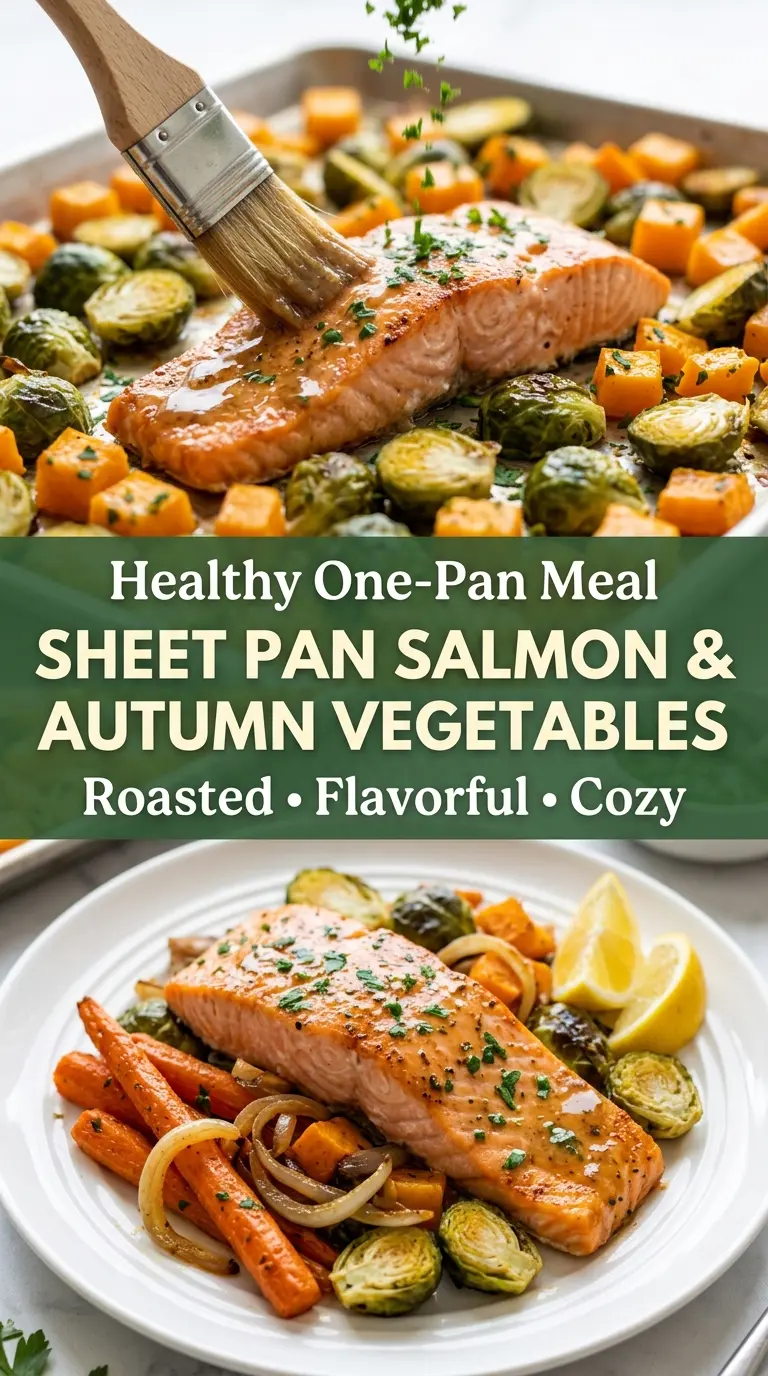
The salmon is best with a fillet that’s about the same thickness across the board. Thick tail pieces cook faster at one end and can dry out before the center is done, while evenly cut fillets finish more predictably. If your fillets are skin-on, leave the skin in place; it helps protect the fish and gives you a cleaner base if you slide them off the pan after cooking.
- Butternut squash — This is the slowest vegetable on the pan, which is why it’s cut into small cubes. Larger chunks stay firm while everything else overcooks, so keep the pieces bite-sized and even.
- Brussels sprouts — Halving them exposes the cut side to the pan, which is where the browning happens. If the outer leaves fall off while tossing, don’t panic; those little loose pieces crisp up fast and add texture.
- Dijon mustard — This gives the glaze sharpness and helps it cling to the salmon instead of sliding off. Yellow mustard won’t taste the same here; Dijon has the right bite and body.
- Maple syrup — Just enough sweetness is enough. It helps the glaze caramelize, but if you add much more, the fish can taste sticky instead of balanced.
- Fresh lemon juice and zest — Juice brings brightness, while zest gives you the part that tastes like lemon before the pan even hits the table. Bottled juice works in a pinch, but fresh zest is what keeps the glaze from tasting flat.
The 20 Minutes That Actually Matter
Roasting the Vegetables First
Toss the Brussels sprouts, squash, carrots, red onion, garlic, and seasoning with the olive oil until every piece looks lightly coated. The oil helps the vegetables brown instead of dry out, and the garlic should cling in a thin layer rather than sit in wet patches. Spread everything out in a single layer and roast at 425°F until the edges start to color and the squash yields when pierced with a fork. If you skip the halfway stir, the vegetables on the edge of the pan can overbrown while the center stays pale.
Glazing the Salmon at the Right Time
Whisk the Dijon, maple syrup, lemon juice, zest, and a little oil until smooth and glossy. Pull the pan out after the vegetables have had their head start, then push them aside and set the salmon in the open space. Brush the glaze over the top of each fillet right before the pan goes back into the oven. If you add the glaze too early, the sugars darken before the fish finishes, and you lose that clean, shiny finish.
Knowing When the Fish Is Done
Roast the salmon just until it flakes with a fork and the center looks opaque but still moist. At 145°F, it’s fully cooked, but if you’re checking by sight, look for the flesh to separate in large, tender layers rather than crumble. Overcooked salmon turns chalky fast, especially on a sheet pan where the heat keeps working after you pull it out. Let the pan rest for a minute, then finish with parsley and lemon wedges so the brightness lands on top instead of baking off.
Three Ways to Make This Sheet Pan Dinner Fit What You Have
Make It Dairy-Free and Naturally Gluten-Free
This recipe already lands in both camps as written, which is part of why it works so well for mixed diets. Just keep an eye on your mustard and seasoning blends if you’re using packaged versions, since some add fillers or unexpected sweeteners. The result stays crisp, bright, and satisfying without needing any dairy at all.
Swap the Vegetables by Roasting Time
Carrots and squash can be swapped for sweet potatoes, parsnips, or chunks of cauliflower if that’s what’s in the kitchen. The rule is to keep the pieces similar in size and use vegetables that need about the same amount of time in the oven. If you add quicker-cooking vegetables like zucchini, they should go in with the salmon so they don’t collapse.
Use Another Fish Without Changing the Method
Trout works beautifully here, and cod can work if the fillets are thick enough to hold together on the pan. Thin fish cooks too fast and doesn’t give the vegetables time to finish, so use a sturdier fillet if you want to keep the same timing. The glaze and seasoning stay the same, but watch the fish closely in the last few minutes because delicate fillets can go from done to dry quickly.
Storage and Reheating
- Refrigerator: Store leftovers in an airtight container for up to 3 days. The salmon stays good, but the vegetables soften a bit as they sit.
- Freezer: The cooked vegetables don’t freeze well, and the salmon texture changes after thawing, so I don’t recommend freezing the finished dish.
- Reheating: Warm gently in a 300°F oven until just heated through, or use short bursts in the microwave at half power. High heat dries out the salmon and makes the glaze sticky instead of glossy.
The Things That Trip People Up With This Dish
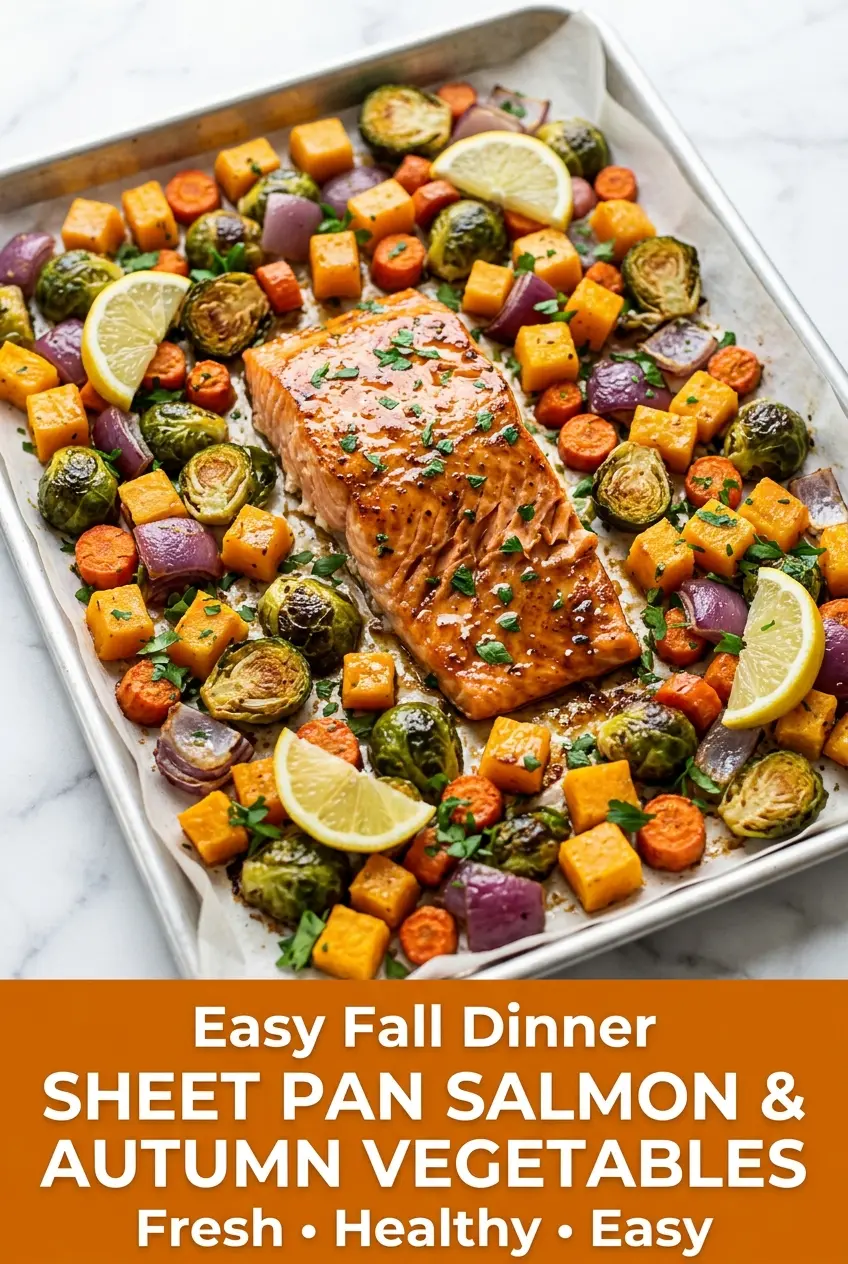
Sheet Pan Salmon and Autumn Vegetables
Ingredients
Equipment
Method
- Preheat the oven to 425°F. Line a large sheet pan with parchment paper for easy cleanup.
- Toss the Brussels sprouts, butternut squash, carrots, and red onion with 1½ tablespoons olive oil, garlic, thyme, rosemary, smoked paprika, ½ teaspoon salt, and black pepper. Spread them into an even layer on the sheet pan.
- Roast the vegetables for 20 minutes at 425°F, stirring halfway, until they begin to brown around the edges. Keep an eye on the tips for deep caramel color.
- Whisk the remaining olive oil, Dijon mustard, maple syrup, lemon juice, lemon zest, and remaining salt. Mix until smooth and glossy.
- Remove the pan from the oven and push the vegetables to the sides. Create a clear center spot for the salmon so it roasts evenly.
- Place the salmon fillets in the center and brush generously with the maple Dijon glaze. Make sure the tops are well coated.
- Return the pan to the oven and roast for 12–15 minutes at 425°F until the salmon flakes easily with a fork and reaches an internal temperature of 145°F. Watch for slightly opaque centers as the last cue.
- Sprinkle the salmon and vegetables with fresh parsley. Serve immediately with lemon wedges on the side for brightness.