
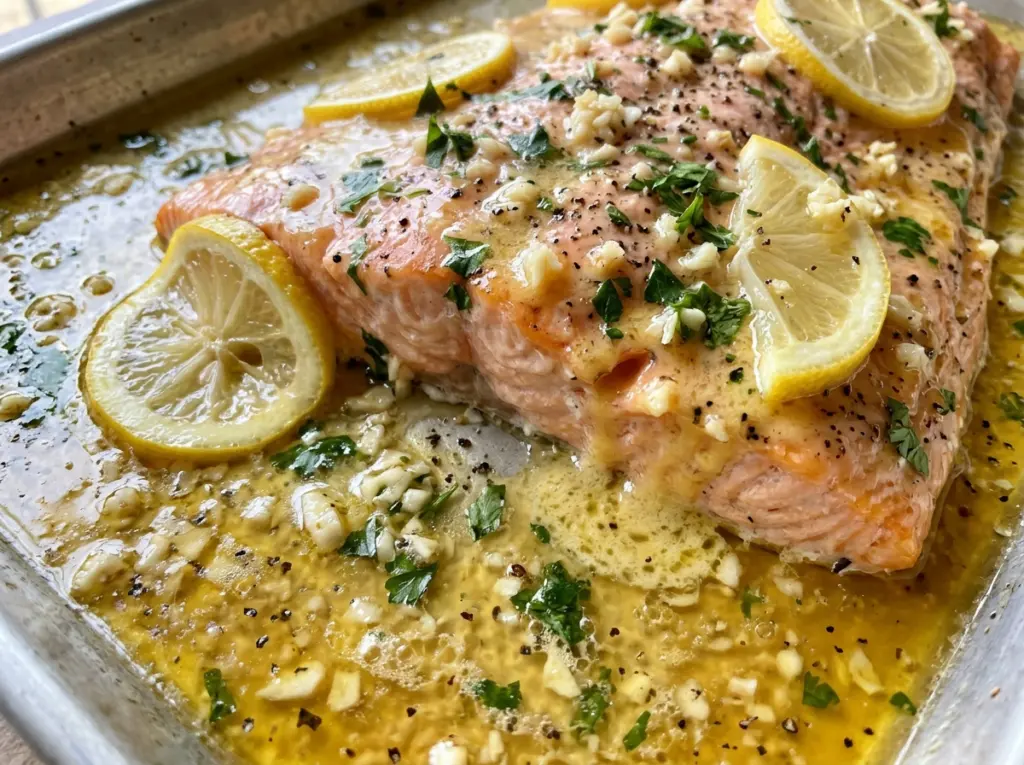
Sheet Pan Lemon Garlic Butter Salmon
The butter pools around the asparagus as the pan goes into the oven, and the lemon starts to smell bright and warm before the salmon is ready. I watch the…

By Ava
•
•
Reading time: 10 min
Tip: save now, make later.
The butter pools around the asparagus as the pan goes into the oven, and the lemon starts to smell bright and warm before the salmon is ready. I watch the fish and the vegetables separately rather than relying on the timer alone; they share a pan, but they don’t announce doneness in the same way. That’s what makes Sheet Pan Lemon Garlic Butter Salmon a dependable one-pan dinner instead of a guess.
The lemon garlic butter coats both the salmon and asparagus, so each gets a little richness and citrus without needing a separate sauce. Using lemon zest as well as juice gives the butter a fragrant citrus note, while minced garlic seasons the whole pan. The salmon stays skin-side down as it roasts, and the asparagus sits around it where you can check its tenderness easily.
With the oven hot and the fish cut to a consistent thickness, dinner comes together in a short roast. You get tender asparagus, moist salmon, and a buttery lemon coating that’s good right down to the last forkful.
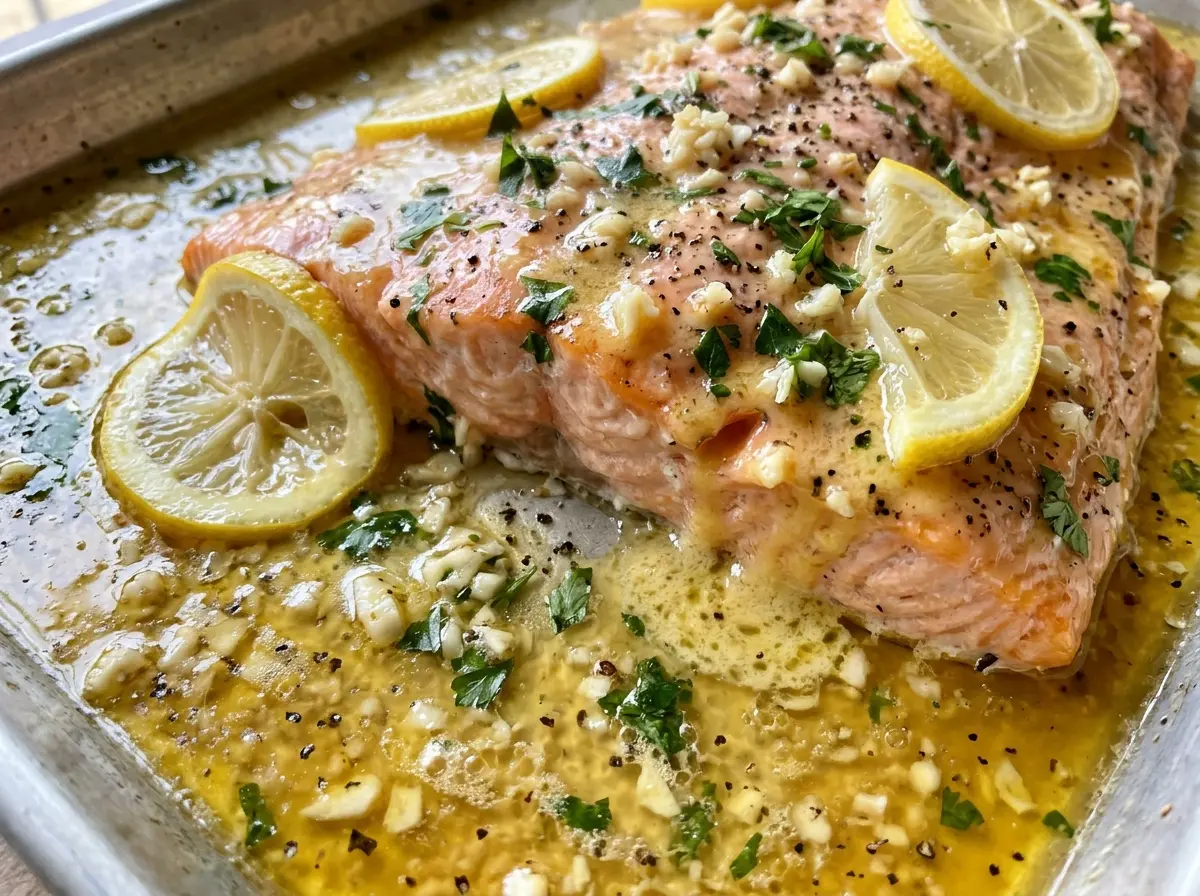
Kitchen Note
Zest the lemon before cutting it to juice; it’s easier to hold and zest while it’s whole. Then both the zest and juice go into the butter, so the citrus doesn’t get left behind on the cutting board.
Save this Sheet Pan Lemon Garlic Butter Salmon for an easy dinner with tender asparagus and a bright lemon-butter finish.
Why the Salmon’s Thickness Matters More Than the Timer
A salmon fillet that’s about an inch thick gives this pan roast a useful starting point. The outside warms quickly, but the center takes longer to reach its finished texture. If the fillets are much thicker or thinner, the same clock time won’t necessarily give you the same result, even at the same oven temperature.
That’s why I treat the stated roasting window as a check-in, not the only measure of doneness. Look at the thickest part of the salmon, where the heat takes longest to reach, and use the asparagus as its own cue. The vegetables should be tender, while the fish needs to reach its specified internal temperature. If you judge everything by the first piece of asparagus that looks ready, the salmon may still need time; if you judge only by the fish, slender asparagus may soften sooner. Checking each separately lets both parts finish properly on the same pan.
Keeping the fillets close to the stated thickness also makes the timing more predictable across the pan. For the most reliable result, choose pieces that are similar in thickness rather than assuming equal weights always mean they’ll cook at the same pace.
What the Butter, Lemon, and Salmon Each Bring to the Pan
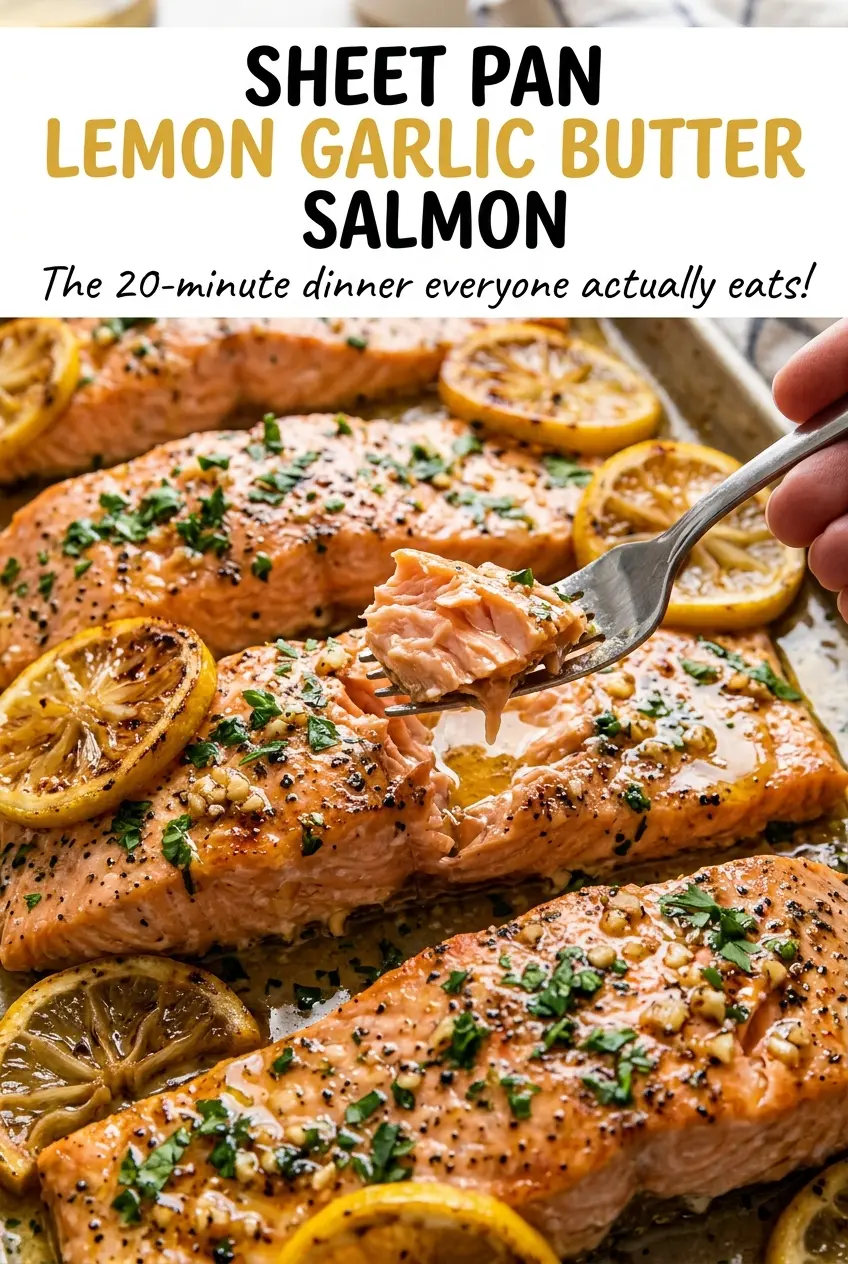
- Skin-on salmon — The skin helps the fillets hold together as you brush them and lift them from the pan. Choose pieces that are similar in thickness; that matters more for even cooking than matching their shape exactly. Skinless salmon isn’t a direct match for this method, since it can be more delicate to handle.
- Asparagus — Its fresh, green flavor balances the richness of the butter, and its shape makes it easy to arrange around the fish. Trim the tough ends before roasting so the stalks are pleasant to eat from tip to end. The source of the asparagus matters less than choosing firm stalks without limp or dried-out tips.
- Unsalted butter — Melted butter carries the garlic and lemon across both the fish and vegetables. Unsalted butter keeps the seasoning in your control, which is useful when kosher salt is measured separately. A good everyday butter works well here; there’s no need for a specialty brand.
- Fresh garlic — Minced garlic spreads through the melted butter and seasons each bite. Mince it finely so there aren’t large pieces sitting on the salmon or asparagus. Leaving it out makes the sauce milder, but there isn’t another ingredient in this dish that gives the same savory garlic flavor.
- Fresh lemon — The zest contributes fragrant citrus oils, while the juice gives the butter a sharper, tangier edge. Both are used here, so bottled juice alone won’t provide the same result. A firm lemon that feels heavy for its size is usually easier to juice.
- Kosher salt and black pepper — They season the butter mixture rather than sitting on the fish in uneven patches. Freshly ground pepper has a more pronounced aroma, though standard ground black pepper works too.
Getting the Salmon and Asparagus Ready for One Even Roast
Heat the Oven and Set Up the Pan
Heat the oven to 425°F and line a large rimmed baking sheet with parchment paper. The rim gives you a contained surface for the butter mixture as it coats the ingredients. Arrange the salmon skin-side down, then spread the trimmed asparagus around it. Keep the vegetables around the fillets so you can see and check each part as it roasts.
Whisk the Lemon Garlic Butter
In a small bowl, whisk together the melted butter, minced garlic, lemon zest, lemon juice, kosher salt, and black pepper. Keep whisking until the garlic and seasonings are distributed through the butter instead of clumping at the bottom. The mixture may look loose, which is fine; it’s meant to brush over both the fish and asparagus. If it sits while you arrange the pan, give it another quick whisk before using it.
Brush Everything Before It Goes in the Oven
Brush the lemon garlic butter over the salmon and asparagus, coating the exposed surfaces. Take a moment to spread the minced garlic across the fish and vegetables rather than leaving it concentrated in one spot. The salmon stays skin-side down while it roasts, so there’s no need to turn the fillets. Once everything is coated, put the baking sheet in the heated oven.
Roast to Two Clear Doneness Cues
Roast for 12 to 15 minutes, checking the asparagus for tenderness and the thickest part of the salmon for an internal temperature of 145°F. Start checking near the earlier end of the range if your fillets are on the thinner side. If the asparagus is tender but the fish hasn’t reached its temperature, the fish still needs more oven time. When both are ready, let the salmon rest on the pan for 2 minutes before serving.
Easy Ways to Change the Lemon Butter Without Losing the One-Pan Ease
A brighter lemon finish
For a sharper citrus note, whisk the zest into the butter but hold the lemon juice until the salmon and asparagus come out of the oven. Spoon the juice over the hot ingredients just before serving. The flavor will taste brighter and more direct than when the juice roasts with the butter.
A dairy-free olive oil version
Replace the melted butter with the same amount of olive oil for a dairy-free adaptation. Whisk it with the garlic, lemon, salt, and pepper, then brush it over the salmon and asparagus as usual. The coating will be lighter and less rich, without the buttery taste.
A gentler garlic flavor
Leave out the minced garlic if you want the lemon and butter to lead. The salmon and asparagus will still get coated in the same citrus butter, but the savory, pungent note will be softer. This is an omission rather than a direct garlic substitute.
Storage and Reheating
- Refrigerator: Store leftovers in a covered container within 2 hours and eat them within 3 to 4 days. The salmon will be firmer after chilling, and the asparagus will soften.
- Freezer: Freeze the cooked salmon and asparagus in an airtight container for up to 2 to 3 months. The salmon may be a little drier and the asparagus softer after thawing.
- Reheating: Warm individual portions in the microwave at reduced power in short bursts, or heat gently in a covered oven-safe dish. Reheat leftovers to 165°F; prolonged high heat is the main cause of dry salmon.
Questions That Come Up Before This Salmon Goes in the Oven
Sheet Pan Lemon Garlic Butter Salmon
Ingredients
Equipment
Method
- Heat the oven to 425°F.
- Line a large rimmed baking sheet with parchment paper.
- Arrange the salmon skin-side down on the baking sheet and spread the asparagus around it.
- Whisk the melted butter, garlic, lemon zest, lemon juice, salt, and pepper in a small bowl.
- Brush the mixture over the salmon and asparagus.
- Roast for 12 to 15 minutes, until the asparagus is tender and the thickest part of the salmon reaches 145°F.
- Let the salmon rest on the pan for 2 minutes before serving.