
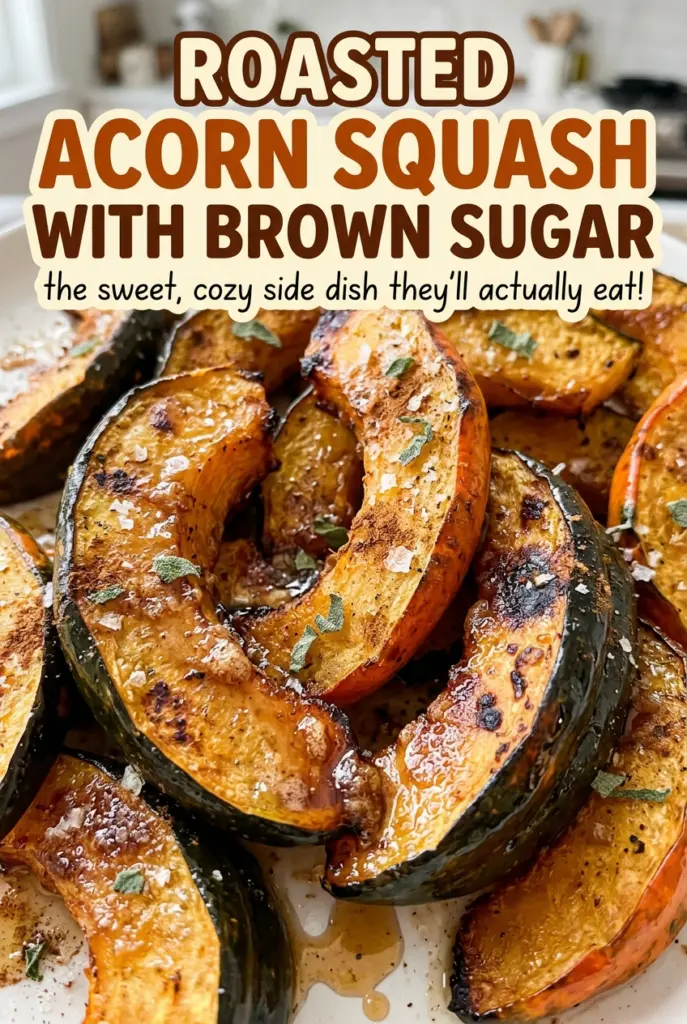
Roasted Acorn Squash with Brown Sugar
The brown sugar melts into the butter as the squash roasts, leaving the cut surfaces glossy and the edges deeply browned. I like this method because each half goes straight…

By Ava
•
•
Reading time: 8 min
Tip: save now, make later.
The brown sugar melts into the butter as the squash roasts, leaving the cut surfaces glossy and the edges deeply browned. I like this method because each half goes straight onto the baking sheet, so there’s no juggling wedges or trying to keep a sweet coating in place while turning them. These roasted acorn squash halves come out tender enough to scoop with a fork, with a simple sweet-and-savory finish.
Keep the squash halves cut side up and season the exposed flesh before they go into the oven. The hollow center gives the butter and sugar a place to settle, while the parchment-lined pan catches any drips. Acorn squash can look sturdy on the outside, but the flesh is ready when a fork slides into it without resistance. Let the browned edges and that tender center be your guide, and you’ll have a cozy side dish with very little hands-on work.
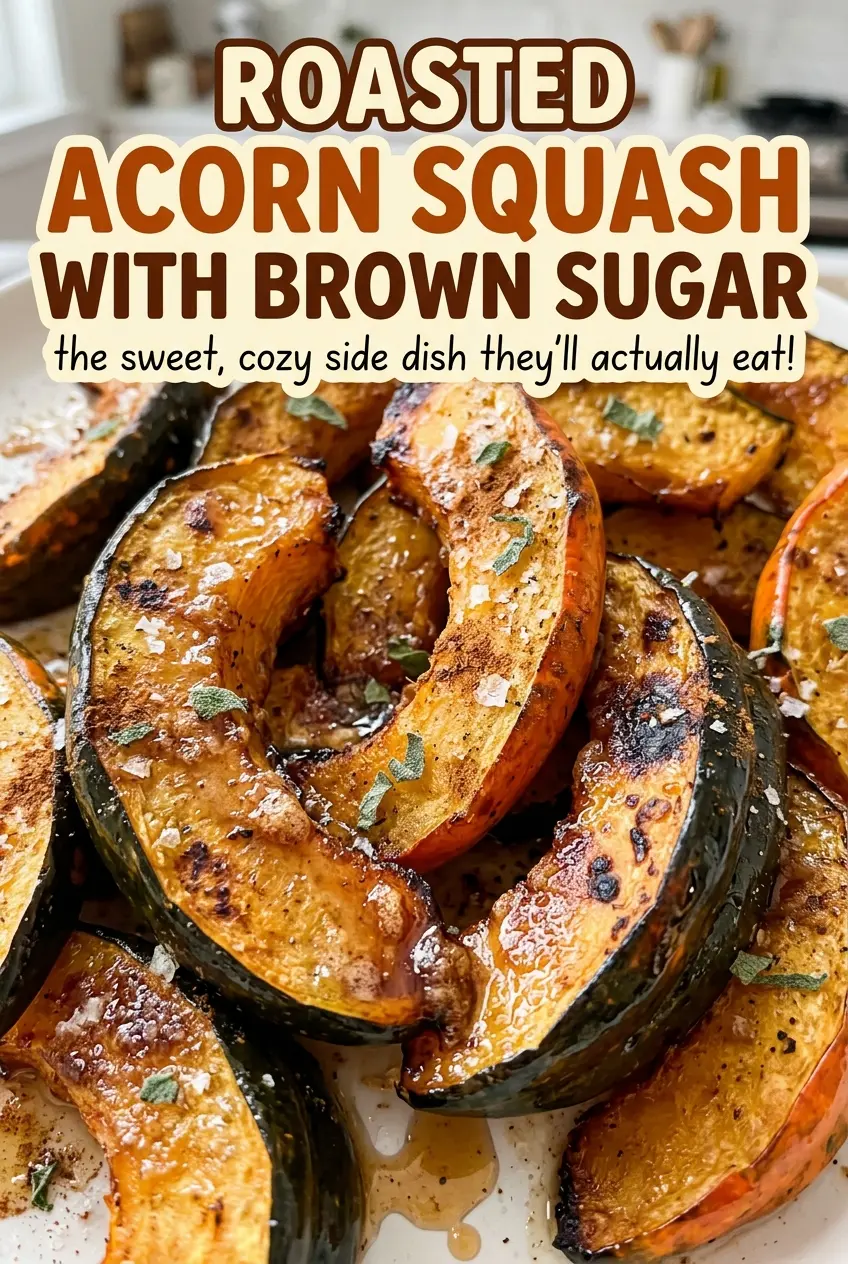
Kitchen Note
Take a moment to scrape out the stringy fibers along with the seeds. Those strands cling to the hollow, and clearing them gives you a neat surface for the butter and brown sugar.
Save these brown sugar acorn squash halves for a tender, buttery side with browned edges and a simple sweet-and-savory finish.
The Cut-Side-Up Detail That Helps Keep the Sugar on the Squash
Acorn squash has rounded sides, so a coating brushed onto the outside would have nowhere to stay. Setting each half cut side up gives the butter and brown sugar a broad, exposed surface to cling to, and the hollow center acts like a shallow bowl. That small orientation choice helps keep the seasoning over the flesh as the squash softens in the oven.
It also makes the squash easier to check without lifting or turning it. The flesh is visible, and the edges can brown against the hot air while the middle cooks through. Parchment on a rimmed baking sheet is useful here: if a little butter or sugar slips over the edge, it stays on the lined pan rather than baking onto the metal. The result isn’t meant to be crisp all over. Look for tender flesh with browned edges and a buttery, sweet coating on top.
Why the Squash, Butter, and Light Brown Sugar Matter

- Acorn squash — Pick firm squash with unbroken skin, and look for two that are close in size so the halves roast at a similar pace. The flesh should be moist and tender after roasting; very small or unusually large squash won’t necessarily match the timing.
- Unsalted butter — Melted butter brushes over the cut flesh more evenly than cold butter and carries the brown sugar across the surface. Unsalted butter also leaves the seasoning in your control, since kosher salt is added separately.
- Light brown sugar — Its soft, slightly moist texture is easy to sprinkle over the buttered squash, and its mild molasses note complements the squash without taking over. Use fresh, soft sugar so it scatters rather than landing in hard clumps.
- Kosher salt and black pepper — Together they keep the sweetness from tasting flat. Distribute them over the cut surfaces rather than leaving all the seasoning in one spot; freshly ground pepper gives a more noticeable peppery aroma, while pre-ground pepper works too.
From Halving the Squash to Getting Those Browned Edges
Heat the Oven and Line the Pan
Heat the oven to 400°F and line a rimmed baking sheet with parchment paper. A rimmed pan gives the squash a stable surface and helps contain any butter that runs off. Set the pan aside while you prepare the squash, so the cut halves can go straight onto it. Use a sheet large enough to hold them without crowding.
Halve and Clear the Centers
Cut each squash in half lengthwise, from stem end to base, and scoop out the seeds and stringy fibers. Work carefully: the rounded squash can shift, so keep it steady on your cutting board and use a firm, controlled cut. You’ll have four halves, each with a hollow center and a flat cut surface. Arrange them cut side up on the lined baking sheet.
Brush on the Butter and Season
Brush the cut surfaces with the melted butter so the flesh has an even sheen. Sprinkle the brown sugar over the tops, followed by the kosher salt and black pepper. The sugar may settle into the hollow as well as across the flatter parts of the squash; that’s fine. Try to spread the seasoning over each half rather than piling it all in the center.
Roast Until the Flesh Is Tender
Roast for 40 to 50 minutes. Pierce the thickest part of the flesh with a fork; it should feel tender, and the edges should be browned. If the fork meets a firm spot, the squash needs more time in the oven. Check the halves individually, since small differences in their size can affect how quickly they soften.
Two Simple Swaps for Brown Sugar Acorn Squash
Use Dark Brown Sugar for a Deeper Molasses Note
Replace the light brown sugar with the same amount of packed dark brown sugar. The squash will have a more pronounced molasses taste and a slightly richer sweetness, while the roasting method stays the same.
Make It Dairy-Free with Plant-Based Butter
Use an equal amount of plant-based butter in place of the unsalted butter, melting it before brushing it onto the squash. Choose a plain version rather than one with added herbs or sweetness; the finished squash will keep its buttery coating, with a slight difference depending on the brand.
Storage and Reheating
- Refrigerator: Keep leftover squash in an airtight container for 3 to 4 days. The flesh will soften as it sits.
- Freezer: Freeze cooled halves in a freezer-safe container for up to 3 months. Thawed squash will be softer, but it’s still good to eat.
- Reheating: Warm in a 350°F oven until heated through, or microwave a portion until hot. Reheat only what you plan to eat so the squash doesn’t dry out from repeated warming.
Questions That Come Up While Roasting Acorn Squash
Roasted Acorn Squash with Brown Sugar
Ingredients
Equipment
Method
- Heat the oven to 400°F.
- Line a rimmed baking sheet with parchment paper.
- Cut each acorn squash in half lengthwise.
- Scoop out the seeds and stringy fibers.
- Arrange the squash halves cut side up on the baking sheet.
- Brush the cut surfaces with the melted butter.
- Sprinkle with the brown sugar, salt, and pepper.
- Roast for 40 to 50 minutes, until the flesh is tender when pierced with a fork and the edges are browned.