
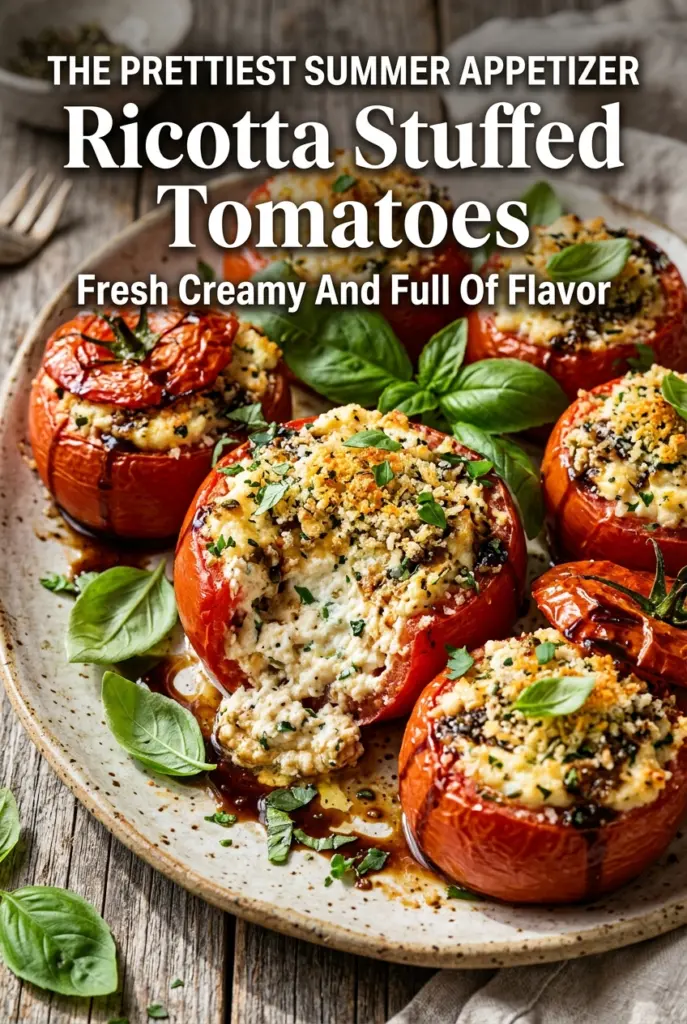
Ricotta Stuffed Tomatoes
Ricotta stuffed tomatoes land in that sweet spot between light and satisfying: juicy, tender tomatoes on the outside and a cool, creamy filling that tastes bright with basil, garlic, and…

By Ava
•
•
Reading time: 9 min
Tip: save now, make later.
Ricotta stuffed tomatoes land in that sweet spot between light and satisfying: juicy, tender tomatoes on the outside and a cool, creamy filling that tastes bright with basil, garlic, and Parmesan. The baking time is just long enough to warm the ricotta and soften the tomatoes without collapsing them into a watery mess. What you get is a dish that feels polished on the table but still comes together without much effort.
The trick is treating the tomatoes like little edible shells, not bowls to be packed and forgotten. Scooping them clean and letting them drain first keeps the filling from turning thin. Mixing the ricotta with Parmesan, herbs, and a little olive oil gives the center more body and a richer finish, while the panko on top adds a crisp layer that keeps every bite from being soft all the way through.
Below, I’ll walk through the part that matters most: how to keep the tomatoes from watering out and how to get the filling creamy instead of runny. There are also a few swaps that help if you want to serve these as an appetizer, a side, or a light lunch.
I followed the draining step and the tomatoes held their shape perfectly. The ricotta stayed creamy after baking, and the little bit of panko on top gave it a nice finish instead of turning soggy.
Save these ricotta stuffed tomatoes for the days when you want something creamy, savory, and elegant without turning on a complicated dinner plan.
The Tomato Drains First, or the Filling Pays for It
Ricotta stuffed tomatoes fail when the tomato juice has nowhere to go. As soon as the seeds and pulp come out, the inside of the tomato starts sweating, and if you fill it right away, that liquid runs straight into the cheese. Ten minutes cut-side down on paper towels changes the whole dish. The tomatoes stay juicy, but the filling keeps its shape and tastes like ricotta instead of tomato water.
There’s also a timing detail that matters more than people expect: these don’t need a long bake. You’re warming the filling and softening the tomato just enough for a clean bite. Push them too far and the shells slump, the tops split, and the breadcrumbs lose their contrast.
What Each Ingredient Is Actually Doing in This Dish
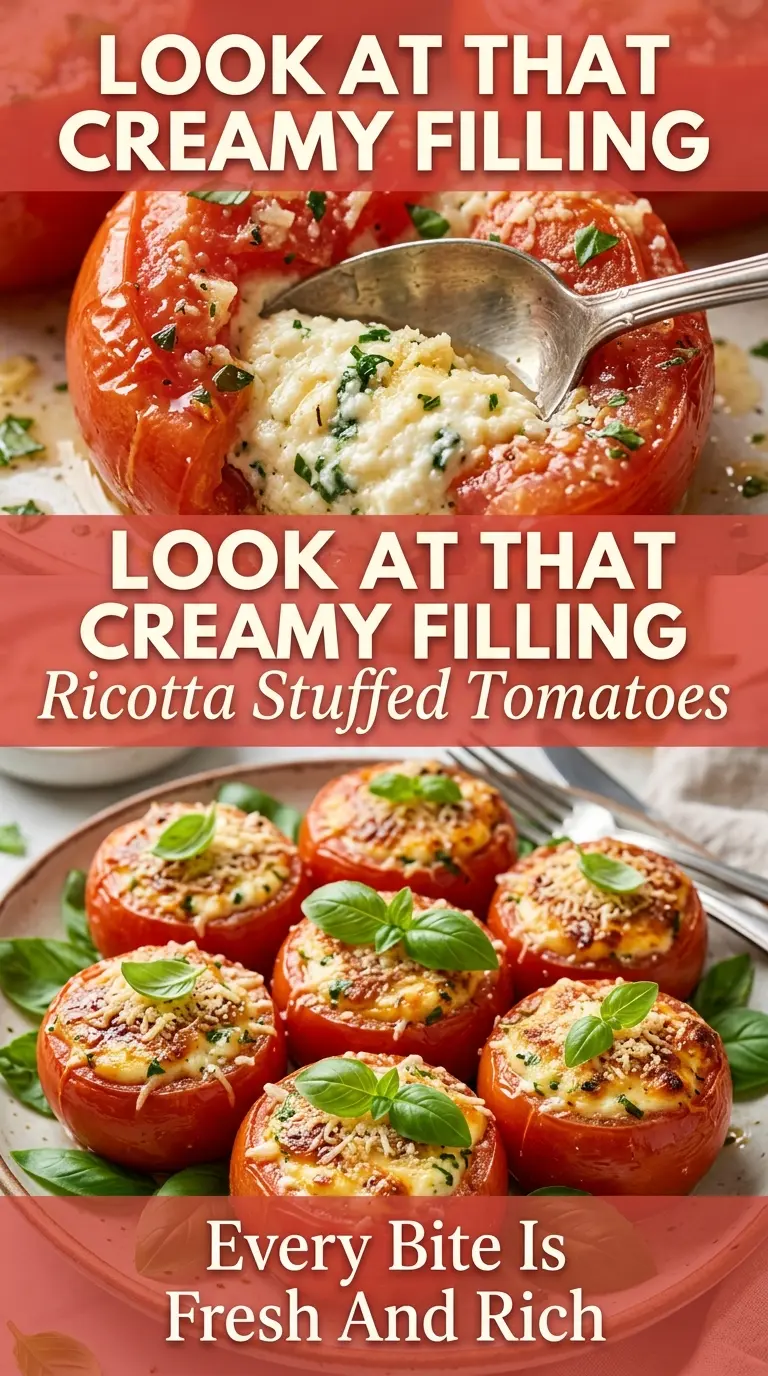
- Whole milk ricotta — This is the base of the filling, and whole milk ricotta gives you the best texture. Part-skim ricotta works, but it can taste drier and a little grainier after baking. If your ricotta looks wet in the container, drain it in a fine mesh sieve for 10 to 15 minutes before mixing.
- Parmesan — Parmesan adds salt and a nutty backbone that keeps the filling from tasting flat. Pre-grated is fine here, though freshly grated melts a little more smoothly. If you swap in Pecorino, the filling gets sharper and saltier, so ease up on the added salt.
- Fresh basil and parsley — These herbs make the filling taste bright instead of heavy. Dried herbs won’t give the same fresh lift. If you only have basil, use it alone and increase it a little; parsley mainly adds a clean green note.
- Panko breadcrumbs — These give the tops a light crust and help protect the filling from turning too soft. Regular breadcrumbs work in a pinch, but panko stays crispier. If you want a gluten-free version, use gluten-free panko or leave the topping off and finish under the broiler for a minute or two.
- Tomatoes — Use ripe but firm tomatoes that can hold a shell after they’re hollowed out. Very soft tomatoes collapse in the oven. Beefsteak-style tomatoes or large garden tomatoes work best because they have enough space for a generous filling.
Building the Filling So It Bakes Up Creamy, Not Loose
Mix the filling until it holds its shape
Stir the ricotta, Parmesan, garlic, herbs, olive oil, salt, and pepper together until the mixture looks thick and evenly flecked with green. Stop once it’s combined; overmixing can make it loose and airy instead of dense enough to mound into the tomatoes. If the ricotta seems wet, let it sit for a few minutes after mixing so the cheese can absorb some of that moisture.
Fill the tomatoes with intention
Spoon the mixture in generously, then mound it slightly above the rim. That little dome gives the top some texture after baking and looks better on the plate. If the tomatoes wobble, set them in a baking dish with close sides so they support one another instead of tipping over and spilling their filling.
Bake just until the edges loosen
Slide them into a 375°F oven and watch for the tomato skins to wrinkle slightly and the filling to look set around the edges. The tops should be faintly golden, not deeply browned. If the breadcrumbs darken too fast, the oven is too hot or the rack is too close to the top element.
Make It a Little More Balsamic
A thin drizzle of balsamic glaze after baking adds sweetness and a sharp finish that plays well against the ricotta. Use a light hand, because too much can overpower the herbs and make the tomatoes taste dessert-like. This version is the best choice when you’re serving them as a starter.
Skip the Breadcrumbs for Gluten-Free
Leave off the panko or replace it with gluten-free panko. The topping still gives a little structure and keeps the surface from looking bare. Without it, the tomatoes will still taste great, just softer on top.
Turn Them Into a Light Lunch
Serve two tomatoes over arugula with a little olive oil and black pepper. The warm tomato juices become part of the dressing, and the ricotta gives the plate enough substance to work as lunch. Add toasted bread on the side if you want something more filling.
Storage and Reheating
- Refrigerator: Store in an airtight container for up to 3 days. The tomatoes soften a bit more as they sit, but the flavor holds well.
- Freezer: I don’t recommend freezing these. The tomatoes turn watery and the ricotta texture changes in a way that isn’t worth saving.
- Reheating: Warm in a 325°F oven until heated through, about 10 to 12 minutes. The microwave works, but it softens the tomatoes too much and can make the filling separate at the edges.
Questions I Get Asked About This Recipe
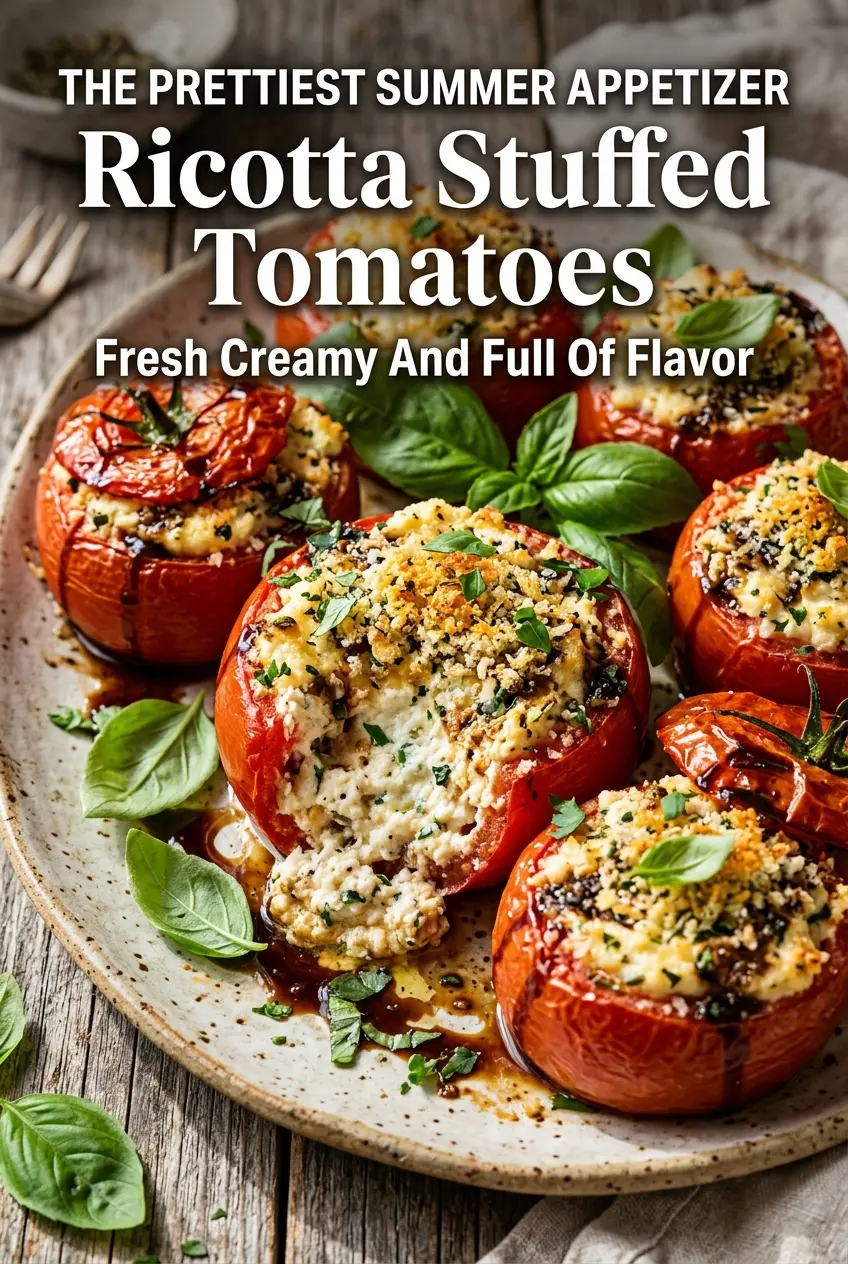
Ricotta Stuffed Tomatoes
Ingredients
Equipment
Method
- Preheat oven to 375°F (190°C).
- Slice the tops off the tomatoes and set the lids aside.
- Scoop out the seeds and pulp using a spoon.
- Place tomatoes upside down on paper towels for 10 minutes to drain excess moisture.
- In a bowl, combine ricotta, Parmesan, garlic, basil, parsley, olive oil, salt, and pepper.
- Fill each tomato generously with the ricotta mixture.
- Sprinkle panko breadcrumbs over the tops.
- Arrange tomatoes in a baking dish.
- Bake for 20–25 minutes until heated through and lightly golden.
- Garnish with fresh basil leaves.
- Drizzle with balsamic glaze if desired.
- Serve warm or chilled.