
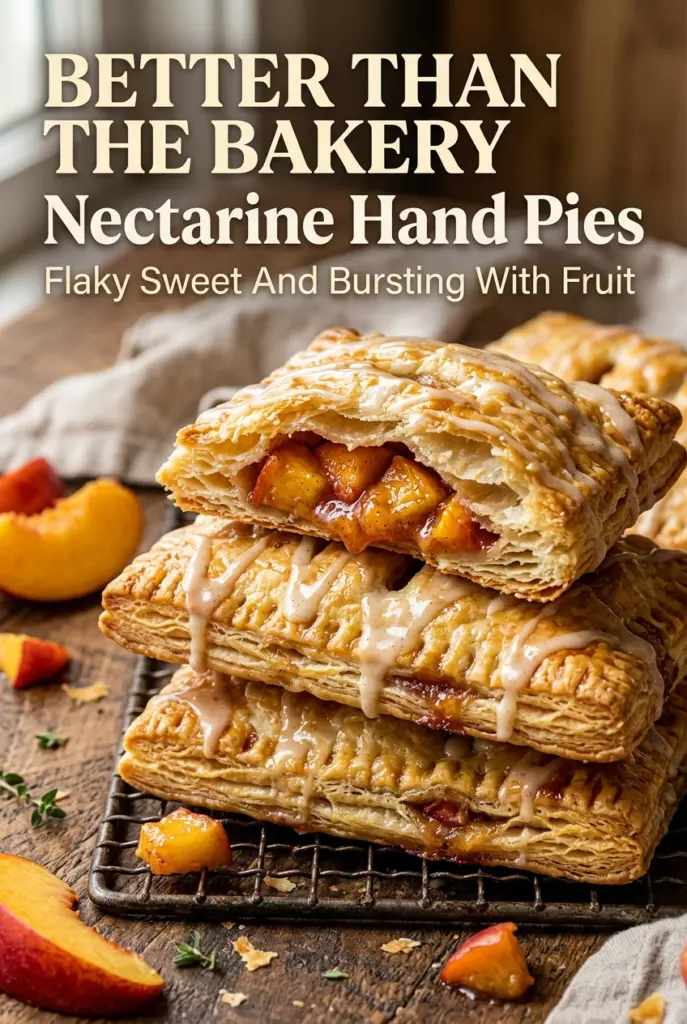
Nectarine Hand Pies
Flaky pastry and juicy nectarine filling are a hard combination to beat, especially when the crust bakes up crisp instead of soggy. These nectarine hand pies give you that bakery-style…

By Ava
•
•
Reading time: 10 min
Tip: save now, make later.
Flaky pastry and juicy nectarine filling are a hard combination to beat, especially when the crust bakes up crisp instead of soggy. These nectarine hand pies give you that bakery-style contrast in a smaller package: tender fruit, a little cinnamon warmth, and a golden shell that holds together cleanly in your hand. They’re the kind of bake that disappears fast because they taste like a proper dessert without asking for pie plates or a long cooling ritual.
The trick is in the filling. Nectarines release a lot of juice as they bake, so the cornstarch has a real job here — it turns that fruit syrup into something spoonable instead of runny. A little lemon juice keeps the sweetness from going flat, and vanilla rounds out the fruit without making the filling taste like candy. I also like refrigerated pie crust for these because it’s consistent and easy to handle; once the fruit filling is portioned evenly and the edges are crimped well, they bake into neat little hand pies that don’t leak all over the pan.
Below, you’ll find the small details that keep the bottoms crisp, the seals tight, and the glaze just thin enough to settle into the ridges without soaking the pastry.
The filling thickened up perfectly, and the pies stayed sealed instead of leaking all over the pan. I baked them for 20 minutes and the crust came out crisp and flaky, not soggy at all.
Like these nectarine hand pies? Save them to Pinterest for the flaky crust, juicy fruit filling, and easy summer baking nights.
The Reason Nectarine Hand Pies Don’t Leak All Over the Pan
Most hand pies fail in one of two places: the filling is too loose, or the pastry is too warm when it goes into the oven. Nectarines are especially juicy, so the filling needs a little structure before it ever hits the crust. Cornstarch does that job, but it only works if the fruit is mixed evenly and the pies are sealed tightly enough that the juices stay inside long enough to thicken.
The other mistake is overfilling. A hand pie should look generously stuffed, but the filling needs room to bubble without splitting the seams. A fork crimp helps, but the real protection is keeping the filling in the center and brushing the edges lightly with egg wash so they stick. If the dough gets soft while you’re assembling, chill the shaped pies for a few minutes before baking. That one step keeps the crust flaky instead of slumping.
What the Nectarines, Cornstarch, and Pie Crust Each Do Here

- Nectarines — Use ripe but still slightly firm fruit. Very soft nectarines collapse too fast and turn the filling watery before the pies finish baking. If yours are extra juicy, dice them and let them sit in a bowl for a few minutes, then spoon off a little excess liquid before adding the cornstarch.
- Brown sugar — This adds a deeper, caramel note that plain white sugar can’t match. You can swap in granulated sugar if that’s what you have, but the filling will taste a little brighter and less rounded.
- Cornstarch — This is what turns fruit juice into a thick filling instead of a puddle. Don’t cut it back unless you want the pies to leak. If you use arrowroot instead, the filling will thicken a bit more softly, but the result still works.
- Refrigerated pie crusts — They keep this recipe fast and dependable. Homemade dough works, but it needs to be rolled evenly and kept cold; otherwise the hand pies are harder to seal and more likely to shrink. Let the store-bought crust sit just long enough to roll without cracking.
- Egg wash — This gives the pies that deep golden color and helps the edges seal. Skipping it makes the pastry paler and less crisp, and the seams don’t grab as well.
The 20 Minutes That Matter Most
Mixing the Filling
Combine the nectarines, brown sugar, cornstarch, lemon juice, cinnamon, and vanilla until every piece of fruit is coated. The mixture should look glossy, not dry and powdery. If you see a dry layer of cornstarch at the bottom of the bowl, stir again before portioning; that clump will bake into a chalky pocket inside one of the pies.
Shaping and Sealing
Roll the crust out evenly and cut clean circles so the top and bottom match. Spoon the filling into the center of half the circles, but leave enough border to crimp without squeezing fruit into the seam. Brush the edge with egg wash, press the top circle on, and seal with a fork. If the dough stretches or tears, it’s too warm — chill it for a few minutes and carry on.
Baking Until the Crust Sets
Cut a few small slits in the top of each pie so steam can escape, then bake at 375°F until the crust is deeply golden and the filling is bubbling through the vents. That bubbling is the signal that the cornstarch has activated and the fruit juice has thickened. Pull them too early and the centers stay loose; bake them long enough and the crust turns crisp instead of pale.
Cooling and Glazing
Let the hand pies cool completely before adding the glaze. If they’re warm, the glaze melts straight off and the crust softens underneath. Whisk the powdered sugar, milk, and vanilla until smooth enough to drizzle, then spoon it over the cooled pies in thin lines. A thicker glaze will sit on top; a thinner one will run into the cracks, and both work as long as the pies are fully cooled.
Three Smart Ways to Change These Nectarine Hand Pies
Make Them Dairy-Free
The filling is already dairy-free, so the only swap you need is the milk in the glaze. Use unsweetened almond milk, oat milk, or another neutral plant milk. The glaze will still set, though it may dry a little softer than one made with whole milk.
Use Peaches Instead of Nectarines
Peaches work in the same amount, but they’re often a little softer, so the filling can turn looser. If the fruit is very ripe, add an extra teaspoon of cornstarch and chop it a bit more coarsely so it holds its shape better in the oven.
Make Them Ahead for a Crowd
Assemble the hand pies, place them on a parchment-lined tray, and chill them for up to 8 hours before baking. Cold pies hold their shape better, which means cleaner edges and less leaking. You can also bake them a day ahead and glaze them just before serving so the pastry stays crisp.
Storage and Reheating
- Refrigerator: Store in an airtight container for 3 days. The crust softens a little after the first day, but the pies still hold up well.
- Freezer: Freeze unglazed baked pies for up to 2 months. Wrap them individually and thaw at room temperature before reheating.
- Reheating: Warm in a 325°F oven for 8 to 10 minutes. The oven brings the crust back to life; the microwave makes it soft and chewy.
Answers to the Questions Worth Asking
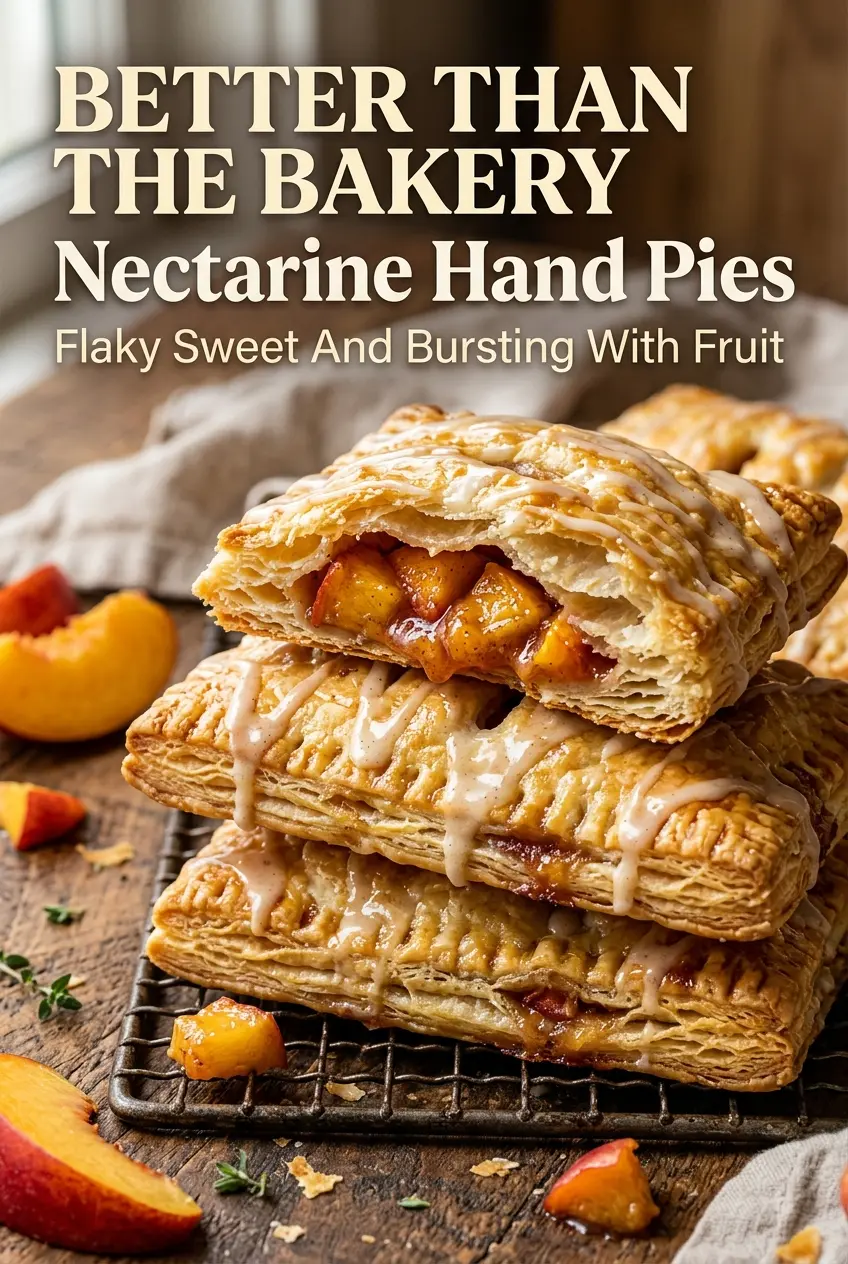
Nectarine Hand Pies
Ingredients
Equipment
Method
- Preheat the oven to 375°F (190°C). Line a baking sheet with parchment paper, then set it near the work area (visual cue: the sheet should look ready for loading).
- Combine nectarines, brown sugar, cornstarch, lemon juice, cinnamon, and vanilla extract in a bowl. Stir until the nectarines are evenly coated (visual cue: the mixture looks glossy and thickened).
- Roll out the refrigerated pie crusts and cut 4-inch circles. Place half the circles on the prepared baking sheet (visual cue: you should see a base layer of circles on parchment).
- Spoon filling into the center of half the circles. Keep a border around the edges so the dough can seal (visual cue: filling mounds stay centered and not touching the rim).
- Top with the remaining circles and seal the edges with a fork. Press firmly around the perimeter for a tight seal (visual cue: fork-tined ridges mark the edges).
- Whisk the egg and water to make an egg wash. Brush the tops of the pies with egg wash for shine (visual cue: tops look glossy).
- Cut small slits in the tops for steam to escape. Make 2–3 slits per pie (visual cue: you can see openings on the surface).
- Bake for 18–22 minutes until golden brown. Transfer pies to a rack to cool completely (visual cue: crust color is deep golden).
- Whisk the glaze ingredients together and drizzle over the cooled pies. Let the glaze set briefly before serving (visual cue: drizzle looks matte and slightly thickened).