
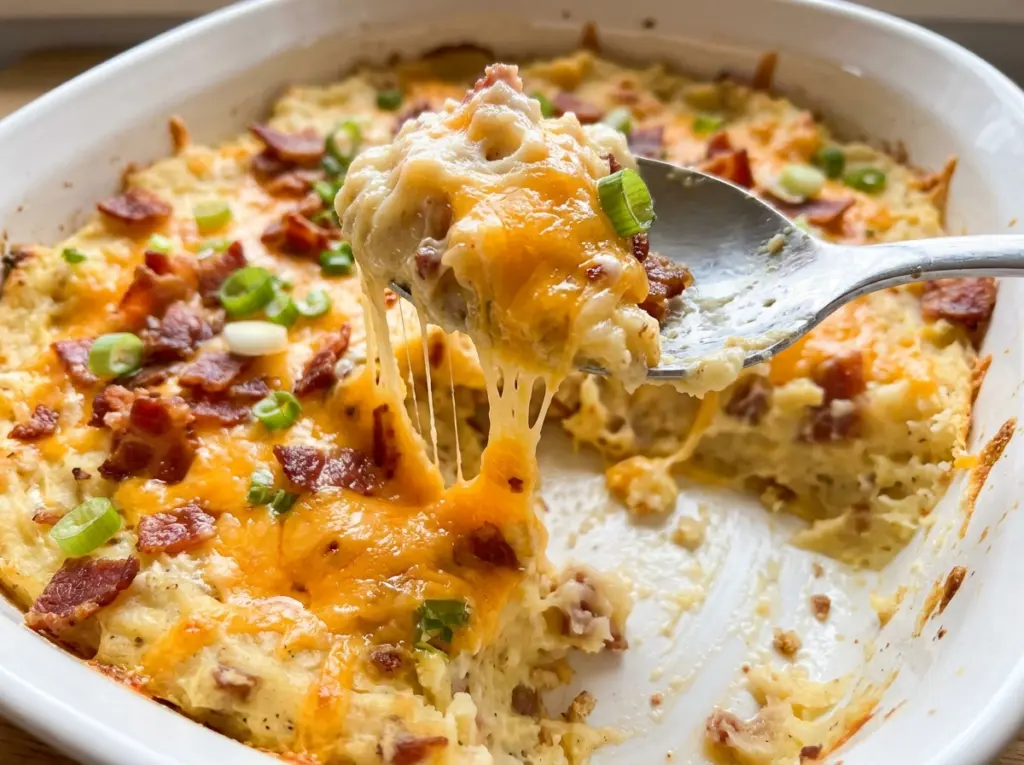
Pioneer Woman Twice Baked Potato Casserole
When the cheddar gives way under a serving spoon, the potato filling should hold its shape instead of slumping into a puddle. That’s what makes this Pioneer Woman Twice Baked…

By Ava
•
•
Reading time: 9 min
Tip: save now, make later.
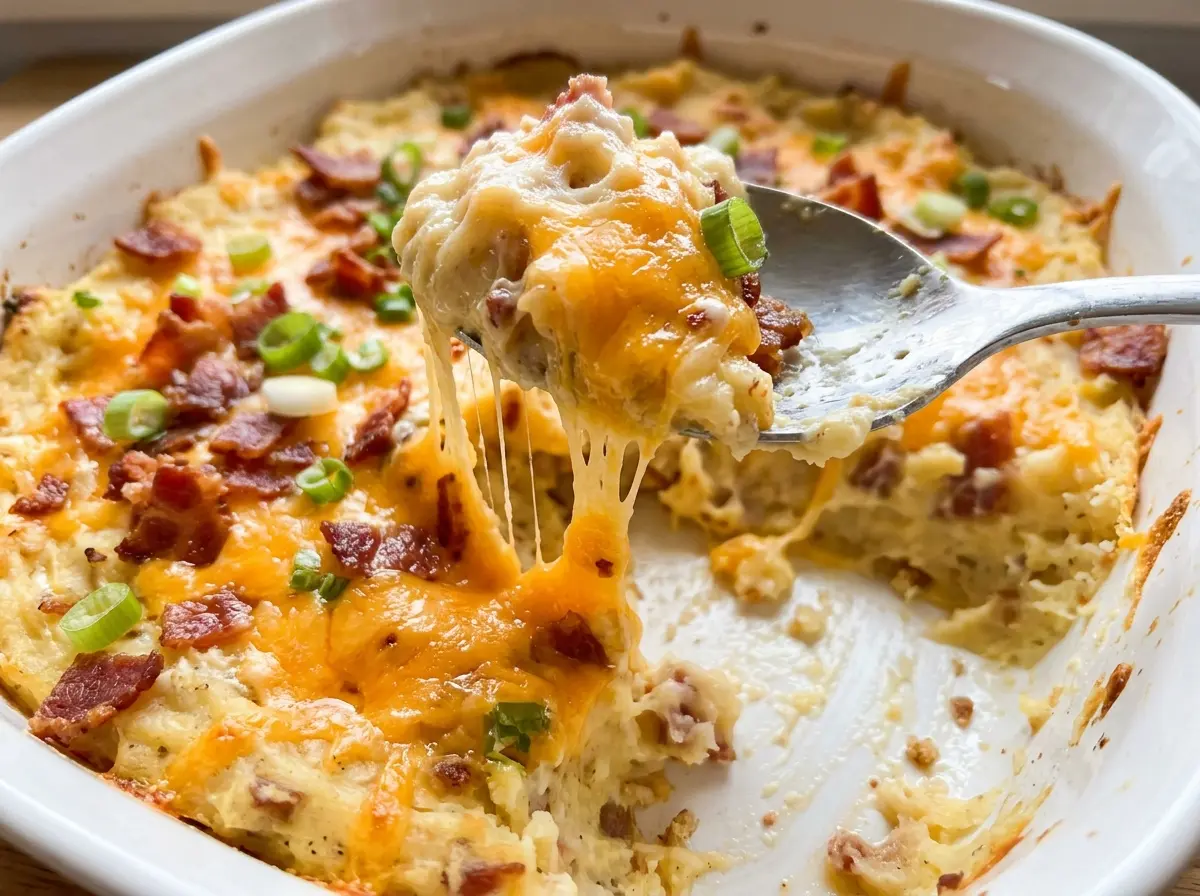
When the cheddar gives way under a serving spoon, the potato filling should hold its shape instead of slumping into a puddle. That’s what makes this Pioneer Woman Twice Baked Potato Casserole worth the extra oven time: the russets bake until tender, then get mashed with butter, sour cream, and warm milk before the bacon and green onions go in.
I like that it has the familiar flavor of twice-baked potatoes without having to refill every potato skin. The crisp bacon gets folded through the filling, and sharp cheddar melts over the top in the baking dish. Letting the potatoes cool until they’re easy to handle makes scooping much less awkward, and the 10-minute rest after baking gives the casserole time to settle before you serve it. Each bite has a soft, savory center under a blanket of melted cheese.
Kitchen Note
Warm the milk before it goes into the potatoes. Cold milk cools the mash as you work, while warm milk blends in easily with the softened butter and sour cream.
Save this Pioneer Woman Twice Baked Potato Casserole for a hearty potato side with crisp bacon folded inside and sharp cheddar on top.
Why Oven-Baked Russets Keep This Casserole From Turning Loose
Potatoes that take on extra water can leave a mashed-potato casserole soft and wet, especially once sour cream and milk are mixed in. Baking the russets gives them time to turn tender without boiling them in water first. Their flesh stays easy to mash, and the filling has a better chance of holding together once it’s spread in the dish.
Russets are a good fit because their starchy, relatively dry flesh mashes into a light filling. A waxier potato tends to make a denser mash, which is why the potato choice matters here more than a fancy topping. Look for the knife cue rather than judging by the outside of the potato: the center needs to be tender enough to scoop and mash smoothly. After that, stop mashing once the butter, sour cream, milk, salt, and pepper are combined. The bacon and green onions go in with a fold, not a hard beat. That keeps the filling from turning pasty and lets the casserole bake up with a soft, spoonable texture.
The Russets, Warm Milk, and Sharp Cheddar Each Have a Job

- Russet potatoes — Their dry, starchy texture makes a fluffy mash that holds up beneath the cheese. They’re an inexpensive, reliable choice; Yukon Gold potatoes work in the same quantity if needed, but the filling will be creamier and a little denser.
- Bacon — Crisp bacon gives the soft potatoes a smoky, salty contrast. Standard grocery-store bacon works well; what matters most is cooking it until crisp so it doesn’t disappear into the filling. For a meat-free version, leave it out rather than trying to mimic its texture.
- Sour cream and butter — Sour cream adds tang, while softened butter makes the mash rich and smooth. Full-fat plain Greek yogurt can stand in for sour cream in the same amount, though it tastes tangier and a little less rich. Use ordinary butter; there’s no need for a specialty brand.
- Warm whole milk — It loosens the potato flesh without making the filling feel thin. Two-percent milk works in the same amount, with a slightly less full texture. Warming it first helps it blend into the mash.
- Sharp cheddar — The stronger flavor stands up to the potatoes and bacon. Freshly shredded cheese usually melts more evenly than pre-shredded cheese, but the bagged kind is convenient and works. Mild cheddar is a fine swap if you prefer a gentler cheese flavor.
From Crisp Bacon to a Set, Melted-Cheese Top
Cook the bacon until crisp
Set a 12-inch skillet over medium heat and cook the bacon pieces for 8 to 10 minutes. Stir them as they cook so they brown evenly instead of scorching on one side. When the pieces look crisp, transfer them to a paper towel-lined plate. Let them drain, then crumble them small enough to distribute through the filling.
Bake the russets until the centers give easily
Heat the oven to 400°F and set the scrubbed, pierced potatoes on a rimmed baking sheet. Bake them for 60 to 75 minutes, until a knife slides easily into the center of a potato. If the center still pushes back, give the potatoes more time rather than trying to scoop firm flesh. Let them cool for about 10 minutes, then cut them in half and scoop the flesh into a large bowl.
Mash gently and fold in the savory pieces
Add the softened butter, sour cream, warmed milk, salt, and pepper to the potato flesh. Mash until the ingredients are combined; a few small, soft lumps are fine. Fold in the crumbled bacon and thinly sliced green onions so they’re spread through the potatoes without beating the mixture. If you mash aggressively at this point, the filling can lose its light texture.
Top the casserole and bake until hot
Lower the oven to 350°F and coat a 9×13-inch baking dish with nonstick cooking spray. Spread the potato mixture evenly in the dish, then cover the surface with the shredded cheddar. Bake for 20 to 25 minutes, until the cheese is melted and the casserole is hot throughout. Leave it to rest for 10 minutes before serving so it’s easier to scoop.
Small Changes That Keep the Casserole’s Character
A meat-free potato and cheddar casserole
Leave out the bacon and make the casserole with the potatoes, dairy, green onions, and cheddar. The result is milder and less smoky, but still rich and savory. No replacement ingredient is needed.
A crisp bacon finish
Fold most of the crumbled bacon into the potatoes and reserve a little to scatter over the cheese after baking. You’ll get crisp bacon on top as well as smoky pieces inside, without changing the ingredient list.
A fresher green-onion finish
Fold some of the sliced green onions into the mash and save the rest to scatter over the casserole after it comes out of the oven. The finishing onions keep a brighter, sharper bite than the ones baked into the potatoes.
Storage and Reheating
- Refrigerator: Refrigerate leftovers within 2 hours and keep them covered for 3 to 4 days. The potato filling firms up as it chills.
- Freezer: Freeze portions in airtight containers for up to 2 months. Thaw them in the refrigerator; the potatoes may be a little softer after freezing.
- Reheating: Warm a larger portion in a 350°F oven, loosely covered, until the center reaches 165°F; microwave individual servings until steaming. Leaving a cold casserole uncovered can dry out the cheese before the center heats through.
Questions That Come Up Before the Casserole Goes in the Oven
Pioneer Woman Twice Baked Potato Casserole
Ingredients
Equipment
Method
- Cook the bacon in a 12-inch skillet over medium heat until crisp, 8 to 10 minutes.
- Transfer the bacon to a paper towel-lined plate and crumble it.
- Heat the oven to 400°F.
- Bake the potatoes on a rimmed baking sheet until a knife slides easily into their centers, 60 to 75 minutes.
- Let the potatoes cool until easy to handle, about 10 minutes.
- Cut the potatoes in half and scoop the flesh into a large bowl.
- Mash the potato flesh with the butter, sour cream, warm milk, salt, and pepper until combined.
- Fold in the bacon and green onions.
- Lower the oven temperature to 350°F.
- Coat a 9x13-inch baking dish with nonstick cooking spray.
- Spread the potato mixture in the dish.
- Cover it evenly with the cheddar.
- Bake until the cheese is melted and the casserole is hot throughout, 20 to 25 minutes.
- Let it rest for 10 minutes before serving.