
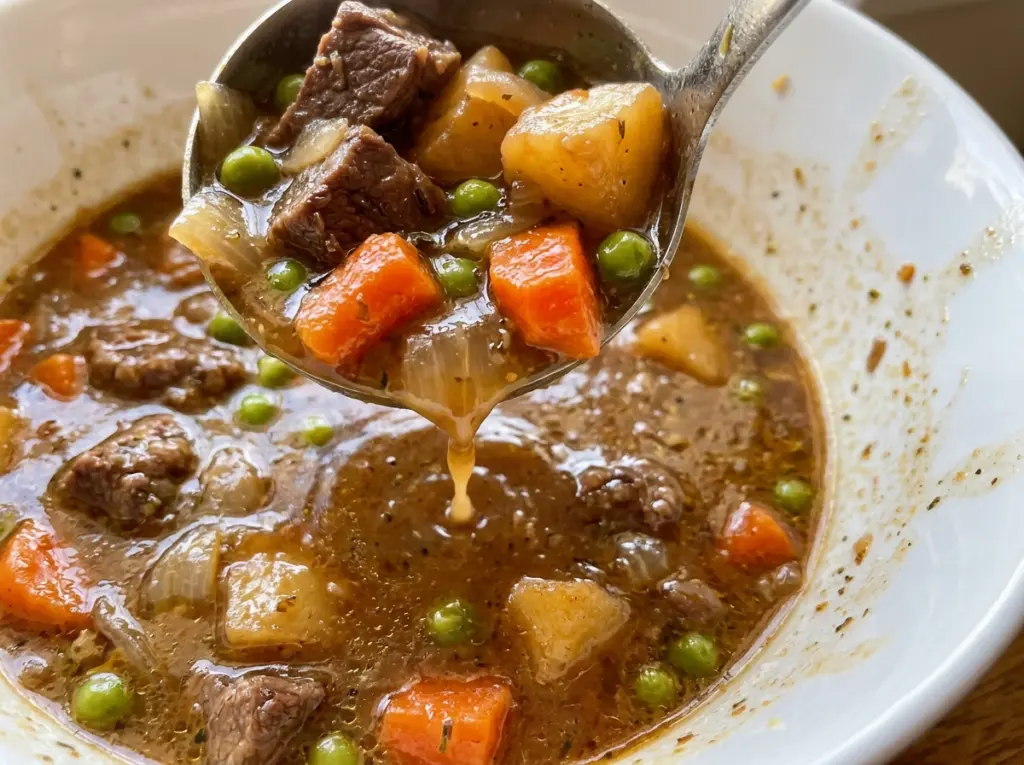
Pioneer Woman Crockpot Beef Stew
When the lid comes off, the carrots should be tender without disappearing, the potatoes should hold their shape, and the beef should give way to a fork. That balance is…

By Ava
•
•
Reading time: 9 min
Tip: save now, make later.
When the lid comes off, the carrots should be tender without disappearing, the potatoes should hold their shape, and the beef should give way to a fork. That balance is what I want from a slow-cooked stew: hearty pieces in a gravy that clings instead of pooling like broth. Pioneer Woman Crockpot Beef Stew gets there with beef chuck, Yukon Gold potatoes, and carrots, all cooked together until the flavors settle into one cozy, savory bowl.
I like that this recipe takes a little time at the stove before the slow cooker takes over. Browning the beef and building the broth in the same skillet gives the stew a deeper base, while the long, gentle cook does the work of tenderizing the chuck. The final cornstarch slurry thickens the gravy right at the end, so each spoonful has enough body to coat the vegetables and beef.
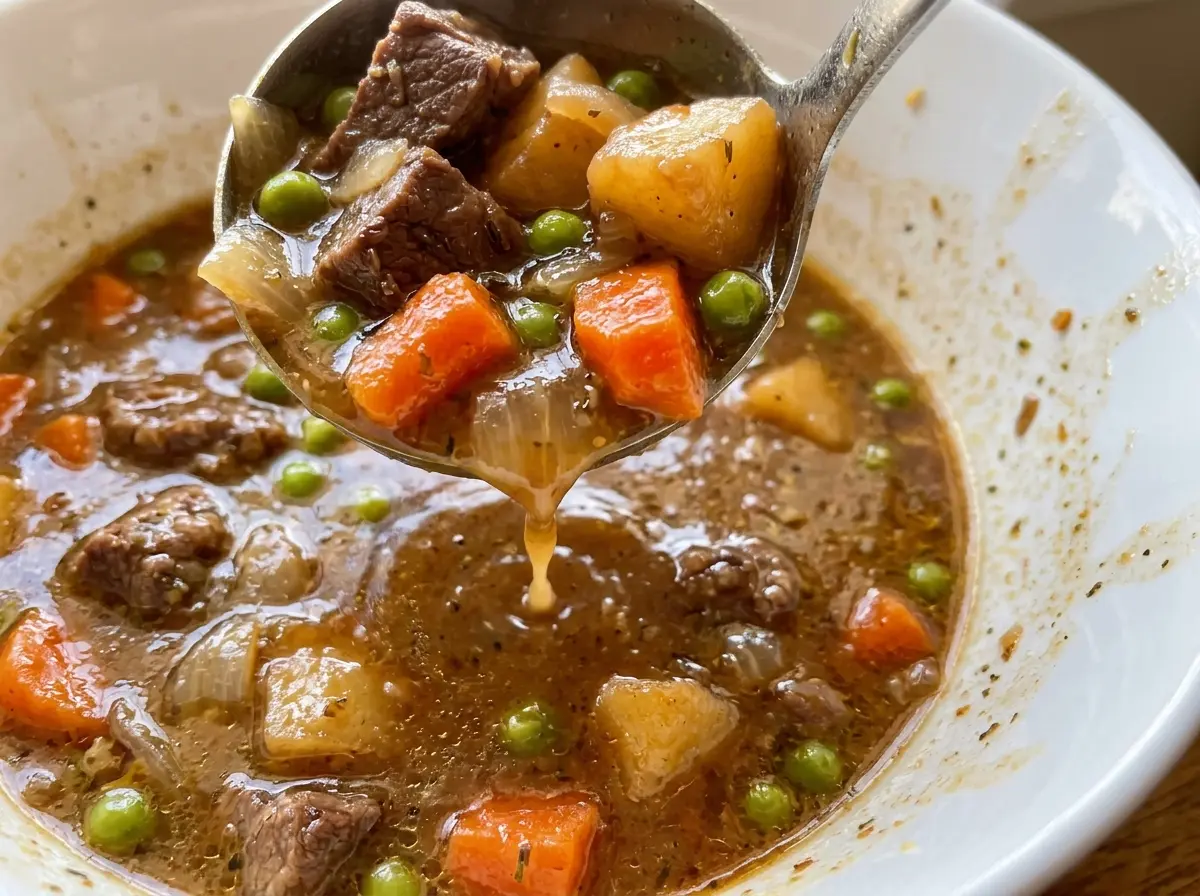
Kitchen Note
Cut the carrots and potatoes into even 1-inch pieces so they soften at about the same pace. If some pieces are much larger than others, the small ones can turn soft while the bigger ones are still firm.
Save Pioneer Woman Crockpot Beef Stew for a cozy dinner with fork-tender beef, soft vegetables, and thick savory gravy.
Why This Stew Builds Its Gravy in the Beef-Browning Skillet
The slow cooker makes the beef tender, but it can’t create the browned, savory layer that forms on a hot skillet. Searing the chuck first leaves browned bits behind, and those bits are worth keeping. When the onion cooks in that same skillet, it softens while picking up the beefy flavor left on the pan.
The flour gets a brief cook before the broth goes in, which helps it blend into the liquid instead of tasting raw. Garlic and tomato paste follow for a short cook, then the broth and Worcestershire sauce loosen everything from the bottom of the skillet. Whisk gradually and scrape well; the mixture should look smooth, with no stubborn browned patches left behind. That flavorful liquid goes into the slow cooker with the beef, rather than leaving the best part of the stew behind in the pan.
This skillet step also gives you a chance to spot a problem before the long cook begins. If the broth mixture looks lumpy, keep whisking as you add the liquid. If it’s smooth and full of those loosened browned bits, the slow cooker has a much better starting point than broth poured straight over the meat.
What the Chuck, Yukon Golds, and Tomato Paste Bring to the Pot
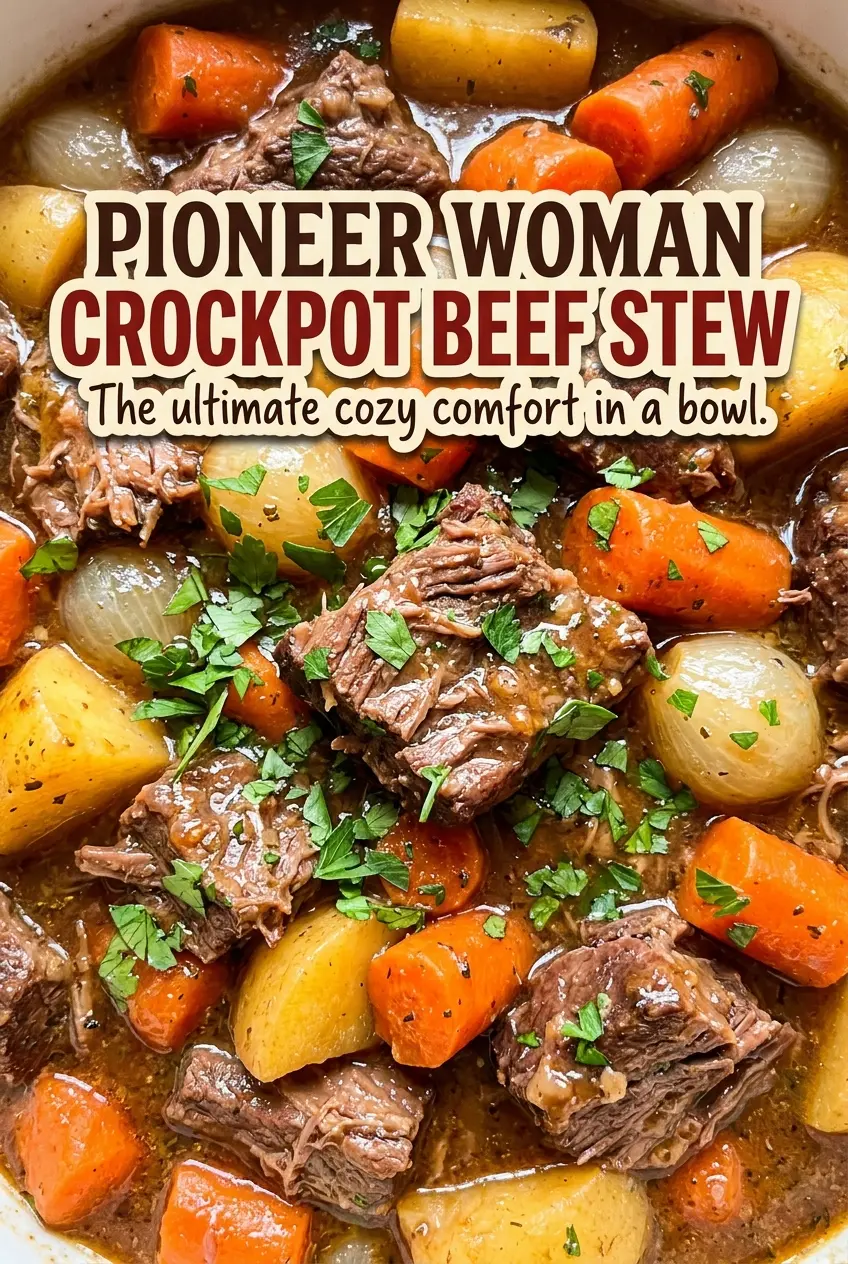
- Beef chuck — Chuck has connective tissue that softens during the long slow cook, giving you tender chunks and a fuller-tasting gravy. It’s a better fit here than a lean cut, which can turn dry before it becomes fork-tender. Ask the butcher to cut it if you’d rather not portion a whole piece yourself.
- Yukon Gold potatoes — Their creamy texture and waxier structure help them hold together in stew. Choose firm potatoes without soft spots; there’s no need to seek out a specialty brand. Russets work as a swap, but they’re starchier and tend to soften more, so the finished stew will be less chunky.
- Carrots and yellow onion — The carrots bring sweetness and the onion supplies the savory base. Fresh, firm carrots are the best choice; a standard yellow onion is all you need. Keep the pieces close in size so they cook evenly.
- Tomato paste — This concentrated ingredient gives the broth a deeper, rounded taste without making the stew taste like tomato soup. A tube or a small can both work; cook it briefly with the garlic so it blends into the skillet base.
- Beef broth and Worcestershire sauce — Together, they make the cooking liquid savory and rich. A basic store-brand beef broth is fine, while Worcestershire adds a distinctive tang and depth that plain broth won’t fully replace. Use a familiar, standard version rather than a sweet or flavored sauce.
- All-purpose flour and cornstarch — Flour gives the skillet liquid body, and the cornstarch slurry thickens the stew at the finish. Keep the slurry cold when you whisk it together; hot water can make cornstarch clump before it reaches the pot.
- Dried thyme and bay leaf — These bring a quiet, savory herbal note during the long cook. Dried thyme is convenient and reliable here. Remember to remove the bay leaf before serving.
Four Stages for Tender Beef and a Thick, Glossy Gravy
Brown the Chuck in Uncrowded Batches
Season the beef with the kosher salt and black pepper, then heat the vegetable oil in a 12-inch skillet over medium-high heat. Brown the beef in batches for about 3–4 minutes per batch, turning so the pieces pick up color rather than steam. Crowding the pan releases moisture and makes it harder to brown the meat, so give each batch room. Transfer the browned beef to a 6-quart slow cooker.
Turn the Pan Drippings Into a Savory Base
Add the chopped onion to the skillet and cook for 3–4 minutes, stirring occasionally. Stir in the flour and cook for 1 minute, then add the minced garlic and tomato paste for 30 seconds. Gradually whisk in the beef broth and Worcestershire sauce, scraping the bottom of the skillet as the browned bits loosen. Stir in the dried thyme and bay leaf, then pour the mixture over the beef.
Let the Slow Cooker Tenderize the Beef and Vegetables
Add the carrots and Yukon Gold potatoes to the slow cooker and stir to combine everything with the broth. Cover and cook on LOW for 8–10 hours or on HIGH for 4–5 hours. The beef should be fork-tender, and the potatoes should be tender when pierced. If the beef still feels resistant, it needs more time; don’t judge doneness by the clock alone.
Thicken the Gravy at the End
Whisk the cornstarch and cold water together in a small bowl until smooth. Stir the slurry into the stew, cover, and cook on HIGH for 15–20 minutes. The gravy is ready when it thickens enough to coat a spoon instead of running off like broth. Stir gently so you don’t break up the tender potatoes, and remove the bay leaf before serving.
Two Easy Changes for Different Dietary Needs and Textures
Make the Gravy Gluten-Free
Replace the all-purpose flour with the same amount of a gluten-free 1:1 flour blend, and use gluten-free beef broth and Worcestershire sauce. The gravy should have a similar body, though blends can thicken a little differently. This keeps the familiar skillet method while adapting the ingredients for a gluten-free meal.
Swap in Russet Potatoes for a Softer Stew
Use russet potatoes in place of the Yukon Golds, keeping the same quantity and cutting them into the same size pieces. Russets have a starchier, fluffier texture and are more likely to soften or break down as they cook. The broth will feel thicker and the potato pieces less distinct.
Storage and Reheating
- Refrigerator: Cool and refrigerate leftovers in a covered container within 2 hours; keep them for 3–4 days. The gravy will firm up as it chills.
- Freezer: Freeze in airtight portions for up to 2–3 months for best quality. The potatoes may soften or turn a little grainy after thawing, but the stew remains satisfying.
- Reheating: Warm gently on the stovetop, stirring now and then, until the center reaches 165°F. Avoid a hard boil, which can break up the potatoes and beef.
Questions That Come Up When Making Crockpot Beef Stew
Pioneer Woman Crockpot Beef Stew
Ingredients
Equipment
Method
- Season the beef with the salt and pepper.
- Heat the oil in a 12-inch skillet over medium-high heat and brown the beef in batches, about 3–4 minutes per batch.
- Transfer the beef to a 6-quart slow cooker.
- Add the onion to the skillet and cook for 3–4 minutes, stirring occasionally.
- Stir in the flour and cook for 1 minute.
- Add the garlic and tomato paste and cook for 30 seconds.
- Gradually whisk in the broth and Worcestershire sauce, scraping up browned bits.
- Stir in the thyme and bay leaf, then pour the mixture over the beef.
- Add the carrots and potatoes to the slow cooker and stir to combine.
- Cover and cook on LOW for 8–10 hours or HIGH for 4–5 hours, until the beef is fork-tender and the potatoes are tender.
- Whisk the cornstarch and cold water in a small bowl, then stir the mixture into the stew.
- Cover and cook on HIGH for 15–20 minutes, until the gravy thickens.