
Apple Pie Enchiladas
When the apple cubes hit the saucepan, they start out firm and pale, then turn glossy as the brown sugar melts around them. I stir often and watch for the…

By Ava
•
•
Reading time: 9 min
Tip: save now, make later.
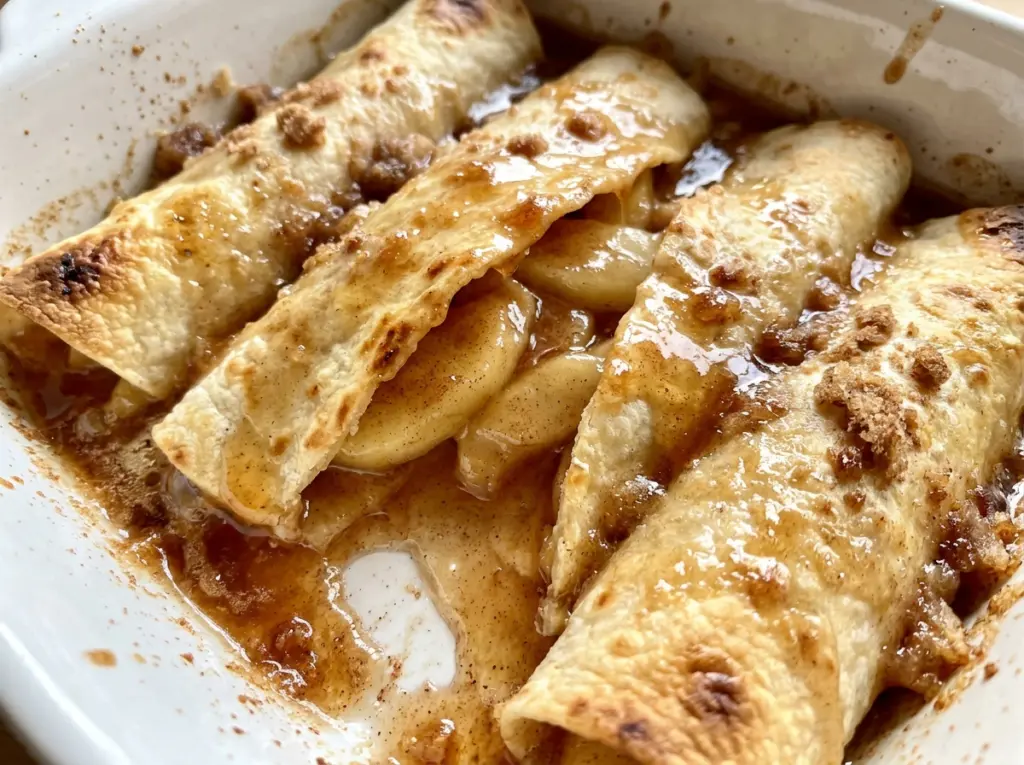
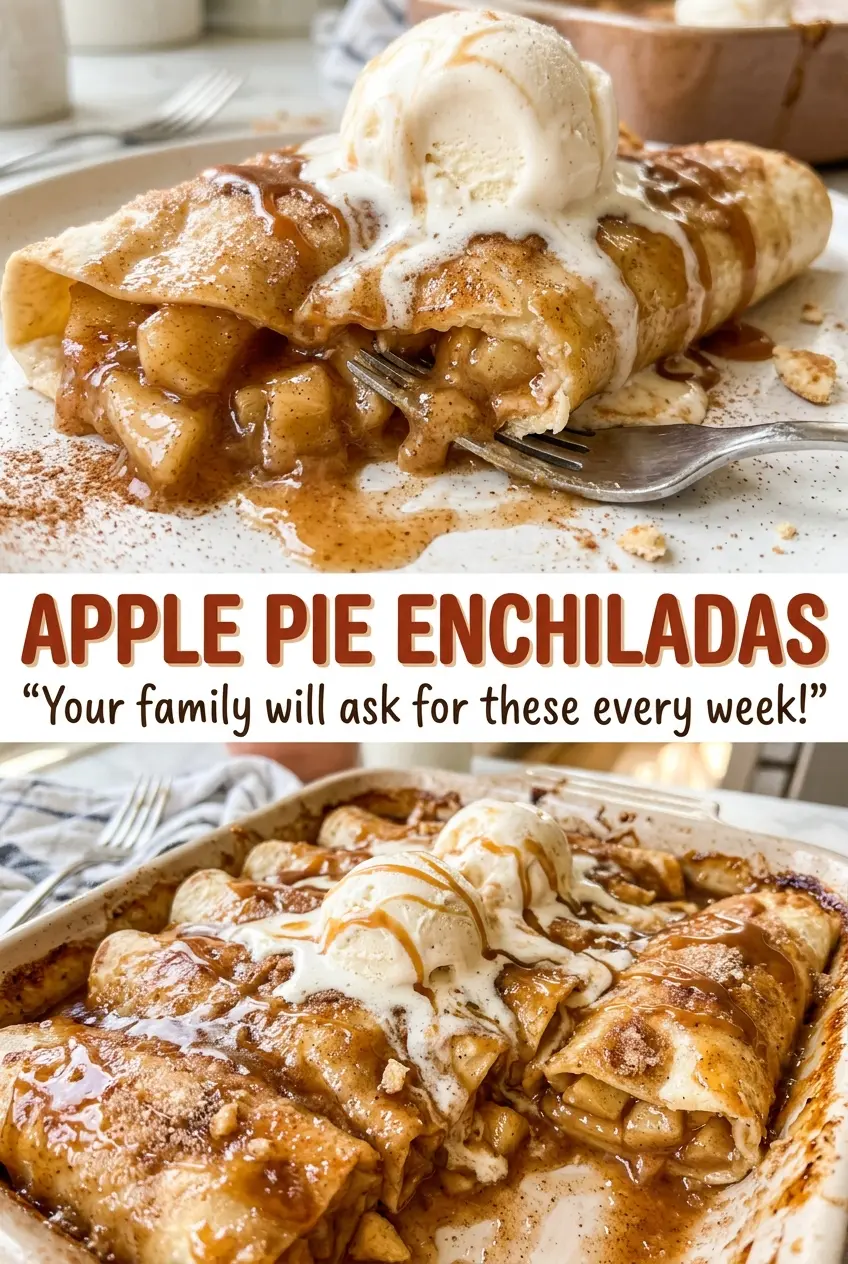
When the apple cubes hit the saucepan, they start out firm and pale, then turn glossy as the brown sugar melts around them. I stir often and watch for the moment the pieces are just tender but still hold their shape. That thick, cinnamon-scented filling is what makes these Apple Pie Enchiladas feel like apple pie tucked into a soft tortilla.
The filling gets rolled into warm flour tortillas, then a simple butter-and-sugar sauce goes over the top before baking. I like that the oven does two jobs at once: the sauce bubbles around the edges while the tortillas turn lightly golden. Let the pan rest before serving, and the warm apple centers are much easier to scoop without the sauce running everywhere.
Kitchen Note
Give the apple filling its full 15 minutes to cool before rolling it up. Warm filling releases steam inside the tortillas, which makes them harder to handle neatly.
Save these Apple Pie Enchiladas for a cozy dessert with tender cinnamon apples and a bubbling butter-sugar sauce.
Why the Cinnamon Sauce Goes on Before the Oven
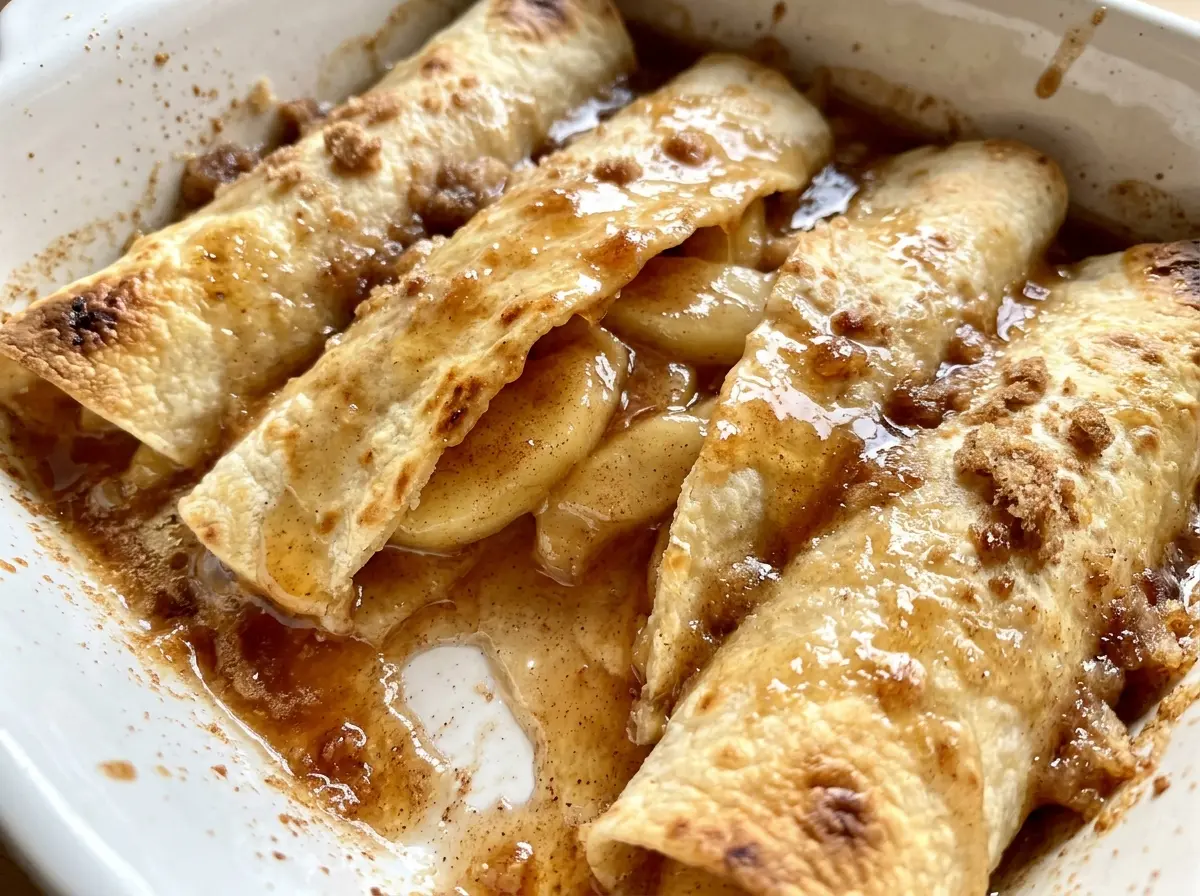
These aren’t dry-filled tortillas waiting for a drizzle at the table. The butter, sugar, and water are stirred together into a sauce and poured evenly over the rolled enchiladas before baking. As the pan heats, the sauce bubbles around the edges and coats the tortillas, while their exposed tops brown lightly. That contrast is part of what makes this dessert work: tender apple filling inside, soft saucy sides, and a little color on top.
That order also means the filling needs to be thick before it goes into the tortillas. Cornstarch gives the apple juices body as they cook, so the filling stays tucked inside instead of behaving like a loose puddle when you roll it. Look for juices that cling to the apples and shine; if they still look watery, the filling needs more time on the stove. Once the enchiladas are assembled, pour the sauce across them rather than leaving it in one spot, so it can spread through the baking dish.
Why Granny Smith Apples Matter More Than the Tortilla Brand
- Granny Smith apples — Their tartness balances the sweet sauce, and their firm flesh keeps its shape as it cooks. Choose firm apples without bruised spots; a less expensive bag is fine if the fruit is sound. Firm Pink Lady apples are the closest easy swap, though the filling will taste sweeter.
- Cornstarch — This thickens the juices around the apples so the filling rolls neatly. Arrowroot is the closest substitute; use the same amount and expect a slightly clearer, less opaque finish. Whisk or stir it through the fruit before cooking so you don’t end up with dry pockets.
- Brown sugar and cinnamon — Brown sugar adds a mild molasses note to the apple filling, while cinnamon carries that familiar pie flavor. Light or dark brown sugar both work; dark brown makes the filling taste a little deeper. Keep the cinnamon fresh-smelling, since an old jar can leave the apples tasting flat.
- Lemon juice — A little acidity keeps the sweet filling from tasting one-note and helps brighten the apples. Fresh or bottled lemon juice works here, so use whichever you have; lime juice brings a more noticeable citrus flavor.
- Flour tortillas — Their soft, flexible texture makes them easy to roll around the filling and sturdy enough to hold their shape in the pan. Fresh tortillas from any standard grocery brand are fine. If they feel stiff, warming them under a damp paper towel helps them bend without splitting.
- Butter and granulated sugar — Together they make the pour-over sauce, so ordinary unsalted butter and regular granulated sugar are all you need. Brown sugar can replace the granulated sugar for a darker, more caramel-like sauce, but it will change the flavor and color.
How to Keep the Filling Thick and the Tortillas Intact
Cook the Apples Until the Juices Turn Glossy
Use a 3-quart saucepan to toss the cut apples with brown sugar, cinnamon, and cornstarch, then stir in the lemon juice. Cook over medium heat for 8 to 10 minutes, stirring often so the fruit doesn’t catch on the bottom. The apples should be just tender, with juices that look thick and glossy rather than thin. Transfer the filling to a bowl and let it cool for 15 minutes.
Warm the Tortillas Before Rolling
Heat the oven to 350°F and lightly grease a 9×13-inch baking dish with the vegetable oil. Wrap the tortillas in a damp paper towel and microwave for 20 to 30 seconds, just until pliable. Divide the filling among them, using about 1/3 cup per tortilla, then roll each one up. Place them seam-side down in the dish so they stay closed as you add the sauce.
Bring the Sauce to a Gentle Simmer
Melt the butter in a small saucepan over medium heat, then stir in the granulated sugar and water. Keep stirring until the sugar dissolves and the sauce reaches a gentle simmer. It doesn’t need a hard boil; watch for small, steady bubbles and a smooth-looking mixture. Pour it evenly over the enchiladas while it’s hot.
Bake Until the Edges Bubble
Bake for 25 to 30 minutes, watching for sauce bubbling around the edges and tortillas that are lightly browned. If the tops have color but the edges aren’t bubbling yet, give the pan a little more time in the oven. Rest the enchiladas for 10 minutes after baking so the filling and sauce settle before you serve them.
What to Change Without Losing the Saucy Enchilada Texture
Use a sweeter apple
Swap the Granny Smith apples for firm Pink Lady apples, keeping the same weight. The filling will be less tart and a little sweeter, with a softer apple texture, so begin checking for tenderness at the early end of the cooking window.
Make the sauce with brown sugar
Use packed brown sugar in place of the granulated sugar in the sauce. It dissolves into a darker, more caramel-forward topping, with a hint of molasses that makes the finished enchiladas taste less like a classic cinnamon-sugar dessert.
Use gluten-free tortillas
Choose soft, pliable gluten-free tortillas in a similar size and warm them according to their package instructions before filling. They can be more delicate than flour tortillas, so handle them gently as you roll; the finished dessert may have a slightly different, less stretchy texture.
Storage and Reheating
- Refrigerator: Refrigerate leftovers promptly in a covered container and use within 3 days. The tortillas soften as they sit in the sauce.
- Freezer: Freeze portions in an airtight freezer-safe container for up to 2 months. Thaw overnight in the refrigerator; the tortillas will be softer and the sauce may look less glossy.
- Reheating: Warm covered in a 325°F oven until the center reaches 165°F. Uncover near the end if you want the edges less soft; microwaving works for one serving but can heat the apple filling unevenly.
Questions That Come Up When You Bake Apple Pie Enchiladas
Apple Pie Enchiladas
Ingredients
Equipment
Method
- In a 3-quart saucepan, toss the apples with the brown sugar, cinnamon, and cornstarch.
- Stir in the lemon juice, then cook over medium heat for 8 to 10 minutes, stirring often, until the apples are just tender and the juices are thick and glossy.
- Transfer the filling to a bowl and let it cool for 15 minutes.
- Heat the oven to 350°F.
- Lightly grease a 9x13-inch baking dish with the vegetable oil.
- Wrap the tortillas in a damp paper towel and microwave for 20 to 30 seconds, until pliable.
- Divide the filling among the tortillas, using about 1/3 cup per tortilla; roll them up and place them seam-side down in the baking dish.
- Melt the butter in a small saucepan over medium heat.
- Stir in the granulated sugar and water; cook until the sugar dissolves and the sauce reaches a gentle simmer.
- Pour the sauce evenly over the enchiladas.
- Bake for 25 to 30 minutes, until the sauce is bubbling around the edges and the tortillas are lightly browned.
- Rest for 10 minutes before serving.