
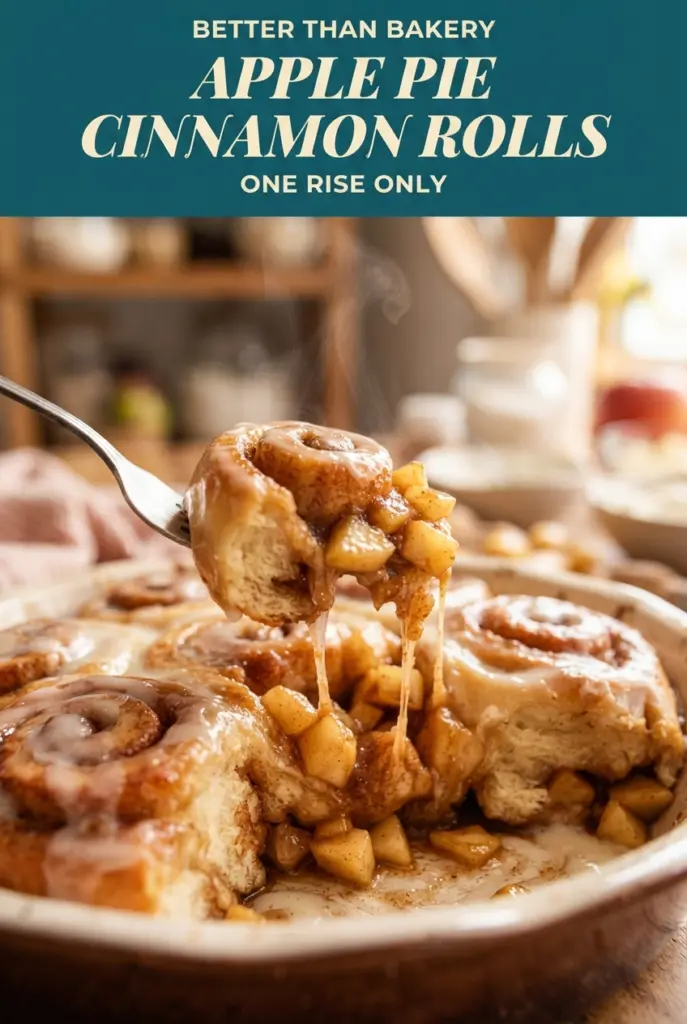
One-Rise Apple Pie Cinnamon Rolls with Cream Cheese Icing
These apple pie cinnamon rolls bake up tall, soft, and pulled apart with sticky edges where the brown sugar filling meets the pan. The apple layer sits right inside the…

By Ava
•
•
Reading time: 11 min
Tip: save now, make later.
These apple pie cinnamon rolls bake up tall, soft, and pulled apart with sticky edges where the brown sugar filling meets the pan. The apple layer sits right inside the swirl instead of getting spooned on top at the end, so every bite tastes like cinnamon rolls and warm apple pie at the same time. The cream cheese icing melts slightly over the top while the rolls are still warm, which gives you that glossy finish and keeps the center from tasting dry.
What makes this version work is the balance of moisture. The apples are cooked first so they stay tender and concentrated instead of leaking juice into the dough. That matters, because raw apples inside rolls can turn the middle dense and gummy. The dough itself is mixed by hand and only rises once after shaping, which keeps the process simple without sacrificing a soft, bakery-style texture.
Below, I’ll walk through the part that matters most: how to keep the filling thick, how to roll the dough tightly enough that the swirls hold, and how to time the icing so it sinks into the warm rolls instead of disappearing into them.
The filling stayed thick and didn’t leak all over the pan, and the rolls were still pillowy the next morning after a quick warm-up. My husband kept sneaking pieces from the corner because the edges were caramelized and sticky.
Save these one-rise apple pie cinnamon rolls for a brunch bake that gives you soft swirls, thick apple filling, and cream cheese icing in one pan.
The Apple Filling Has to Be Thick Before It Goes Near the Dough
The mistake most people make with fruit-filled rolls is treating the filling like pie filling that can finish baking inside the dough. It can’t. Raw apples release a lot of juice as they bake, and that liquid has nowhere to go once the rolls are spiraled up tight. That’s how you end up with soggy centers and filling that slides out when you cut the rolls.
Cooking the apples first fixes that. The butter softens them, the brown sugar starts the syrup, and the cornstarch slurry turns everything glossy and spoonable instead of wet. By the time it cools, the filling should mound on a spoon and hold its shape. If it still looks loose in the pan, give it another minute before you set it aside.
What Each Ingredient Is Doing in This Dough and Filling

The apples matter more than people think. Honeycrisp gives you a sweeter, juicier bite, while Granny Smith keeps the filling brighter and a little firmer. Either one works, but the key is dicing them finely so they soften in the skillet without leaving chunks that punch through the dough.
- Instant yeast gives you the one-rise structure here. It wakes up fast in warm milk and lets the dough puff without a long proofing schedule. Active dry yeast can work too, but it needs a few extra minutes to dissolve and may take longer to rise.
- Butter in two places does different jobs. Melted butter in the dough keeps the crumb tender, while softened butter in the swirl helps the brown sugar cling to the dough and bake into that sticky spiral.
- Cream cheese is what gives the icing its tang. Regular vanilla glaze will taste sweet, but it won’t cut through the richness the same way. If you only have milk, you can thin the icing with a small splash, but don’t skip the cream cheese unless you want a much flatter finish.
- Cornstarch slurry is the insurance policy for the filling. It thickens the apple juices just enough so the rolls bake through cleanly instead of turning wet in the center.
The 20 Minutes That Decide Whether These Rolls Hold Their Shape
Mixing the Dough by Hand
Start with warm milk, not hot milk. Around 110°F is enough to wake the yeast without killing it. Stir in the sugar, egg, melted butter, salt, and flour until you get a shaggy dough, then knead it on a floured counter until it turns smooth and soft, about 5 minutes. If it feels tacky, that’s fine; too much extra flour will make the rolls dry and tight.
Rolling and Filling Without Stretching the Dough
Roll the dough into a clean rectangle, then spread the softened butter edge to edge before adding the cinnamon sugar and cooled apples. The apples should be completely cool or they’ll soften the dough and make rolling harder. Roll from a long side with steady pressure so the spiral stays snug, then cut cleanly into 12 pieces. A tight roll gives you even layers; a loose roll gives you gaps and uneven baking.
Baking Until the Center Is Set
Place the rolls in the pan so they’re touching after the second rise. That helps them rise upward instead of spreading outward. Bake until the tops are golden and the middle roll no longer looks doughy in the center. If the tops brown too fast, the pan is getting too much heat before the centers are done, so cover it loosely with foil for the last few minutes.
Finishing With the Icing While They’re Warm
Beat the cream cheese, butter, powdered sugar, vanilla, and milk until smooth, then spread it over the rolls while they’re still warm. That warmth softens the icing just enough to sink into the swirls without melting it completely away. If the rolls cool all the way before you frost them, the icing sits on top instead of settling into the cracks.
Three Ways to Make These Rolls Fit Your Morning
Make-ahead overnight rolls
Shape the rolls, cover the pan, and refrigerate overnight instead of doing the room-temperature rise. The cold slows everything down without hurting the dough, and the rolls bake up just as soft the next morning. Let them sit at room temperature before baking so the center isn’t going into the oven cold and underproofed.
Dairy-free adaptation
Use a neutral plant-based butter and an unsweetened non-dairy milk. The rolls will still be soft, but the icing loses some of its tang unless you use a dairy-free cream cheese with good flavor. Keep the apple filling and cinnamon swirl the same; they carry most of the character here.
Swap the apples for pears
Firm pears can stand in for the apples if you want a softer, more floral filling. Cook them the same way, but keep a close eye on the texture because pears break down faster. The result is lighter and a little more delicate, which works well if you want the rolls to taste less pie-like and more bakery-style.
Double the batch for a crowd
This recipe scales well if you use two pans and keep the rolls fairly close together. Bake each pan on its own rack if your oven has hot spots, or rotate them halfway through so the centers finish at the same pace. The filling and icing can be doubled cleanly without changing the method.
Storage and Reheating
- Refrigerator: Store covered for up to 4 days. The rolls stay soft, though the icing firms up once chilled.
- Freezer: Freeze baked rolls without the icing for up to 2 months. Wrap tightly, thaw overnight in the fridge, then frost after reheating.
- Reheating: Warm individual rolls in the microwave for 20 to 30 seconds or cover the pan with foil and heat in a 300°F oven until warmed through. Don’t blast them on high heat or the dough will turn chewy before the center is warm.
Answers to the Questions Worth Asking
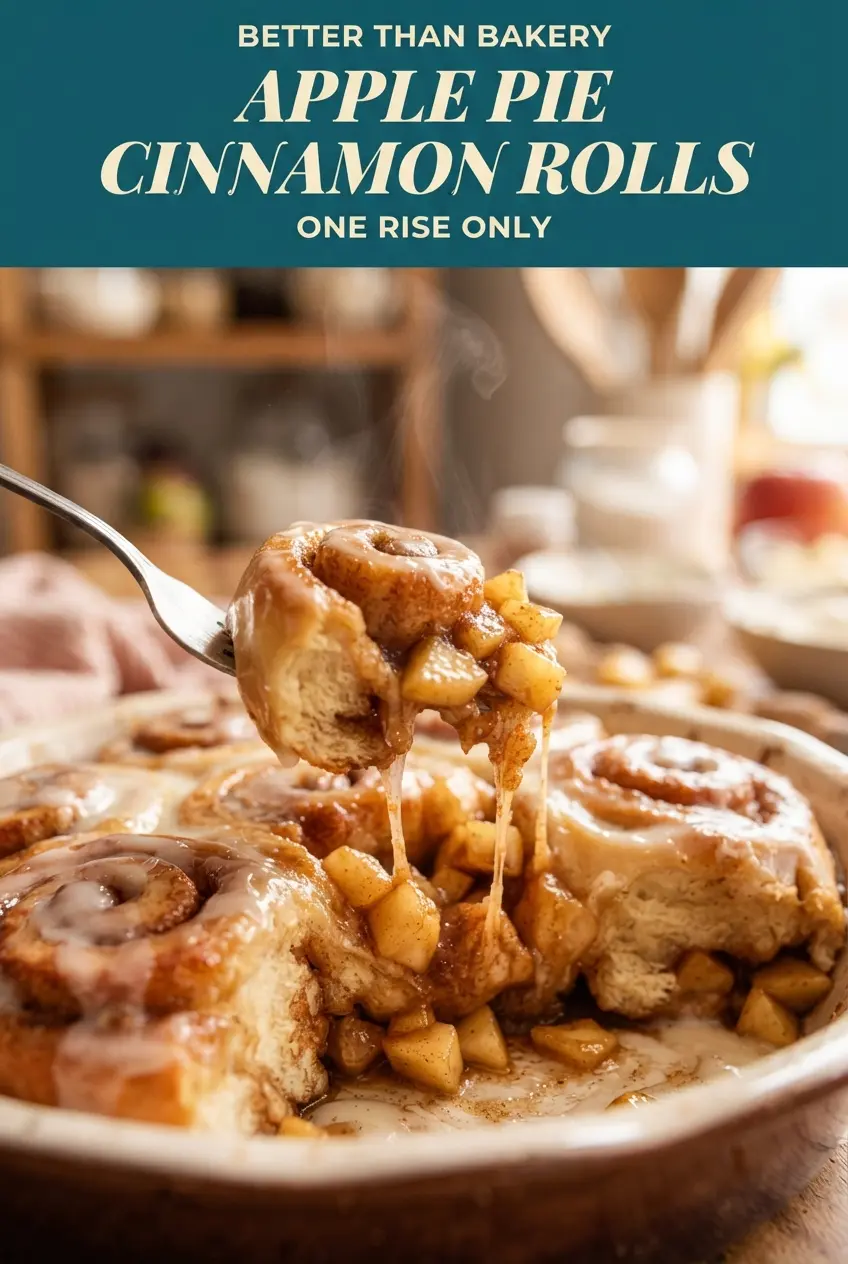
One-Rise Apple Pie Cinnamon Rolls with Cream Cheese Icing
Ingredients
Equipment
Method
- Melt 2 tbsp butter in a skillet over medium heat. Add diced apples, brown sugar, and ground cinnamon, then cook for 5–6 minutes until tender (you should see bubbling and softened apple edges).
- Stir in the cornstarch slurry (cornstarch mixed with 1 tbsp water) and cook for 1 minute more. The mixture should thicken and turn glossy, then set aside to cool.
- Whisk warm milk, instant yeast, and granulated sugar in a large bowl until foamy. Add the egg, melted butter, salt, and flour, then stir until a shaggy dough forms.
- Knead the dough by hand on a floured surface for 5 minutes until smooth and soft. If it sticks, dust lightly with extra flour to keep the dough manageable.
- Rest the dough for 10 minutes. Cover it loosely so it doesn’t dry out while you prepare the filling.
- Roll the dough into a 16x12-inch rectangle. Spread the softened cinnamon filling butter evenly, then sprinkle with the brown sugar and cinnamon.
- Spoon the cooled apple pie filling evenly over the cinnamon layer, leaving a 1-inch border. Press gently so the filling sits in place without squeezing out the edges.
- Roll up tightly from a long side and cut into 12 rolls. Place the rolls into a greased 9x13-inch pan with the cut sides up and evenly spaced.
- Cover and let rise in a warm spot for 45–60 minutes until puffy and touching. Use visual cues: the rolls should expand and fill the gaps between them (and they should look airy, not dense).
- Bake at 350°F for 22–26 minutes until golden brown and cooked through in the center. The tops should be set and lightly browned, and a roll in the middle should not look wet or doughy.
- Beat cream cheese, softened butter, powdered sugar, vanilla, and 1 tbsp milk until smooth. Spread the icing over the warm rolls and serve right away (add more milk only if needed for a pourable spread).