
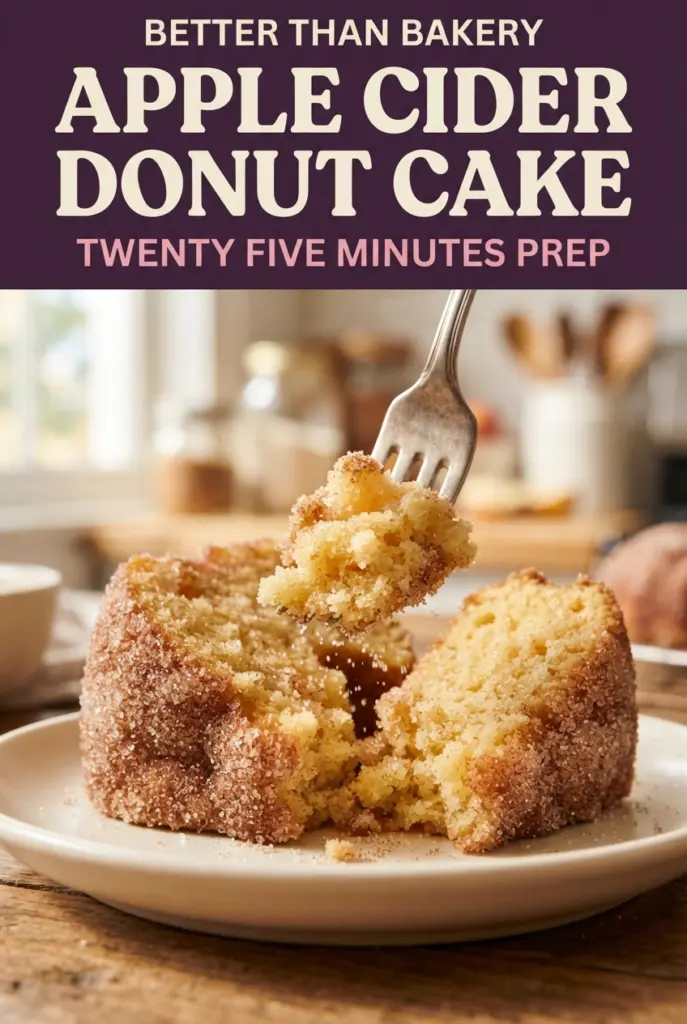
Apple Cider Donut Bundt Cake with Cinnamon Sugar Crust
Apple cider donut bundt cake brings all the best parts of a cider mill treat into a pan that doesn't ask for frying oil, a thermometer, or any special equipment.…

By Ava
•
•
Reading time: 10 min
Tip: save now, make later.
Apple cider donut bundt cake brings all the best parts of a cider mill treat into a pan that doesn’t ask for frying oil, a thermometer, or any special equipment. The crumb stays tender and buttery, with that old-fashioned cake-donut texture that feels just dense enough to be satisfying but still soft when you cut into it. The cinnamon sugar coating gives every slice a crisp, sandy edge that tastes like the outside of a fresh donut.
The trick is reducing the cider first. That step concentrates the apple flavor so it doesn’t disappear into the batter, and it keeps the cake from tasting like plain spice cake with a fancy name. Melted butter keeps the mixing easy by hand, while sour cream adds moisture and enough acidity to help the cake rise cleanly. The result is a bundt that holds its shape, slices neatly, and still feels special enough for a brunch table.
Below you’ll find the small details that matter most: how far to reduce the cider, how to get the coating to stick without clumping, and what to do if your bundt pan has a few stubborn grooves. The whole cake comes together with simple pantry ingredients, but the finishing step gives it that fresh-donut look and crunch.
The cider flavor came through in every bite, and the cinnamon sugar crust stayed crunchy even after it cooled. I used the full 15 minutes of cooling before turning it out, and the cake released cleanly from my pan.
Love the cinnamon sugar crust and warm apple cider flavor? Save this bundt cake for the next time you want a donut-style dessert without frying.
The cider has to be reduced first, or the cake tastes flat
Raw apple cider brings moisture, but it doesn’t bring enough apple flavor on its own. When you simmer it down to about half its original volume, the cider turns deeper, sharper, and more concentrated. That matters here because the cake batter is rich with butter, eggs, and sugar; without the reduction, the cider gets lost and the whole cake leans more spiced than apple-forward.
The other common mistake is adding too much heat back into the batter. Melted butter should be warm, not hot, and the reduced cider should be cool enough that it doesn’t start cooking the eggs. If the batter looks slightly thick and glossy, you’re in the right place. If it looks greasy or separated, the butter was too hot when it went in.
What each ingredient is actually doing in this cake
- Apple cider — Reducing it is what makes the apple flavor noticeable. Skip that step and the cake loses the cider-donut character.
- Sour cream — This adds moisture and a gentle tang that keeps the crumb tender instead of dry or bready. Plain Greek yogurt works in the same amount if that’s what you have.
- Brown sugar — It brings a deeper, almost caramel note that supports the cider and spices. All granulated sugar works in a pinch, but the cake tastes a little flatter.
- Butter — Melted butter gives the batter a rich, dense tenderness that fits the donut-cake style. You can use neutral oil, but the flavor won’t be as round.
- Cinnamon and nutmeg — These are the spice backbone, but they should stay in the background of the apple. Too much nutmeg turns the cake sharp, so measure it carefully.
- Bundt pan — A well-greased, well-floured pan is part of the ingredient list in practice, because this cake has a sugary crust and a delicate crumb. Miss the grooves and the cake will cling there.
How to build the batter so the crumb stays tender
Reduce the cider with patience
Start the cider in a small saucepan and let it simmer until it measures about 3/4 cup. You want steady bubbles, not a hard boil, so the reduction doesn’t pick up a scorched edge. Once it shrinks down, take it off the heat and let it cool for a few minutes before it touches the eggs and sour cream.
Mix the wet ingredients without overworking them
Whisk the melted butter with the sugars until it looks thick and glossy, then add the eggs one at a time. The batter should smooth out before you add the sour cream, vanilla, and reduced cider. If it looks curdled after the cider goes in, that usually means the cider was still too warm or the butter was too hot, not that the cake is ruined.
Fold the dry ingredients just until the flour disappears
Whisk the flour, baking powder, baking soda, salt, cinnamon, and nutmeg first so the leavening and spices spread evenly. Then fold them into the wet mixture with a light hand. Stop as soon as you stop seeing streaks of flour. Overmixing tightens the crumb and turns a tender bundt into something dry around the edges.
Bake until the center springs back
Pour the batter into a generously prepared 10-cup bundt pan and spread it evenly so it bakes in the same thickness all the way around. The cake is done when the top is deep golden and a toothpick in the center comes out clean or with a few moist crumbs. If the top is browning too fast before the center is set, tent it loosely with foil for the last stretch of baking.
Coat the cake while it is still warm
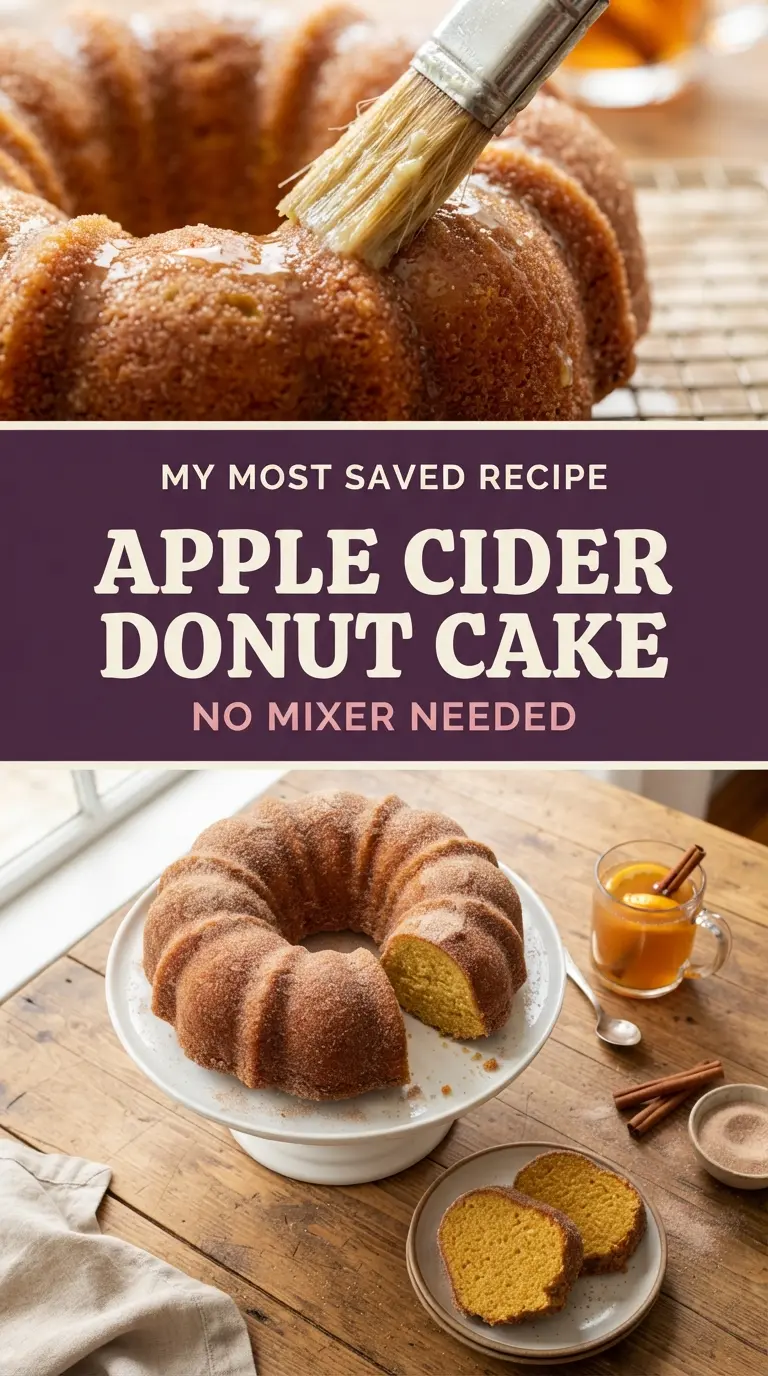
Let the bundt cool in the pan for 15 minutes, then turn it out and brush the warm cake with melted butter. Press the cinnamon sugar onto every surface while the butter is still tacky. If the cake is fully cool, the coating won’t stick as well and you’ll lose that crisp donut-like shell.
Three ways to adapt the cake without losing the donut-shop feel
Make it gluten-free with a measure-for-measure blend
A good 1:1 gluten-free flour blend can work here because the cake doesn’t depend on yeast or delicate layers. The crumb will be slightly more delicate and a little less springy, but the cider reduction and butter coating still carry the flavor. Let the baked cake cool fully before slicing so it doesn’t crumble.
Swap in Greek yogurt for sour cream
Plain Greek yogurt works in the same amount and keeps the batter tangy and moist. The cake may bake up just a touch lighter, but the texture stays soft. Use full-fat yogurt if you want the closest match to sour cream.
Make mini bundt cakes instead of one full cake
Divide the batter among smaller bundt pans and start checking them early, since they bake faster and dry out sooner. The cinnamon sugar coating still works the same way, but the smaller cakes give you more crust per slice. They’re a good choice for gifting or a dessert table.
Storage and Reheating
- Refrigerator: Store covered at room temperature for up to 2 days, or refrigerate for up to 5 days. The sugar coating softens a bit in the fridge.
- Freezer: Freeze slices tightly wrapped, or freeze the whole uncoated cake for up to 2 months. Add the butter and cinnamon sugar after thawing so the crust stays crisp.
- Reheating: Warm slices in a 300°F oven for 8 to 10 minutes, or microwave briefly just until warmed through. Don’t overheat it or the coating will melt and the crumb can turn dry.
Answers to the questions worth asking
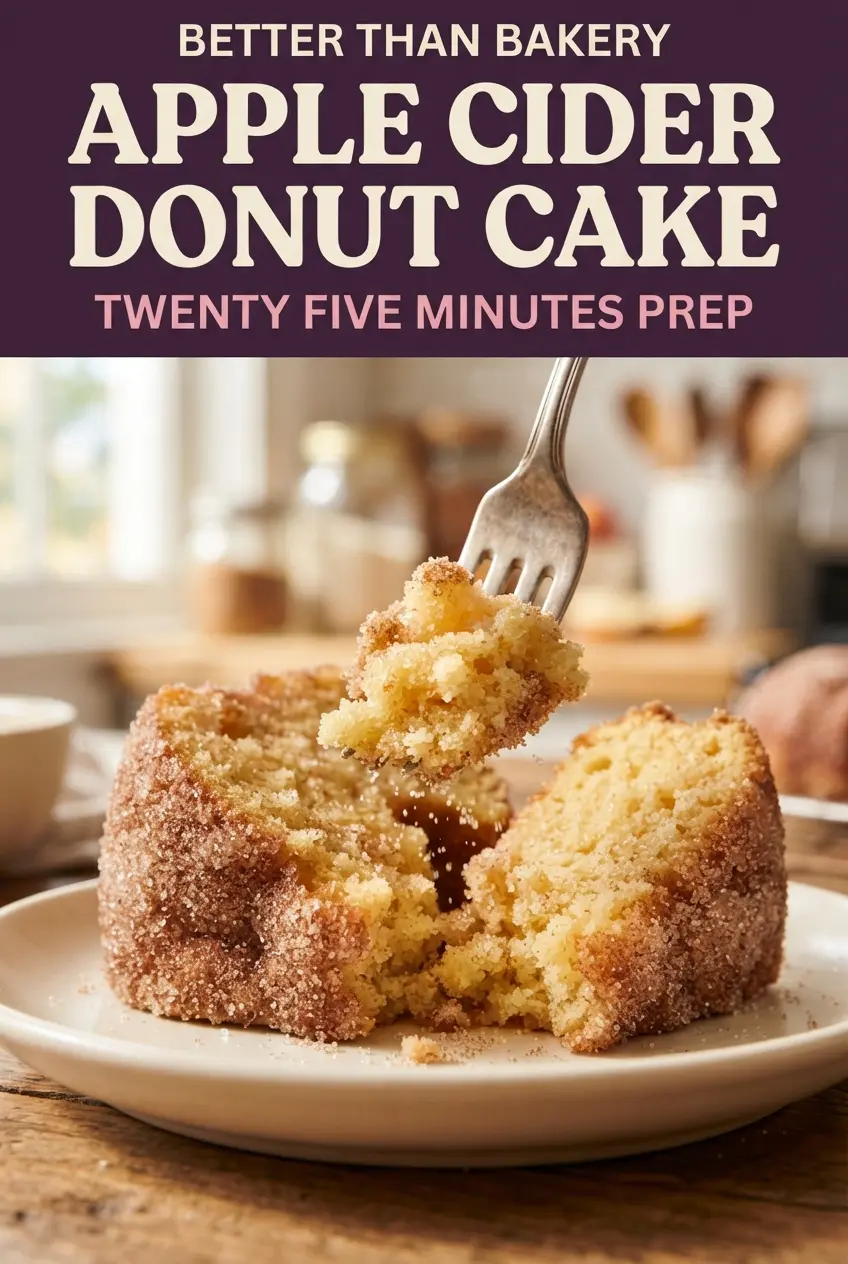
Apple Cider Donut Bundt Cake with Cinnamon Sugar Crust
Ingredients
Equipment
Method
- Simmer the apple cider in a small saucepan over medium heat for 12–15 minutes, until reduced to 3/4 cup, then let cool slightly.
- Preheat the oven to 350°F and generously grease and flour a 10-cup bundt pan, getting into every groove.
- Whisk the all-purpose flour, baking powder, baking soda, salt, ground cinnamon, and ground nutmeg in a bowl.
- In a large bowl, whisk the melted unsalted butter with the granulated sugar and light brown sugar, then whisk in the eggs one at a time.
- Whisk in the sour cream, vanilla extract, and reduced apple cider until smooth.
- Fold the dry ingredients into the wet just until combined, then spread the batter evenly in the prepared bundt pan.
- Bake at 350°F for 45–55 minutes, until the cake is golden and a toothpick inserted in the center comes out clean.
- Cool in the pan for 15 minutes, then invert onto a wire rack.
- Mix the granulated sugar and ground cinnamon for the coating, then while the cake is still warm brush it all over with melted unsalted butter and press the cinnamon sugar onto every surface.
- Slice and serve slightly warm or at room temperature.