
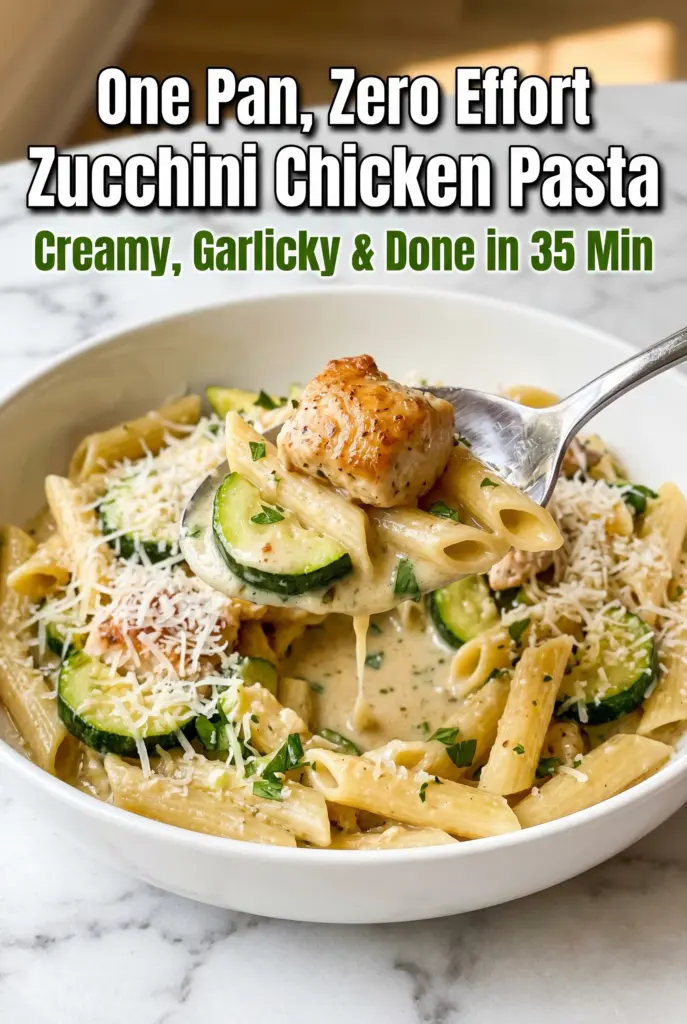
One Pot Zucchini and Chicken Pasta
Tender chicken, soft ribbons of zucchini, and pasta cooked right in the same pot come together in a sauce that tastes like it took much longer than 35 minutes. The…

By Ava
•
•
Reading time: 11 min
Tip: save now, make later.
Tender chicken, soft ribbons of zucchini, and pasta cooked right in the same pot come together in a sauce that tastes like it took much longer than 35 minutes. The broth, cream, and pasta starch build a silky coating as they simmer, so you get a pan of dinner that feels rich without turning heavy. The zucchini stays fresh enough to taste like zucchini, not mush, and the chicken picks up all that garlicky, Parmesan finish along the way.
What makes this version work is the order. The chicken gets a quick sear first, which builds flavor in the pot before anything else goes in. Then the pasta cooks in the liquid instead of in a separate pot, and that’s what gives the sauce its body without needing flour or a long reduction. The zucchini goes in near the end so it softens just enough to blend in, but still has some bite.
Below, I’ll walk through the part that matters most: when to cover, when to stir, and how to keep the sauce from turning thin or gummy. There’s also a note on the best pasta shapes for this style of one-pot dinner, because that choice changes the texture more than most people expect.
The sauce thickened up perfectly and the zucchini stayed tender instead of disappearing. I made it on a Tuesday and my husband asked if I could put it in the regular dinner rotation.
Save this one-pot zucchini and chicken pasta for a fast skillet dinner with creamy sauce, tender chicken, and barely any cleanup.
The Trick to Keeping the Zucchini Tender, Not Watery
Zucchini releases a lot of moisture once it heats up, and that’s the main thing that can dull this dish. If it goes in too early, it gives up its water before the pasta has had a chance to absorb the broth and cream, which leaves you with a loose sauce and limp vegetables. The fix is simple: let the pasta cook most of the way first, then add the zucchini near the end so it softens into the sauce instead of boiling apart in it.
The other thing that matters is keeping the boil under control. A hard boil can break the cream and beat the zucchini into submission. A steady simmer gives the pasta time to finish, the starch time to thicken, and the zucchini enough heat to turn tender without losing its shape.
What the Broth, Cream, and Parmesan Each Do Here
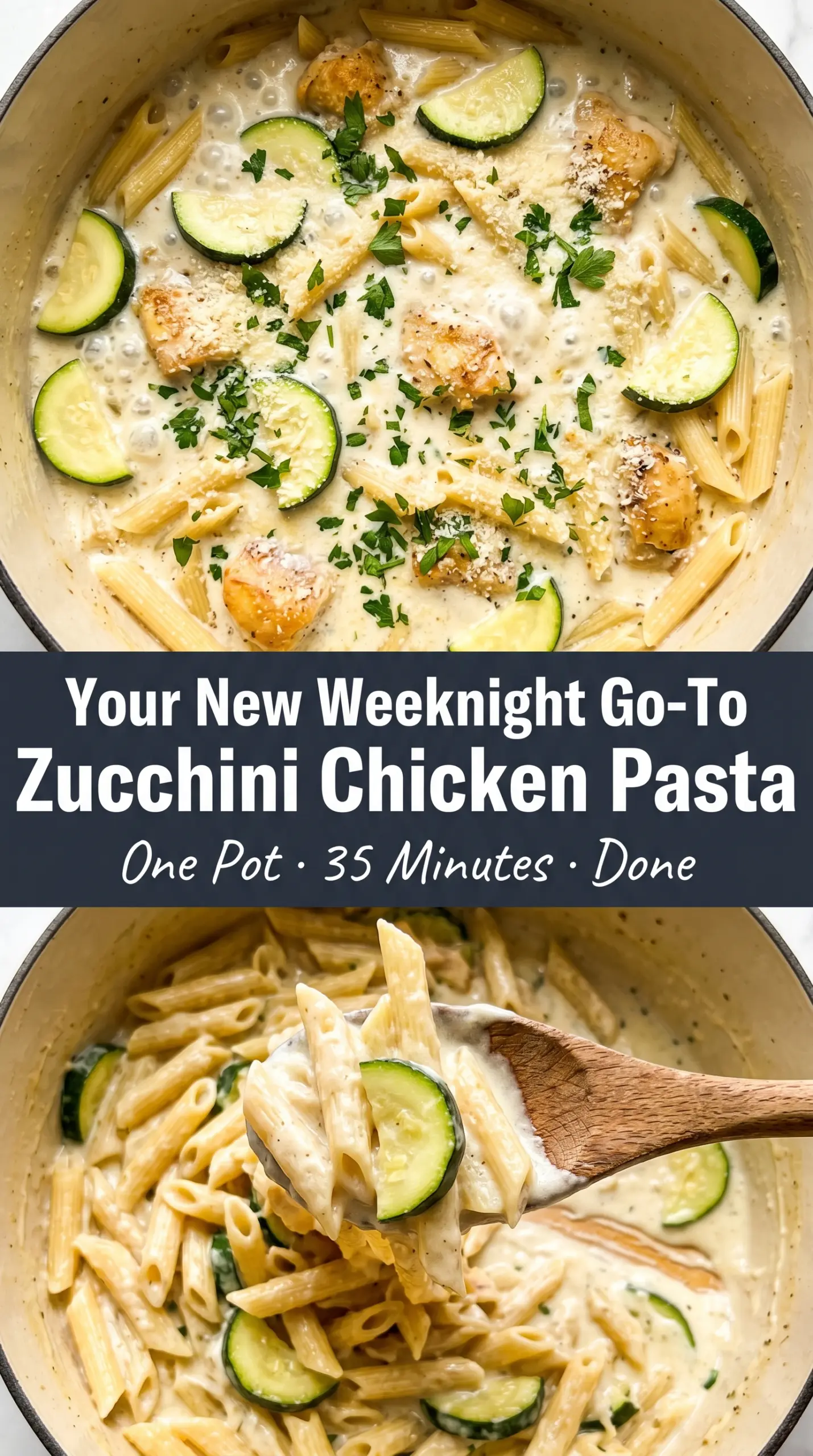
The chicken broth does more than add liquid. It seasons the pasta from the inside out, so every bite tastes integrated instead of like sauce sitting on top of plain noodles. Use a broth you’d actually drink, since a weak one gives you a flat sauce no matter how much Parmesan you add.
Heavy cream is what turns the pot from soup-like to silky. Half-and-half can work in a pinch, but the sauce will be thinner and a little more fragile, especially once the lemon and cheese go in. Parmesan brings salt, body, and that slightly nutty finish that makes the sauce cling to the pasta instead of sliding off.
- Pasta: Penne and rotini both hold the sauce well because the ridges catch the cream and Parmesan. Long pasta won’t fail, but it’s harder to stir evenly in a one-pot method.
- Chicken breasts: Bite-sized pieces cook fast and stay tender if you sear them first and finish them in the broth. Thighs work too and give you a richer result, but they’ll add a little more fat to the sauce.
- Zucchini: Slice it into half-moons about 1/4-inch thick so it softens without collapsing. Very thin slices disappear; thick chunks stay too firm.
- Lemon juice: This is the quiet finishing step that keeps the dish from tasting heavy. Add it off the heat so it brightens the sauce instead of curdling the cream.
Building the Pot in the Right Order
Searing the Chicken First
Season the chicken before it hits the pan, then let it sit in the hot oil long enough to take on color. If you move it too soon, it steams and you lose that savory browned edge that carries the whole dish. You’re not cooking it through at this stage; you’re building flavor and setting up the pot for the sauce that follows.
Blooming the Onion and Garlic
Once the chicken comes out, the onion should soften in the same pan and pick up the browned bits on the bottom. Add the garlic at the end of that brief sauté so it smells fragrant, not sharp or burnt. Garlic burns fast in a hot pot, and if that happens, the bitterness hangs around even after the cream goes in.
Letting the Pasta Cook in the Sauce
Add the broth, water, cream, and pasta together, then bring it to a boil only long enough to get the pot moving. After that, drop the heat to a steady simmer and cover it. Stir every few minutes so the pasta doesn’t weld itself to the bottom, because one-pot pasta can catch fast once the starch starts to release.
Finishing With Zucchini, Cheese, and Lemon
When the pasta is nearly done, add the zucchini and chicken back in. The zucchini should turn bright and tender, and the chicken should finish cooking without drying out. Pull the pot off the heat before you stir in the Parmesan; if the pot is too hot, the cheese can clump instead of melting into a smooth sauce. The lemon goes in last for lift, not acidity you can taste separately.
Three Smart Ways to Adapt This Skillet Dinner
Make It Gluten-Free
Use a gluten-free short pasta that’s meant to hold up in boiling liquid, not a fragile rice noodle. Gluten-free pasta can soften faster and break more easily, so start checking it a few minutes early and keep the simmer gentle. The sauce still thickens well because the starch from the pasta is part of what builds the body here.
Use Chicken Thighs for a Richer Pan
Boneless chicken thighs give you a juicier bite and a little more savory depth. They take about the same amount of time, but they stay forgiving if the simmer goes a minute long. The sauce will taste a touch fuller because the thighs release more fat into the pot.
Go Dairy-Free Without Losing the Creamy Texture
Use an unsweetened oat or cashew cream and skip the Parmesan, then add a little extra salt and a spoonful of nutritional yeast if you want that savory edge back. The sauce won’t taste exactly the same, but it will still coat the pasta well if you keep the heat low. Coconut cream works technically, though it brings its own flavor, which changes the dish more than most people expect.
Storage and Reheating
- Refrigerator: Store in an airtight container for up to 4 days. The pasta will absorb more sauce as it sits, so it gets thicker overnight.
- Freezer: Freezing isn’t ideal because cream sauces can turn grainy and the zucchini gets soft. If you do freeze it, cool it completely and thaw overnight before reheating gently.
- Reheating: Warm it over low heat with a splash of broth, milk, or water to loosen the sauce. High heat is the mistake here; it can make the dairy separate and push the zucchini past the point of tenderness.
Questions I Get Asked About This Recipe
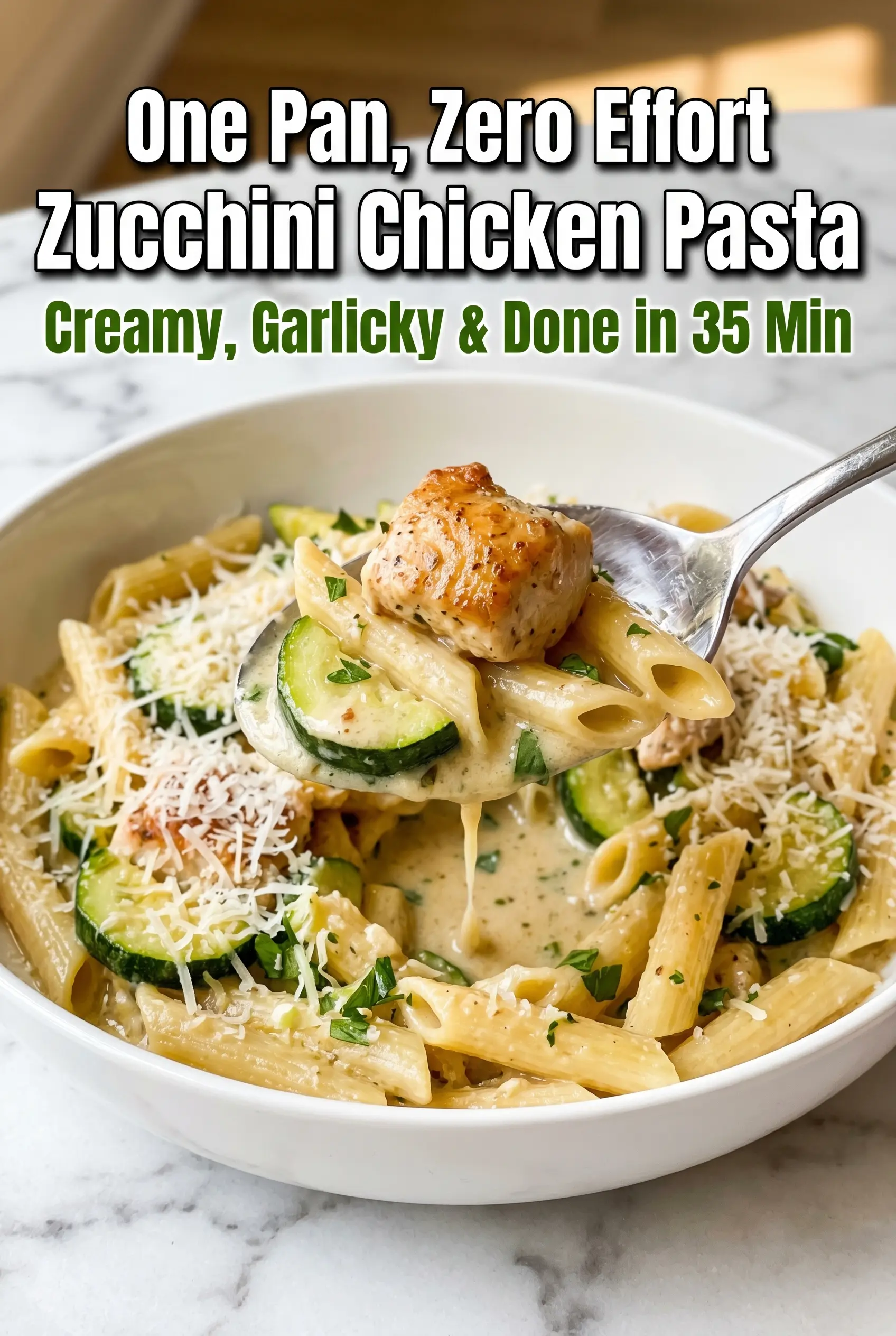
One Pot Zucchini and Chicken Pasta
Ingredients
Equipment
Method
- Heat olive oil in a large deep skillet or Dutch oven over medium-high heat. Season the chicken chunks with salt, black pepper, garlic powder, and onion powder.
- Add chicken to the hot pan in a single layer and sear for 3–4 minutes without touching. Flip and cook another 2–3 minutes until golden, then remove the chicken and set aside (it won’t be fully cooked yet).
- In the same pot, add a splash more oil if needed and sauté diced onion for 2 minutes until softened. Stir in minced garlic and cook for 30 seconds until fragrant.
- Add uncooked pasta, chicken broth, water, heavy cream, Italian seasoning, and red pepper flakes (if using). Stir to combine and bring to a boil.
- Reduce heat to medium, cover, and cook for 8 minutes, stirring occasionally so the pasta doesn’t stick. Look for bubbling throughout the pot as it thickens slightly.
- Add sliced zucchini and the reserved chicken back to the pot, then stir everything together. Cover and cook for another 5–7 minutes until the pasta is al dente and the zucchini is just tender, with sauce visibly clinging to the pasta.
- Remove from heat and stir in Parmesan cheese and lemon juice. Taste and adjust seasoning for salt and black pepper.
- Garnish with fresh parsley and an extra sprinkle of Parmesan, then serve straight from the pot. The sauce should look silky and slightly glossy around the pasta.