
One Pot Shrimp Fettuccine Alfredo
Creamy shrimp fettuccine Alfredo hits the table with the kind of rich, silky sauce that clings to every strand of pasta instead of pooling at the bottom of the bowl.…

By Ava
•
•
Reading time: 10 min
Tip: save now, make later.
Creamy shrimp fettuccine Alfredo hits the table with the kind of rich, silky sauce that clings to every strand of pasta instead of pooling at the bottom of the bowl. The shrimp stay tender, the garlic has enough time to bloom without turning harsh, and the pasta cooks right in the sauce so it picks up all that butter, cream, and Parmesan flavor from the inside out. It’s the kind of dinner that feels a little indulgent but still lands on the table fast enough for a regular weeknight.
The trick is using enough liquid to let the fettuccine soften evenly while still reducing into a real sauce. If the heat is too high, the dairy can tighten up before the pasta is done, and if the Parmesan goes in too early, it can turn grainy. Cooking the shrimp first and folding them back in at the end keeps them plump instead of rubbery, which matters just as much as the sauce itself.
Below you’ll find the timing that keeps the pasta from sticking, the point where the sauce turns glossy, and a few practical swaps if you need to adjust the dish for what’s already in your kitchen.
The sauce turned silky and thickened right as the pasta finished, and the shrimp stayed tender instead of getting tough. I followed the stirring times and it came out perfect on the first try.
Save this one pot shrimp fettuccine Alfredo for the nights when you want a creamy pasta dinner without a sink full of dishes.
The Reason the Pasta Cooks in Sauce Instead of Water
Traditional Alfredo starts with cooked pasta and a separate sauce, which means the noodles never get a chance to season the way they do here. When the fettuccine simmers in broth and cream, it releases starch that naturally thickens the sauce while the pasta absorbs flavor as it cooks. That’s why the finished dish tastes deeper than a sauce poured over boiled noodles.
The most common mistake is letting the liquid boil hard the whole time. That turns the cream aggressive, makes the edges of the sauce look greasy, and can leave the pasta soft before the center is done. A steady simmer is the sweet spot: enough movement to keep the noodles from sticking, not so much heat that the dairy splits.
- Chicken broth — This gives the pasta something savory to cook in. Water won’t add the same depth, and the sauce will taste flatter unless you compensate with more salt and cheese.
- Heavy cream — It’s the base that keeps the sauce smooth under heat. Half-and-half can work in a pinch, but the sauce will be thinner and less stable, so keep the simmer gentle.
- Freshly grated Parmesan — Pre-shredded cheese often has anti-caking agents that make the sauce grainy. Grating your own lets it melt cleanly and gives you that glossy finish.
- Fettuccine — Its flat shape holds the sauce better than thin pasta. If you swap in linguine or spaghetti, the sauce still works, but you lose some of that clingy, spoon-coating texture.
What Each Ingredient Is Actually Doing in This Dish
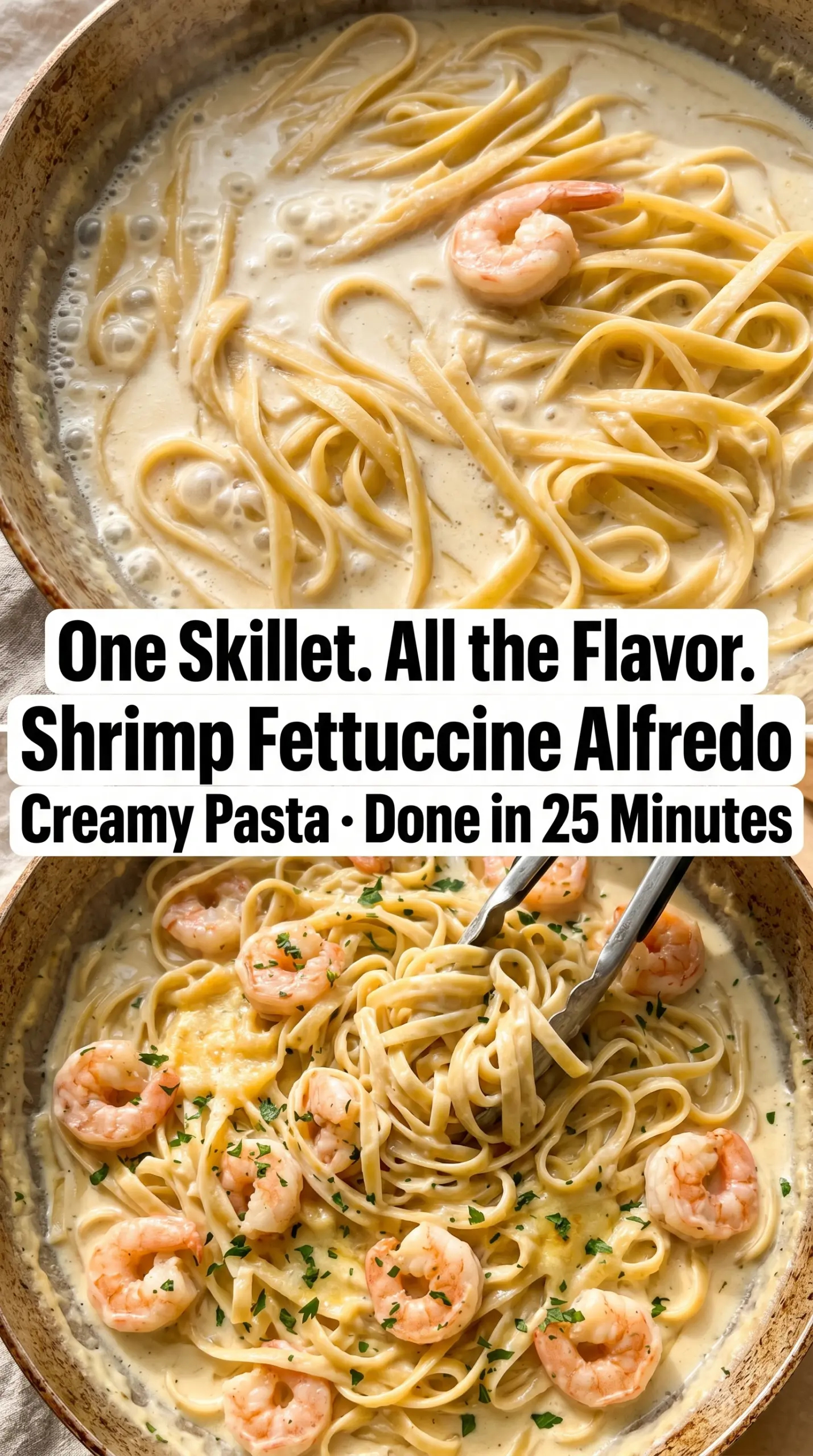
Shrimp — Large shrimp hold up best here because they stay juicy through the short cooking time. Smaller shrimp cook too fast and can go rubbery before the pasta is ready.
Butter and olive oil — The oil helps the butter handle the first sear on the shrimp, while the butter carries the garlic and gives the sauce its round, rich finish. Using all butter for the shrimp can brown too quickly.
Garlic — Fresh minced garlic is worth it here because it perfumes the whole pan in a minute. If it browns, it goes bitter fast, so keep the heat moderate and stir constantly.
Chicken broth and cream — This combination creates a sauce that is both savory and lush. For a seafood-forward flavor, use a light seafood stock if you have it, but keep the ratio the same so the pasta cooks properly.
Parmesan — Add it off the heat. That keeps the sauce smooth instead of stringy or grainy, which is what happens when cheese hits a roaring burner.
Italian seasoning, onion powder, red pepper flakes — These add background flavor without making the sauce taste crowded. The red pepper flakes are optional, but even a small pinch helps cut the richness.
The 20 Minutes That Actually Matter
Getting the Shrimp Out at the Right Moment
Season the shrimp first, then cook them in a hot pan just until they turn pink and opaque with a slight curl. If they tighten into a tight C-shape, they’ve gone too far and will only get firmer once they go back into the pot. Pull them out early; they’ll finish warming through at the end.
Letting the Garlic Bloom Without Burning
Once the butter melts, add the garlic and stir for about a minute until it smells sweet and savory, not sharp. Burnt garlic will stain the whole dish with bitterness, and there’s no fixing that once it happens. Keep it moving so it softens instead of browning.
Cooking the Pasta in the Sauce
Pour in the broth and cream, then add the uncooked fettuccine and press it down so the strands are mostly submerged. Stir every couple of minutes so the noodles don’t glue themselves together or catch on the bottom. The sauce should be at a gentle simmer, not a hard boil, or the cream can separate before the pasta turns tender.
Finishing With Cheese Off the Heat
When the pasta is al dente and most of the liquid has reduced, take the pan off the burner before adding Parmesan. Stir until the sauce turns glossy and coats the pasta in a smooth layer. Return the shrimp, give them a minute to warm, then serve right away while the sauce is still silky.
How to Adapt This for Different Kitchens and Different Eaters
Make It Lighter Without Losing the Sauce
Swap half the cream for additional broth if you want a lighter finish. The sauce won’t be as plush, but it will still cling to the pasta as long as you keep the simmer gentle and finish with fresh Parmesan.
Gluten-Free Version
Use a sturdy gluten-free fettuccine that holds up to simmering, then watch it closely near the end because it can go from firm to soft faster than wheat pasta. Stir a little more often too, since gluten-free noodles are more likely to stick as they cook.
Dairy-Free Swap
This one is harder to mimic perfectly, but full-fat coconut milk plus a dairy-free Parmesan-style cheese gets you close. The flavor shifts a little, so add extra garlic and a pinch more salt to keep the sauce from tasting flat.
Turn It Into Chicken Alfredo
Use thinly sliced chicken breast or thigh pieces instead of shrimp and cook them through before starting the sauce. Chicken needs a little more time than shrimp, so cutting it small keeps the one-pot method intact without overcooking the pasta.
Storage and Reheating
- Refrigerator: Keep in an airtight container for up to 3 days. The sauce will thicken as it chills, and the pasta will keep absorbing liquid.
- Freezer: I don’t recommend freezing this one. Cream sauces and shrimp both suffer in texture after thawing, and the pasta turns soft.
- Reheating: Warm it slowly in a skillet over low heat with a splash of broth or cream. High heat is the fastest way to break the sauce and turn the shrimp rubbery.
Answers to the Questions Worth Asking
One Pot Shrimp Fettuccine Alfredo
Ingredients
Equipment
Method
- Heat olive oil in a large deep skillet or wide pot over medium-high heat. Season the shrimp with salt and black pepper.
- Add the shrimp in a single layer and cook 1–2 minutes per side until pink and just opaque. Transfer the shrimp to a plate and set aside.
- In the same pot, melt the butter over medium heat. Add the minced garlic and cook 1 minute until fragrant, stirring constantly so it doesn’t burn.
- Pour in the chicken broth and heavy cream. Stir in Italian seasoning, onion powder, and red pepper flakes, then bring to a gentle boil.
- Add the uncooked fettuccine and press it into the liquid. Reduce heat to medium, cover partially, and cook 10–12 minutes, stirring every 2–3 minutes to prevent sticking, until the pasta is al dente and has absorbed most of the liquid.
- Remove the pot from the heat. Stir in the Parmesan cheese until the sauce is silky and coats every strand.
- Return the shrimp to the pot and gently fold them in. Let sit 1–2 minutes so the shrimp warm through.
- Taste and adjust salt and black pepper. Garnish with fresh parsley and serve immediately straight from the pot.