
New Year’s Eve Champagne Punch
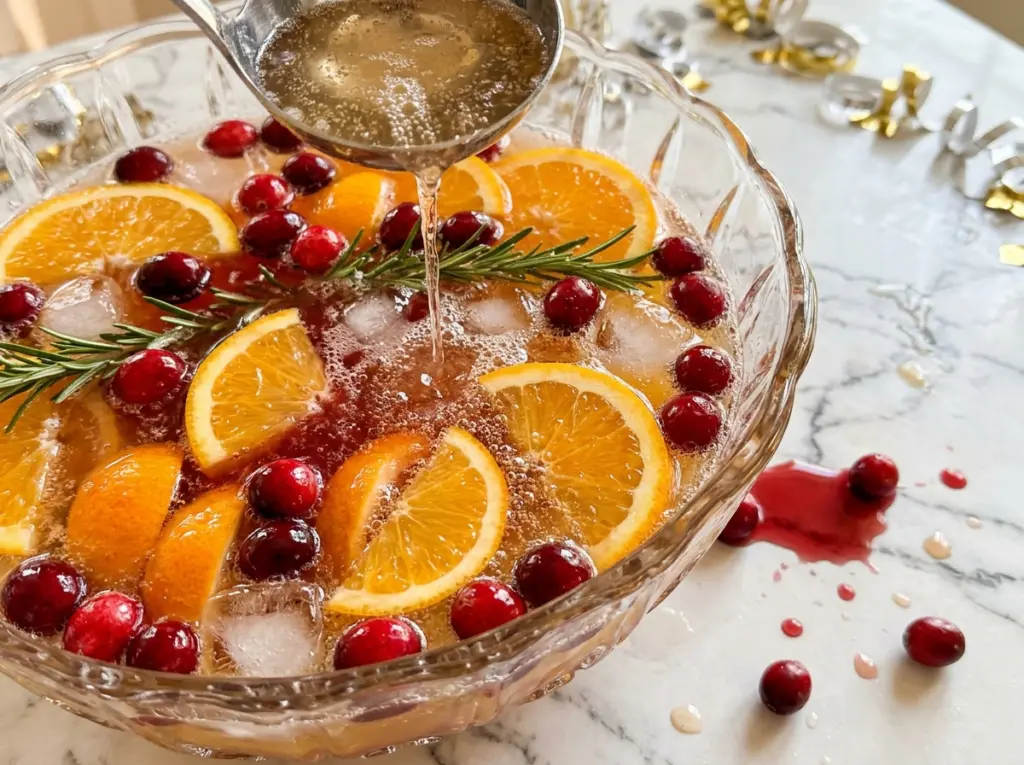
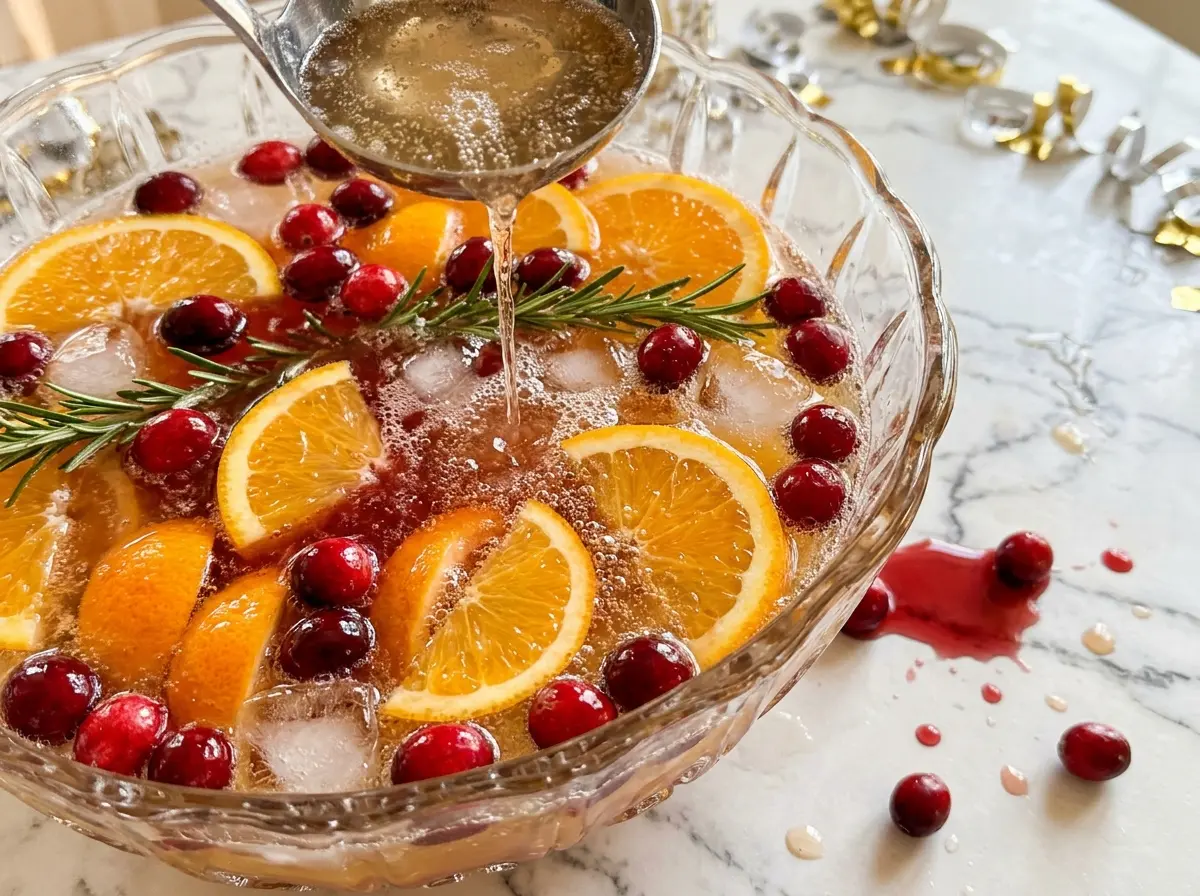
The moment Champagne meets the cranberry mixture, the bowl turns bright and lively, with orange slices and cranberries bobbing through the bubbles. I like this New Year's Eve Champagne Punch…

By Ava
•
•
Reading time: 7 min
Tip: save now, make later.
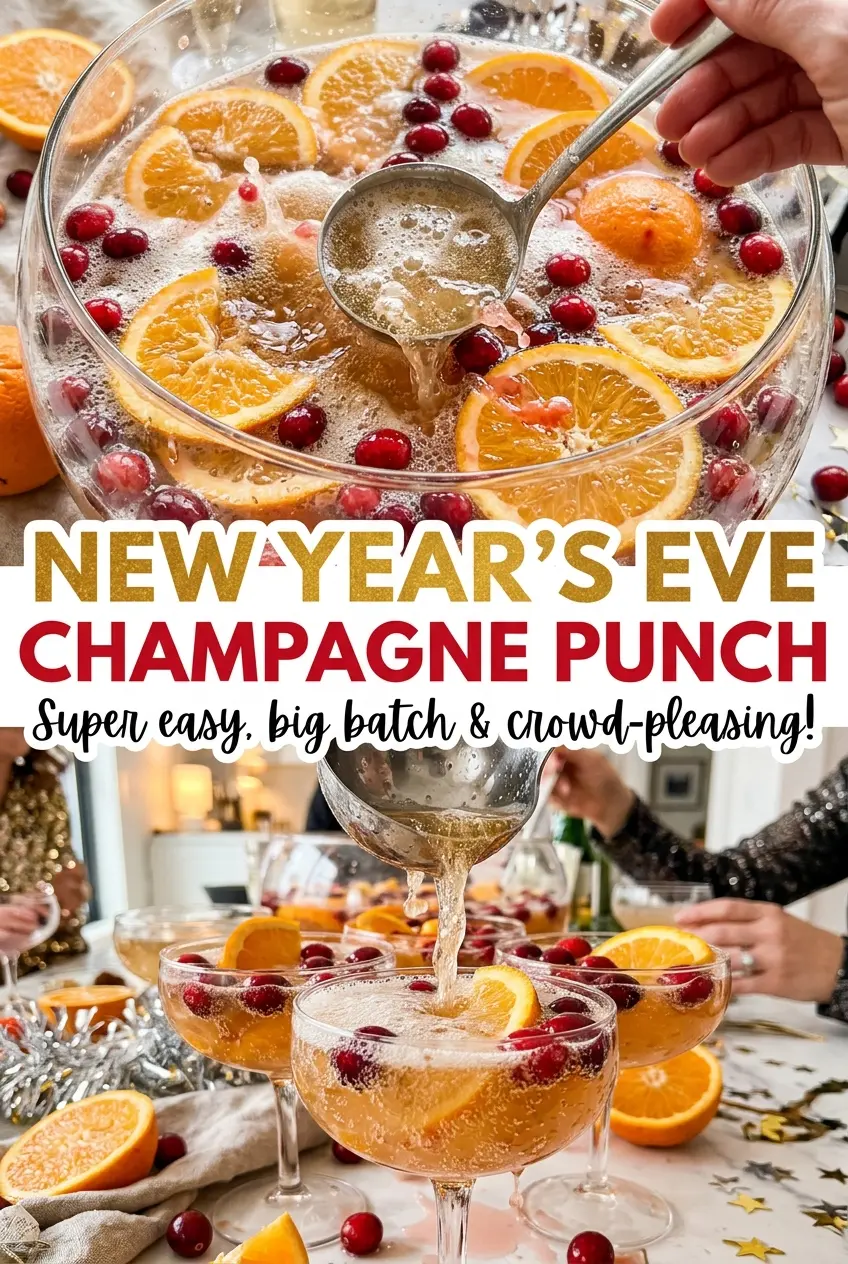
The moment Champagne meets the cranberry mixture, the bowl turns bright and lively, with orange slices and cranberries bobbing through the bubbles. I like this New Year’s Eve Champagne Punch because the juice-and-spirit base can be chilled before anyone arrives, so the last-minute work is just adding the fruit, ice, and Champagne.
The fresh lemon juice keeps the cranberry and orange from leaning too sweet, while brandy and orange liqueur give the punch a deeper, rounded finish. I stir the base together first and let it chill covered; adding the Champagne at the end keeps its fizz in the glass. Each ladleful is tart, citrusy, and sparkling, with a little fruit to catch at the bottom.
Kitchen Note
Add the ice only when you’re ready to serve. It starts diluting the punch as it melts, so ladle the drinks soon after the bowl is finished.
Save this New Year’s Eve Champagne Punch for its tart cranberry-citrus base and easy, last-minute sparkle.
Why the Lemon Keeps Cranberry and Orange From Tasting Heavy
Cranberry juice cocktail and orange juice bring a fruity sweetness, and the brandy and orange liqueur add warmth. Without a sharp counterpoint, those flavors can sit heavily on the tongue. Fresh lemon juice cuts through that sweetness and makes the fruit taste brighter, not more sour.
The balance comes from using all three juices together rather than letting one take over. Orange juice softens cranberry’s tart edge; lemon keeps the orange from making the whole bowl taste like sweet juice. Brandy adds a deeper note, while orange liqueur echoes the orange in the juice and slices. None of those ingredients has to shout. The result should taste lively and citrus-forward, with cranberry still easy to recognize.
Chilling the mixed base gives those flavors time to mingle before the Champagne goes in. Since the Champagne is added just before serving, the punch finishes light and bubbly instead of tasting like a flat, overly sweet fruit mixture.
What Each Ingredient Brings to This Champagne Punch
- Cranberry juice cocktail — This gives the punch its ruby color and recognizable cranberry character. Use the cocktail version named here rather than assuming unsweetened cranberry juice will taste the same; the latter is much sharper and would change the balance.
- Orange juice and fresh lemon juice — Orange juice rounds out the cranberry, and fresh lemon brings a clean, brisk note. Squeeze the lemon fresh for the clearest citrus taste; bottled juice won’t have quite the same brightness.
- Brandy and orange liqueur — Brandy lends a mellow, warming base, while orange liqueur reinforces the citrus. These bring different qualities, so leaving one out makes the punch lighter but less layered.
- Champagne — Keep the bottle chilled so it doesn’t warm the punch when poured in. The bubbles are part of the drink’s texture, which is why this goes into the bowl at the finish rather than into the make-ahead mixture.
- Orange and fresh cranberries — Thin orange slices are easier to ladle than thick wedges and make a bright garnish. Fresh cranberries keep their shape in the bowl and add a tart bite between sips.
Build the Chilled Base Before Adding the Bubbles
Stir Together the Juices and Spirits
In a 1-gallon punch bowl, stir the cranberry juice cocktail, orange juice, lemon juice, brandy, and orange liqueur until combined. The juices should already be chilled, which helps the finished punch stay cold once the Champagne is added. Cover the bowl and chill the mixture for at least 2 hours. Don’t skip the covered rest; it gives the blended base time to settle into one cohesive taste.
Get the Fruit and Ice Into the Bowl
When you’re ready to finish the punch, add the thin orange slices and fresh cranberries to the chilled base, followed by the ice. Spread the fruit through the bowl rather than leaving all the slices in one clump, so they show up across the servings. The cranberries add color and a little tartness, while the orange slices make each ladleful look festive. Add the ice at this point, not during the covered chill.
Pour in Champagne and Serve
Pour the chilled Champagne into the bowl after the fruit and ice, then stir gently to combine. A light stir distributes the juices without knocking out more bubbles than necessary. The bowl is ready for ladling as soon as everything is mixed; serve the punch immediately. If you stir hard or leave it sitting, you’ll lose some of the Champagne’s lively sparkle.
Two Easy Ways to Adapt the Punch
A Lighter Brandy-and-Liqueur Version
Leave out the brandy and orange liqueur but keep the juices and Champagne. The drink will taste lighter and more fruit-forward, with less of the warm, rounded finish those spirits provide.
A Nonalcoholic Cranberry-Citrus Bowl
For a version without alcohol, omit the brandy, orange liqueur, and Champagne. The cranberry, orange, and lemon juices still make a bright punch with the fruit, but it won’t have Champagne’s bubbles or the spirits’ depth.
Making Ahead and Serving
- Before guests arrive: Mix the juice-and-spirit base, cover it, and chill it. Add the fruit, ice, and Champagne close to serving.
- At the table: Ladle and serve the finished punch immediately, while the ice is cold and the Champagne is still sparkling.
- Leftovers: The finished bowl doesn’t keep its best texture; melting ice dilutes it and the bubbles fade. Make only what you’ll serve rather than relying on a stored, finished punch.
Questions That Come Up Before the First Pour
New Year's Eve Champagne Punch
Ingredients
Equipment
Method
- In a 1-gallon punch bowl, stir together the cranberry juice cocktail, orange juice, lemon juice, brandy, and orange liqueur.
- Cover and chill for at least 2 hours.
- Add the orange slices, cranberries, and ice.
- Pour in the Champagne and stir gently.
- Ladle into glasses.
- Serve immediately.