
New England Clam Chowder
The milk and cream go into the pot, and the bubbling settles into a quiet shimmer. That’s the moment I watch most closely when I make New England clam chowder:…

By Ava
•
•
Reading time: 9 min
Tip: save now, make later.
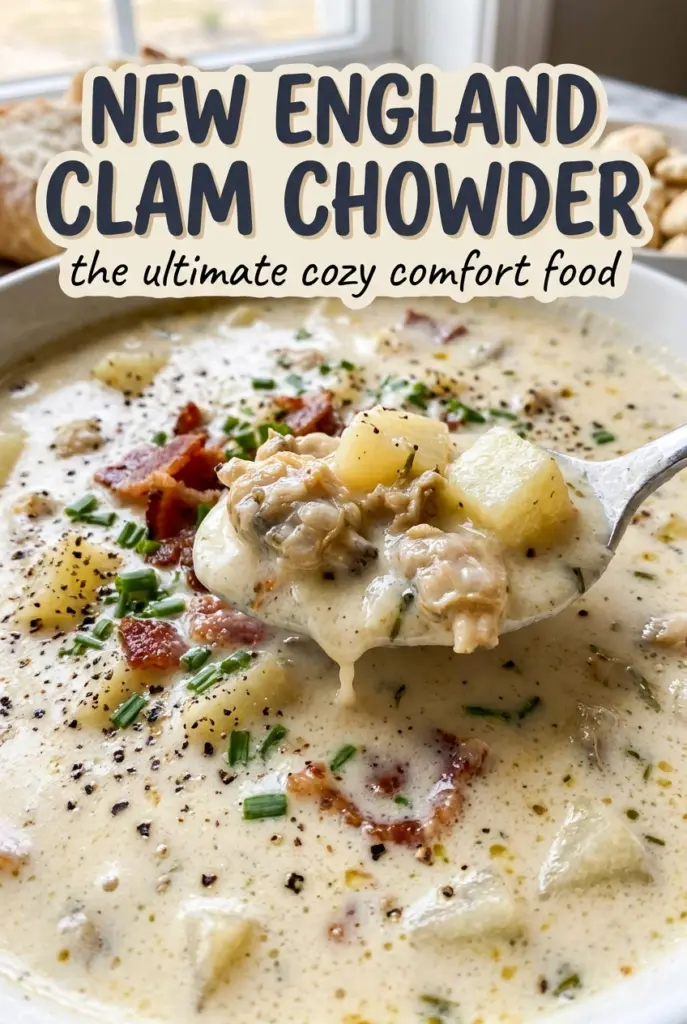
The milk and cream go into the pot, and the bubbling settles into a quiet shimmer. That’s the moment I watch most closely when I make New England clam chowder: a hard boil can leave a creamy soup looking greasy instead of smooth. Keep the heat gentle, and the broth stays rich while the potatoes finish giving it body.
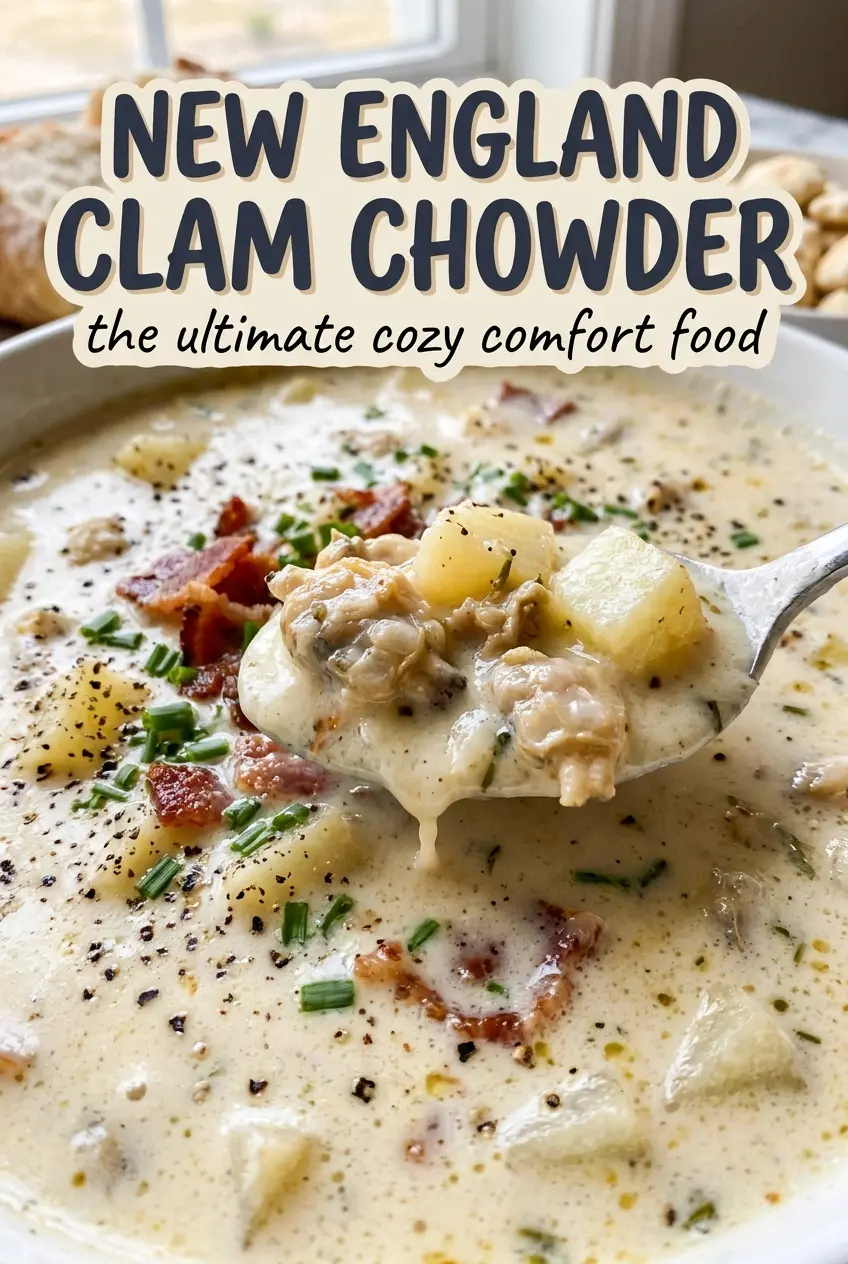
I build this chowder around the liquid from the canned clams, plus bottled clam juice, so the broth tastes unmistakably briny without needing a long seafood stock. Yukon Gold potatoes bring a soft, buttery texture, and bacon adds a savory note underneath. The finished bowl is creamy but not heavy, with tender potato cubes and clams that stay pleasantly soft.
Kitchen Note
I spoon off all but a tablespoon of bacon drippings before adding the vegetables. Leaving more can make the broth feel greasy, but keeping that little bit carries the bacon’s savory flavor into the whole pot.
Save this New England clam chowder for a cozy meal with a creamy broth, tender Yukon Gold potatoes, and briny clams.
Why the Potatoes Matter as Much as the Cream
A chowder that relies on cream alone can taste rich but still feel thin. Here, the flour thickens the clam liquid into a light base, while the potatoes add a little more body as they cook. Yukon Golds are a good fit because they turn tender without dissolving into the broth when you stop at fork-tender.
That balance is what keeps this bowl spoonable rather than pasty. The broth should coat the back of a spoon lightly, not stand up like gravy. Don’t try to force extra thickness by boiling the dairy; that risks a separated, greasy texture and doesn’t give the potatoes time to soften properly. The gentle simmer before the dairy goes in does the main thickening work, and the milk and cream round out the soup at the end.
The result should still move easily around the clams and potato cubes. If you prefer a thicker chowder, the potatoes will soften a little more as the soup rests, but this version is meant to be creamy and pourable rather than dense.
What the Clams, Potatoes, and Dairy Each Bring
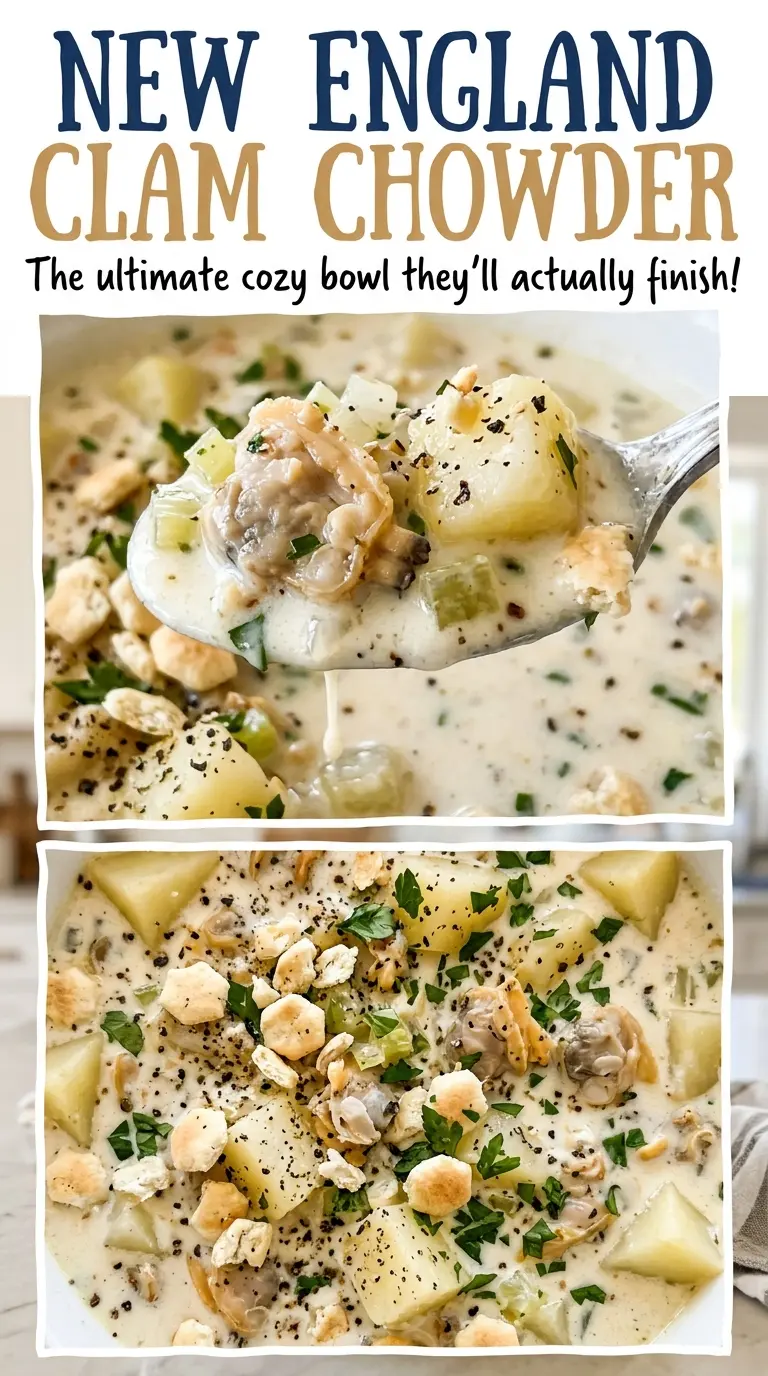
- Canned clams and their juices — Chopped clams are convenient and tender, and the reserved can liquid gives the broth a direct briny flavor. Don’t discard it when draining. If bottled clam juice is unavailable, an equal amount of low-sodium seafood stock will work, though the soup will taste less distinctly of the sea.
- Bacon — Regular smoked bacon contributes both rendered fat for the vegetables and a salty, smoky note. A lean turkey bacon won’t leave the same drippings, so it won’t build the base in quite the same way. For a pork-free pot, leave out the bacon and sauté the vegetables in the butter instead; the chowder will lose that smoky depth.
- Yukon Gold potatoes — Their creamy texture suits chowder, and they hold their cubes better than a starchier potato. Red potatoes are a useful substitute if that’s what you have; they stay firmer and make the soup a little less soft and buttery. Peel and cut them evenly so they become tender together.
- Whole milk and heavy cream — Whole milk keeps the broth fluid, while heavy cream adds richness without making the soup as heavy as an all-cream base. If you’re out of heavy cream, half-and-half can replace it, with a lighter, less velvety result. Use plain, unflavored dairy.
- All-purpose flour — Flour gives the clam liquid enough structure to carry the potatoes and dairy. Stir it constantly into the softened vegetables for a full minute; dry pockets of flour are what lead to little lumps once liquid is added. For a gluten-free version, use a cup-for-cup gluten-free flour blend as described below.
Building the Chowder Without Tough Clams or Lumpy Broth
Render the bacon until crisp
Set a 5-quart Dutch oven over medium heat and cook the bacon pieces for 6–8 minutes, until crisp. Move them to a plate, then spoon off all but 1 tablespoon of the drippings. If the bacon is still pale and soft, give it more time; crisp pieces hold their texture better when they go back into the soup at the end.
Soften the vegetables and cook the flour
Add the butter, onion, and celery to the pot and cook over medium heat for 5–7 minutes, stirring occasionally. The onion should look translucent and the celery should have softened, without browning at the edges. Stir in the flour and keep it moving for 1 minute so it coats the vegetables evenly. If you see dry flour clinging to the pot, keep stirring before adding liquid.
Simmer the potatoes in clam liquid
Gradually whisk in the reserved clam juice and bottled clam juice, then add the potatoes. Bring the pot to a gentle simmer and cook uncovered for 12–15 minutes. Check a few cubes with a fork; it should slide in easily, but the potatoes shouldn’t be falling apart. A vigorous boil can break them up before the broth has time to thicken smoothly.
Warm the dairy, then finish with clams
Stir in the milk, heavy cream, salt, and pepper, then lower the heat to medium-low. Cook for 5–7 minutes, stirring often, until the chowder is steaming and slightly thickened; don’t let it boil. Stir in the clams and crisp bacon and cook over low heat for 2–3 minutes, just until heated through. The clams go in last because extended cooking can make them tough.
Three Practical Ways to Adapt This Chowder
Make it gluten-free
Replace the all-purpose flour with the same amount of a cup-for-cup gluten-free flour blend, then stir and cook it with the vegetables before whisking in the clam juices. Choose a blend intended to replace wheat flour in cooking; the soup may have a slightly different finish, but it keeps the same creamy chowder structure.
Use a dairy-free milk and cream
Swap the whole milk for unsweetened, unflavored oat milk and use an oat-based cooking cream in place of the heavy cream. Pick a cooking cream made for heating, and stir it in at the same point as the dairy. The chowder will be less buttery and rich, while the flour and potatoes still give the broth body.
Choose russet potatoes for a thicker bowl
Use russet potatoes in place of the Yukon Golds, cut into the same-size cubes. They release more starch as they soften, so the broth turns thicker and less distinct potato cubes may break down at the edges. Keep an eye on them as they simmer and stop once a fork slides in easily.
Storage and Reheating
- Refrigerator: Refrigerate leftovers within 2 hours and use them within 3 days. The potatoes absorb some broth as they sit, so the chowder will be thicker the next day.
- Freezer: This cream-based chowder doesn’t freeze especially well; the dairy may separate and the potatoes can turn grainy after thawing. For the best texture, keep it refrigerated rather than freezing it.
- Reheating: Warm it gently on the stovetop over low heat, stirring often, until it reaches 165°F. Don’t bring it to a boil; high heat can make the dairy separate.
Questions That Come Up When Making Clam Chowder
New England Clam Chowder
Ingredients
Equipment
Method
- In a 5-quart Dutch oven over medium heat, cook the bacon for 6–8 minutes until crisp.
- Transfer the bacon to a plate.
- Spoon off all but 1 tablespoon of the drippings.
- Add the butter, onion, and celery to the pot and cook over medium heat for 5–7 minutes, stirring occasionally, until the vegetables are softened.
- Stir in the flour and cook for 1 minute, stirring constantly.
- Gradually whisk in the reserved clam juice and bottled clam juice.
- Add the potatoes.
- Bring to a gentle simmer and cook uncovered for 12–15 minutes, until the potatoes are fork-tender.
- Stir in the milk, heavy cream, salt, and pepper.
- Heat over medium-low for 5–7 minutes, stirring often, until steaming and slightly thickened; do not let it boil.
- Stir in the clams and bacon.
- Cook over low heat for 2–3 minutes, until heated through.