
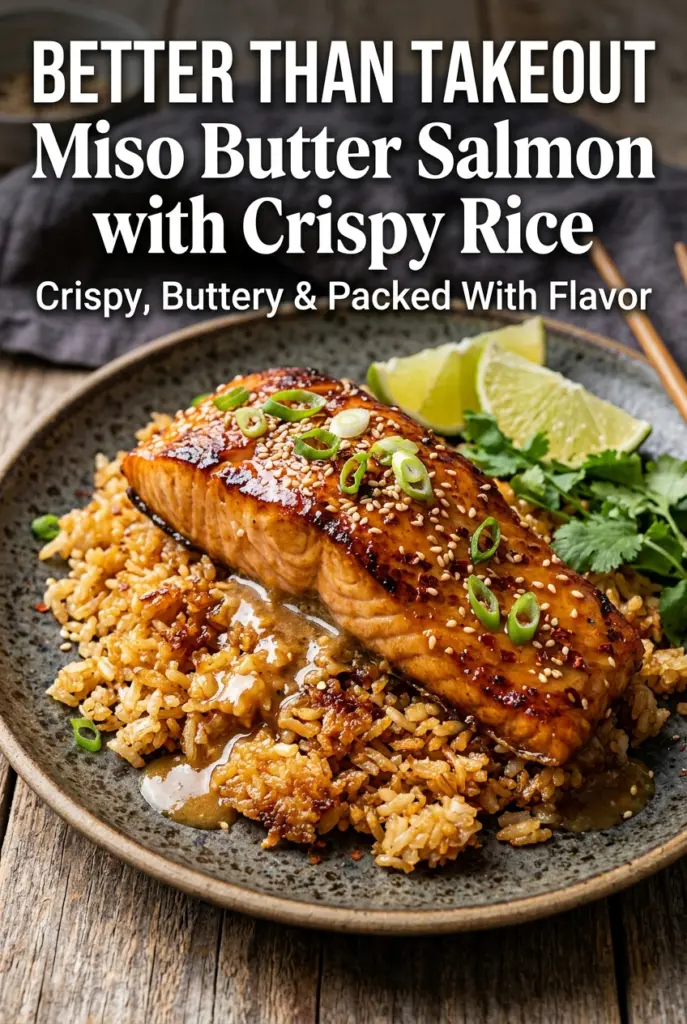
Miso Butter Salmon with Crispy Rice
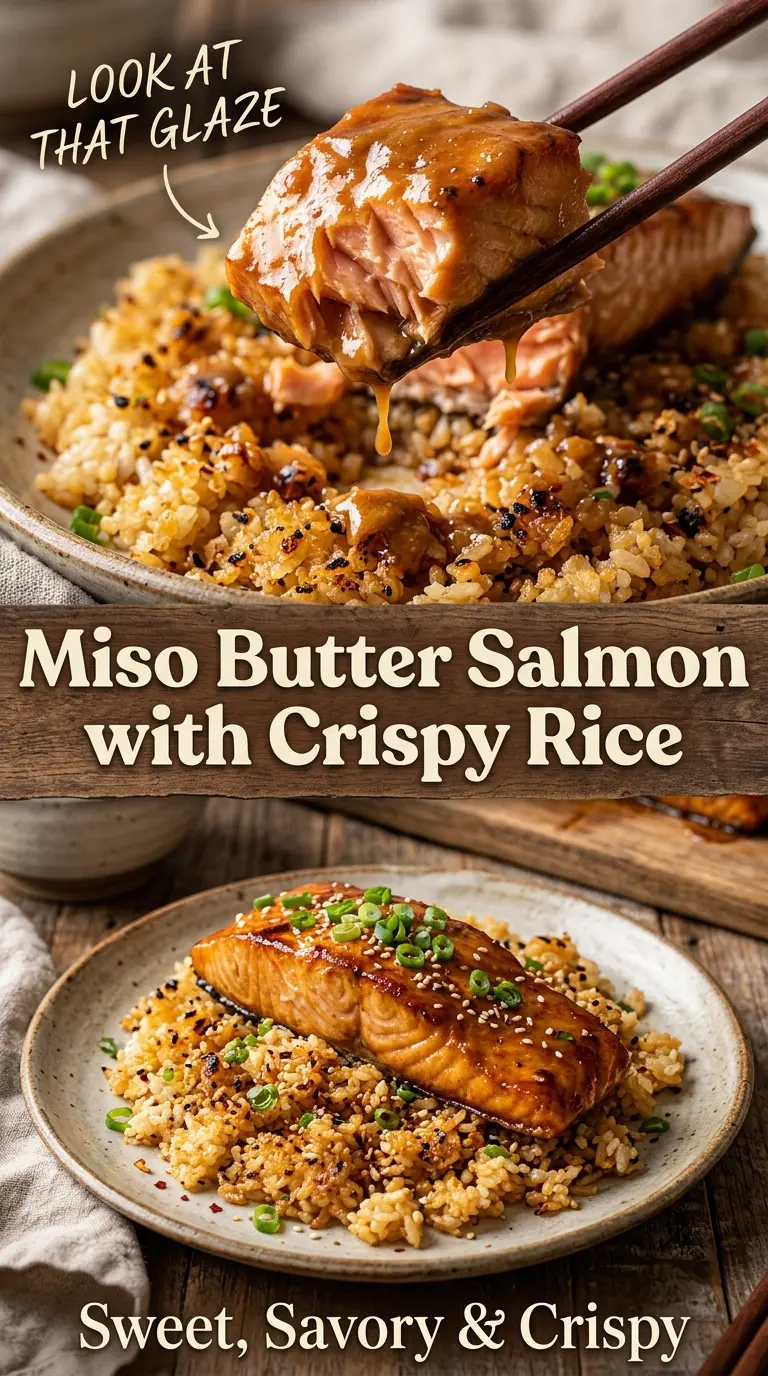
Flaky salmon, glossy with miso butter, lands on a bed of crisped rice that shatters at the edges and stays tender underneath. That contrast is what makes this dish hit…

By Ava
•
•
Reading time: 10 min
Tip: save now, make later.
Flaky salmon, glossy with miso butter, lands on a bed of crisped rice that shatters at the edges and stays tender underneath. That contrast is what makes this dish hit harder than a standard salmon-and-rice dinner. It tastes polished, but the method is plain enough for a weeknight and fast enough that the rice can crisp while the salmon cooks.
The key is treating both parts with a little restraint. The miso butter glaze brings salt, sweetness, and depth, but it needs a dry piece of salmon so it can caramelize instead of sliding off the fish. The rice needs to be chilled and left alone in the pan long enough to form a crust; if you stir too early, you get soft fried rice instead of those crunchy golden patches that make the plate worth it.
Below you’ll find the trick to getting both textures right at the same time, plus a few swaps and storage notes so this recipe keeps working even when dinner needs to bend a little.
The miso butter caramelized beautifully on the salmon, and the crispy rice stayed crunchy on the bottom even after plating. I used leftover jasmine rice from the night before and it turned out better than I expected.
Save this miso butter salmon with crispy rice for the nights when you want glossy salmon, crunchy rice, and one pan of serious flavor.
The Trick to Crispy Rice That Stays Crunchy Under Salmon
The rice has to be cold and a little dry before it hits the pan. Freshly cooked rice steams itself soft, but chilled rice has enough structure to sear into a crust instead of collapsing into mush. Spread it in an even layer and leave it alone until the bottom is deeply golden; that first crust is what gives you the texture you came for.
The other common miss is overcrowding. If the rice is packed too thick, the center steams while the edges brown, and you lose the contrast. A wide skillet gives the best result here, and a thin film of oil plus butter delivers flavor without making the rice greasy.
What Each Ingredient Is Doing in This Dish
- White miso paste — This is the backbone of the glaze. White miso is mild, sweet, and deeply savory, which makes it ideal for salmon. Red miso will work in a pinch, but it’s saltier and more forceful, so cut back a little if you use it.
- Butter — Butter softens the miso and helps the glaze cling to the fish instead of drying on contact. Melted butter works best because it blends smoothly with the other ingredients. If you swap in oil, you’ll lose some richness and the sauce won’t round out the same way.
- Jasmine rice — Day-old jasmine rice crisps up with the nicest contrast: chewy inside, crunchy underneath. Short-grain rice also works if that’s what you keep on hand, but it turns a little stickier. The important part is chilling it first so the grains separate in the pan.
- Sesame oil — A small amount adds that toasted, nutty note that makes the glaze taste layered instead of just sweet and salty. Don’t overdo it or the salmon starts tasting heavy. A teaspoon or two is enough.
- Fresh ginger and garlic — These keep the glaze from tasting flat. Use fresh if you can, because the sharpness lifts the butter and cuts through the salmon’s richness. Powdered versions won’t give you the same brightness.
How to Cook the Salmon and Rice Without Rushing Either One
Mix the glaze until it looks glossy and unified
Whisk the miso, melted butter, soy sauce, honey, rice vinegar, garlic, ginger, and sesame oil until the mixture looks smooth and shiny. If the miso stays in little streaks, it won’t coat the salmon evenly, and the flavor will land in patches instead of a clean glaze. The honey should disappear into the sauce rather than sit at the bottom of the bowl.
Dry the salmon before the glaze goes on
Pat the fillets dry with paper towels, then season lightly with pepper. Moisture on the surface stops browning, and the glaze will slide around in the pan instead of caramelizing. Brush on a generous layer, but don’t bury the fish under it; a thick coating burns before the salmon cooks through.
Crisp the rice in a quiet pan
Heat the oil and butter, then press the chilled rice into an even layer. Leave it alone for 6 to 8 minutes until the bottom turns deeply golden and the grains at the edge start to sound crackly when you nudge them. If you keep stirring, the rice never gets a chance to form the crust that makes this side dish worth making.
Cook the salmon until the glaze darkens, not burns
Set the salmon in a hot skillet and let it cook until the glaze turns sticky and the edges deepen in color. The fish should flake with gentle pressure, but the center can still look just opaque enough to finish on the plate. If the pan is too hot, the sugars in the honey will scorch before the salmon has time to cook, so medium-high is the ceiling, not the goal.
How to Adapt This for a Different Pantry or a Lighter Plate
Gluten-Free Version
Swap the soy sauce for tamari or a certified gluten-free soy sauce. The rest of the recipe stays the same, and the glaze still gets the same salty backbone without changing the texture. Check the miso label too, since a few brands add wheat.
Dairy-Free Miso Salmon
Use olive oil or a neutral oil in place of the butter in both the glaze and the crispy rice. You’ll lose a little of the sauce’s roundness, but the miso still gives the dish plenty of depth. Add an extra drizzle of sesame oil at the end if you want a richer finish.
Spicy Finish
Add a pinch of chili flakes or a little chili crisp to the glaze after it comes together. That turns the sweet-savory salmon into something with more bite, which works especially well against the plain crispy rice. Don’t add too much before cooking or the heat can overpower the miso.
Storage and Reheating
- Refrigerator: Store leftovers in an airtight container for up to 3 days. The rice will soften a bit, but the flavor holds up well.
- Freezer: The salmon freezes okay, but the crispy rice loses its texture, so I don’t recommend freezing the full dish. Freeze salmon separately if needed, then cook fresh rice later.
- Reheating: Reheat the salmon gently in a low oven or covered skillet so the glaze doesn’t dry out. For the rice, use a hot skillet with a little oil to bring back some crispness; the microwave turns it soft and sticky.
Answers to the Questions Worth Asking
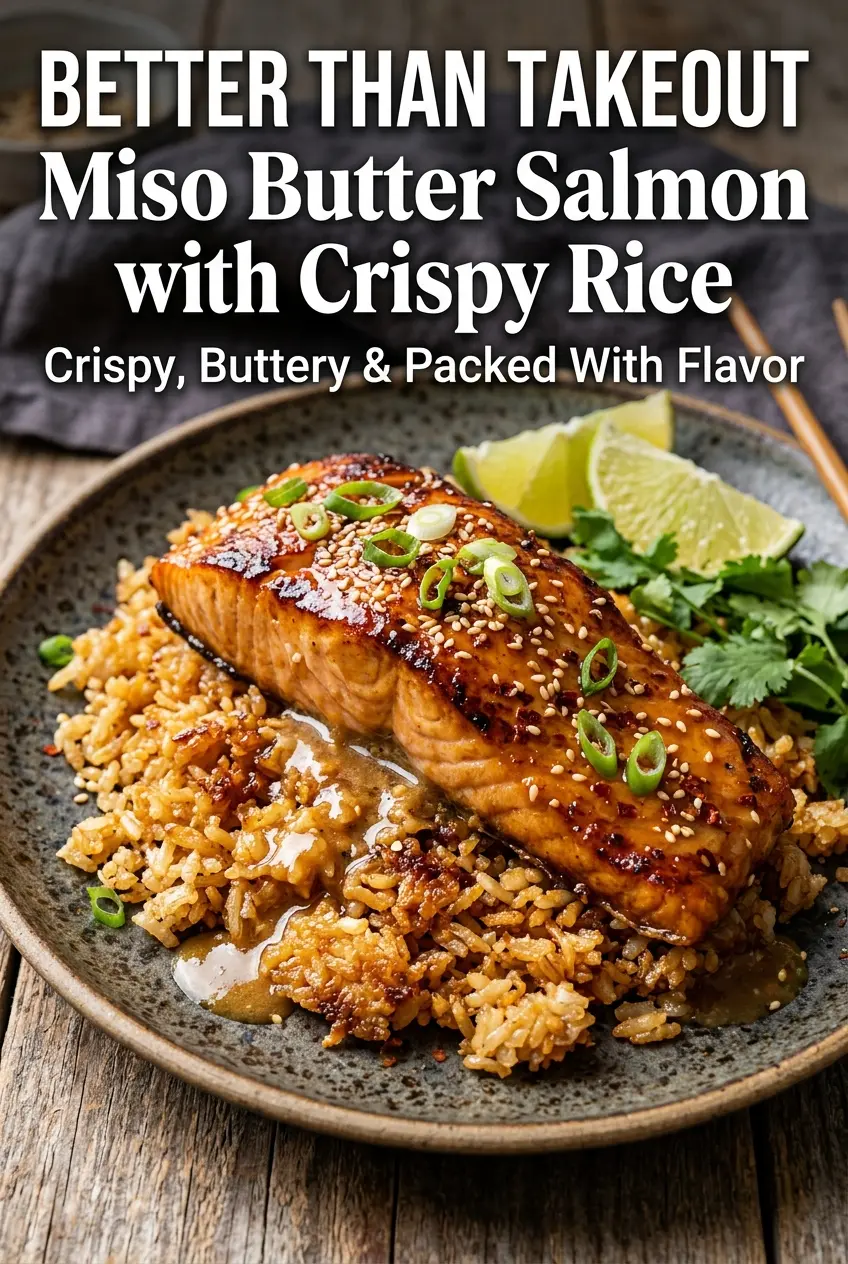
Miso Butter Salmon with Crispy Rice
Ingredients
Equipment
Method
- Whisk together white miso paste, melted unsalted butter, soy sauce, honey, rice vinegar, minced garlic, grated fresh ginger, and sesame oil until smooth.
- Pat the salmon fillets dry, then season lightly with black pepper and a pinch of salt.
- Brush the salmon generously with the miso butter glaze.
- Heat olive oil in a large skillet over medium-high heat until shimmering.
- Add the salmon and cook 4–5 minutes per side, until flaky and caramelized.
- In a second skillet, heat vegetable oil and butter over medium-high heat.
- Spread the chilled cooked and chilled jasmine rice into an even layer.
- Cook without stirring for 6–8 minutes, until deeply golden.
- Flip sections carefully and crisp the second side for 2–3 minutes, until browned.
- Drizzle soy sauce over the rice during the final minute to glaze the surface.
- Plate crispy rice and top with the miso-glazed salmon.
- Garnish with green onions, sesame seeds, fresh cilantro, and lime wedges before eating.