

Mini Beef Wellington Bites
The first thing I watch is the skillet: the beef should pick up color fast, then come out before its center has time to cook through. These mini beef Wellington…

By Ava
•
•
Reading time: 9 min
Tip: save now, make later.
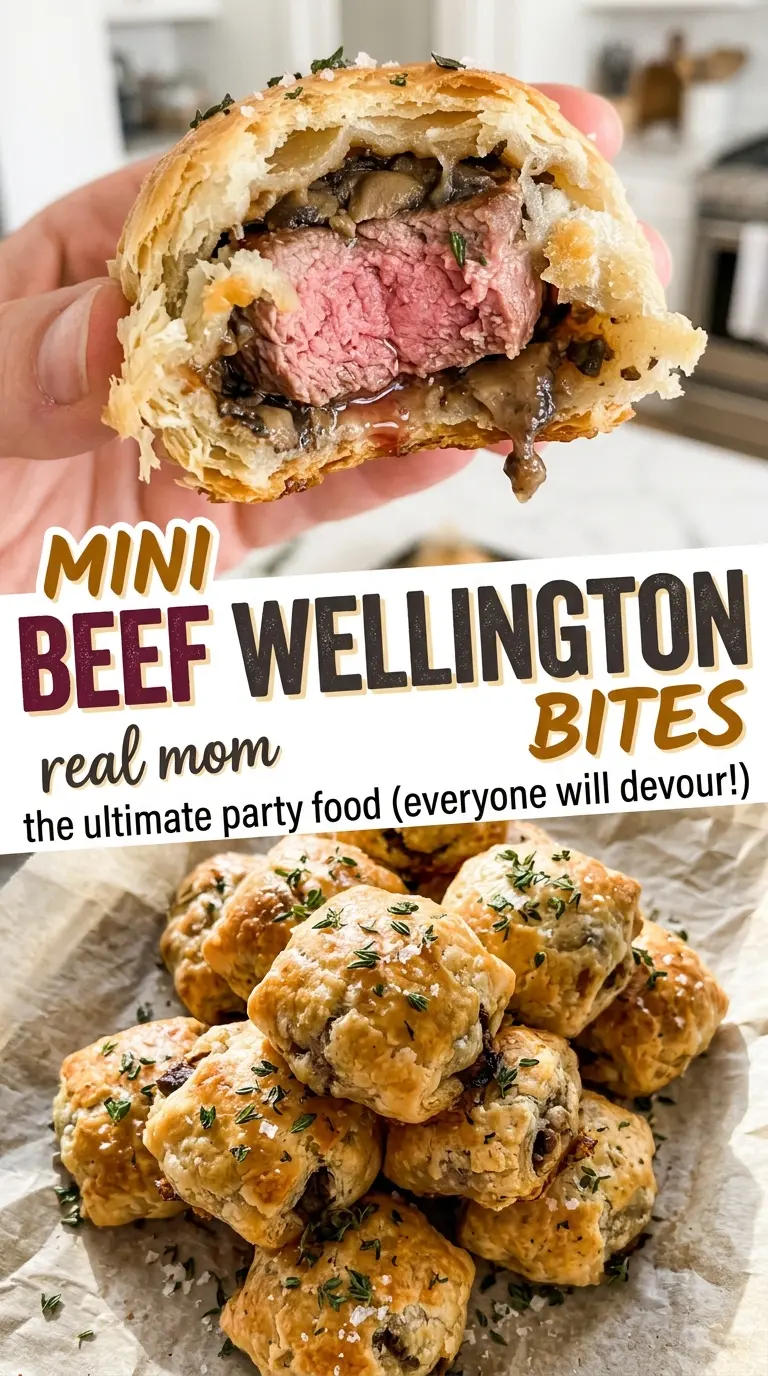
The first thing I watch is the skillet: the beef should pick up color fast, then come out before its center has time to cook through. These mini beef Wellington bites are built around that quick sear, a concentrated mushroom filling, and crisp pastry wrapped around each piece. Getting the parts ready in order keeps the assembly manageable, even when you’re making all 18.
The mushrooms need more time than their small pieces suggest. I cook them until they’re browned and the pan is completely dry, then let the mixture cool before it goes anywhere near the pastry. That concentrated duxelles brings deep savory flavor without wetting the layers. With a thin swipe of Dijon on the beef, each bite comes out with tender beef tucked inside deeply golden puff pastry.

Kitchen Note
The puff pastry should be thawed enough to bend, but still cold when you start wrapping. Once it turns soft and sticky, the corners are harder to pinch together and the pastry loses some of its lift.
Save these mini beef Wellington bites for a party menu when you want tender beef and crisp, golden pastry in a two-bite package.
Why Golden Pastry Isn’t the Doneness Test for These Beef Bites
Puff pastry browns on its own schedule, while the beef inside needs its own check. A deeply golden exterior is the visual cue for the pastry, but it doesn’t tell you whether the center of a tenderloin piece has reached the right temperature. That’s why I use both cues instead of relying on appearance alone.
The pieces are small, so check one through the side, aiming the thermometer into the center of the beef rather than the mushroom layer or pastry. The recipe’s target is 145°F, followed by a 3-minute rest. Keep the pieces close in size, too: cutting 18 pieces about 1 to 1 1/4 inches across helps them bake at a similar pace. If one is noticeably larger, it may need a little longer than its neighbors.
It also helps to remember what the brief sear is for. You’re browning the broad sides for flavor, not trying to cook the tenderloin through in the skillet. The oven finishes the beef while the pastry puffs around it.
The Tenderloin, Duxelles, and Pastry Each Have a Job
- Beef tenderloin — Its tenderness suits the short sear and quick bake. I wouldn’t treat a tougher cut as a direct swap; it needs a longer cooking method to soften, which won’t match the timing or pastry. Buy evenly sized pieces so they cook consistently.
- Cremini mushrooms — They give the duxelles a deeper, earthier taste than white mushrooms. White button mushrooms are a workable swap in the same weight, though the flavor will be milder. Chop them finely so they cook down evenly with the shallot and thyme.
- Puff pastry — The frozen, two-sheet package gives you enough pastry to cut 18 squares and makes the crisp shell possible. Standard all-butter pastry has a rich taste, while other brands work too; the important buying detail here is having two sheets and thawing them while keeping them cold.
- Dijon mustard — Its sharp, tangy flavor cuts through the rich beef and pastry, and a thin layer seasons each piece without making the wrapping wet. Whole-grain mustard can stand in if that’s what you have; its seeds give the center a slightly different texture.
- Shallot and fresh thyme — Together they make the mushrooms taste savory and aromatic rather than flat. Fresh thyme leaves blend neatly into the finely chopped mixture. If you leave either out, the filling will still cook, but it won’t have the same rounded flavor.
From Quick Sear to a Sealed, Golden Bite
Give the Beef a Fast Sear
Pat the tenderloin dry, then season it with 1/2 teaspoon of the kosher salt and the black pepper. Heat the olive oil in a 12-inch skillet over medium-high heat and sear the beef in batches for about 30 seconds on each broad side. Don’t crowd the pan; the pieces need contact with the hot surface to brown instead of steaming. Move them to a plate and chill until cool, about 15 minutes.
Cook the Mushrooms Until the Pan Is Dry
Melt the butter in the same skillet over medium heat, then add the finely chopped cremini mushrooms, shallot, thyme, and remaining 1/2 teaspoon salt. Stir often as the mushrooms release their liquid and begin to brown. This takes 8 to 10 minutes. They’re ready when the pan has no liquid left; cool the mixture completely before assembling.
Layer the Mustard, Duxelles, and Beef
Heat the oven to 400°F and line a half-sheet pan with parchment paper. Cut each puff pastry sheet into 9 squares, about 3 inches each, then beat the egg with the water to make the egg wash. Spread about 1/2 teaspoon Dijon on each beef piece, place 1 teaspoon duxelles in the center of each pastry square, and set a piece of beef on top. Bring the pastry corners up and pinch the seams closed.
Bake Until the Pastry Is Deeply Golden
Arrange each bite seam-side up on the prepared pan, leaving space between them, and brush the pastry with egg wash. Bake for about 18 to 22 minutes, until deeply golden and a thermometer inserted through the side into the center of a bite reads 145°F. Rest the bites for 3 minutes before serving. If the pastry looks pale, give it the time it needs to turn properly golden while keeping an eye on the beef temperature.
Three Swaps That Keep the Bites in Wellington Territory
Make the pastry gluten-free
Replace the standard puff pastry with two sheets of gluten-free puff pastry, following that package’s thawing directions. Gluten-free brands vary in size and browning, so keep the beef temperature as your doneness check and watch the pastry for a deep golden color.
Use white mushrooms for a milder filling
Swap white button mushrooms for the cremini and chop them just as finely. They’ll make a slightly milder duxelles, but they still cook down into a savory filling; don’t take them off the heat while liquid remains in the skillet.
Trade Dijon for whole-grain mustard
Use whole-grain mustard in place of the Dijon on the beef for a more textured, gently tangy layer. The mustard seeds will be noticeable in each bite, but the change won’t affect how you wrap or bake the pastry.
Storage and Reheating
- Refrigerator: Store cooled leftovers in an airtight container for up to 3 days. The pastry will soften as it sits.
- Freezer: Freeze the cooled bites in a single layer, then transfer them to an airtight container for up to 2 months. The pastry won’t be quite as flaky after thawing.
- Reheating: Warm in a 350°F oven until heated through to 165°F in the center. Skip the microwave if you want to avoid soft, chewy pastry.
Questions That Come Up While Making Mini Beef Wellington Bites
Mini Beef Wellington Bites
Ingredients
Equipment
Method
- Pat the beef dry.
- Season the beef with 1/2 teaspoon of the salt and the pepper.
- Heat the olive oil in a 12-inch skillet over medium-high heat.
- Sear the beef in batches for about 30 seconds on each broad side.
- Transfer the beef to a plate and chill until cool, about 15 minutes.
- Melt the butter in the same skillet over medium heat.
- Add the mushrooms, shallot, thyme, and remaining 1/2 teaspoon salt.
- Cook, stirring often, until the mushrooms are browned and no liquid remains, 8 to 10 minutes.
- Cool the duxelles completely.
- Heat the oven to 400°F.
- Line a half-sheet pan with parchment paper.
- Cut each puff pastry sheet into 9 squares, about 3 inches each.
- Beat the egg with the water in a small bowl.
- Spread about 1/2 teaspoon Dijon on each beef piece.
- Place 1 teaspoon duxelles in the center of each pastry square.
- Set a beef piece on top of the duxelles.
- Bring the pastry corners up over each beef piece and pinch the seams closed.
- Arrange the bites seam-side up on the prepared pan, leaving space between them.
- Brush the pastry with egg wash.
- Bake until the pastry is deeply golden and a thermometer inserted through the side into the center of a bite reads 145°F, about 18 to 22 minutes.
- Rest for 3 minutes before serving.