
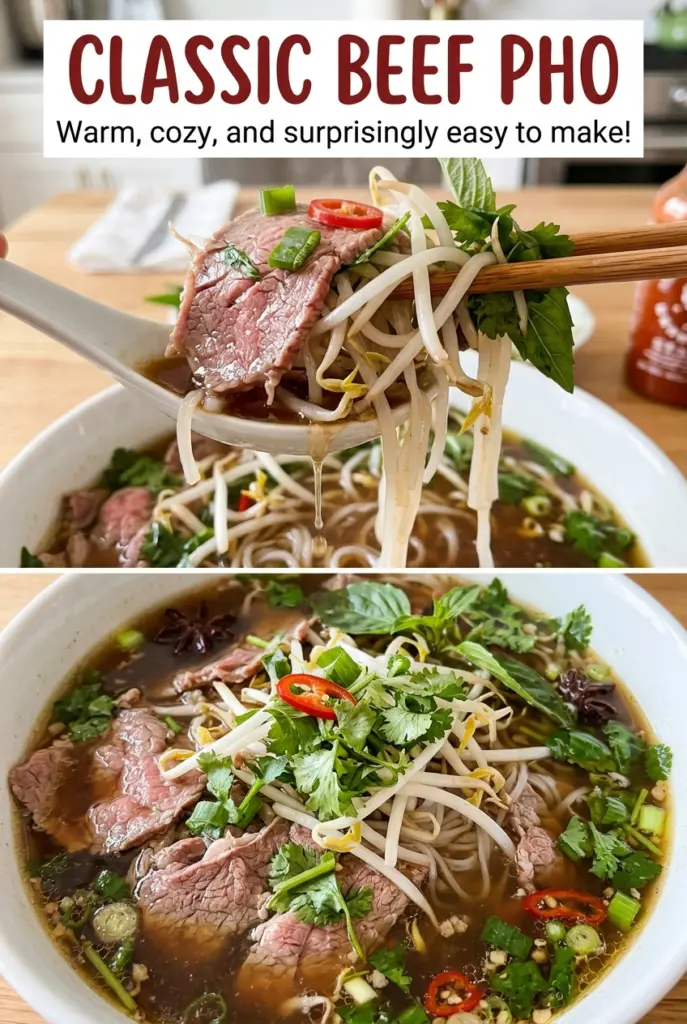
Classic Beef Pho
The pot gets its first hard boil before the real broth-making begins, and that short stretch is easy to mistake for a step you can skip. I don’t skip it:…

By Ava
•
•
Reading time: 11 min
Tip: save now, make later.
The pot gets its first hard boil before the real broth-making begins, and that short stretch is easy to mistake for a step you can skip. I don’t skip it: blanching and rinsing the bones gives the broth a cleaner start, while the long, gentle simmer builds the deep beef flavor that makes Classic Beef Pho worth tending.
What I like about this bowl is the contrast: rich broth, tender brisket, quick-cooked sirloin, and rice noodles that stay separate until serving. Charred onion and ginger bring a mellow sweetness, and toasted whole spices add warmth without turning the broth into a spice cabinet. Finish each bowl with fresh herbs, lime, and whichever toppings you want, and you get a fragrant soup that still tastes unmistakably like beef.
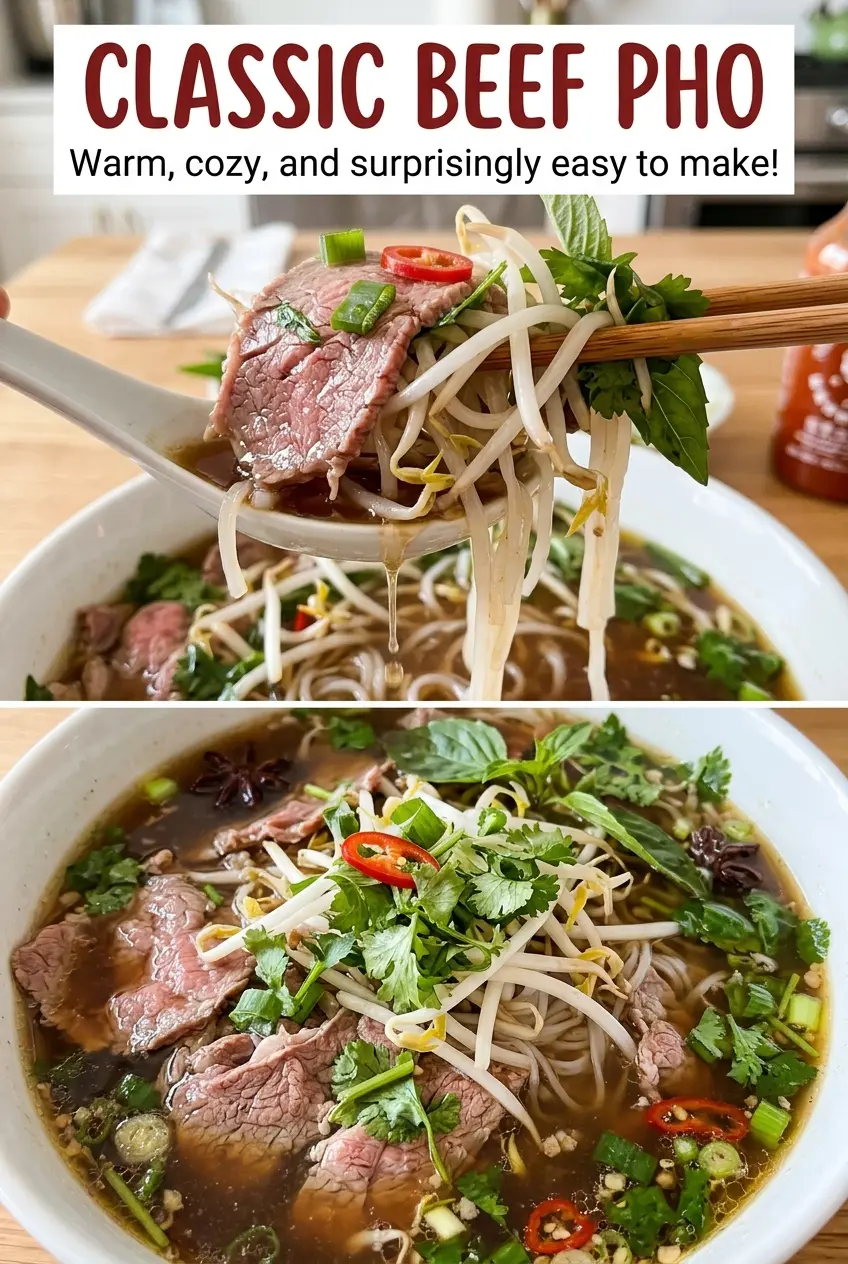
Kitchen Note
After the bones boil for 10 minutes, drain them, rinse them well, and wash the pot before starting the broth. That extra rinse is worth the small effort for a cleaner-tasting bowl.
Save Classic Beef Pho for a slow-simmer day: deeply savory broth, tender brisket, and fresh toppings in every bowl.
Why the Brisket Leaves the Pot Before the Bones
The brisket and the bones need different amounts of time, even though they start in the same pot. The brisket is ready when it’s fork-tender, usually after 2 1/2 to 3 hours of gentle simmering. The bones stay in for another 1 1/2 to 2 hours, giving the broth more time to develop without letting the brisket keep cooking until it shreds.
That pause is what gives the finished bowls two distinct kinds of beef. The brisket is soft and substantial, while the sirloin is sliced thin and cooked briefly in the hot broth just before serving. Keeping the brisket warm, covered tightly with foil in a 200°F oven, lets the bones keep simmering without cooling the meat down. If you leave the brisket in for the full bone simmer, it can lose its neat slices and become harder to portion into the bowls.
Keep the pot at a gentle simmer after skimming off the foam, not a rolling boil. A quiet pot gives the long cook time room to do its work, and it’s easier to see and skim foam before it gets stirred back into the broth.
What the Bones, Brisket, and Whole Spices Each Bring
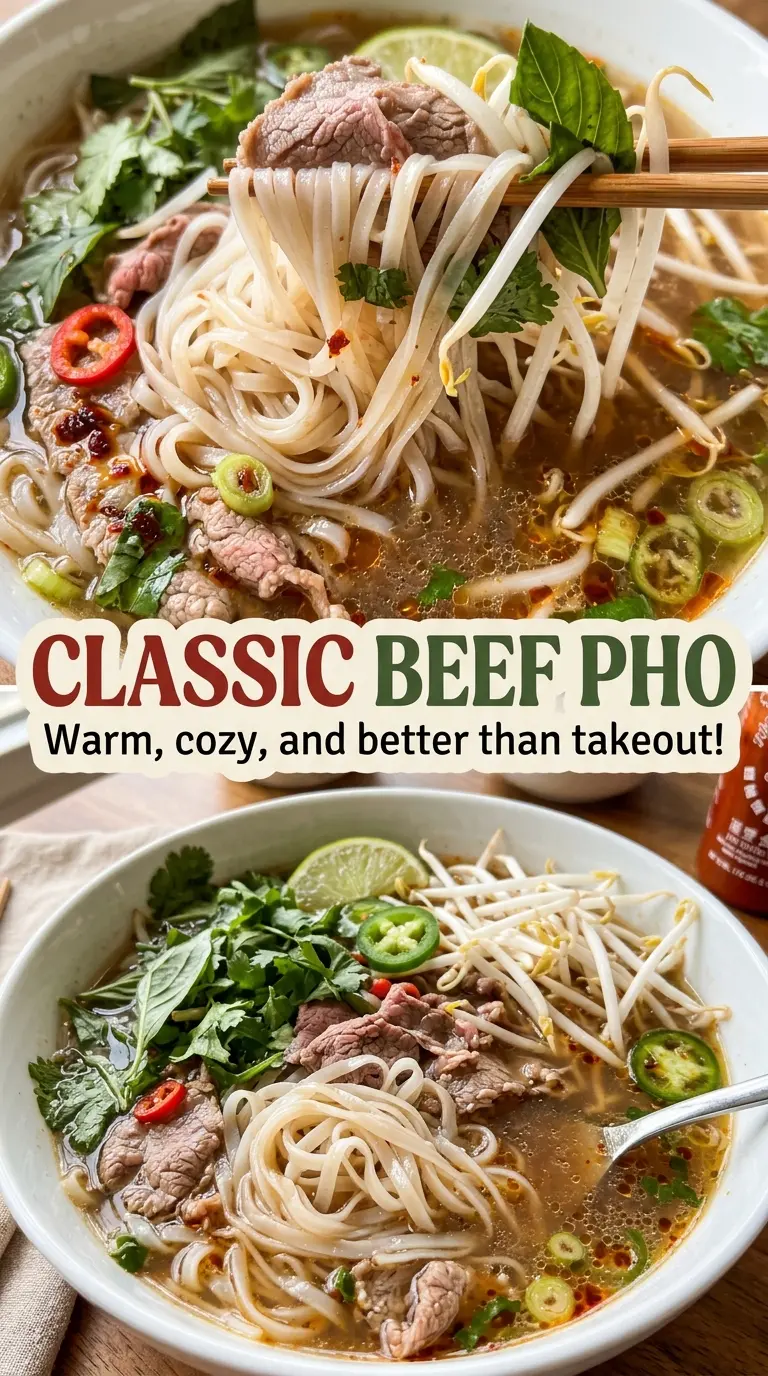
- Beef soup bones — Knuckle and marrow bones bring the deep beef character and body that make this broth more than seasoned water. Ask the butcher for soup bones if you don’t see them packaged; a mix of knuckle and marrow bones works well. They don’t need to be fancy, but they should be sold for cooking, not smoked or seasoned.
- Brisket and sirloin — Brisket becomes fork-tender during the long simmer and gives the bowls a soft, braised bite. Sirloin supplies the contrasting tender slices, so trim it and cut across the grain into thin strips for the brief simmer. A sharp knife makes thin, even slices easier.
- Onion and ginger — Broiling the cut sides and edges until charred in spots gives the broth a rounded, lightly sweet aroma. Choose firm ginger and onions without soft spots; the broil adds the character here, so there’s no need to seek out specialty varieties.
- Whole spices — Cinnamon, star anise, coriander, fennel, and cloves make the broth fragrant and gently warm. Whole spices are useful because they can be toasted and then strained out; fresh, fragrant spices matter more than an expensive brand. Don’t replace them with ground spices, which won’t strain cleanly from the broth.
- Fish sauce and sugar — Fish sauce gives the strained broth a savory, rounded finish, while a little sugar balances its saltiness and the spices. Fish sauces vary in saltiness, so taste the finished broth after stirring them in rather than adding extra salt automatically.
- Rice noodles and toppings — Flat rice noodles make a tender base without competing with the broth. Thai basil has a more distinctive, peppery aroma than regular basil; regular basil works in a pinch but changes that fresh finish. Lime, bean sprouts, green onions, cilantro, jalapeño, hoisin, and Sriracha let everyone adjust the bowl at the table.
The Long Simmer, Without Losing the Tender Beef
Blanch the Bones and Bring Out the Aromatics
Put the bones in the stockpot with cold water, bring it to a boil, and boil for 10 minutes. Drain and rinse the bones, then wash the pot so the broth can start in a clean vessel. While the broiler heats to high, arrange the halved onions and lengthwise-halved ginger on a foil-lined rimmed baking sheet. Broil for 8 to 12 minutes, turning once, until charred in spots; toast the cinnamon, star anise, coriander, fennel, and cloves in a dry skillet over medium heat for 2 to 3 minutes, until fragrant.
Simmer Until the Brisket Is Fork-Tender
Return the bones to the pot with the remaining cold water, brisket, charred onion and ginger, and toasted spices. Bring the pot to a boil, skim off the foam, then reduce the heat to a gentle simmer. Simmer uncovered until the brisket is fork-tender, about 2 1/2 to 3 hours; check the texture rather than relying on the clock alone. Transfer the brisket to an oven-safe dish, cover it tightly with foil, and keep it warm in a 200°F oven while the bones simmer for another 1 1/2 to 2 hours.
Strain and Season the Broth
Pour the broth through a fine-mesh strainer into a clean pot and discard the bones, spices, onion, and ginger. Stir in the kosher salt, fish sauce, and sugar, then simmer for 5 minutes so the seasoning blends into the broth. Taste a spoonful while it’s hot; it should be savory and aromatic, not overwhelmingly sweet or salty. Keep the broth hot while you prepare the noodles and beef.
Build Each Bowl While the Broth Is Hot
Cook the rice noodles according to the package directions until tender, drain them, and divide them among six large soup bowls. Slice the warm brisket thinly across the grain and add it to the bowls. Slice the sirloin across the grain into 1/4-inch-thick strips, bring the broth to a boil, then cook the sirloin in batches at a steady simmer for 1 to 2 minutes, until the strips reach 145°F; transfer each batch to a clean plate and rest for 3 minutes. Divide the sirloin among the bowls, add green onions and cilantro, and ladle about 2 cups of hot broth into each; serve with Thai basil, bean sprouts, lime, jalapeño, hoisin, and Sriracha.
Three Simple Ways to Adapt Your Pho Bowl
Make the Bowl Gluten-Free
Rice noodles are naturally a good fit, but fish sauce and hoisin can vary by brand. Choose versions labeled gluten-free for both sauces and keep the rest of the bowl the same. The broth’s savory balance stays close to the original, though the hoisin’s sweetness may differ slightly between brands.
Turn Up the Heat at the Table
Add more sliced jalapeño or Sriracha to individual bowls rather than making the whole pot spicy. That keeps the broth balanced for everyone and lets you dial up the heat without changing the long-simmered base.
Make It Brisket-Only
Skip the sirloin and divide the cooked brisket among the bowls for a softer, more braised texture. You’ll lose the contrast of quick-cooked steak, and each bowl will have less meat, but the broth and toppings still make a complete pho bowl.
Storage and Reheating
- Refrigerator: Store broth, brisket, cooked sirloin, and noodles separately in covered containers for 3 to 4 days. Refrigerate leftovers within 2 hours; the noodles soften as they sit, so freshly cooked noodles have the best texture.
- Freezer: Freeze broth and brisket separately in airtight containers for up to 3 months. Thaw in the refrigerator; noodles, cooked sirloin, and fresh toppings are better prepared fresh than frozen.
- Reheating: Reheat the broth on the stove until it reaches 165°F, then warm the brisket and sirloin in the hot broth. Keep noodles separate until serving; simmering them in the pot can make them soft and break them apart.
Questions That Come Up When Making Beef Pho
Classic Beef Pho
Ingredients
Equipment
Method
- Place the beef soup bones in an 8-quart stockpot, add 5 qt cold water for blanching, and bring to a boil over high heat; boil for 10 minutes.
- Drain and rinse the bones, then wash the pot.
- Heat the broiler to high and arrange the halved yellow onions and halved fresh ginger on a foil-lined rimmed baking sheet.
- Broil for 8-12 minutes, turning once, until charred in spots.
- Toast the cinnamon sticks, whole star anise, coriander seeds, fennel seeds, and whole cloves in a dry skillet over medium heat for 2-3 minutes, until fragrant.
- Return the bones to the stockpot and add the remaining 5 qt cold water, trimmed beef brisket, charred onions and ginger, and toasted spices.
- Bring to a boil, skim off foam, and reduce to a gentle simmer.
- Simmer uncovered for 2 1/2-3 hours, until the brisket is fork-tender.
- Transfer the brisket to an oven-safe dish.
- Cover tightly with foil and keep warm in a 200°F oven while the bones simmer for another 1 1/2-2 hours.
- Strain the broth through a fine-mesh strainer into a clean pot and discard the solids.
- Stir in the kosher salt, fish sauce, and granulated sugar, then simmer for 5 minutes.
- Cook the dried flat rice noodles according to the package directions until tender.
- Drain the noodles and divide them among six large soup bowls.
- Slice the warm brisket thinly across the grain and divide it among the bowls.
- Slice the trimmed beef sirloin across the grain into 1/4-inch-thick strips.
- Bring the broth to a boil, then cook the sirloin in batches at a steady simmer for 1-2 minutes, until the strips reach 145°F.
- Transfer each batch to a clean plate and rest for 3 minutes.
- Divide the sirloin among the bowls, add the thinly sliced green onions and fresh cilantro leaves, and ladle about 2 cups hot broth into each bowl.
- Serve with the fresh Thai basil leaves, bean sprouts, lime wedges, thinly sliced jalapeño, hoisin sauce, and Sriracha.