
Maple Balsamic Brussels Sprouts
The cut faces are what I watch when the pan comes out: they should be browned, while the centers give easily to a fork. When Brussels sprouts roast pale or…

By Ava
•
•
Reading time: 9 min
Tip: save now, make later.
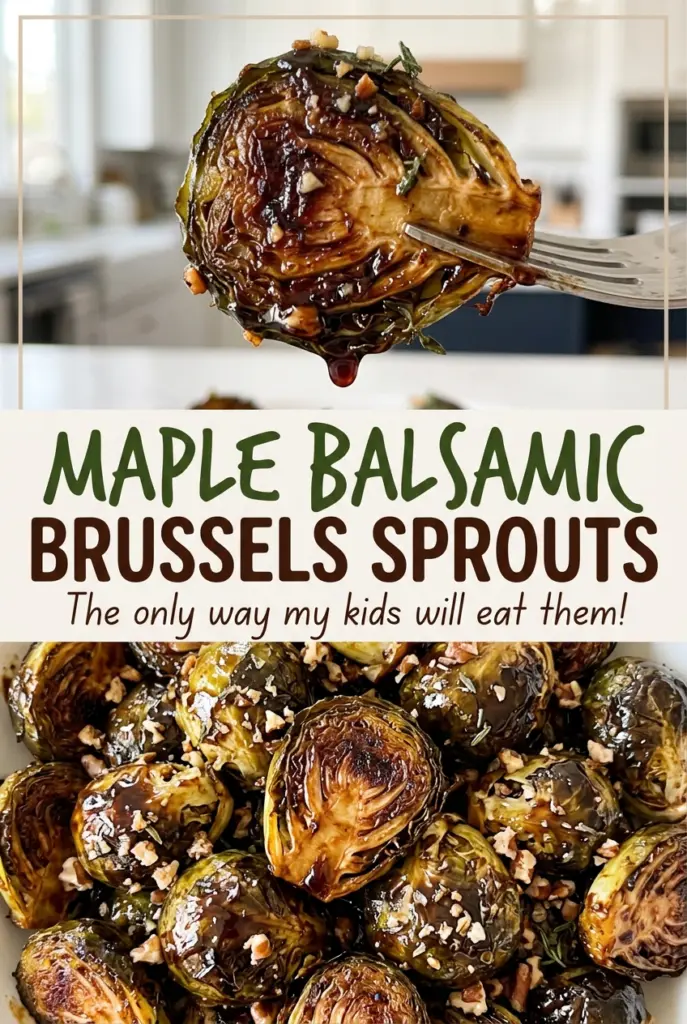
The cut faces are what I watch when the pan comes out: they should be browned, while the centers give easily to a fork. When Brussels sprouts roast pale or turn soft all over, they can feel more steamed than roasted. Arranging the halves cut-side down on a rimmed pan gives them a better shot at that deep, browned surface.
For Maple Balsamic Brussels Sprouts, I keep the glaze on the stovetop while the vegetables roast. Maple syrup and balsamic vinegar need only a brief simmer to thicken slightly, and making the glaze separately keeps its sugars out of the hot oven. The result is a sweet-tart finish that clings to the sprouts instead of tasting scorched.
This is a straightforward side dish, but the timing of that last toss matters. I move the sprouts into a serving bowl while they’re hot, then coat them with the warm glaze so it spreads across the browned edges. Each bite has a little sweetness, a little tang, and plenty of roasted Brussels sprout flavor.
Kitchen Note
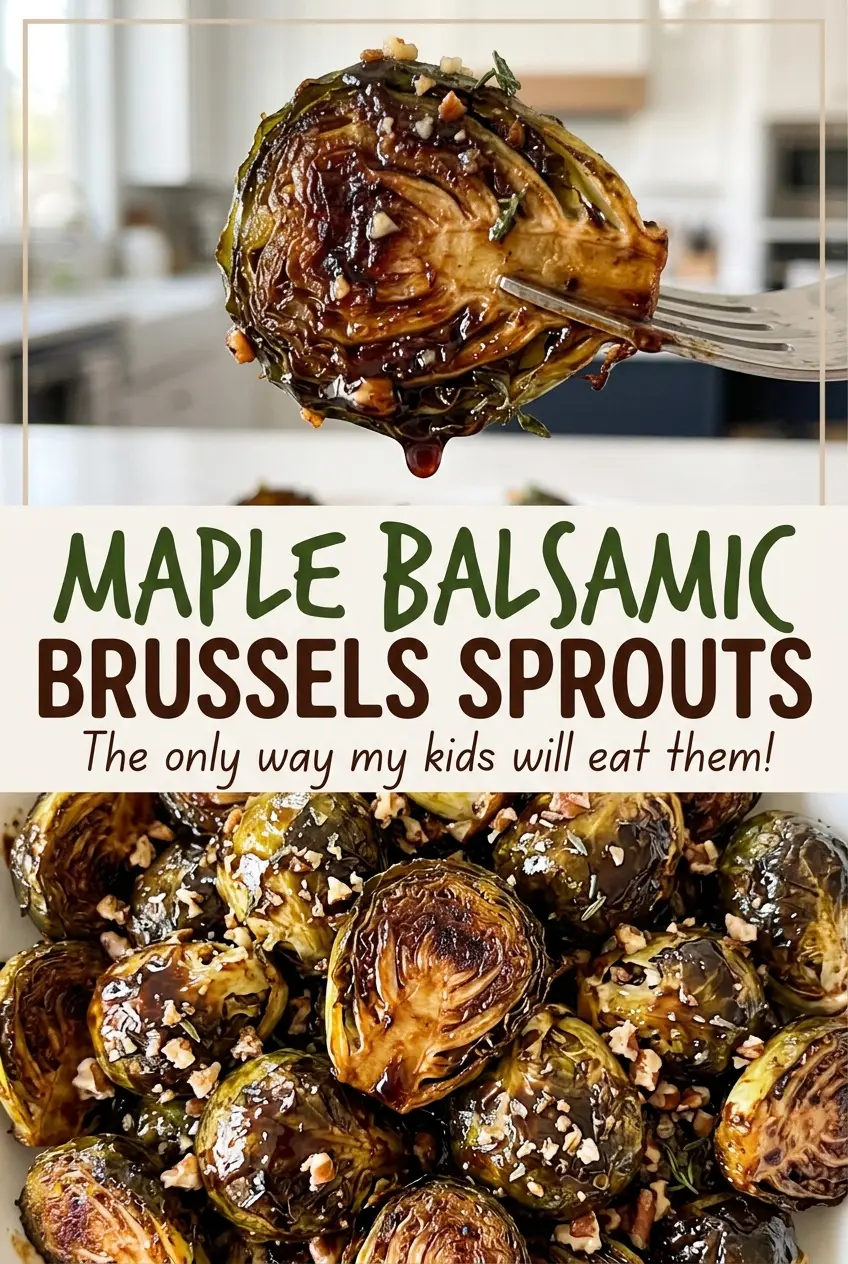
Cut each sprout through the stem so the halves stay intact as they roast. That flat cut face gives you a steady side to set against the pan.
Save Maple Balsamic Brussels Sprouts for a side dish with browned edges and a quick sweet-tart glaze.
Why the Maple-Balsamic Glaze Goes on After the Oven
Maple syrup tastes lovely in a glaze, but its sugars can darken quickly under roasting heat. Balsamic vinegar also changes as it cooks: a short simmer concentrates it, while too much heat or time can make it taste overly sharp and sticky. Keeping both ingredients in a small saucepan gives you control over that finish.
The sprouts get their time in the oven on their own, where the cut sides can brown and the centers turn tender. Meanwhile, the maple and vinegar simmer over medium-low heat until the mixture thickens slightly. That separation gives you two distinct textures to bring together at the end: browned vegetables and a glossy coating. It also means you can judge the glaze before it touches the sprouts, rather than discovering that it has reduced too far after roasting.
There’s no need to aim for a thick syrup in the saucepan. The glaze should still move easily when you drizzle it over the hot sprouts, so it can coat them as you toss. A light coating keeps the sweet-tart balance in check and lets the roasted vegetable remain the main event.
What the Sprouts, Maple, and Balsamic Each Bring
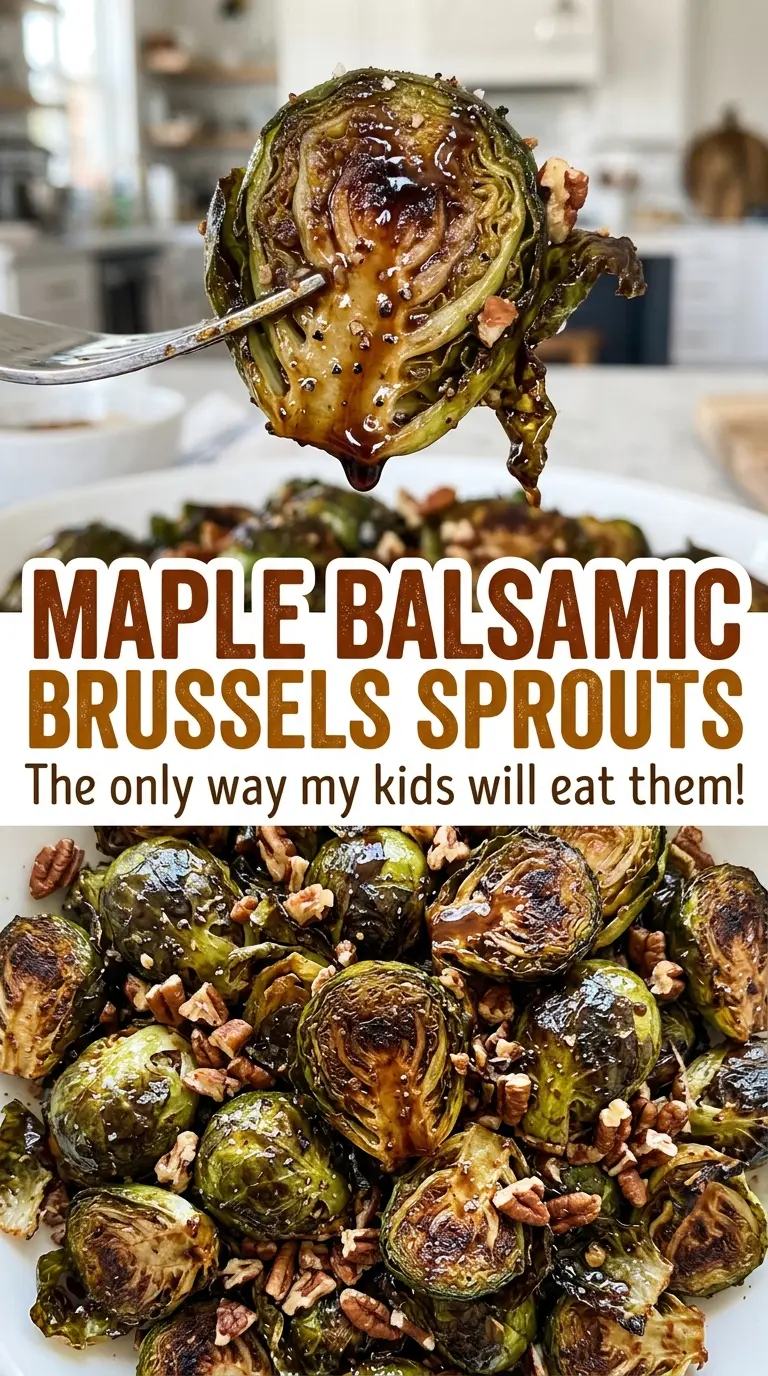
- Brussels sprouts — Choose firm sprouts that feel compact rather than soft or loose. Trim the ends and halve them evenly so they roast at about the same pace. The cut surface is where you’ll see the most browning, so intact halves are easier to arrange and turn out neatly.
- Olive oil — The oil helps coat the sprouts and encourages browning across the cut faces. A basic olive oil is fine here; there’s no need for a costly finishing oil because the maple-balsamic glaze goes on after roasting. Toss until the surfaces look lightly slick, without leaving a pool of oil in the bowl.
- Pure maple syrup — Use pure maple syrup rather than pancake syrup. The latter is usually a flavored syrup with a different sweetness and consistency, and it won’t give the glaze the same clean maple character. I don’t recommend swapping in another sweetener here because it changes the balance and texture of this simple two-ingredient glaze.
- Balsamic vinegar — A standard bottle works; an expensive aged balsamic isn’t necessary for a glaze that’s briefly simmered. Its acidity keeps the maple from reading as candy-sweet, and its dark, rounded flavor suits the browned sprouts. There isn’t a direct vinegar swap that keeps the same sweet-tart result.
Roast the Sprouts First, Then Make the Glaze Cling
Heat the oven and prepare the pan
Heat the oven to 425°F and line a rimmed 18×13-inch sheet pan with parchment paper. The pan gives the halved sprouts room to sit cut-side down rather than wobbling on their rounded sides. Having the lined pan ready before tossing keeps the oil-coated vegetables from sitting in a bowl while the oven heats.
Season and arrange the halves
Toss the Brussels sprouts with the olive oil, kosher salt, and black pepper until the seasoning is spread over the surfaces. Arrange them cut-side down on the prepared pan. Give the halves space instead of piling them on top of one another; crowded sprouts release moisture against each other and are less likely to brown well.
Roast until browned and fork-tender
Roast for 20 to 25 minutes, until the sprouts are browned and tender when pierced with a fork. Start checking at the shorter end of the range, since the size of the sprouts affects how quickly the centers soften. A fork should pass into the thicker part without much resistance, and the cut faces should have visible color.
Simmer the maple-balsamic glaze
While the sprouts roast, combine the pure maple syrup and balsamic vinegar in a small saucepan. Bring the mixture to a simmer over medium-low heat and stir occasionally for 3 to 4 minutes, until slightly thickened. Keep the heat moderate; a hard boil can reduce the glaze too quickly and make its sweetness more concentrated than you want.
Toss while the sprouts are hot
Transfer the hot Brussels sprouts to a serving bowl, drizzle with the glaze, and toss to coat. The bowl gives you room to turn the halves gently without scraping them across the sheet pan. Stop once the sprouts are coated; they don’t need to sit in a pool of glaze to pick up its maple and balsamic flavor.
Two Ways to Change the Glaze-to-Sprout Balance
Serve the glaze as a dip
Roast and season the sprouts as usual, then serve the prepared glaze in a small bowl alongside them instead of tossing everything together. This keeps the browned surfaces more distinct and lets each person control how much sweet-tart glaze lands on a bite. The glaze still uses the same maple-and-balsamic combination, but the presentation feels less uniformly coated.
Keep some glaze back for the table
Drizzle and toss the sprouts with enough glaze to give them a light sheen, then serve the rest alongside. The first coating keeps the dish balanced, while the extra glaze gives anyone who prefers a bolder maple-balsamic finish an easy way to add more. This works well when you’re serving people with different preferences for sweet or tangy flavors.
Storage and Reheating
- Refrigerator: Store leftovers in an airtight container for 3 to 4 days. The sprouts soften in storage, and the glaze becomes less glossy.
- Freezer: Freezing isn’t recommended; thawed Brussels sprouts turn softer, and the glaze can become watery.
- Reheating: Warm them in a 425°F oven until heated through. A microwave works in a pinch, but it softens the browned surfaces further, so avoid heating them longer than needed.
Questions That Come Up When Roasting Brussels Sprouts
Maple Balsamic Brussels Sprouts
Ingredients
Equipment
Method
- Heat the oven to 425°F.
- Line a rimmed 18x13-inch sheet pan with parchment paper.
- Toss the Brussels sprouts with the olive oil, salt, and pepper.
- Arrange the Brussels sprouts cut-side down on the pan.
- Roast for 20 to 25 minutes, until browned and tender when pierced with a fork.
- While the sprouts roast, combine the maple syrup and balsamic vinegar in a small saucepan.
- Simmer over medium-low heat for 3 to 4 minutes, stirring occasionally, until slightly thickened.
- Transfer the hot Brussels sprouts to a serving bowl.
- Drizzle with the glaze and toss to coat.